Veo and Wearth are now Ziracle. Same mission, better platform. See what's new

Self-Care for Stress: Small Rituals that Actually Help

Nature's Journey|Nature's Journey Product Flatlay|||||||||||||

Stress isn’t something you can outrun. But you can build small, grounding rituals that help your body respond to it differently. Here’s where to start.

You know the version of self-care that stops at face masks and scented candles. It photographs well. It doesn’t do much when your chest is tight at 2am and your brain won’t switch off. What actually works is smaller, less Instagrammable, and more reliable, and it has more to do with your nervous system than your bathroom shelf.

Stress is a physiological response, not a mindset. When you hit a deadline or an argument or an unexpected bill, your body floods with cortisol and adrenaline. Your heart rate climbs. Your muscles tense. Short bursts keep you sharp. The problem is the same response stuck on. The NHS describes chronic activation of the stress system as showing up in sleep disruption, gut issues, lowered immunity and the tight chest that keeps you awake at 2am.

That chronic pattern matters. Harvard Health traces how prolonged cortisol exposure reshapes how the HPA axis, the brain-body loop that runs your stress response, fires over time. In practical terms, the more often you spike, the faster you spike next time. The work of self-care for stress is to retrain that loop, not to paper over it.

One-off fixes rarely stick for exactly this reason. A yoga class or a long bath feels good in the moment, but they don’t retrain the underlying response. A 2022 systematic review in BMJ Open found that brief, consistent mindfulness-based practices delivered modest but measurable reductions in perceived stress across a large number of randomised trials, with effects that grew with consistency rather than intensity. Here’s what actually works, placed at the three points in the day where stress tends to stack, plus the supplement layer underneath.

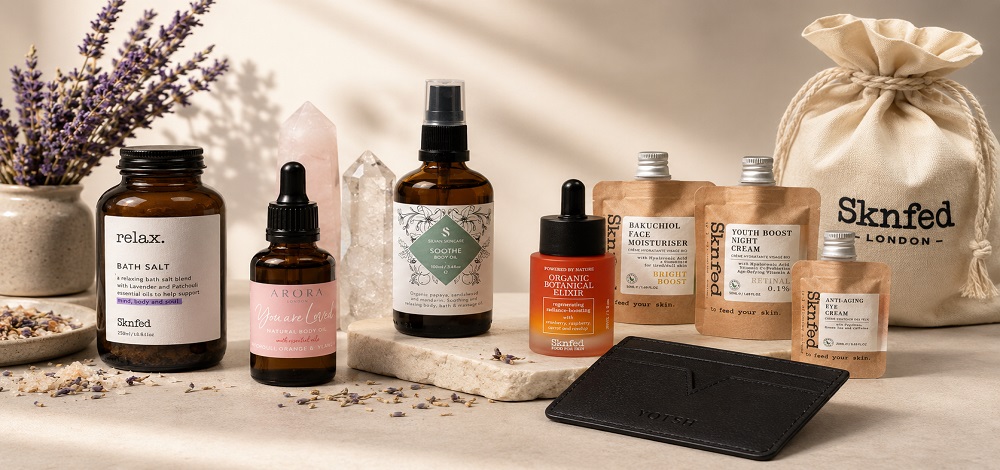
If you want tools to support this, the Reduce Stress edit on Ziracle pulls together aromatherapy, herbal supplements and mindfulness products that earn their place in a routine rather than adding to the clutter on the shelf.

Set the tone before the noise starts

The first ten minutes of your day matter more than you think. Before you reach for your phone, give your nervous system something gentler to work with. Light a stick of natural incense or a soy-wax candle. Put the kettle on. Write three lines in a journal: what you’re grateful for, what you’re bringing into the day, one thing you’re noticing.

Gratitude journaling has the research to back it up. A 2021 systematic review in the Journal of Happiness Studies synthesised 64 randomised trials and found small but consistent improvements in wellbeing from structured gratitude interventions, with effects present several weeks after the practice stopped. Three lines. Five minutes. The habit matters more than the length.

If writing isn’t for you, the equivalent is a two-minute sit with your tea before you look at a screen. The point is a deliberate gap between waking and reacting. Your inbox can wait ten minutes. Your body notices the difference if it starts the day reacting to the news, and it also notices if it doesn’t. Browse the Home Fragrance edit for candles and incense that don’t flood the room with synthetic scent.
The reset you forget to take

Stress builds quietly through the day. By early afternoon your shoulders are somewhere near your ears and you’ve been holding your breath without realising. A physical cue helps here. An essential-oil roller on your wrists. A glass of water you actually drink, not the one you forget on the desk. Four minutes away from the screen, ideally near a window.

If you learn one breath pattern, make it the physiological sigh. Two short inhales through the nose, one long slow exhale through the mouth. Three cycles. A 2023 randomised study in Cell Reports Medicine led by researchers at Stanford University School of Medicine compared several short breathwork protocols and found that the physiological sigh produced the largest improvement in mood and reduction in physiological arousal compared with passive mindfulness. Do it twice a day and you’ll feel the difference inside a week.

Pair the scent or breath cue with a two-minute emotional check-in. Name what you’re actually feeling. Not fine, not busy, the specific word. Research led by Matthew Lieberman at UCLA, published in Psychological Science, found that putting feelings into words reduced activity in the amygdala, the part of the brain that fires your threat response. The emotion doesn’t disappear. It gets less power over the next hour. Browse the Essential Oil Blends edit for rollers and diffuser oils that work this way.

Wind down on purpose

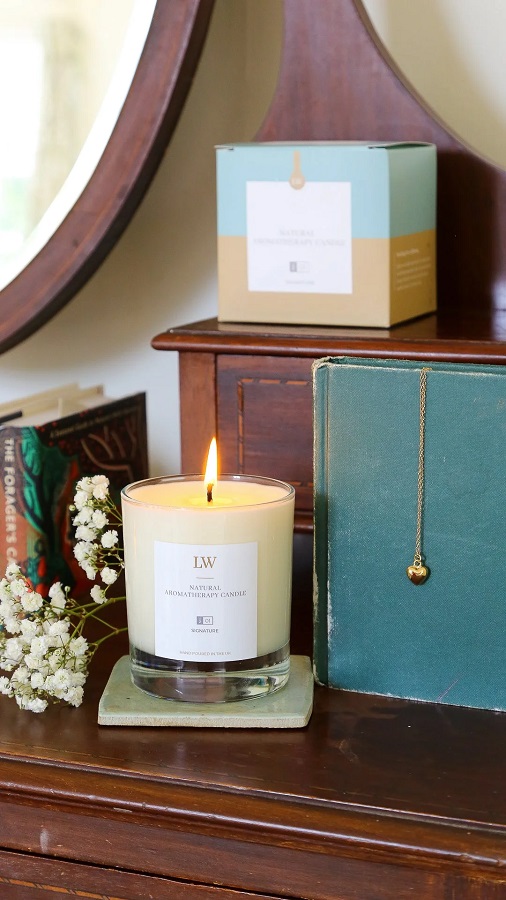
Your evening routine does more than help you sleep, though better sleep will follow. The job is to give your body a clear signal that the day is finished. Light a candle. Put the phone away an hour before bed. Write down anything that’s looping in your head, so it’s on paper instead of in your mind.

Write tomorrow’s three most important tasks on paper. Your brain’s grip on them loosens once they’re out of your head and onto a list it trusts. The rest of the to-do list can wait until morning.

For the nights when your mind is still busy at bedtime, a pillow and room spray with lavender or chamomile creates a scent anchor your brain learns to read as rest. A 2016 review in Evidence-Based Complementary and Alternative Medicine found that lavender essential oil has modest but consistent anxiolytic effects across clinical trials. Consistency is the point. Same routine, same cues, most nights. Your nervous system likes a pattern. Browse the Stress and Sleep edit for the formulations designed for this.
Self-care for stress is a practice, not a product category.

When your body needs more than a ritual

Rituals and routines form the foundation. There are moments when your body needs extra support, and that’s where adaptogenic herbs come in. Ashwagandha is the most studied of them. A 2019 meta-analysis in Medicine synthesised the randomised trials and found modest but real reductions in cortisol and perceived stress over eight to twelve weeks of daily use, alongside the safety and dosing notes worth reading before you start.

Dose matters. Standardised extracts are what most of the trials use, so look for ashwagandha products specifying KSM-66 or Sensoril, the formulations with the cleanest evidence. Take it in the morning with food, not before bed. Give it four to eight weeks before you decide whether it’s doing anything, and don’t stack it with other stimulant-adjacent supplements in the same window. Browse the Stress Relief edit for standardised adaptogens.

An adaptogenic blend with ashwagandha, rhodiola and reishi, taken daily for a few months, is a supporting layer rather than a quick fix. Look for formulas that list their doses plainly and cite their sourcing. The supplement doesn’t replace the practice. It sits underneath it, helping your body do what the ritual is training it towards.

The point of all of this

The face mask and the candle still have their place. The ritual around them is what does the actual work. Five minutes of journaling in the morning, three breaths at the desk, a consistent evening wind-down, an adaptogen you take for a season rather than a week. None of it is Instagrammable. All of it moves the needle.

The 2am chest-tight moment doesn’t go away forever. It comes less often, it leaves more quickly, and you have something to do when it arrives. Start with one of these four. Stack from there. For more on building the surrounding habits, read our guides to daily habits for mental health and how to sleep better.

If you’re struggling with chronic stress or your mental health more broadly, please speak to your GP. In the UK, the Samaritans are available on 116 123, free, 24/7.

Ready to build your edit? Browse the Wellness and Vitality department and filter by Organic to narrow it to products made without synthetic additives.

FAQs

Does self-care actually reduce stress, or is it just marketing?

Both, depending on what you mean by self-care. The face-mask-and-candle version does modest work at best. The practice-based version (consistent mindfulness, gratitude journaling, breathwork, sleep hygiene) has a substantial evidence base. A 2022 BMJ Open systematic review found that brief mindfulness-based practices produce measurable reductions in perceived stress across many randomised trials, with effects growing with consistency. The product itself matters less than the routine it supports.

What’s the physiological sigh, and why does it work?

Two short inhales through the nose followed by one long slow exhale through the mouth. Three cycles. A 2023 randomised study led by Stanford researchers, published in Cell Reports Medicine, compared it against several other breath patterns and found it produced the largest improvements in mood and reductions in physiological arousal. The mechanism is the double inhale, which reopens collapsed alveoli in the lungs more efficiently than a single breath and lets the long exhale engage the parasympathetic (‘rest and digest’) nervous system. It takes around 30 seconds total. The evidence for doing it daily is stronger than for most longer breathwork protocols.

How long before ashwagandha actually works?

Four to eight weeks of daily use is the window most of the clinical trials measure. The 2019 meta-analysis in Medicine found modest but consistent reductions in cortisol and perceived stress over eight to twelve weeks. If you’re going to try it, commit to the full window before deciding it isn’t working. Look for standardised extracts (KSM-66 or Sensoril are the most-studied formulations), take it in the morning with food, and don’t stack it with other stimulant-adjacent supplements. If you’re on prescription medication, check with your GP first.

What’s the difference between stress and anxiety?

Stress is a physiological response to an identifiable external trigger (a deadline, an argument, a bill). Anxiety is the same underlying response without a clear trigger, or sustained beyond the moment the trigger passed. Most people experience both at various times. Short-term stress that resolves when the trigger is gone is normal and usually healthy. Chronic stress that doesn’t resolve, or anxiety without a clear cause, is worth taking to a GP rather than managing alone with rituals and supplements.

When should I see a GP rather than trying to manage stress myself?

If your stress is affecting your sleep most nights for more than a few weeks, if you’re having panic attacks, if it’s interfering with work or relationships, or if you’re feeling persistently low or hopeless. Self-care rituals are useful for everyday stress management. They aren’t a substitute for professional support if symptoms are persistent or severe. In the UK, your GP is the starting point, and the Samaritans are available on 116 123 free, 24/7.

Can Leather Be Sustainable? The Honest Answer

|||

The fashion industry has a long way to go on sustainability. As shoppers push brands to clean up their environmental impact and show their working on ethics and transparency, fashion houses find themselves caught between people, planet and profit. That tension is nowhere more visible than in the debate around leather.

Search data from fashion search platform Lyst has tracked the shift clearly in its recent Conscious Fashion Reports, with interest in vegan and plant-based materials rising steadily year on year while interest in conventional leather has softened. Shoppers are voting with their keyboards. The material itself is still catching up.

So why are many brands still dragging their feet? Because leather is lucrative. According to Grand View Research, the global luxury leather goods market was valued at over $50 billion in 2023, with continued growth projected through the rest of the decade. That’s a serious revenue pool to walk away from on principle, and it helps explain why the industry has been slow to change.

Is traditional leather sustainable?

Supporters of the leather industry often argue that leather is sustainable because it’s a natural, biodegradable material that uses waste from meat production. On the surface, the case sounds neat. Meat is produced anyway, hides would otherwise be discarded, and turning them into a durable material is better than landfilling them.

The argument misses the point. Commercial cattle farming is itself a major contributor to the environmental impact of global consumption. Figures from the Food and Agriculture Organization of the United Nations put the livestock sector at around 14.5% of all human-caused greenhouse gas emissions, with cattle responsible for about two-thirds of that share.

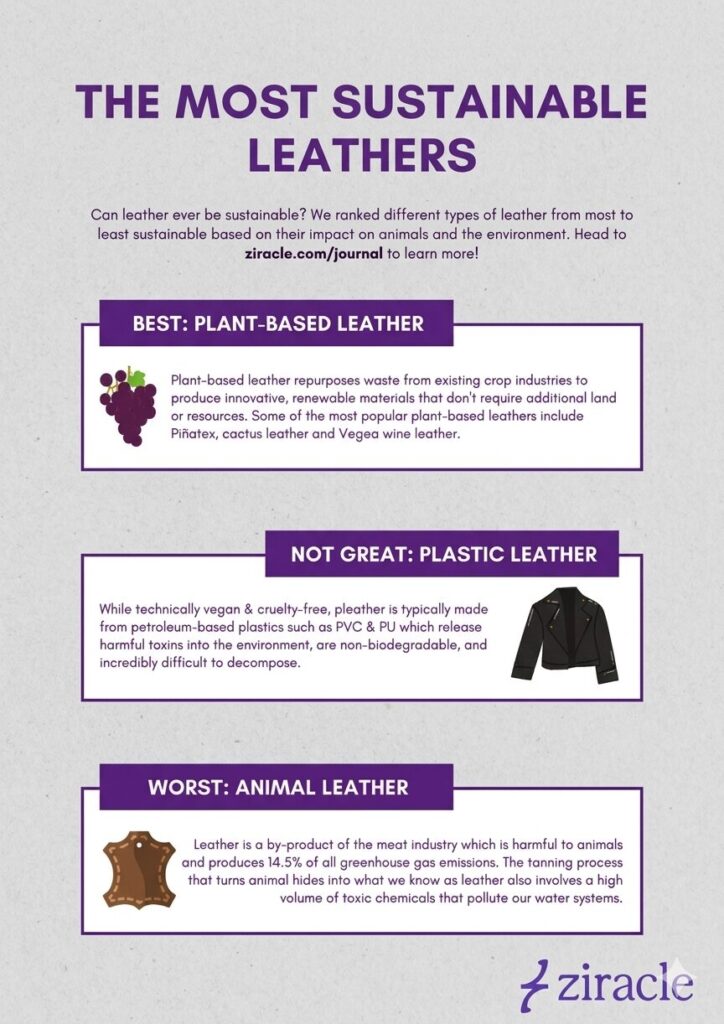
Can leather ever be sustainable? We ranked different types of leather from most to least sustainable based on their impact on animals and the environment. Best: plant-based leather, Not Great: plastic leather, Worst: animal leather

The tanning process that turns raw hides into leather also involves heavy use of chemicals, particularly chromium salts. A 2021 review in the Journal of Cleaner Production documented how chromium from tannery wastewater can leach into soil and water systems and cause long-term contamination in communities near production sites, which are disproportionately in lower-income countries. With that kind of footprint sitting behind every hide, the argument that leather is a clean waste product doesn’t hold.

Calling leather sustainable because it’s a meat byproduct ignores the entire industry that creates the hides in the first place. So what’s the alternative?

The problem with faux leather

Faux leather was initially pitched as the more ethical answer to animal leather, and it has genuine advantages. These materials use no animal byproducts, which makes them vegan and cruelty-free. For anyone trying to avoid contributing to animal agriculture, that’s a meaningful win.

The catch is what they’re actually made from. The most common faux leathers on the market are petroleum-based plastics: polyvinyl chloride (PVC) and polyurethane (PU). Both are fossil-fuel-derived, both release toxins during manufacture, and both shed microplastics as they wear. According to the European Environmental Bureau’s 2021 assessment, PVC in particular carries a heavy burden across its lifecycle, which is why it’s been progressively phased out by many major fashion brands. PU production has also improved, with water-based polyurethane dispersion reducing the solvent load and pushing performance closer to what traditional leather offers.

That’s progress, but it isn’t the answer. PVC and PU are both non-biodegradable and add directly to the growing pile of global plastic waste. Vegan-friendly faux leathers aren’t the eco-friendly alternative the industry actually needs.

Vegan and sustainable aren’t the same thing.

Enter plant-based leathers

Plant-based leathers are the most interesting development in this space. They use agricultural waste or low-impact crops to produce materials that look and behave like leather, without the animal hide and without the plastic backbone. From pineapple leaves to cactus pads to grape skins, here are three of the most promising alternatives changing what’s possible.

1. Piñatex

Credit: Ananas Anam, the makers of Piñatex®

Piñatex, developed by Ananas Anam, is produced using the cellulose fibres of pineapple leaves that are a byproduct of the pineapple fruit industry. Because the raw material is an existing waste stream, no additional land, water or fertiliser is needed to produce it. It contains none of the harmful toxins found in traditional animal leather or conventional faux leather. The material is used by brands ranging from small independents to larger fashion houses including H&M and Hugo Boss, and has been certified as a PETA-Approved Vegan material.

2. Cactus leather

Credit: Bohema Clothing | veo.world/brand/bohema-clothing

Cactus leather, most notably Desserto, is made in Mexico from nopal cactus. Cactus plants naturally absorb a high volume of CO2 as they grow, and they can help regenerate soil in degraded areas thanks to their resilience and low water demand. The production process uses only the mature leaves of the plant without damaging it, allowing the same plants to be harvested repeatedly. No additional land or environmental resources are needed to scale the material.

3. Wine leather

Credit: ACBC | veo.world/brand/acbc

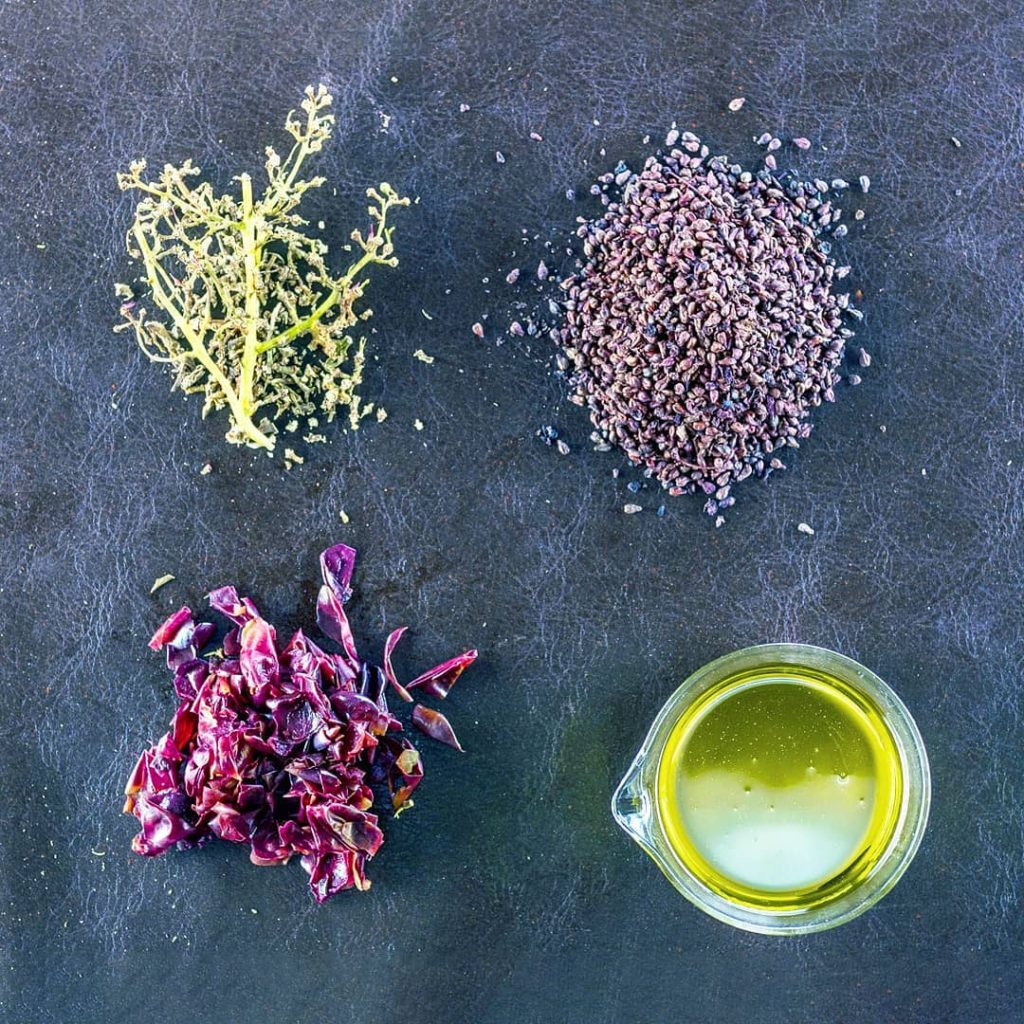
Wine leather (the best-known being Italian innovator Vegea) is made using pomace: the skin, seeds and stalks of grape clusters left over from winemaking. According to the International Organisation of Vine and Wine, global wine production generates millions of tonnes of grape marc a year, which gives wine leather a reliable and substantial supply of raw material. The production process has low environmental impact, low production costs, and no polluting substances. It comes from a renewable source and needs no additional resources to produce.

What these materials still need to prove

Plant-based materials are a clear improvement on both hide and conventional faux leather, but many are still works in progress. Most plant-based alternatives on the market today are blended with polyurethane or other petroleum-based resins to give them the feel, strength and flexibility that leather is prized for. That means the finished material isn’t fully plant-based and isn’t fully biodegradable at end of life.

The industry is working on it. Fully plant-based, compostable versions are appearing in limited runs, and recycling pathways are being developed. Mushroom-based leathers like MycoWorks‘ Reishi and Bolt Threads‘ Mylo have attracted significant investment and brand partnerships, with the potential to remove the PU backing entirely over time. Shoppers should know that buying a plant-based leather bag today isn’t the same as buying a compostable one. It’s a better option than hide or plastic, but it isn’t a closed-loop material yet.

Progress, not perfection

The honest answer to whether leather can be sustainable is: it’s complicated. No single material is the hero of the story. Animal leather carries a heavy climate and welfare cost. Plastic faux leather trades one problem for another. Plant-based alternatives are the most promising option by a distance, but they aren’t yet a finished solution.

What you can do is buy less leather overall, make what you own last, and choose better alternatives when you do buy new. For the broader picture, read our guides to eco swaps for fashion and why sustainable fashion costs more.

Every brand in the Apparel and Style category on Ziracle has passed the same standard: kind to the people making the clothes, transparent about materials and supply chain, built to last longer than a season. For anyone avoiding animal products specifically, filter by Vegan and Cruelty Free to find pieces made without hides. For footwear, the Footwear edit carries options using recycled, natural and plant-based materials.

Ready to shop? Browse the Vegan edit and pick pieces that work for your wardrobe.

FAQs

Is leather actually a waste product of the meat industry?

In accounting terms, hides are a secondary output of cattle raised primarily for meat and dairy. But treating leather as a pure waste product ignores the scale of the industry it depends on. The FAO estimates livestock accounts for around 14.5% of global greenhouse gas emissions, with cattle responsible for roughly two-thirds of that. The tanning process adds a separate footprint through chromium use and wastewater impact. Leather is only a waste product if you’ve already decided the industry producing it is acceptable.

Is vegan leather always better for the environment?

No. Most vegan leathers on the market are polyurethane or, less commonly now, PVC. Both are petroleum-derived plastics that shed microplastics and don’t biodegrade. They’re better than animal leather on welfare grounds and often on emissions per square metre, but they create a different environmental problem in their place. Plant-based alternatives (Piñatex, cactus leather, wine leather, mushroom leather) are the option that addresses both welfare and material footprint, though most still include some PU backing for durability.

How do I tell if a bag or pair of shoes uses real plant-based leather?

Look for named materials rather than generic “vegan leather” descriptions. Piñatex, Desserto, Vegea, Mylo and Reishi are specific trademarked materials with traceable supply chains, and brands using them tend to say so explicitly on the product page. “Vegan leather” without further detail is usually polyurethane. Certifications help too: PETA-Approved Vegan is a baseline signal, and Cradle to Cradle certification indicates the material has been assessed for end-of-life impact.

Is plant-based leather as durable as animal leather?

For most uses, yes. Piñatex, cactus leather and wine leather are designed to meet the performance standards of the products they’re used in, and major fashion houses including Hugo Boss and H&M have incorporated them into mainstream collections. Durability depends more on the construction of the finished product than the base material. A well-made plant-based bag will outlast a badly-made leather one. The area where plant-based materials still lag slightly is in heavy-duty applications like work boots or saddlery, where traditional leather retains specific properties that haven’t yet been fully replicated.

Should I throw out my existing leather items?

No. The most sustainable item you own is the one you already have, regardless of what it’s made of. The manufacturing impact is already sunk. Wear and repair what you’ve got until it wears out. When it does, replace with a plant-based or recycled alternative. Throwing away wearable items to replace them with greener versions is counterproductive on both environmental and financial grounds.

Zero Waste Beauty: The Formats Worth your Money

plastic free eye shadow palette||||||||zero waste makeup|organic makeup rounds|exfoliate concentrated skincare bar|bamboo makeup brushes|plastic-free soap|refill vegan haircare||biodegradable glitter eyeshadow||natural refining body scrub|Natural Vegan Deodorant|biodegradable glitter eyeshadow||bamboo toothbrush|lavender scrub|bamboo safety razor|charcoal toothpaste|||

Most beauty sold as “eco” is a bottle with a leaf on the label. The brands actually doing the work redesigned the packaging out at the product stage, not bolted a recycling scheme onto the end. The difference shows in the bathroom cabinet over a year. One kind fills your bin with plastic you cannot recycle. The other is a set of reusable containers you top up.

The scale of the problem is not a small one. The Plastic Pollution Coalition reported in 2022, drawing on Zero Waste Week research, that the global cosmetics industry produces more than 120 billion units of packaging a year, most of it not meaningfully recyclable. The same analysis cited Greenpeace USA figures showing that since 1950, only around 9% of all plastic ever produced has actually been recycled. The rest is in landfill, incinerators, or the sea. Beauty is one of the single biggest contributors.

This guide is format-led rather than brand-led for a reason. Brands come and go, packaging claims drift over time, and what matters most when you shop is what the container is, not whose name is on it. Five formats, six questions, and a clearer sense of where your money is actually working.

01. Refillable compacts for colour cosmetics

The easiest wins sit in makeup. Mineral pigments compress cleanly into a pan, which means blushes, bronzers, eyeshadows and pressed powders can live inside a refillable compact you keep for years. Good systems use a bamboo or aluminium outer case and a drop-in pan that pops out when the colour runs down.

plastic free eye shadow palette
Brand: BAIMS Natural Makeup

What to look for: a brand that commits to backward compatibility, so a refill you buy in three years still fits the compact you bought today. Refills usually come in around 30 to 40% cheaper than a new full-size compact, which means the maths works before you factor in the packaging saved. The systems that fail are the ones where the brand redesigns the compact every eighteen months and leaves you with a drawer of obsolete shells.

Mineral pigments have the secondary benefit of working well on reactive skin. No emulsifiers to stabilise a liquid formula, no preservatives for a water-based one, fewer triggers across the board. If you are building a low-waste routine from scratch, start here. Browse our full Colour & Cosmetics edit for the refillable-first options.

02. Solid bars for skin and body

Solid cleansers, shampoo bars and body bars are the format most people try first, and the one most people abandon fastest if they pick a bad one. The problem is not bars. The problem is bad bars.

Brand: Beauty Kin

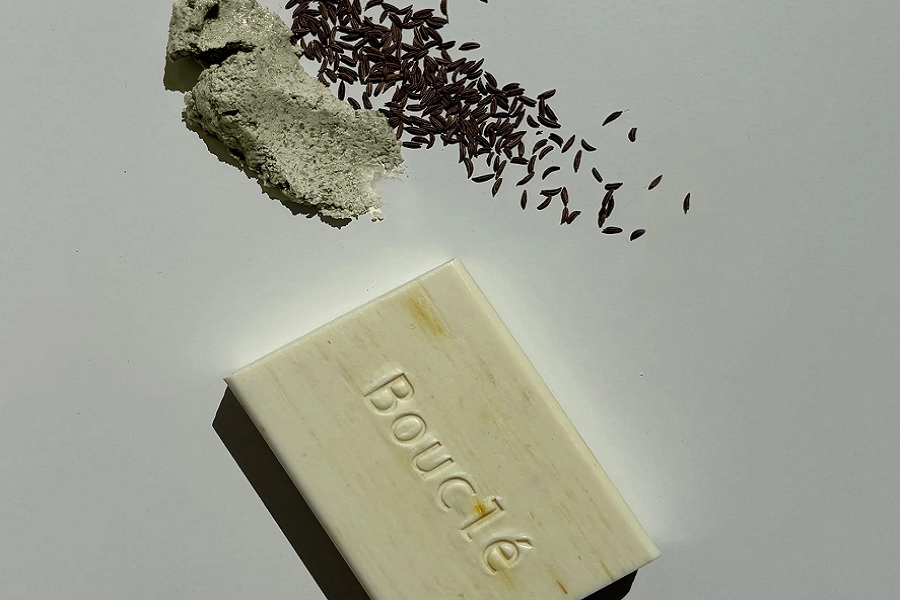
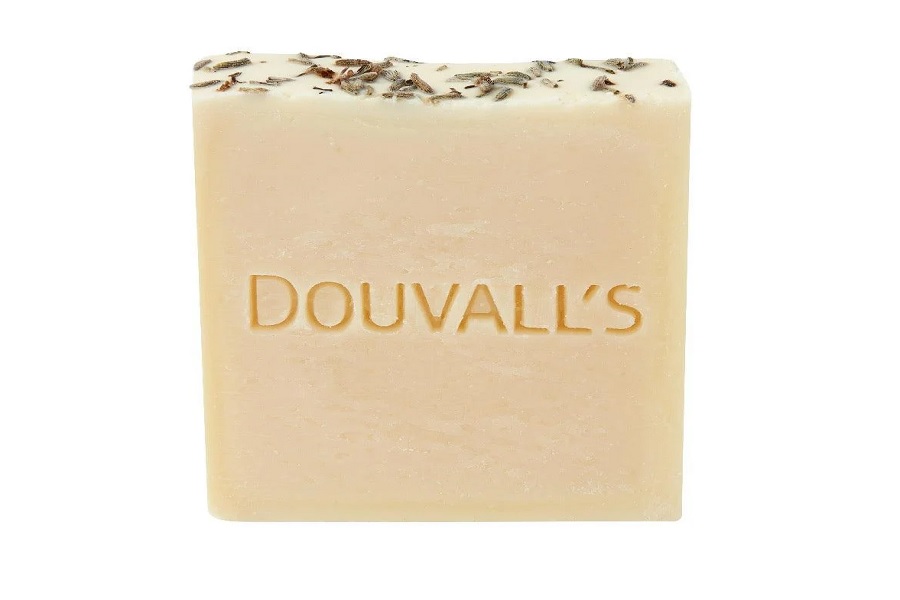
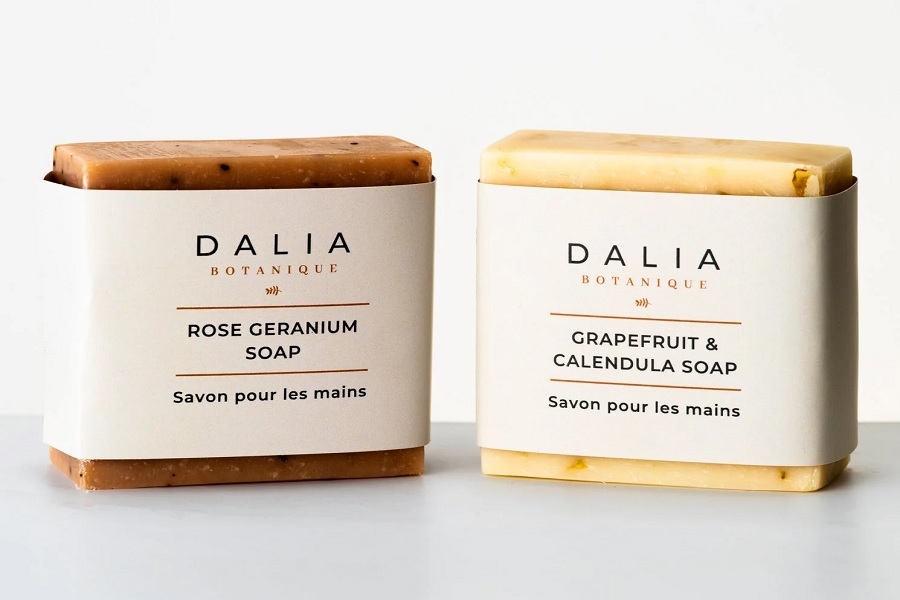
A cold-processed soap made with actual oils (olive, coconut, shea) cleans without stripping skin. A syndet bar -built on synthetic surfactants at skin-neutral pH -works for people who react to traditional soap. Either can be genuinely good. What to avoid is a commodity soap bar with a “natural” sticker, which typically is neither gentle nor particularly natural.

One well-made body bar replaces two to three standard bottles of liquid body wash. The water is gone, so the packaging is smaller, the shipping is lighter, and you are not paying to ship liquid around the country. A 2024 lifecycle assessment from CarbonBright found that shampoo concentrate in standard packaging produced around 1.01 kg of CO2 equivalent per use versus 1.25 kg for a full-size liquid bottle, with solid formats cutting the footprint further. The format works. The ingredient deck on the back tells you whether the specific bar works.

03. Shampoo and conditioner bars that actually wash

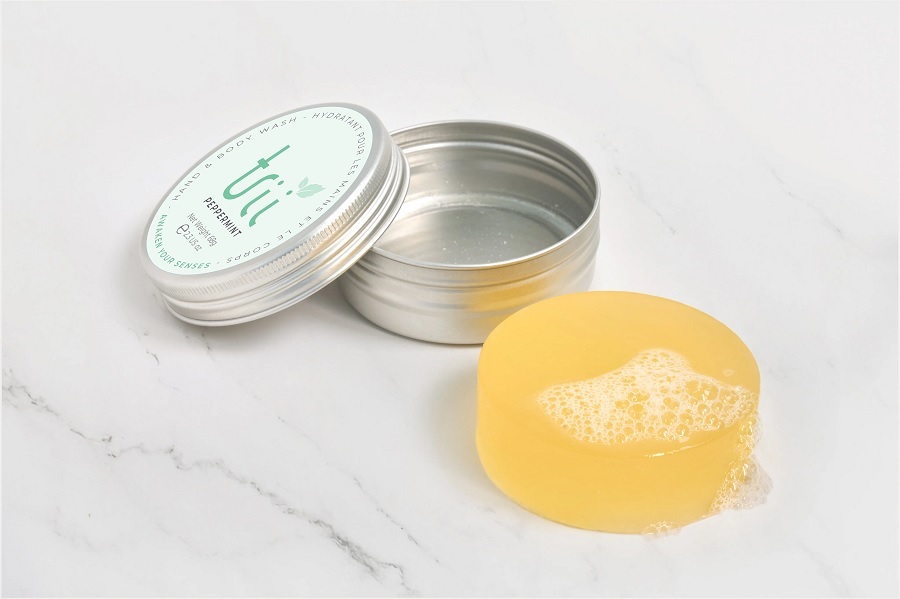
First-generation shampoo bars were scratchy. Second-generation ones are not. A sulphate-free, silicone-free bar delivers roughly 50 to 80 washes per bar if you store it properly, which roughly equates to two to three standard shampoo bottles.

refill vegan haircare
Brand: Indie Refill

The failure point is always storage. Leaving a bar in a puddle at the bottom of the shower is how you lose it in a fortnight. A draining dish, or better a tin that doubles as a travel case, is non-negotiable. Conditioner bars are the harder format to get right and where cheap bars quickly announce themselves on fine hair. Look for vegetable glycerin, cocoa butter or shea in the ingredient list rather than surfactants alone.

The Ellen MacArthur Foundation’s work on circular business models in beauty identifies personal care as one of the highest-impact categories for the switch from single-use to refill. Daily-use products compound fastest, which is exactly why shampoo is worth the effort.

04. Dental and deodorant, where daily use adds up

A toothbrush is replaced every three months. A lifetime of plastic brushes is a small pile of unrecyclable plastic no council stream touches. A bamboo handle with a replaceable bristle head cuts the waste to the bristle tuft. A stainless steel handle with a snap-in bamboo head does better again and lasts years.

Natural Vegan Deodorant
Brand: Kutis Skincare

For toothpaste, look for toothpowder in a glass or aluminium tin, or chewable tabs in cardboard or refillable glass. Fluoride versions of both exist for anyone following NHS and British Dental Association guidance on cavity prevention. Fluoride-free options exist too, if that is your preference, though the dental case for fluoride is strong.

For deodorant, a solid stick in a cardboard push-tube or a refillable aluminium case works for most people. Look for plant waxes, mineral powders and bicarbonate-based formulations rather than aluminium salts. Application is slightly different from a spray or roll-on and takes about a week to adjust to. After that most people find they prefer it.

05. Tools that last

Reusable cotton rounds in organic cotton or bamboo terry replace the disposable pads most removers are formulated around. A set of twelve, washed weekly with a bag of laundry, lasts a year or more. A good bamboo-handled brush with synthetic bristles, kept clean, outlives three generations of disposable applicators.

bamboo safety razor
Brand: Clean U Skincare

A well-made tool you keep for years beats any number of disposables.

For face tools -jade rollers, gua sha, dermarollers -the sustainability case runs the other way: longevity is automatic if the material is solid (stone, metal, glass). The question there is whether the tool does what the brand claims. Most of the evidence for facial-massage tools is anecdotal. They are pleasant to use. They move lymph. They do not replace sunscreen, sleep, or retinol.

Where to start on Ziracle

Every brand in our Beauty and Self-Care edit has passed the same standard: honest ingredients, transparent production, and packaging that earns its place rather than just its marketing. Filter by Plastic Free for the zero-waste formats, or by Refillable for the refill-first systems. For the wider view on swaps across the category, see our eco swaps for beauty guide.

If reactive or sensitive skin is why you started looking at this, Healthy Skin is the goal page we most often point people to.

Zero waste beauty is not a discipline of self-denial. The formats exist, the performance holds up, and the maths works the moment you commit to the first compact, the first bar, the first handle. Everything after that is refills.

FAQs

What actually makes a beauty brand “zero waste”?

A brand that designed the packaging out at the product stage, not one that bolted a recycling scheme onto the end. That means refillable formats, solid formulations, compostable wrappers or reusable containers as the default, not as a premium upsell. A useful test: if the brand’s lowest-waste option is also its cheapest per use, the model is genuine. If the zero-waste line is the premium tier, the strategy is marketing.

Do shampoo bars really last longer than liquid shampoo?

A well-formulated bar gives roughly 50 to 80 washes, which is about two to three bottles of standard liquid shampoo. The variable is storage. Keep the bar on a draining dish or in a tin that doubles as a travel case, and let it dry between uses. A bar left in a puddle dissolves in a fortnight. If you travel a lot, the format also clears airport liquid rules without a second thought.

Are refillable makeup compacts actually compatible across years?

Only if the brand commits to backward compatibility. Ask before you buy the first compact whether refills bought in two or three years will still fit the current shell. The good systems guarantee this, because the whole point of the format is retention. A refill system that goes obsolete every eighteen months is the worst of both worlds.

Is solid dental care as effective as toothpaste from a tube?

Toothpowders and chewable tabs with fluoride deliver the same active ingredient as standard toothpaste and meet the same dental guidance. The format has matured past its early limitations. The British Dental Association’s fluoride recommendations apply whether your paste arrives in a tube or a tin. Fluoride-free versions exist for anyone who prefers them, but the cavity-prevention case for fluoride is strong and worth knowing.

Do zero waste beauty products cost more?

Sometimes at the first purchase, almost never across a year. Refills typically come in 30 to 40% below the full-format price, and a solid bar outlasts the bottled equivalent by a factor of two or three. The payback usually sits inside the first re-purchase cycle. The exception is the very cheapest mass-market products, which are hard to beat on headline price but always beat on total cost of ownership.

Anti-Pollution Skincare, Without the Marketing Noise

||||||||||||||||||

Anti-pollution skincare is one of the few wellness categories where the underlying problem is genuinely serious and the marketing around it is genuinely excessive. The air in most UK cities is measurably damaging your skin, the evidence for that has been strong for well over a decade, and the industry has responded with hundreds of products, some of which do meaningful work and most of which just slap “anti-pollution” on a standard serum and raise the price. This is the version that separates them.

What pollution actually does to skin

The World Health Organization considers air pollution the single largest environmental health risk globally. The UK-specific picture is not quite as bleak as it used to be (nitrogen dioxide has fallen in most English cities since 2010) but it is still a problem. UK Government 2024 data shows London Marylebone Road exceeded the 10 µg/m³ PM2.5 target last year, and the WHO’s own guideline is half that, at 5 µg/m³. Most of the country, on that stricter measure, breathes air that is over the limit.

Skin, as the body’s largest organ and the one most directly exposed, takes the hit. The landmark 2010 Vierkötter study in the Journal of Investigative Dermatology was the first large epidemiological work linking airborne particulate matter exposure to measurable skin ageing in women. A follow-up Hüls study in 2016 found that women in high-PM areas had around 20% more pigment spots on the forehead and cheeks than those in cleaner air.

The mechanism is now well-characterised. PM2.5 particles are small enough to penetrate the skin barrier, where they generate free radicals, degrade collagen and elastin via matrix metalloproteinases, disrupt the skin’s microbiome, and erode tight-junction proteins like filaggrin. The end result, according to a 2025 review in the Annals of Dermatology, is accelerated wrinkles, pigmentation, inflammation, and a higher incidence of acne, eczema, and rosacea flares.

Two sentences worth holding onto. Pollution does not produce one new skin problem. It makes most of them worse.

Start here. The three things that actually matter

These come first, before any marketed “anti-pollution” product.

Superfood Cabbage & Cranberry & Hemp Anti-Pollution Deep Cleansing Oil & Makeup Remover | 100ml

01. Cleanse properly at night. The single most important thing you can do. Pollutant particles, PM2.5, soot, VOCs, deposit on the skin across the day and sit there oxidising until they come off. A thorough double cleanse (oil first to dissolve lipid-bound particulates and sunscreen, then a gentle second cleanse) removes most of what has accumulated. Skipping this step makes everything else you do less useful. Format recommendation: a plant-oil cleanser (jojoba, sunflower, hemp seed) for step one, followed by a pH-balanced syndet cleanser or gentle milk. Browse Face & Skincare for cleansing formats.

02. Use a vitamin C serum in the morning. The best-evidenced antioxidant for daytime skin protection. Vitamin C (ascorbic acid, usually at 10–20%) neutralises the free radicals that pollution generates, and a 2012 paper in the Journal of Investigative Dermatology confirmed it boosts the effectiveness of SPF against oxidative stress. Apply on clean skin, under moisturiser and sunscreen. Format recommendation: a stabilised L-ascorbic acid serum in airtight, opaque packaging (vitamin C oxidises on contact with light and air, which is why a clear-bottle serum that has gone orange in your bathroom is no longer working).

03. Sunscreen, every day, even in British winter. Pollution and UV are synergistic: a 2020 review in Current Environmental Health Reports found that PM’s damage is amplified by UV exposure and vice versa. SPF 30 minimum, broad spectrum, applied generously. This one non-negotiable finishes more of the job than most standalone “anti-pollution” products ever will. Browse Face & Skincare for SPF.

The supporting cast

04. Niacinamide. Strengthens the skin barrier and reduces transepidermal water loss, which is how pollution weakens skin in the first place. A 5% niacinamide serum or moisturiser alongside (not in the same step as) vitamin C is the quiet workhorse of anti-pollution routines.

05. A ferment or prebiotic to support the skin microbiome. The 2025 Annals of Dermatology review flagged that PM2.5 disrupts the skin microbiome, promoting inflammatory bacteria over the beneficial strains that keep skin calm. Fermented lysates, prebiotics, and probiotic extracts help rebuild that balance. The category is young, the evidence is still building, but the mechanism is sound.

06. A weekly clay or charcoal mask. For the deep-clean element. Activated charcoal and bentonite clay physically pull oxidised particulate matter and sebum from pores in a way daily cleansers cannot. Once a week is enough. More is drying.

07. An antioxidant-rich facial oil at night. Rosehip, sea buckthorn, marula, prickly pear. They deliver fat-soluble antioxidants (vitamin E, carotenoids, tocotrienols) that water-based serums cannot, and they seal in the rest of your routine. If you want to go deeper on this, the organic facial oils guide has more.

Ingredients with the strongest evidence

Vitamin C, niacinamide, vitamin E, ferulic acid, resveratrol, green tea polyphenols (EGCG), and astaxanthin all have reasonable clinical data behind their anti-pollution claims. The marketing term you will see often is “ectoin” — an extremophile-derived osmolyte used in some barrier-repair serums. The evidence is mostly industry-sponsored and the dermatology literature has not yet caught up, so treat it as promising rather than proven.

Ingredients marketed as anti-pollution that are just ingredients

Most “detox” claims are not mechanism, they are vibes. Kelp, algae, and cabbage extracts are perfectly fine skincare ingredients for other reasons (hydration, mild antioxidant effect), but the idea that they pull toxins from your skin in any meaningful way is not supported. Same with anything marketed as drawing “deep impurities” unless there is clay or charcoal doing the actual physical work.

Packaging matters for anti-pollution skincare specifically

This is a pollution article, so it is worth pointing out: most anti-pollution skincare is sold in hard-to-recycle mixed plastic, which contributes to the same problem the product claims to fight. Glass and aluminium, ideally refillable, solve this. Browse Beauty Refills for what this looks like in practice. If you want the wider context on microplastic shedding in cosmetics, the microplastics in cosmetics piece covers the detail.

The ones that aren’t ready yet

Pollution-protective SPFs with “anti-PM barrier” claims. The science here is thin. A good broad-spectrum SPF already does more than most of these pretend to, and paying a premium for the claim is not supported by independent data.

Ingestible anti-pollution supplements. The mechanism (systemic antioxidants reducing oxidative skin damage) is plausible; the evidence in humans is weak. Eating a plant-rich diet does most of what these promise, at a fraction of the price.

If you care about skin and you live in a UK city, the simple, boring version of this works: cleanse well at night, vitamin C in the morning, SPF every day, and a weekly deep clean. Everything else is refinement. The industry is selling you complexity; the dermatology is selling you consistency.

Ready to rebuild the routine? Explore Healthy Skin for the full edit.

FAQs

Does air pollution really damage your skin?

Yes, and the evidence is well-established. The landmark Vierkötter 2010 study in the Journal of Investigative Dermatology was the first to show airborne particulate matter was linked to measurable skin ageing in women. A 2016 follow-up found roughly 20% more facial pigment spots in women living in high-PM areas. A 2025 review in the Annals of Dermatology confirms pollution accelerates wrinkles, pigmentation, and inflammation, and worsens acne, eczema, and rosacea.

What is the single most important anti-pollution step?

A thorough cleanse at the end of the day. Pollutant particles accumulate on skin across the day and oxidise there until they come off. A double cleanse (oil first, then a gentle second cleanser) removes most of what has settled on the skin. Skipping this step makes every other anti-pollution product less effective.

Is vitamin C actually evidence-based for this?

Yes. It is the best-evidenced topical antioxidant for daytime use. A 2012 paper in the Journal of Investigative Dermatology showed vitamin C neutralises pollution-generated free radicals and boosts the effectiveness of sunscreen against oxidative stress. Look for 10–20% L-ascorbic acid in opaque, airtight packaging. If your serum has gone orange, it has oxidised and stopped working.

Do I need a dedicated anti-pollution product?

Probably not. A well-formulated vitamin C serum, a good cleanser, SPF, and a niacinamide moisturiser cover almost everything an “anti-pollution” line claims to do, usually with better-established ingredients and without the premium. The exception is a weekly clay or charcoal mask, which physically removes deposited particulate in a way other products cannot.

How bad is UK air pollution for skin?

Worse than most people assume. The UK Government’s 2024 compliance data showed one London monitoring site still exceeded the national PM2.5 target of 10 µg/m³ last year, and the WHO’s stricter guideline is 5 µg/m³, which most urban areas of the UK exceed. Chronic exposure at these levels is enough to accelerate extrinsic skin ageing, on the evidence available.

Is Wool Sustainable? The Honest Answer

|||||||

The leather debate tends to grab the attention, but wool sits in a strikingly similar spot. Cattle have to be killed for leather. Sheep don’t have to be killed for wool. That single difference is often where the conversation stops, and the assumption is that wool must therefore be the kinder, more sustainable option.

The reality is more complicated. Wool accounts for around 1% of global fibre output, according to the International Wool Textile Organisation, but that small share still runs through the lives of over a billion sheep and a production system that carries serious welfare and climate costs. That’s a lot of animals, a lot of land, and a lot of methane.

So can wool be part of a sustainable wardrobe, or is it time to retire it? Here’s what the industry actually looks like, why it’s a harder conversation than it first appears, and what the alternatives can realistically do.

Why we’ve used animal fibres for so long

Natural fibres have been used in every culture on earth for clothing, storage, rope, fishing nets, basic building materials. What people used depended on what grew or grazed nearby, and the result was a mix of plant fibres like linen and hemp and animal fibres like wool, silk and cashmere.

Wool became a staple in colder climates for good reason. It’s warm, breathable, flame-resistant, naturally moisture-wicking, and it holds its shape in a way few other fibres can. A 2016 technical review in Animal Frontiers set out the properties that have kept wool in use for millennia: thermal regulation across temperature ranges, elasticity, and durability that outlasts most synthetics. That list explains why wool has been hard to displace. It performs.

The question isn’t whether wool does the job. It does. The question is whether the way it’s produced today can be reconciled with what consumers now expect from their clothes, and with what the climate can afford.

What modern wool production actually involves

The mental image most of us have of wool is a small flock of sheep grazing on a hillside, shorn once a year by a friendly farmer in wellies. Industrial wool production at scale doesn’t look like that, and undercover investigations have repeatedly exposed cruelty on farms the industry considered standard.

One of the most widely documented practices is mulesing. According to the RSPCA, mulesing involves cutting strips of skin from around a lamb’s breech using sharp shears, so that the scarred skin is less susceptible to flystrike. It’s usually carried out during lamb ‘marking’ when the lamb is between two and ten weeks old. Marking often clusters several painful procedures on the same day: mulesing, tail docking, castration, ear notching, vaccination. Pain relief isn’t always provided.

There’s an ongoing industry shift towards pain relief and non-mulesing Merino breeds, particularly in Australia where the practice is concentrated, but progress is uneven. Shoppers who want to avoid mulesed wool generally need to look for explicit certification rather than assume it.

The second issue is climate. Sheep are ruminants, which means they produce methane as part of their digestive process. A 2017 study published in Environmental Science and Technology found that wool has one of the highest greenhouse gas footprints per kilogram of any common apparel fibre during the production phase, driven primarily by enteric methane emissions from sheep. Land use compounds this. Sheep need space, and their impact on soil, vegetation and biodiversity accumulates over time.

Wool carries one of the highest greenhouse gas footprints of any common apparel fibre at the production stage.

A nuanced conversation, not a clean one

Campaigns like Fashion Revolution’s #IMadeYourFabric stories have put the people behind the supply chain in front of consumers for the first time. The reactions the campaign has surfaced say something about where consumer attitudes have moved. Animals are increasingly seen as sentient beings rather than raw material, and the ethical footing of the industry is shifting underneath producers who were following the rules as they were taught them. That’s uncomfortable, and it needs to be held alongside the fact that farmers need to earn a living and deserve a fair conversation about their future.

It also means the question isn’t just ‘is wool ethical?’ but ‘what else could farmers be doing with the same land?’ Research from the University of Leeds has modelled how removing a fraction of grazing land and allowing it to return to forest or regenerative landscapes could significantly reduce UK agricultural emissions while maintaining rural livelihoods through carbon payments and nature-based income. Sheep farming at current prices is often marginal without subsidy. Other land uses are starting to pay farmers better, restore the land, and reduce atmospheric carbon at the same time.

Personal ethics will always play a role in what each of us considers acceptable. The justification for virgin animal fibres is getting thinner every year, not because farming is inherently wrong, but because there are now good alternatives for almost every use case. When animals are treated as a disposable commodity in pursuit of margin, their welfare gets squeezed in predictable ways.

What the alternatives actually look like

Wool is more biodegradable than oil-based synthetics like polyester, and that’s a real advantage at end of life. But weighed against the full set of fibres now available, its welfare and climate footprint put it lower down the list than most plant-based options and several of the newer semi-synthetics.

Organic cotton, linen and hemp all perform well in knitwear, layering and everyday wear, with much lower water and pesticide profiles when certified organic. Tencel, made from wood pulp using a closed-loop solvent process, performs especially well against wool for softness, drape and moisture management. For warmer garments, recycled wool is another option, reusing fibres that have already been through the supply chain rather than producing new ones. The same logic applies to recycled cashmere.

Lab-grown and bio-engineered fibres are starting to appear too, including protein-based fibres spun from agricultural waste. Most are still at early-stage commercial scale, but they show how quickly the fibre mix is changing.

Knitwear for the modern era

One of the most common objections is that wool is essential for knitwear. The reasoning usually goes: you want a jumper that’s warm, soft, holds its shape and lasts, so you need wool. That used to be broadly true. It’s no longer.

A new generation of knitwear brands is working with natural plant fibres to produce pieces that handle cold weather, wash well and age gracefully. Peruvian Pima cotton has become a favoured alternative in the space: its exceptionally long staple fibre gives it softness, strength and colour-holding qualities that rival wool for most wardrobe uses. Komodo carries knitwear in organic cotton and other plant fibres on Ziracle.

What’s more interesting than the material is the philosophy behind it. The best of these brands design for what might be called ‘selecting rather than accumulating’: pieces made to be worn often, kept in good condition, and passed through wardrobes for years rather than seasons. Each piece earns its place over time, rather than being pushed through the wardrobe by the next trend cycle.

That approach matters almost more than the fibre choice. Even the most sustainable material becomes a problem if it’s churned through a seasonal trend cycle. Knitwear that lasts is knitwear that gets worn.

Good things are worth fighting for

The fashion and textiles industry is global, interconnected and deeply tangled. Farming, spinning, dyeing, manufacturing and distribution systems have been built up over generations, and they won’t switch away from animal fibres overnight. What can change, and what’s already changing, is the mix of what we buy.

Buy less wool. Make the wool you already own last. When you do buy new, choose recycled, certified ethical or plant-based alternatives. For the broader picture, read our guide to can leather be sustainable and our guide to eco swaps for fashion.

Every brand in the Apparel and Style category on Ziracle has passed the same standard: kind to the people making the clothes, transparent about materials and supply chain, built to last longer than a season. For anyone avoiding animal fibres specifically, filter by Vegan and Cruelty Free to find pieces made without wool, silk or cashmere.

Ready to shop? Browse the Knitwear edit and find pieces made to outlast the trend cycle.

FAQs

Is wool really worse for the climate than polyester?

At the production stage, yes. A 2017 study in Environmental Science and Technology found wool has one of the highest greenhouse gas footprints per kilogram of any common apparel fibre during the production phase, driven by methane emissions from sheep. Polyester has a lower production footprint per kilogram but sheds microplastics in every wash and doesn’t biodegrade. Both have real environmental costs. The better option is usually recycled wool, organic natural fibres, or semi-synthetics like Tencel, depending on the use case.

What’s mulesing and how do I avoid mulesed wool?

Mulesing is the practice of cutting strips of skin from around a lamb’s breech to reduce the risk of flystrike later in life. It’s concentrated in Australian Merino farming and is typically done when lambs are two to ten weeks old, often without pain relief. The most reliable way to avoid mulesed wool is to look for certifications like Responsible Wool Standard (RWS), ZQ Merino, or SustainaWOOL, all of which require non-mulesed sourcing. Some brands also specify ‘non-mulesed’ directly on product pages.

Is recycled wool actually better than new wool?

Yes, meaningfully. Recycled wool reuses fibres that have already been through the supply chain, avoiding the need for new sheep, new grazing land, and new methane emissions. The processing is lower-impact than producing new wool from scratch. The trade-off is that recycled wool is usually slightly less fine and less soft than virgin wool, though the gap has narrowed as processing has improved. For most wardrobe uses, recycled wool delivers comparable performance at a fraction of the footprint.

Can plant-based knitwear really keep you warm?

For most UK winter temperatures, yes. Peruvian Pima cotton, Tencel and hemp-cotton blends can be knitted at weights and densities that compete directly with wool for warmth. Where wool still holds a specific advantage is in extreme cold (mountain weather, prolonged outdoor exposure) where its thermal regulation remains unmatched. For city wear, commuting and layering, plant-based knitwear is a credible substitute. For the Cairngorms in February, wool still wins.

Should I throw out my existing wool clothes?

No. The most sustainable item you own is the one you already have, whatever it’s made of. The manufacturing and welfare cost is already sunk. Wear and repair what you’ve got until it wears out, then replace with recycled wool or a plant-based alternative. Giving wool items a second life through resale or charity donation is also valuable, because it extends the garment’s active life and displaces a new purchase somewhere else in the system.

Self-Care Guide: The Maintenance that Keeps Everything Else Running

||||||||

Stress doesn’t stay in your head. It settles in your body, disrupts your sleep, and weakens your immune system over time. Self-care isn’t a luxury or a reward. It’s the maintenance that keeps everything else running.

Why self-care matters more than you think

You’ve probably heard the empty cup metaphor before. It’s overused because it’s true. When you’re running on fumes, everything costs more: your energy, your patience, your ability to make good decisions. The NHS Five Steps to Mental Wellbeing consistently shows that small, regular practices outperform reactive fixes. You don’t need a crisis to start taking care of yourself. You need a Tuesday.

Chronic stress suppresses your immune function, raises cortisol, and disrupts sleep architecture. A 2017 meta-analysis in Brain, Behavior, and Immunity synthesising data across decades of research found that psychological stress measurably increases inflammatory markers in the body, including C-reactive protein and interleukin-6. The connection between mental load and physical health isn’t theoretical. It’s measurable, and it’s the reason self-care belongs in the same category as brushing your teeth: non-negotiable maintenance.

Self-care as prevention, not recovery

The best time to sleep well is before you’re exhausted. The best time to move your body is before anxiety locks up your chest. Self-care gets positioned as something you earn after a hard week. That framing is backwards. It’s preventative.

The research on journalling supports this clearly. A 2018 study in JMIR Mental Health led by researchers at University College London found that participants who wrote about stressful experiences for a few minutes a day over a month reported meaningful reductions in anxiety and depressive symptoms compared with a control group, with effects persisting at follow-up.

This means choosing small, regular practices over grand gestures. A ten-minute journalling session most mornings moves the needle more than a one-off spa day. A walk outside three times a week does more for your stress levels than any single intervention. The consistency is what builds resilience. Think of it like compound interest for your nervous system.

If stress management is something you’re actively working on, our guide to self-care for stress goes deeper on the specific practices that help most.

What self-care looks like when it’s working

Self-care is specific to what your body is actually asking for. If you’re wired and anxious, a high-intensity workout won’t help. If you’re flat and unmotivated, rest isn’t what you need. Movement is. This is where paying attention to yourself becomes the practice.

Journalling works because it externalises the noise. You’re not trying to solve anything. You’re emptying your mind onto a page. Within a few weeks, patterns emerge. You notice what actually drains you and what restores you. Then you build your routine around those truths rather than around what you’ve been told you should want.

Your body doesn’t distinguish between types of stress. A work deadline triggers the same cortisol response as a near-miss in traffic. Harvard Health explains this well: the fight-or-flight response was designed for physical danger, but modern life triggers it constantly. The antidote is movement. A 2023 umbrella review in the British Journal of Sports Medicine synthesising 97 meta-analyses found that regular physical activity produced reductions in symptoms of depression and anxiety comparable in magnitude to psychotherapy for many populations. Twenty minutes of anything that raises your heart rate signals to your nervous system that the threat has passed. That’s the reset.

You’re not trying to solve anything. You’re just emptying your mind onto a page.

Sleep is the foundation of everything else

When you’re stressed, sleep becomes fragile. The advice about wind-down routines and screens off by 10pm is real, but the deeper piece is consistency. Your body runs on circadian rhythms. Going to bed at the same time most nights, even when you don’t feel tired, builds sleep resilience over weeks. The Sleep Foundation recommends keeping your schedule within 30 minutes of the same time, including weekends.

Caffeine has a half-life of around five hours, according to a 2023 review in the journal Sleep. A coffee at 4pm is still half-active at 9pm. Alcohol disrupts REM sleep even when it feels sedating. These aren’t opinions. They’re pharmacology. If you’re working on your sleep, these two interventions make the biggest difference before you change anything else. For the full walkthrough, see our how to sleep better guide.

For products and routines that support your nervous system, browse the Stress and Sleep edit.

The tools that make the practice stick

A notebook and pen are enough. Having something you actually want to write in makes it more likely you’ll use it. A journal with paper you enjoy touching feels different from a scrap of paper. Similarly, if movement is your anchor, a mat you like unrolling matters more than the perfect yoga sequence. These aren’t fancy needs. They’re practical: the tools work better when you’re more likely to reach for them.

The same principle applies to the rest of your routine. A candle you light most evenings, a robe you actually want to wear when you get out of the shower, a supplement you take with your morning coffee because the ritual of it has become automatic. Products that support your self-care routine, from skincare to home environment, are worth choosing with care. Browse the Beauty and Self-Care and Wellness and Vitality categories for options that have already passed the quality and ethics bar.

When self-care isn’t enough

This matters most. Self-care practices help you manage stress and improve your baseline. They don’t replace professional support. If you’re experiencing depression, anxiety, burnout, or any mental health condition, a journal and a yoga mat won’t fix it. They might help you feel slightly better while you get actual help.

The NHS talking therapies service is free, self-referral, and available across England. The Samaritans are available on 116 123, free, 24/7, if you need to talk to someone tonight. Your GP is the starting point for ongoing support.

Self-care isn’t selfish. It’s the only way to show up for anything else. Start with one practice: a morning journal, a consistent bedtime, a walk three times a week. Build it for two weeks before adding another. That’s the whole method. Your body will tell you what matters next.

For more on specific practices, read our guides to daily habits for mental health and how to practise self-love.

Ready to build your routine? Browse the Reduce Stress edit and start with one product you’ll actually use.

FAQs

Does self-care actually work, or is it just marketing?

The face-mask-and-candle version does modest work at best. The practice-based version (consistent journalling, regular movement, sleep hygiene, structured time off screens) has a substantial evidence base. A 2018 UCL study in JMIR Mental Health found measurable reductions in anxiety and depressive symptoms from a few minutes of daily expressive writing. A 2023 umbrella review in the British Journal of Sports Medicine found regular physical activity produced effects on depression and anxiety comparable in magnitude to psychotherapy for many populations. The ritual itself matters less than the routine it supports.

How long before self-care practices start to feel like they’re working?

Two to four weeks of consistency is the window most research measures, which is why starting with one practice and giving it a fortnight before judging it is the realistic approach. Gratitude journalling, breathwork and movement all show up in trials with measurable effects at four weeks. Sleep routines can take longer because circadian rhythms adjust slowly. Supplements like ashwagandha typically need eight to twelve weeks before their effects are clear. Consistency matters more than intensity.

What’s the difference between self-care and self-indulgence?

Self-care is the maintenance of your capacity to function and feel well over time, usually involving small repeated actions that aren’t particularly exciting: sleep, movement, boundaries, connection, time outdoors. Self-indulgence is the occasional treat (a takeaway, a late night, a bottle of wine) which has its place but doesn’t do the underlying work. Both are fine. The confusion is treating self-indulgence as a self-care strategy. A bubble bath every Sunday is self-care if it’s part of a broader routine; it’s not self-care if your sleep is shot and your relationships are strained and the bath is the only thing you’re doing.

What should I do first if I’ve never really done this?

Pick one thing and do it for two weeks. Write three lines in a journal every morning before you open your phone. Walk for 20 minutes three times a week, outside if possible. Go to bed within 30 minutes of the same time most nights. Any one of these, held for a fortnight, will tell you more about what your body needs than reading about self-care will. Add another practice when the first one has started to feel automatic, which usually takes longer than you’d expect.

When should I see a GP instead of trying to manage this myself?

If symptoms are affecting your sleep most nights for more than a few weeks, if you’re having panic attacks, if your mood is persistently low, if you’re having thoughts of harming yourself, or if work and relationships are being materially affected. Self-care is useful for everyday maintenance of mental health. It isn’t a substitute for clinical support. The NHS talking therapies service is free, self-referral and available across England. The Samaritans are free and available 24/7 on 116 123.

The Best Organic Facial Oils for Skin that’s Starting to Show its Age

|||||||||||||||

Here is something worth getting straight from the top: the article you are probably looking for is called “essential oils for wrinkles,” and it is the wrong article. Essential oils are the volatile, aromatic compounds, frankincense, ylang ylang, rose otto. They smell beautiful and they do some things, but they are not what actually works on fine lines. What works is facial oils, also known as carrier oils, the heavier plant-pressed lipids like rosehip, argan, and jojoba. The distinction matters because it changes what you buy. Get the right one and you have a genuinely useful addition to your skincare. Get the aromatherapy blend and you have something that smells lovely and does very little for your skin.

What actually causes the signs that bother people

Free radicals, UV exposure, and a slowdown in natural oil production. A 2020 review in Current Environmental Health Reports confirmed that traffic-related pollution and UV are the two biggest accelerants of extrinsic ageing, working synergistically. Intrinsic ageing adds its own layer: after roughly age 30, collagen production drops by around 1% a year, sebum output falls, and the lipid barrier thins. The result is drier, thinner, more reactive skin that shows damage more easily than it used to.

Facial oils address two of those three things directly. They replace lost lipids, and the better ones bring antioxidants that neutralise free radicals. They will not undo UV damage, and they are not a substitute for sunscreen or retinol. What they are is the quietly effective, evening-based workhorse that most anti-ageing routines benefit from.

The ones with the strongest evidence

Work top to bottom. These are ordered by the strength of the clinical data behind them, not by price or novelty.

01. Rosehip seed oil (Rosa canina). The most interesting plant oil in skincare. It contains naturally occurring trans-retinoic acid (the active form of vitamin A, the same molecule as prescription tretinoin) at concentrations between 0.01% and 0.1%, per a 2015 analysis in Skin Pharmacology and Physiology. A 2015 randomised trial in Clinical Interventions in Aging gave 34 adults aged 35–65 a standardised rosehip preparation for eight weeks and measured significant reductions in crow’s-feet wrinkles and improvements in skin moisture and elasticity. A smaller 2025 pilot study in MDPI Cosmetics found measurable wrinkle and UV-spot reduction after five weeks of topical use. Format recommendation: cold-pressed, unrefined, stored in dark glass. Oxidises quickly, so buy small bottles and keep them out of sunlight.

02. Argan oil. Rich in vitamin E, squalene, and linoleic acid. A 2015 study in Clinical Interventions in Aging found that daily application to the face increased skin elasticity measurably over 60 days in postmenopausal women. Best for people whose main issue is dryness and a thinning barrier rather than hyperpigmentation.

03. Squalane (plant-derived, usually olive). Not strictly an oil, but the closest mimic of the skin’s own sebum, which makes it exceptionally well-tolerated. Sits under or over other oils without interfering. No strong anti-ageing data of its own, but it solves the delivery-vehicle problem for everything else in the routine.

04. Jojoba oil. Also a wax ester rather than a true oil, also very close to sebum in structure. Good for oily or combination skin that cannot tolerate heavier oils. Mild evidence for barrier support; not a standalone anti-ageing agent.

05. Sea buckthorn oil. Very high in vitamin C, carotenoids, and omega-7. Antioxidant-rich. Will stain cotton a faint orange if you use too much, which is a good reminder that you almost certainly are. A few drops, no more.

06. Marula oil. High in monounsaturated fats and tocopherols. Lighter texture than rosehip, less prone to oxidation. Limited direct clinical data, but the lipid profile is genuinely good.

The role essential oils actually play

Essential oils (frankincense, ylang ylang, sweet orange, lavender) appear in most “anti-ageing facial oil” blends at 0.5–2% for fragrance, mood, and mild antioxidant contribution. That is a legitimate role, but it is supporting, not leading. Frankincense in particular is often marketed as a cell-regenerative active; the evidence is limited to in vitro work on boswellic acids and has not been replicated on human facial skin. Enjoy the scent, do not pay a premium for the claim.

One note of caution: citrus essential oils (bergamot, sweet orange, lemon) can be mildly phototoxic, so a blend that contains them is best used at night only, not in the morning.

How to use a facial oil without wasting it

Clean, slightly damp skin. Four to six drops warmed between clean palms, then pressed into the face rather than rubbed. If the skin is already treated with a water-based serum, the oil goes last, sealing everything in. If oil is the only leave-on step, a heavier moisturiser is not required; the oil does the barrier work.

One thing that sabotages oil use more than anything else: applying it under SPF in the morning. Most mineral and hybrid sunscreens do not play well with a heavy oil underneath, and the finish tends to pill. Oils work best as a nighttime step. If you want a morning option, squalane or jojoba are the ones that layer well under most sunscreens; leave the heavier oils for evening.

The ones that aren’t ready yet

“Anti-ageing” essential-oil blends without a substantial carrier-oil base. If the ingredient list starts with rose or frankincense before any carrier is named, you are paying for fragrance at skincare prices.

CBD facial oils marketed for wrinkles. The skincare evidence is genuinely thin. CBD may help with inflammation and reactive skin, which is useful, but it is not an anti-ageing ingredient on any rigorous reading of the data.

Anything promising to “boost collagen” topically without retinoids, vitamin C, or peptides. These are the three ingredient classes with credible topical collagen evidence. A facial oil alone does not belong in that category.

If you live in a UK city, the useful version of all this is short: a rosehip or rosehip-argan blend at night, a vitamin C serum in the morning, daily SPF, and sleep. Everything else is refinement.

Browse Oils & Balms for the edit, or explore Healthy Skin for the full routine.

FAQs

What’s the best facial oil for fine lines?

Rosehip seed oil has the strongest clinical evidence for reducing the appearance of fine lines. A 2015 randomised trial in Clinical Interventions in Aging, using a standardised rosehip preparation on 34 adults aged 35–65, found measurable reductions in crow’s-feet wrinkles and improvements in elasticity after eight weeks. The active ingredient is trans-retinoic acid, the same molecule as prescription retinoids, present naturally at low concentrations in cold-pressed rosehip oil.

Are essential oils actually good for wrinkles?

Not really, and this is worth getting right. “Essential oils” (frankincense, ylang ylang, lavender) are the fragrance fraction of most facial-oil blends. They contribute a mild antioxidant effect and a pleasant scent, but the clinical evidence for wrinkle reduction sits with the carrier oils (rosehip, argan, jojoba), not the essentials. Be cautious of products that lead with essential-oil marketing.

How long does it take to see results?

Five to eight weeks of daily consistent use is the honest answer, based on the clinical trial data. The 2015 rosehip trial measured results at 8 weeks. The 2025 MDPI Cosmetics pilot saw changes by 5 weeks. If a product promises visible results overnight, it is selling you hydration, not structural change.

Can I use facial oil instead of moisturiser?

For some skin types, yes. A good plant oil provides lipid barrier support, locks in water, and delivers antioxidants in a single step, so a separate moisturiser is often unnecessary, especially at night. If your skin is very dry or very dehydrated, layering a water-based serum or hydrator under the oil works better than oil alone. Combination and oily skins usually prefer jojoba or squalane, which are the closest mimics of natural sebum.

Why do facial oils go rancid?

Oils oxidise when exposed to light, heat, and air, and oxidised oils on skin cause free-radical damage rather than preventing it. This is why the packaging matters: dark glass, small sizes, a pump or dropper rather than an open-mouth bottle, and ideally a vitamin E component to slow oxidation. If an oil smells sour, waxy, or markedly different from when you bought it, it has gone off. Replace it.

Natural Ways to Boost Serotonin and Dopamine

||||||

Flat Tuesday mornings. Coffee in, emails open, nothing lifts. Not depression, exactly. Just off. The fix is probably not another wellness trend. It is two specific brain chemicals, serotonin and dopamine, and a handful of small things that shift them.

The Office for National Statistics reported in 2022 that one in six UK adults experience moderate to severe depressive symptoms. Medication is the right answer for many, and Mind UK has the clearest evidence-based information on it. This article is not a replacement for that. It is what the research says about daily choices that move the same dials.

What the two chemicals actually do

Serotonin is the one that makes you feel settled. It regulates mood, sleep, appetite, and digestion. When it runs low the body notices before the mind does: restless nights, a flatter emotional baseline, a gut that feels off.

Dopamine is the one that makes you want to get out of bed. It drives motivation and the brain’s reward system. Low dopamine shows up as listlessness and the strange feeling that things you normally enjoy have lost their colour.

The distinction matters because the fixes differ. You need both working, and it helps to know which one is missing.

01. Feed the gut, not the brain

Around 90% of the body’s serotonin is produced in the gut, not the brain. A 2015 Caltech study, published in Cell, identified specific gut bacteria that drive this production. The gut speaks to the head through the vagus nerve, which means that feeding your microbiome is the most direct route to a steadier mood.

Tryptophan is the raw material. The body cannot make it, so it has to come from food: butternut squash seeds, walnuts, oats, tofu, eggs, bananas. Research in Nutrients found tryptophan pairs best with a carbohydrate, which helps it cross the blood-brain barrier. Almonds with oatcakes works better than almonds on their own.

Full guide: how food affects mood. Shop: Gut Health.

02. Move for 20 minutes, most days

Credit: Andrew Tanglao

The single most reliable lever. A 2017 review in Brain Plasticity, led by neuroscientist Wendy Suzuki at New York University, found that a single bout of aerobic exercise raises both dopamine and serotonin, and that regular movement strengthens the neural pathways that produce them.

Twenty minutes is enough. Mode matters less than consistency: a brisk walk, a yoga flow, a cycle to work. Most people notice the shift within days, not weeks. It is measurable biology, not placebo.

03. Use scent deliberately

Bergamot, lavender, and lemon essential oils reach the limbic system directly through the olfactory nerve, which is why they act faster than most interventions. A 2019 review in Frontiers in Pharmacology found measurable anxiolytic and mood-elevating effects across multiple clinical studies of lavender in particular.

The trick is to use the same scent in the same way, repeatedly. Lavender on your pillow. Bergamot in the diffuser at 4pm. The nervous system learns to associate the scent with settling, so the effect compounds. Shop: Aromatherapy.

04. Meditate, briefly, daily

Credit: Daniel Mingook Kim

Even short meditation sessions activate dopamine release in the brain’s reward centre. A 2002 study in Cognitive Brain Research, using PET imaging at the John F. Kennedy Institute in Copenhagen, found a 65% increase in endogenous dopamine release during yoga nidra meditation compared to rest. Longitudinal studies since have found measurable increases in grey matter density in regions linked to attention and emotional regulation.

Five minutes counts. The method that matters is the one you will actually do. Full guide: how to add meditation.

05. Sunlight, early

Morning light exposure is the clearest non-pharmacological regulator of serotonin in the literature. A study in The Lancet led by neurologist Gavin Lambert at the Baker Heart Research Institute found brain serotonin turnover rises in direct proportion to the hours of bright sunlight on any given day, regardless of season.

Ten minutes outside before 10am, without sunglasses. It also anchors your circadian rhythm, which sorts out sleep, which sorts out most of the rest. Shop: Reduce Stress.

06. Cold exposure, with caveats

Cold water immersion has become the dopamine trend of the last few years, largely on the back of research from Czech physiologist Petr Šrámek, whose 2000 study in the European Journal of Applied Physiology found a 250% increase in dopamine following one hour of cold-water immersion at 14°C. That is a striking number, but the dose used in the study is far from a 30-second cold shower.

A cold shower still has value: it sharpens alertness and delivers a short noradrenaline kick. Just do not expect the dopamine curve from the study. And if you have a heart condition, ask your GP first.

07. Protein at breakfast

Credit: Better Nature | veo.world/betternature

Dopamine is built from the amino acid tyrosine. Eating protein at breakfast, rather than leaving it until lunch, gives the brain the building blocks earlier in the day, when motivation is most needed. Eggs, Greek yoghurt, lentils on toast, tofu scramble. Nothing elaborate. Shop: Nutrition & Superfoods.

08. Sleep before optimisation

This one sits last because it is the easiest to skip and the hardest to fake. A 2007 study in Neuropsychopharmacology found that even one night of poor sleep reduces dopamine receptor availability the following day. Every other item on this list works better when sleep is handled. Build sleep first. The rest is leverage.

Medication and natural strategies are not either-or

If you are on SSRIs or another mood medication, these practices run alongside it, not instead of it. Medication resets the baseline; daily practices optimise from there. Do not change a prescription without your GP. Many people find the natural strategies only start to land once medication has done the heavier lifting first.

The ones that sound important but aren’t

Adaptogenic mushrooms and nootropic stacks. The clinical evidence is thin and the marketing is loud. Not a waste of money necessarily, but nowhere near the return of the items above.

Dopamine detoxes. Not a neurochemically coherent concept. Reducing compulsive phone use is a good idea for attention and sleep. Framing it as a detox misunderstands how dopamine works.

Serotonin supplements. You cannot supplement serotonin directly; it does not cross the blood-brain barrier. 5-HTP and tryptophan supplements exist but interact with SSRIs and other medications. Food first, supplement only with medical advice.

If the day ahead looks flat, the chemistry is addressable. Start with movement and morning light. Add protein at breakfast. You will notice the shift within the week.

Ready to build the routine? Browse the Reduce Stress edit and pick one place to start.

FAQs

What actually raises serotonin naturally?

Sunlight, movement, and tryptophan-rich food, in that order of reliability. Morning light has the clearest evidence base for serotonin specifically. A 2002 study in The Lancet found brain serotonin turnover rises in direct proportion to hours of bright light exposure each day. Pair that with twenty minutes of movement and tryptophan at meals, and you have the three highest-return levers.

What raises dopamine without supplements?

Protein at breakfast (for the tyrosine), short daily meditation, and sunlight. A 2002 study at the John F. Kennedy Institute found meditation produced a 65% increase in dopamine release compared to rest. Morning light and protein front-load the system for the day. Brief cold exposure adds something, but less than the headlines suggest at domestic doses.

Can I do this if I’m already on antidepressants?

Yes, alongside your medication, not instead of it. SSRIs change the baseline availability of serotonin in the brain, and daily practices optimise from that baseline. Some supplements (notably 5-HTP and St John’s Wort) interact dangerously with SSRIs, so food-first is the safer route. Speak to your GP before adding any supplement.

How long before I notice a difference?

Movement and sunlight produce shifts within days. Dietary changes take a week or two to register, because the gut microbiome takes time to adjust. Meditation compounds over weeks, which is why it is the easiest to quit before it starts working. Give any single change two weeks before judging.

What about gut health and mood?

Around 90% of serotonin is produced in the gut, not the brain. A 2015 Caltech study identified specific gut bacteria that drive production. Feeding the microbiome (fibre, fermented foods, tryptophan-rich foods) is one of the most direct mood interventions available, and one of the slowest to be felt, which is why people give up on it. Consistency matters more than intensity.

Is Foraging the Next Step for Slow Beauty?

|||||||||||||||

Benzoyl peroxide. Dihydroxyacetone. Glycerin. Emollient. The ingredients list on most skincare products reads like a chemistry paper. Many of those ingredients are harmless, some are useful, and a fair number are there mainly to extend shelf life. All of them come wrapped in beautiful packaging with a price tag to match.

Slow beauty is a direct response to that status quo, asking the same questions slow fashion asks but about what we put on our skin. Fewer ingredients. Local and seasonal where possible. Less packaging, less shelf-life engineering, and more attention to the full journey of the product. Foraging for your own skincare ingredients sits comfortably inside that movement, and it’s a surprisingly practical place to start if you want a near-zero-waste beauty routine.

Foraging is the practice of sourcing ingredients from the wild, most often for food, but also for home remedies and skincare. There’s an abundance of natural ingredients with skincare benefits growing in British woodlands, hedgerows and gardens, and many of them can be combined with other natural sources to produce serums, toners, scrubs and bath salts. Most cost little to nothing beyond the effort of finding them.

Natural ingredients grow by season, so you can’t forage the same things all year. Here’s a seasonal guide to the most useful plants for skincare, where to find them, and four recipes to get started. A few important notes on safety first.

A note on foraging safely

Before you head out, read the Woodland Trust’s foraging guidelines. The short version: only forage what you can identify with total confidence, take small amounts from abundant sources, never uproot plants (which is illegal on land you don’t own under the Wildlife and Countryside Act 1981), and never forage in protected sites.

Plant identification matters enormously. Some plants that look edible are toxic, and several common look-alikes can cause serious harm. If you’re in any doubt, leave it alone and check a reliable reference like Kew’s guide to poisonous plants or go with someone experienced. When you’re foraging for skincare in particular, patch-test on a small area of skin before applying anything more widely. Natural doesn’t automatically mean non-irritant.

One more thing. The NHS is clear that herbal and plant-based products are not a substitute for medical treatment. If you have a persistent skin condition, see a dermatologist. Foraged skincare is for everyday routines, not for treating serious issues.

Spring

Chickweed

Where: shady, moist locations including gardens and woodland edges. Chickweed forms small low-growing mats with distinctive white star-shaped flowers.

image of chickweed growing between light grey rocks

Benefits: chickweed has traditionally been used to soothe a range of skin issues thanks to its natural antiseptic, antifungal and anti-inflammatory properties. It’s often used as a quick remedy for itchiness and surface irritation.

Dandelion

Where: dandelions prefer moist, sunny areas, only going dormant in the coldest winters. They’re one of the easiest foraging plants to find in the UK because they grow almost everywhere, including lawns and pavements.

dandelions in long grass next to pink flowers

Benefits: the sap from dandelions is naturally alkaline, which makes it useful against germs, bacteria and fungus. It’s been used traditionally to treat ringworm and eczema. Seen as a natural detoxifier, dandelion juice also appears in homemade acne treatments, and the plant’s vitamin C content can support the appearance of scars and inflammation.

Goose grass

Where: turf, landscaped areas like crop fields, orchards and gardens. Goose grass, also known as cleavers, is the sticky plant children used to throw at each other in playgrounds.

close up image of goosegrass.

Benefits: goose grass has long been used in folk medicine for skin complaints like psoriasis and eczema, and for helping small cuts, scrapes and abrasions to heal. It’s usually applied as a cooled infusion or a cold-pressed juice.

Wild garlic

Where: near marshland or water drainage ditches across much of the UK, often carpeting the floor of damp woodland in spring. You’ll usually smell it before you see it.

huge pile of wild garlic in a dark brown wicker basket

Benefits: wild garlic is rich in allicin, which gives it antiviral, antifungal and antiseptic properties. It’s used in cleansing products and in homemade acne treatments because it helps remove the bacteria that cause breakouts. Garlic also contains vitamin C, known to support collagen production and protect against the effects of UV exposure.

Recipe: dandelion face serum

Designed to brighten the complexion and firm the skin. The flower’s properties are known for supporting the appearance of age spots and scars, so it works well as a serum layer before your moisturiser, morning or night.

Ingredients: 6 fresh dandelion flowers and leaves, 1 aloe vera leaf, 1 teaspoon vitamin E oil.

  1. Wash the flowers and chop off the base of the stems to remove any dirt. Leave to drain.
  2. Slice the aloe vera leaf down the middle and scoop out the gel to fill half a cup.
  3. Blend the dandelions and aloe vera gel in a food processor or NutriBullet.
  4. Leave the mixture to sit for one hour.
  5. Using a cloth or strainer, squeeze the gel into a bowl until all you have left is dandelion pulp in the strainer and dandelion-infused gel in the bowl.
  6. Gently mix in the vitamin E.
  7. Pour into a pot or bottle, preferably dark glass to preserve the contents for longer.
  8. Apply to clean skin morning and night. Use within 10 weeks.

Summer

Chanterelle mushrooms

Where: growing in clusters in mossy coniferous forests, and also in mountainous birch forests. Chanterelles have a distinctive trumpet shape and a golden-yellow colour, with false gills rather than true ones.

Chanterelle mushrooms in wicker baskets

Benefits: like many fungi, chanterelles are rich in vitamin D. They’re also rich in niacin, which has been used traditionally to address conditions like eczema and rosacea by helping to reduce redness, inflammation and irritation. Only forage mushrooms with expert ID. Several UK species are lethally toxic.

Blackberries

Where: commonly found in brambles across most UK woodland and along hedgerows. Pick them ripe and jet-black, never at the roadside where exhaust residue will have settled on the fruit.

black berries

Benefits: blackberries are rich in antioxidants, which support circulation and immune function. They feature in face masks because of their astringent properties. The high vitamin C content supports collagen production, and the antioxidants help the skin look brighter and healthier.

Hazelnuts

Where: moist, lowland soil and under the shade of oak trees. The nuts ripen in late summer and early autumn.

Benefits: hazelnuts contain a high concentration of antioxidants and are often applied to the skin as a cold-pressed oil. Naturally rich in fatty acids and vitamin E, hazelnut-based products support hydration and elasticity. They’re also a good protein source if you want to take some home for the kitchen.

Honeysuckle

Where: honeysuckle grows close to home, often on the exteriors of buildings and along hedgerows and woodland fringes. Its strong sweet scent makes it easy to find in the evening.

close up image of honeysuckle

Benefits: honeysuckle features in traditional remedies for eczema, acne and rosacea. Oil distilled from the plant is also used in hair products to strengthen roots and strands. As an essential oil, honeysuckle is used in aromatherapy and is thought to help with headaches, sinus pressure and stress.

Recipe: rose face spritz

Doubles as a face toner and as a cooling spritz on hot days. Use fresh, unsprayed roses from your own garden or a friend’s.

Ingredients: 7 roses, 1.5 litres of distilled water.

  1. Gently pull the petals from the roses and place them in a colander under lukewarm running water to remove any dirt.
  2. Once clean, put the petals in a pan with the distilled water. If 1.5 litres isn’t enough to cover them, add more.
  3. Over a low to medium heat, bring the petals to a simmer for about 25 minutes until they’ve lost their colour and gone very pale pink.
  4. Strain the mixture and separate the petals from the water. Don’t throw the petals away, you can add them to a bath that evening.
  5. Pour the rose water into a dark bottle and use as a cooling face spritz throughout summer.

Foraging is a near-zero-waste way to learn what actually grows around you.

Autumn

Rosehips

Where: rosehips develop from the seed pods of wild roses along hedgerows, waste ground and woodland edges. They ripen from late summer onwards and are at their best after the first frost.

Benefits: rosehips are known for their astringent properties, which help tighten the skin and close pores. They also contain lycopene and beta carotene (the same compound that gives carrots their colour) and have been used to address hyperpigmentation: skin that has darkened in places due to sun, hormones or medication. Rosehip oil is a staple in natural skincare for its essential fatty acid content.

Hawthorn

Where: hawthorn grows in hedgerows, woodland and scrubland. The berries (haws) ripen to a deep red in autumn.

close up image of orange hawthorn berries

Benefits: hawthorn berries are naturally rich in polyphenols, and are traditionally associated with supporting the immune system and cardiovascular health. Cosmetically, they appear in hair products where they have a reputation for supporting fast hair growth and strong roots.

Walnuts

Where: in woodland, most commonly in southern parts of England. Wild walnut trees are less common than their cousins in orchards, so take only what you’ll use.

arial shot of walnuts in a bowl next to a walnut cracker and shells.

Benefits: most of the skincare benefits come from the shell and leaves, which makes walnuts an excellent near-zero-waste option. Walnut extracts help protect the skin from free radicals, and the shells make a brilliant natural exfoliant thanks to their rough texture. Grind them fine before use on the face. Shells are gentler on arms, legs and feet.

Recipe: walnut body scrub

Supports circulation, buffs away dead skin cells, and leaves skin smoother and brighter. Use no more than once or twice a week.

Ingredients: 12 walnuts, 30g refined shea butter, 30g almond oil, 5g vitamin E oil, 5 drops rosehip oil.

  1. Remove the shells from the walnuts.
  2. Grind the walnut shells into tiny particles. You can do this in a pestle and mortar, in a canvas bag with a rolling pin, or in a blender. Set aside.
  3. Put the shea butter and almond oil in a heat-proof bowl and place it over a pan of hot water, as you would to melt chocolate.
  4. On a low heat, let the shea butter melt into the oil.
  5. Once fully melted, remove from heat and allow to set. You can speed this up in the fridge.
  6. Use a wooden spoon to mix until the product turns fluffy.
  7. Add the crushed walnut particles, vitamin E and rosehip oil. Stir through.
  8. Spoon into a dark glass jar to keep it fresh. Use in the shower on damp skin, avoiding the face.

Winter

Nettles

Where: nettles prefer rich, moist soil and are commonly found near rivers, streams and lakes. Wear gloves when harvesting. Nettles lose their sting once they’re cooked or properly processed.

image of stinging nettles.

Benefits: prepared properly, nettles are a rich source of antioxidants and have a reputation for supporting skin against the effects of heavily polluted air. They’re also traditionally used as a hair rinse, where they’re thought to inhibit a hormone associated with hair loss and stimulate the scalp.

Beech nuts

Where: beech nuts prefer dry conditions and acidic soil. They can be tricky to find, but mature woodland is a good place to start, particularly where there are large beech trees.

beech nuts

Benefits: beech nuts have a reputation as a powerful antiseptic and are traditionally associated with strong hair growth. Oil distilled from beech nuts is thought to strengthen follicle cells and slow hair loss. Important caveat: parts of the beech tree are toxic, so don’t attempt to forage or prepare beech nuts without expert guidance.

Rowan berries

Where: rowan trees grow at high altitude, particularly in the Scottish Highlands, and produce bright orange-red berry clusters. Rowan is also common in urban parks and gardens across the UK.

close up of Rowan berries

Benefits: packed with vitamin C, rowan berries are associated with supporting collagen production, which helps keep skin feeling firm and reduces the appearance of wrinkles over time. They can also be applied to dry or sore patches of skin for itchiness and irritation, and have traditionally been used for eczema and other skin inflammations. Raw rowan berries are mildly toxic, so they need to be cooked before use.

Pine

Where: Scots pine is the only truly native pine in the UK. It thrives on heathland and is widely planted for timber. It’s also found in the Caledonian Forest in the Scottish Highlands.

woman with a small tattoo touching a pine tree

Benefits: pine nut-based products help combat the effects of free radicals, which are associated with higher pollution levels, and feature in many anti-ageing formulations. Naturally fragrant, pine nuts are also used in perfumes and shower gels.

Recipe: rosehip bath salts

A luxurious bath salt infused with rosehips you can forage through autumn and into winter. Rosehips are rich in essential fatty acids which help nourish and rehydrate dry winter skin. Pour a hot bath, sprinkle in your salts, and let the mixture do the work.

Ingredients: 10 to 15 rosehips, Himalayan bath salts, almond oil, 4 rose petals, 4 drops of lavender essential oil.

Part one: infuse the oil.

  1. Chop any stalks and leaves from the rosehips and wash them with cold water in a strainer.
  2. Fill a jar (jam size works well) one-third with rosehips and top it up with almond oil.
  3. Leave to infuse for a minimum of four hours. The longer you leave it, the better the result.
  4. Strain the rosehip oil into a clean jar so you now have rosehip-infused almond oil.

Part two: mix the bath salts.

  1. In a mixing bowl, add the Himalayan bath salts.
  2. Mix in one teaspoon of your rosehip oil and the lavender essential oil. You can add more lavender if you like a stronger smell.
  3. Grind the rose petals in a pestle and mortar, then add them to the mix.
  4. Stir everything together and spoon into a jar, ready to sprinkle into your next bath.

Progress, not perfection

Foraging your own skincare isn’t going to replace your whole bathroom cabinet. It’s not meant to. Think of it the way you might think of growing your own herbs. You’ll still buy most of what you use, but the bits you make yourself tend to be the pieces you enjoy the most, and they come with no packaging, no shipping, no ingredient list to decode.

The bigger shift is the mindset. Foraging pushes you to notice what actually grows around you. That noticing tends to spread to the other parts of your routine, which is how slow beauty becomes a habit rather than a one-off project.

For more on slow beauty, read our guides to eco swaps for beauty and the truth about microplastics in our cosmetics.

Every brand in the Beauty and Self-Care category on Ziracle has passed the same standard: honest ingredients, transparent formulation, and packaging that takes the environment seriously. For products with short ingredient lists and whole-plant formulations, filter by Organic or Plastic Free to match the spirit of the foraged routine above.Ready to shop?

Browse the Healthy Skin edit for brands that work with whole ingredients from the start.

FAQs

Is foraging for skincare actually legal in the UK?

On land where you have permission, and within sensible limits, yes. The Wildlife and Countryside Act 1981 makes it illegal to uproot any wild plant without the landowner’s permission, and foraging in designated protected sites (National Nature Reserves, SSSIs) generally requires specific consent. Picking small amounts of leaves, flowers and fruit from common plants on public land for personal use is usually acceptable. Commercial foraging or stripping a site clean is not. The Woodland Trust’s guidelines are the most accessible starting point.

Is foraged skincare actually better for your skin than shop-bought?

It depends what you’re comparing it to. Foraged skincare has short ingredient lists, no packaging and no preservatives, which appeals to people who want minimal formulations. It also has a very short shelf life (typically two to ten weeks depending on the recipe) and no standardised potency, because plant concentrations vary with season, soil and species. For everyday use by people without sensitive skin, it’s a reasonable alternative. For anyone with reactive skin, eczema, or a specific condition, professionally formulated skincare is usually the more reliable choice. Always patch-test first.

What should I never forage without expert help?

Mushrooms, first and most importantly. Several UK species are lethally toxic, and some of them look very similar to edible ones. Beech nuts, which contain compounds that can be toxic if not properly processed. Anything you can’t identify with complete confidence. The rule of thumb: if you aren’t 100% sure what it is, leave it alone. Kew Gardens and the Woodland Trust both publish clear identification guides online.

How long does foraged skincare last?

Most of the recipes in this guide last between two and ten weeks, stored in dark glass in a cool place. The lack of preservatives is part of why they’re gentle, and also why they go off faster than shop-bought products. If something changes colour, smell, or texture, throw it out. Making smaller batches more often is the practical way to work with natural formulations.

Can I forage ingredients in a city?

With care, yes. Parks, community gardens, and private gardens (with permission) often have useful plants. Avoid anything within a few metres of busy roads, where exhaust particulates settle on leaves and fruit. Don’t forage in sites sprayed with herbicides or where dogs regularly urinate. Urban blackberries and elderflower are particularly popular and usually safe if picked sensibly away from traffic.

Creative Ways to Add Meditation into your Day

|||||

Most advice on meditation assumes you have twenty quiet minutes and a cushion. Most people have neither. The research does not actually require that. A 2014 study in Psychoneuroendocrinology from Carnegie Mellon University found that 25 minutes of mindfulness meditation for three consecutive days was enough to measurably reduce participants’ psychological response to stress. A 2021 review in PLOS One found daily 10-minute sessions for four weeks significantly improved trait mindfulness in over 500 adults.

Which means the barrier to entry is low. Lower than the industry selling you apps would suggest. The useful forms of meditation fit inside the routines you already have: waiting for the kettle, walking to the station, washing up after dinner. This is a list of those. Ordered by how easily they slot into a normal day.

What actually works, and what doesn’t

A landmark 2014 JAMA Internal Medicine meta-analysis of 47 randomised controlled trials (roughly 3,500 participants) concluded mindfulness meditation produced moderate reductions in anxiety, depression, and pain. The evidence for sleep, weight, and cognition is weaker. The point is not that meditation fixes everything. The point is that for stress, anxiety, and rumination, it has the strongest evidence base of any non-clinical intervention available.

Around 16% of UK adults had practised mindfulness by 2021, up from 15% in 2018, per a 2024 PLOS One paper. The proportion is growing, mostly among young and middle-aged adults in London and the South East. If you are sceptical because it sounds vaguely hippyish, you are increasingly in the minority.

Start here. The easiest three

These three require nothing you do not already own and nothing you are not already doing.

01. Kettle meditation. Two minutes. Stand at the counter while the kettle boils, feet planted, shoulders down. Notice the sound of the water heating. The way the steam rises. The warmth when your hand closes around the mug. This is it. You do not need to empty your mind or achieve anything. You are just paying attention for as long as the water takes. Drink the tea the same way. Chamomile, green, rooibos — whatever you already drink works. The point is presence, not the plant.

Credit: NEMI Teas | veo.world/nemiteas

02. Shower meditation. Four minutes. Also called waterfall meditation, though the name is more dramatic than the practice. Focus on the physical sensation: water temperature, pressure, the feel of it on your scalp and shoulders. When your mind drifts to the day ahead (and it will), notice the drift and come back to the water. That noticing-and-returning is the entire mechanism. The rest is just warm water.

Credit: Sop | veo.world/sop

03. Walking meditation. Five to fifteen minutes. Pick a familiar route and do it without your phone, earphones, or podcast. Attention on the feet meeting the ground, the rhythm of your breath, the air on your face. If you live somewhere green, even briefly, better. A 2019 study in Frontiers in Psychology found 20 minutes of contact with nature measurably reduced cortisol. Walking meditation overlaps that benefit with the attention practice.

Once the easy ones are routine

04. Movement meditation. The thing yoga and running and swimming have in common when done without a podcast: the repetitive, rhythmic attention on breath and body creates the same state as formal sitting meditation. For people who find stillness difficult, this is usually the way in. Controlled breath, one muscle group at a time, no distraction stacked on top.

Credit: Iron Roots | veo.world/ironroots

05. Cleaning meditation. The one that sounds strangest and works surprisingly well. Washing up, wiping surfaces, folding laundry. Simple, repetitive tasks with a defined start and end. The mind naturally settles into a state psychologists call flow, and flow has a similar neurochemical signature to formal meditation. The only requirement is that you do it without a podcast playing. Headphones defeat the purpose.

Credit: Delphis Eco | veo.world/delphiseco

06. Breath boxes, on demand. Four seconds in, four seconds hold, four seconds out, four seconds hold. Repeat for one to two minutes. Usable at your desk, in a meeting, on the Tube. A 2017 study in Frontiers in Psychology found diaphragmatic breathing over eight weeks significantly reduced cortisol in healthy adults. This is the same principle, compressed into moments.

07. Loving-kindness meditation, at night. Slightly different animal. Instead of observing, you silently repeat warm phrases towards yourself, then people you love, then someone neutral, then someone you find difficult. A 2015 Emory University review in Mindfulness found the practice measurably increased positive emotion and social connection over time. Good for the night before a hard day, or for anyone whose mind runs anxious at bedtime.

The ones that aren’t ready yet

Expensive meditation apps. Calm and Headspace work for the people they work for, but there is no evidence they outperform free guided meditations on YouTube or the free Insight Timer app. If paying helps you stick with it, that is its own reason. Do not mistake cost for efficacy.

Biofeedback headbands and stress-tracking wearables. The evidence is genuinely thin. Most of what they measure is heart-rate variability, which is a reasonable proxy for stress but a poor teacher of meditation skill. The money is better spent on a 10-minute daily practice.

The idea that you have to clear your mind. You cannot, and nobody can. Thoughts will keep arriving. The practice is the noticing and returning, not the absence of thought. This is the single most common reason people quit after a week, and it is based on a misunderstanding.

You now have seven versions to choose from. Pick one. Use it tomorrow. Two weeks is usually enough to feel whether it is landing.

Ready to go deeper? Explore Mindfulness & Meditation for related reads and tools, or browse Reduce Stress for the full edit.

FAQs

How long do I need to meditate for it to work?

Less than most people assume. A 2014 study in Psychoneuroendocrinology at Carnegie Mellon University found 25 minutes for three consecutive days was enough to measurably reduce psychological stress response. A 2021 PLOS One trial found 10 minutes daily for four weeks improved trait mindfulness in over 500 adults. Consistency matters more than duration. A daily 5-minute practice outperforms a weekly 30-minute one for most people.

Is it normal for my mind to wander during meditation?

Yes. Noticing that your mind has wandered and gently returning to the breath is not a failure of meditation. It is meditation. This is the single most common reason people quit after a week, and it is based on a misunderstanding of how the practice works.

What’s the difference between mindfulness and meditation?

Mindfulness is the state: non-judgmental attention to the present moment. Meditation is the practice: a structured way of cultivating that state. You can be mindful without meditating (while washing up, walking, listening to someone speak), and you can meditate without being particularly mindful if your technique is off. The everyday forms in this article are closer to applied mindfulness than formal meditation.

Does meditation actually reduce stress?

The best available evidence says yes, for anxiety, depression, and pain, with moderate effect sizes. A 2014 JAMA Internal Medicine meta-analysis of 47 randomised controlled trials found mindfulness meditation produced moderate reductions in these outcomes. The evidence is weaker for sleep, weight, and cognition. For stress specifically, multiple cortisol-measurement trials have shown measurable biological reductions, particularly from consistent practice over 8 weeks or more.

Can meditation be harmful?

Rarely, but occasionally. A 2024 PLOS One study found around a quarter of UK mindfulness users reported negative effects during the pandemic, and a 2024 Cambridge trial found meditation can induce altered states of consciousness in a substantial minority of practitioners. If you have a history of psychosis, severe anxiety, or unprocessed trauma, it is worth starting with short sessions and ideally under professional guidance. For most people, in small daily doses, the practice is safe.