Open the drawer most men keep for T-shirts and you’ll find the problem with how organic cotton usually gets sold. Three or four thin tees gone baggy at the neck, a couple of printed ones cracking across the chest, all technically “organic,” none worth keeping. The fibre was never the issue. The weight of the cloth and whether you actually reach for it were.
That’s the useful way to shop men’s clothing in organic cotton. The fibre question gets settled once in the organic cotton clothing guide, so here the focus is the men’s staples, where the two things that decide a good buy are how it’s built and how often it’ll leave the drawer. Do that and the premium pays for itself. Ignore it and you’ve just bought nicer landfill.
Before you Buy Anything: The Fibre is the Floor, Not the Finish
Organic cotton is worth choosing, and it’s the least interesting decision you’ll make here. Growing cotton organically drops the synthetic pesticides and fertilisers and is easier on soil and on the people farming it, which is a real improvement over conventional cotton. It says nothing about whether the garment will last, and durability is where menswear either earns its keep or doesn’t.
The number that predicts longevity better than the word “organic” is fabric weight, measured in grams per square metre. A 150gsm tee is a summer throwaway; a 250gsm-plus tee holds its shape for years. Sweats and hoodies at 350gsm outlast the 220gsm high-street norm by a wide margin. Weight isn’t everything, but on a plain staple it’s the closest thing to a durability spec you’ll get on the label.
Which turns the whole thing into simple maths. “Every time you buy something, ask yourself: will I wear it a minimum of 30 times?” says Livia Firth, founder and creative director of the sustainability consultancy Eco-Age, whose #30Wears rule is the most useful test in the shop. A £25 tee worn 100 times costs 25p a wear. A £15 one worn ten times costs £1.50. The heavier, better-made piece is almost always cheaper in the end.
The greenest thing you can do with a T-shirt is wear it out.
The Picks, Sorted by the Job you need doing
Everything below is organic cotton (one honest blend flagged), verified in stock, and chosen for weight and wearability, not the logo. Prices and stock were checked at the time of writing and shift with the sales.
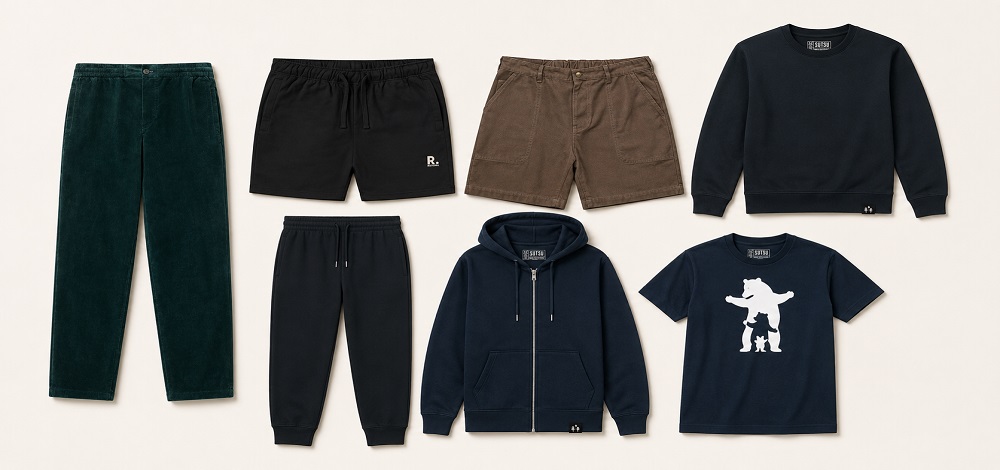
Best everyday tee: Sutsu Three Bears T-Shirt, around £25. The one you’ll wear most, so the one where organic cotton earns its keep hardest. Sutsu has built its line around heavier, slow-fashion basics since 2004, and a mid-weight organic cotton tee at this price clears the 30-wears bar without thinking. Look for a substantial handfeel and a printed rather than heat-pressed graphic, which cracks less.
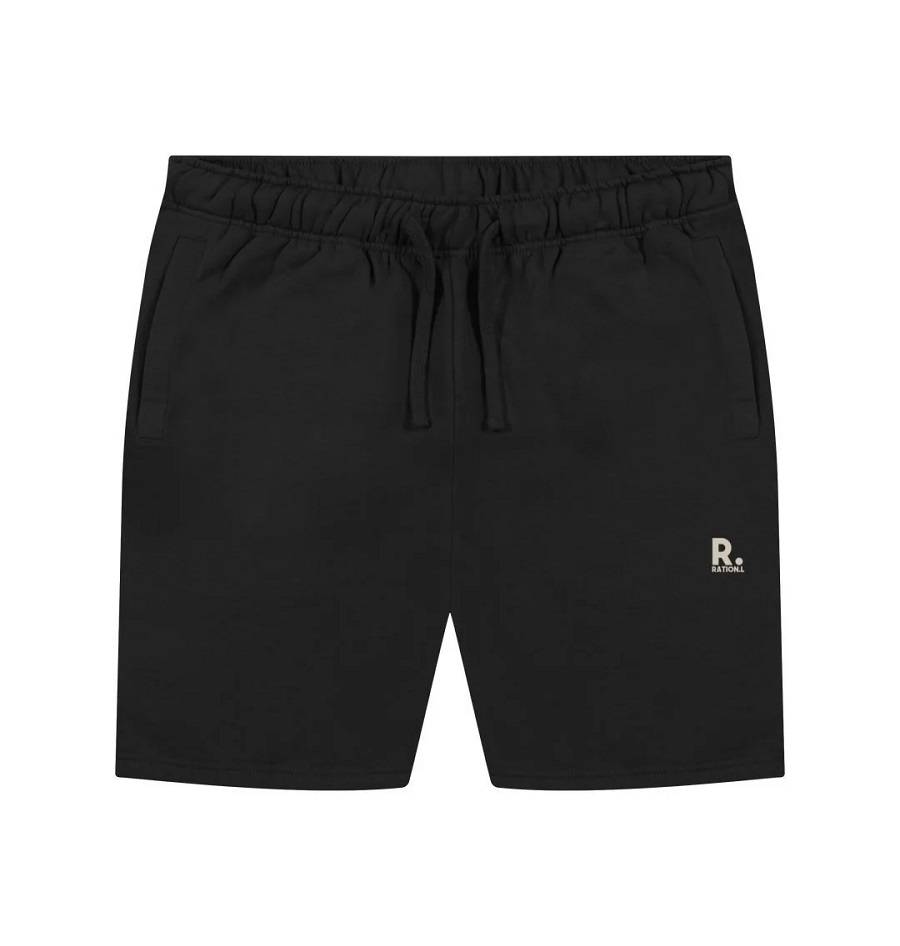
Best on a budget:Ration.L R-Kind Organic Cotton Short, £30. Proof that the entry price doesn’t have to mean a throwaway. A plain organic cotton short in black goes with everything you already own, which is the real budget test: not the sticker, but how many outfits it slots into. Buy the neutral, wear it all summer.
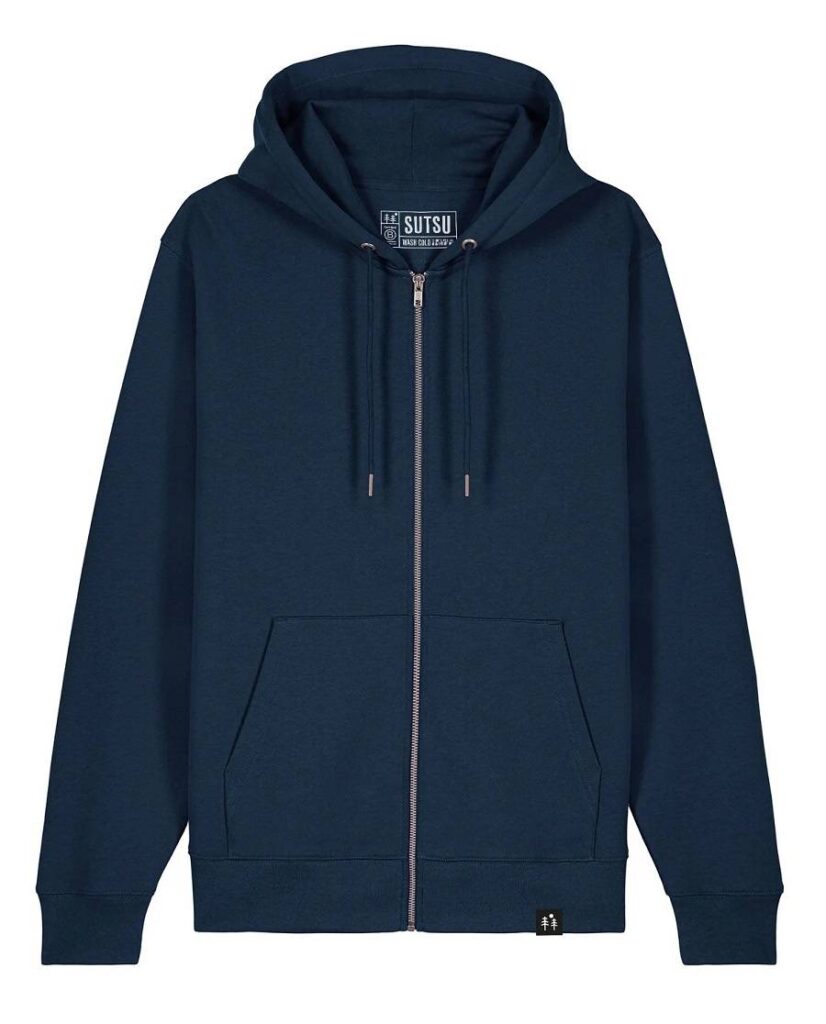
Best heavyweight hoodie:Sutsu Long Haul 350gsm Zip Hoodie, around £59. At 350gsm this is built to outlast three high-street hoodies, and that weight is exactly what the durability maths rewards. It’s the piece you’ll live in through autumn, so cost-per-wear collapses fast. Check the cuff and hem ribbing, where cheap sweats die first.
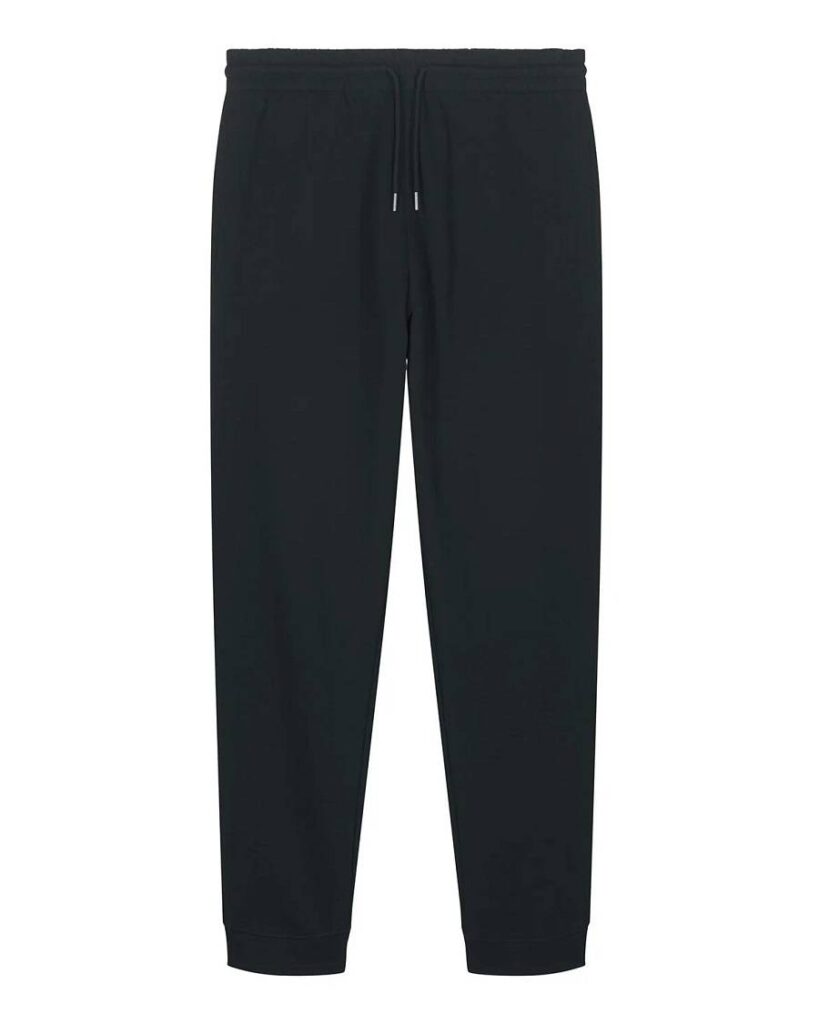
Best joggers:Sutsu Long Haul 350gsm Joggers, around £56. The matching heavyweight bottom half, organic cotton, made to take repeated washing without going thin at the knee. Everyday-wear staples like these are where weight matters most, because they get worn and washed twice as often as anything else you own.
Best everyday trousers:Komodo Joshua Organic Cotton Trousers, £75. A proper grown-up trouser you can wear to work and the pub, in organic cotton from a brand that’s been doing ethical menswear since the late eighties. This is the workhorse: buy one good pair, wear them weekly, replace them in years not months.
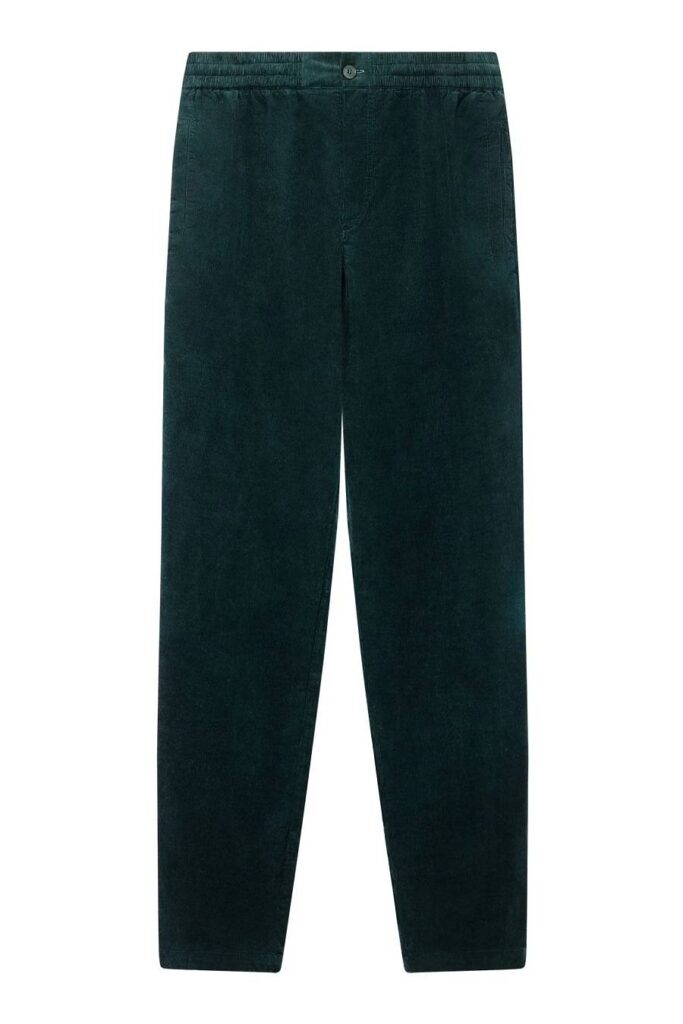
Best smart-casual trousers:Komodo Andro Needlecord Trousers, around £40 in the sale. Organic cotton needlecord dresses up a notch without going near a suit, which makes it one of the most versatile things on this list. Cord also hides wear well, so it ages into something rather than out of it.
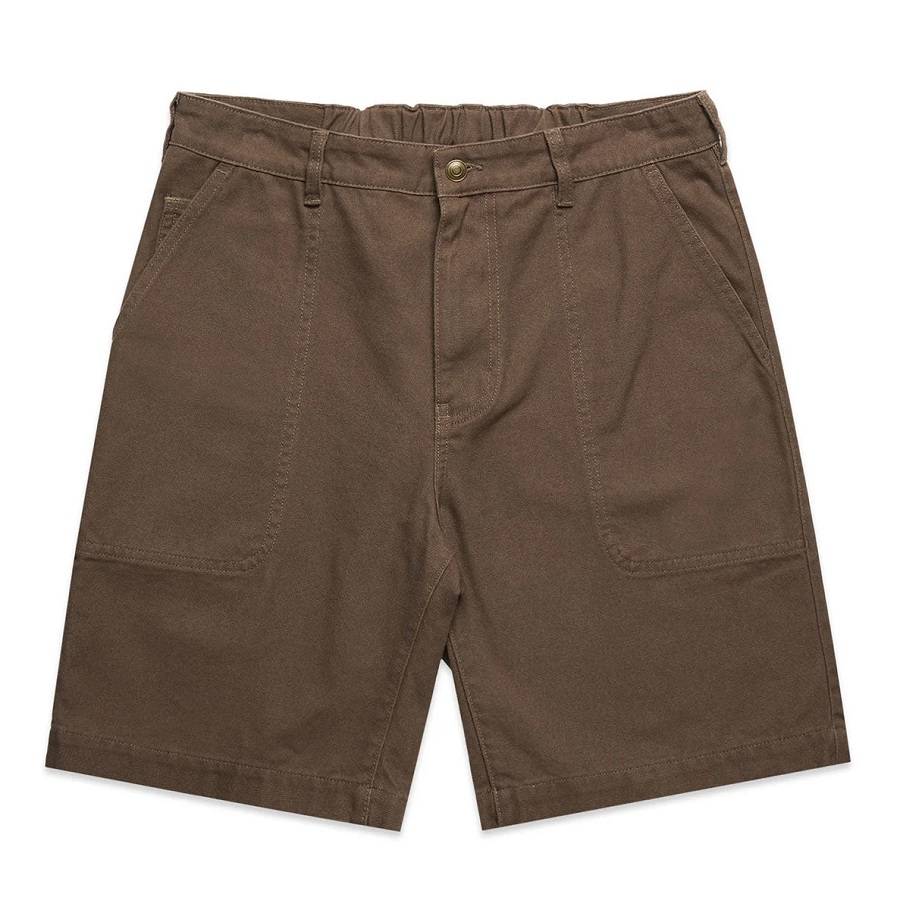
Best for hard wear:Sutsu Duck Canvas Shorts, around £56. At 360gsm duck canvas, these are the most over-built thing here, in the good sense: the sort of short you wear for a decade of weekends and gardening. If you only judge one piece on weight, judge this one, and it wins.
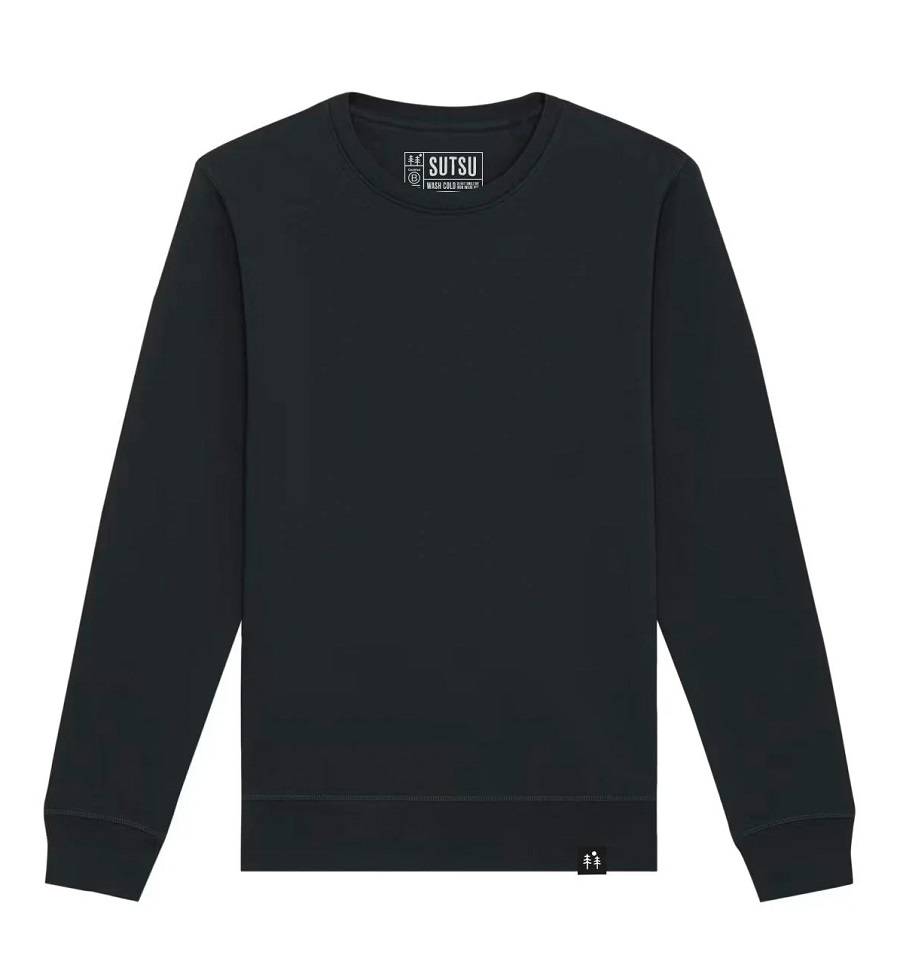
Best lightweight layer:Sutsu Long Haul 280gsm Sweatshirt, around £52. The honest outlier: this one blends certified organic cotton with post-consumer recycled polyester, so it isn’t pure organic cotton, but the recycled content is a fair trade-off for a mid-weight layer built to last. Worth knowing exactly what you’re buying, which is the whole point of reading the label.
How to Tell the Organic Claim is Real
“Organic cotton” on a tag certifies nothing by itself, so the proof worth looking for is GOTS. The Global Organic Textile Standard certifies the whole supply chain, from fibre through spinning, dyeing and sewing, with independent annual audits, and it builds in social and human-rights criteria along the way. One mark answers two questions: is the cotton really organic, and were the people who made it treated decently. Ziracle’s men’s trousers range, for instance, leans on GOTS-certified organic cotton for exactly that reason.
Where a piece isn’t GOTS-certified, the fallback is a brand that’s specific about its supply chain rather than one that just prints the word organic in a nice font.
So what should you buy?
Buy fewer, heavier, plainer, and check the proof. Start with the pieces you wear most, a good tee and a workhorse trouser, in organic cotton with enough weight to survive the wash cycle, and replace the dead ones as they go rather than overhauling the drawer. The staples are where the organic premium pays back, because they get the wears; the novelty piece you’ll wear twice never will.
Get that right and the fibre becomes the least interesting thing about the decision, which is exactly where it belongs. If you’re buying for a partner too, the same logic runs through the women’s organic cotton guide.
Buy the heavy plain one. Wear it to death. That’s the whole guide.
FAQs
Is organic cotton clothing actually better, or is it marketing?
At the farm it’s a real improvement: organic cotton is grown without synthetic pesticides or fertilisers, which is easier on soil and on growers. But the fibre is only one stage of a garment’s life, and how long you wear the piece matters more to its total footprint. A heavy, well-made organic tee you wear 100 times beats a thin one you bin in a season, so weight and wear-count matter as much as the fibre.
What does GOTS-certified mean on men’s clothing?
GOTS, the Global Organic Textile Standard, certifies the whole supply chain from fibre to finished garment, with independent annual audits, and includes social and human-rights criteria. It’s the difference between an “organic cotton” claim anyone can print and one that’s been checked by someone other than the brand’s marketing team. On men’s staples it’s the single most reliable proof point to look for.
How can you tell if a T-shirt will last?
Check the fabric weight in grams per square metre where it’s listed: a tee around 250gsm or heavier holds its shape far better than a 150gsm summer-weight one. Also look at whether any graphic is printed into the fabric rather than heat-pressed on top, since pressed prints crack, and check the neck ribbing, which is where cheap tees go baggy first.
A full wardrobe and nothing to wear is rarely a shortage of clothes. It’s a shortage of clothes that go with each other and get worn. Which is the quiet flaw in how organic cotton usually gets sold to women: as a virtuous swap, one nice-sounding piece at a time, when the thing that actually lowers a garment’s footprint is how many mornings it earns a place on your body.
So the smartest way to shop women’s clothing in organic cotton isn’t to hunt for the greenest label. The fibre question is settled once in the organic cotton clothing guide, so here the focus is versatility and wear-count. Get that right, and the organic premium pays back many times over.
Before You Buy Anything: Wear-Count Beats Fibre, Every Time
Organic cotton is a real improvement at the farm, and it’s the smallest part of whether a garment does any good. Growing it organically cuts the synthetic pesticides and fertilisers and is gentler on soil and growers. But a garment’s biggest impact is use, and a “sustainable” piece worn twice and forgotten is just tidier waste.
The maths is stark. Research by WRAP, the UK sustainability charity, found that extending a garment’s active life by nine months cuts its carbon, water and waste footprints by roughly 20 to 30 percent each, and that around a quarter of the clothing in UK wardrobes goes unworn. “The most sustainable garment is the one already in your wardrobe,” as Orsola de Castro, co-founder of Fashion Revolution and author of Loved Clothes Last, puts it. The point isn’t to buy nothing. It’s to buy the piece you’ll keep reaching for.
That’s why versatility is the real buying signal. A jumpsuit that’s a whole outfit in one decision, a legging that works under a dress or with a jumper, a plain tee that goes with everything: these get the wears, so they earn the fibre. The novelty piece almost never does.
The greenest garment in your wardrobe is the one you’ll wear out first.
The Picks, Sorted by the Job You Need Doing
Everything below is organic cotton, verified in stock, and chosen for how many jobs it does. Ziracle’s women’s organic cotton range leans heavily on Komodo, so a few picks share it, but the list below also pulls in Sutsu, Reflexone and AMOKA DALO. Each piece still has to clear the same test. Prices and stock were checked at the time of writing and move with the sales.
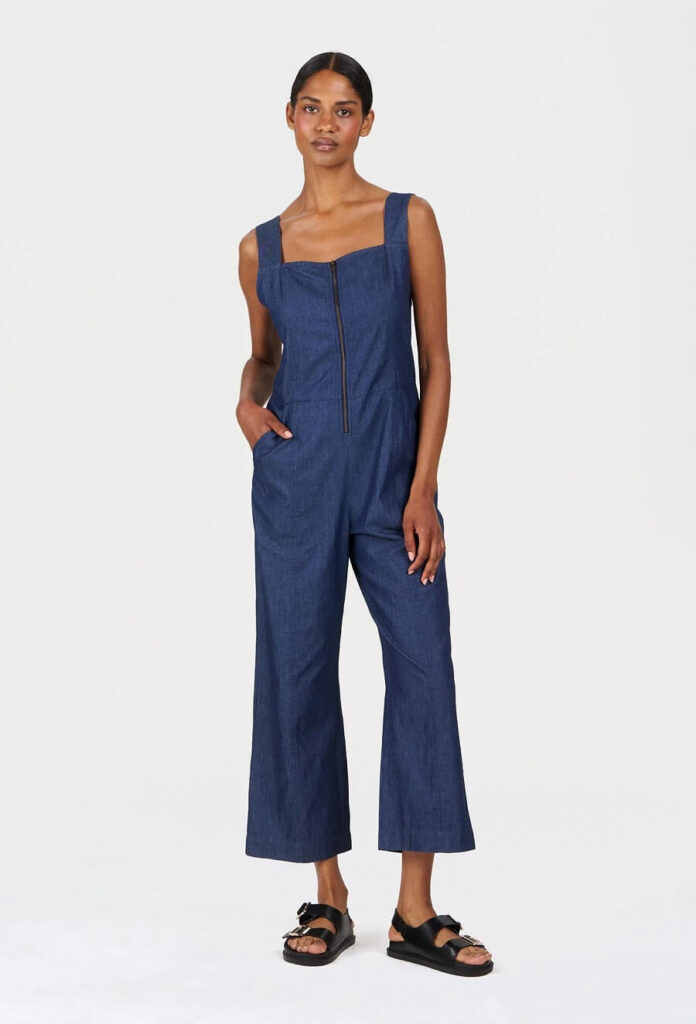
Best one-and-done outfit: Komodo DAY Organic Cotton Jumpsuit, around £72. A whole outfit in a single decision, which is what makes a jumpsuit the highest cost-per-wear buy in the wardrobe: dress it down with trainers or up with sandals and it covers a week of mornings. Organic cotton, so it survives the frequent washing a favourite gets.
Best everyday tee: Sutsu Three Bears T-Shirt, around £25. The plain organic cotton tee that goes under everything and over nothing, from a slow-fashion label that builds heavier basics made to last. This is the piece you’ll wear most, so the one where organic cotton earns its keep hardest.
Best joggers: Reflexone Club Joggers, £40. Certified organic cotton fleece at a hefty 300gsm, so they take repeated washing without going thin, and they’re vegan, GM-free and printed in the UK in a renewable-energy factory. An oversized cream jogger does double duty as loungewear and out-the-door wear, which is exactly the versatility you’re paying for.
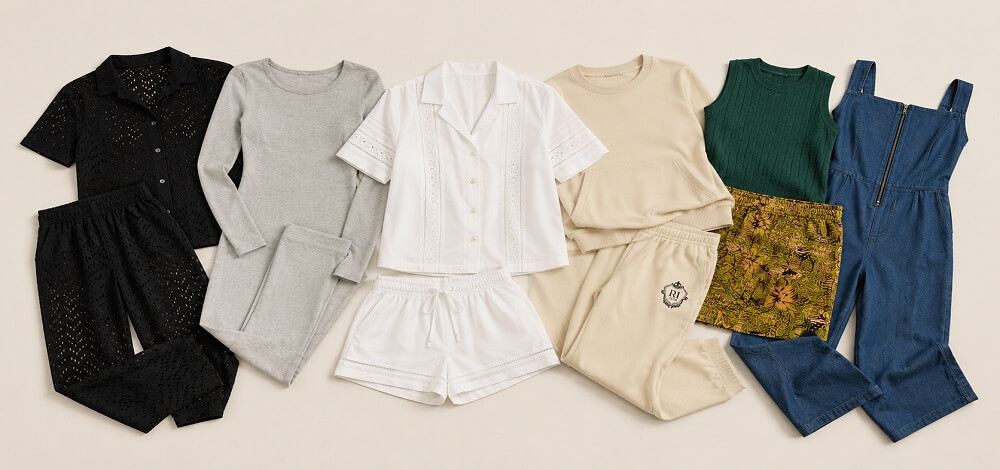
Best sleepwear that travels: AMOKA DALO Salvador Organic Cotton Pyjama Set. 100 percent GOTS-certified organic cotton from a small-batch British label, cut from a Guayabera-style top and drawstring shorts that read as smart enough to wear beyond the bedroom. It works for sleeping, lounging, or as a lightweight cover-up on holiday, so it earns its place three ways, and it arrives in a reusable fabric bag rather than plastic.
Best versatile layer: Komodo Sylvie Organic Cotton Legging, £40. A GOTS-certified organic cotton legging is the quiet workhorse of a wardrobe: under a dress, with an oversized jumper, on its own for yoga. It earns wear-count in a way a statement piece never can, which is what makes it a smarter buy than it looks.
Best workwear trouser: Komodo Khari Organic Cotton Trousers, £90. A proper tailored-ish organic cotton trouser in black that reads as smart at a desk and relaxed at dinner. Buy one good pair, wear them weekly for years, and the per-wear cost drops to pennies.
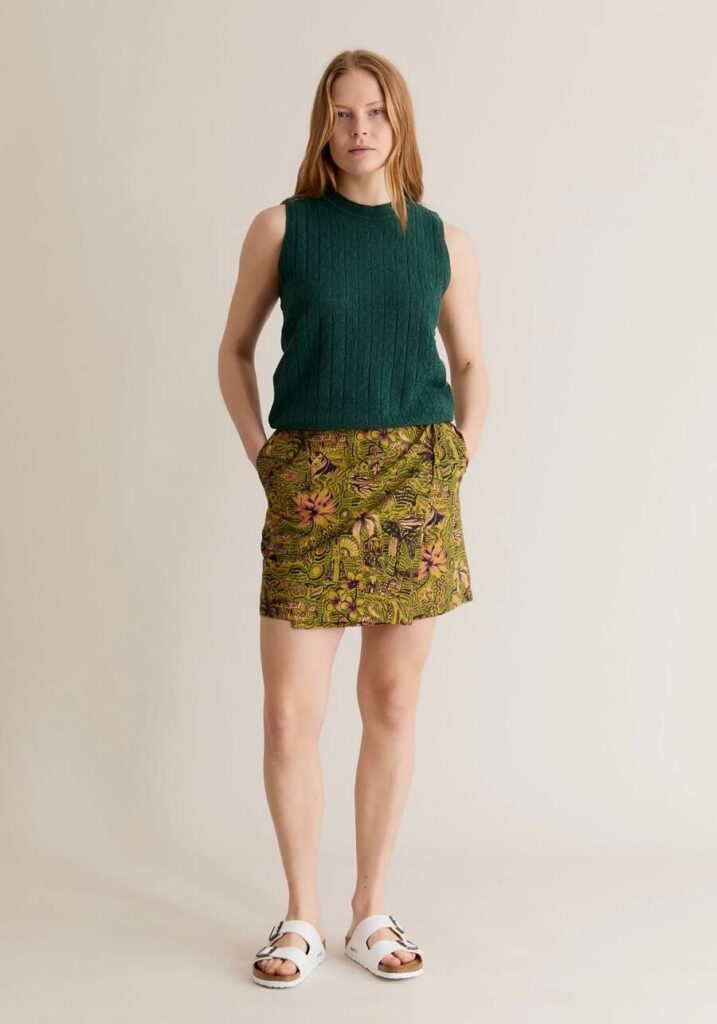
Best on a budget: Komodo Solstice Organic Cotton Skirt, around £20 in the sale. Proof the entry price needn’t mean a throwaway: an organic cotton cheesecloth skirt that pairs with the tee and the leggings above for three more outfits. On a budget, the real test isn’t the sticker, it’s how many things it goes with, and this clears it.
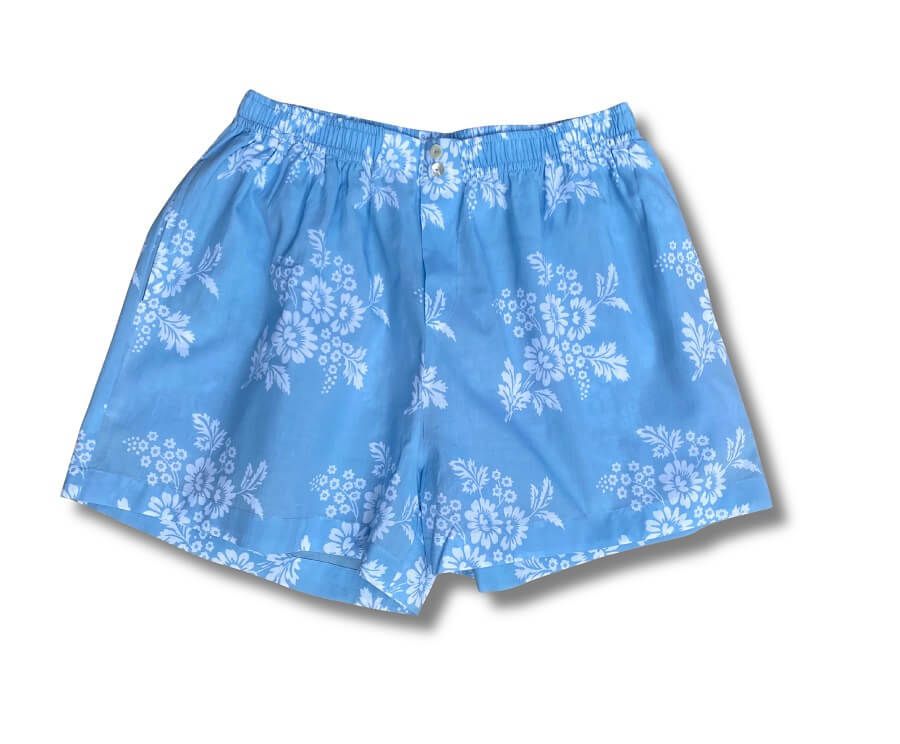
Best warm-weather short: AMOKA DALO Marguerite Organic Cotton Boxer Shorts, £33. Organic cotton lounge shorts in a blue and white floral print, from the same British small-batch label, made for hot nights and slow mornings. They pair with the plain tee above, which is the whole trick: buy pieces that connect to what you already have.
How to Tell the Organic Claim is Real
“Organic cotton” on a label certifies nothing by itself, so the proof worth looking for is GOTS. The Global Organic Textile Standard certifies the whole supply chain, from fibre through dyeing and sewing, with independent annual audits, and it builds in human-rights and social criteria. One mark tells you the cotton is really organic and the people who made it were treated decently, which is why the GOTS-certified picks above are flagged as such.
Two grades are worth knowing: “organic” means at least 95 percent certified organic fibre, “made with organic materials” at least 70 percent. Where a piece isn’t certified, favour a brand that’s specific about its supply chain over one that just prints the word. You can filter the whole rail to certified pieces under Organic.
So What Should You Buy?
Buy for versatility and wear-count, check for GOTS or real transparency, and keep the piece for years. Start with the highest-utility items, the jumpsuit, the plain tee, the leggings that go under everything, and let each new piece connect to three you already own. A rail of well-meant clothes you never wear is the opposite of the point. A handful you reach for daily is the whole of it.
Get that right and the fibre becomes the least interesting thing about the decision. If you’re buying for a partner too, the men’s organic cotton guide runs on the same logic, weighted to durability.
Buy the piece that does three jobs. Wear it out. That’s the whole guide.
FAQs
Is organic cotton clothing actually better for the environment?
At the farm, yes: organic cotton is grown without synthetic pesticides or fertilisers, which is gentler on soil and growers. But the fibre is a small part of a garment’s total footprint, and how long you wear it matters more. WRAP found that keeping clothes in use nine months longer cuts their carbon, water and waste footprints by around 20 to 30 percent, so a well-worn organic piece far outperforms a barely-worn one.
What does GOTS-certified mean, and is it worth looking for?
GOTS, the Global Organic Textile Standard, certifies the whole supply chain from fibre to finished garment, with independent annual audits, and includes human-rights and social criteria. It’s the difference between an “organic cotton” claim anyone can print and one that’s been checked. “Organic” grade means at least 95 percent certified organic fibre, and “made with organic” means at least 70 percent.
Which organic cotton pieces give the most wear for the money?
The most versatile ones. A jumpsuit is a whole outfit in one decision, and a plain tee or a pair of leggings goes with almost everything you already own, so all three rack up wears fast and drop to a low cost per wear. Statement pieces and novelty prints tend to get worn a handful of times, so they rarely justify the organic premium.
Switching to organic cotton feels like the sustainable win. It’s the smallest part of one. The label goes on the front of the garment and the front of the marketing because it’s the thing you buy, and buying is the part of sustainability that’s easy to sell. What actually decides whether a piece of clothing is a good or a bad thing for the world happens mostly after you’ve paid, in how long you keep it and how you treat it.
That’s not an argument against organic cotton. It’s an argument for putting it in its place. Get the order of operations right and you’ll spend less, waste less, and stop paying a premium for a badge while ignoring the decisions that do ten times the work. Here’s what matters, ranked, with the fibre where it honestly belongs.
Why the Label is the Wrong Place to Start
A garment’s biggest impacts are spread across its whole life, and the fibre is one slice of one stage. Growing cotton organically drops the synthetic pesticides and fertilisers and is easier on soil and on the people farming it, which is a real improvement over conventional cotton. But that improvement is dwarfed by what happens next: how the piece is made, how long it stays in use, how it’s washed, and whether it’s worn out or thrown out.
The marketing inverts that order because only one stage has something to sell you. No brand can charge you for washing your jumper less often, so the message lands on the one lever with a price tag. “Paying as much attention to using things as to creating or buying them can liberate us from an obsessive engagement with consumer society,” says Professor Kate Fletcher, research professor at the Centre for Sustainable Fashion, University of the Arts London, whose work reframes clothing as something we use, not just something we buy.
The wins that matter most are the ones you do, not the ones you buy.
So before the fibre, four levers, in order of how much they actually change.
Lever One: Wear what you own, for longer
Nothing you can buy beats wearing what you already have. Extending a garment’s active life is the single largest lever a normal person has, and it costs nothing. Research by WRAP, the UK sustainability charity, found that keeping clothes in use nine months longer cuts their carbon, water and waste footprints by roughly 20 to 30 percent each. The same research found around a quarter of the clothing in UK wardrobes goes unworn, so for most of us the greenest garment is one we already own and have forgotten about.
This is where organic cotton’s whole case gets put in perspective. A conventional-cotton tee worn for five years does far less damage than an organic one worn twice and dropped at a charity shop. Use is the multiplier that makes or breaks everything upstream of it, which is why the first move is never a purchase. It’s a rediscovery of the back of your own wardrobe.
Lever Two: When you do buy, Buy Fewer and Better
New clothes are fine; buying carelessly is the problem, so buy less and buy it to last. The most useful test in the shop isn’t the fibre content, it’s a question about the future. “Every time you buy something, ask yourself: will I wear it a minimum of 30 times?” says Livia Firth, founder and creative director of the sustainability consultancy Eco-Age, whose #30Wears rule cuts through most bad purchases before they happen.
What lets a garment survive 30 wears is mostly construction, not fibre: fabric weight, seam quality, and a plain enough design that you’ll still want it next year. A heavier tee at 250 grams per square metre holds its shape where a 150-gram one goes baggy in a season. This is the lever that quietly determines cost-per-wear, and it’s where your money does more good than the organic premium does. Buy the well-made plain thing, and buy fewer of them.
Lever Three: Wash it Cool, Wash it Less
How you launder a garment shapes both its lifespan and its running footprint, and the fix is to turn the dial down. Research from the University of Leeds found that washing a cotton T-shirt at 30 degrees on a shorter cycle made it last more than 50 percent longer than a standard 40-degree wash, while cutting the wash’s warming impact by around a fifth. Cooler, shorter, and less often does three good things at once: saves energy, sheds fewer fibres, and keeps the garment wearable for longer.
Most of us never touch the temperature dial, which is exactly why this lever is so easy to pull. Wash on 30, skip the wash the garment doesn’t really need, air it instead where you can, and dry it on a line rather than in a tumble dryer. None of this costs anything, and all of it extends the life that lever one relies on.
Lever Four: Now the Fibre, and What GOTS Actually Buys You
Only now does the fibre earn its turn, and this is where organic cotton and certification matter. When you are buying new, choosing organic cotton is the honest floor: it means the raw material was grown without synthetic pesticides or fertilisers. But “organic cotton” printed on a tag certifies nothing on its own, so the proof worth looking for is GOTS.
The Global Organic Textile Standard certifies the whole supply chain, from fibre through spinning, dyeing and sewing, with independent annual audits, and it builds in human-rights and social criteria along the way. One mark answers two questions: is the cotton really organic, and were the people who made it treated decently. Two grades are worth knowing, “organic” means at least 95 percent certified organic fibre, and “made with organic materials” means at least 70 percent. Where a piece isn’t certified, favour a brand that’s specific about its supply chain over one that just prints the word. You can filter a whole range to certified pieces under Organic.
That’s the fibre’s honest role: the right default for the clothes you do buy, and the fourth thing that matters, not the first.
So, How to shop it without overthinking
Put the four levers together and the method is simple. Wear what you own, buy fewer and better when you do buy, wash it cool and less, and choose certified organic as the floor for the fibre. The first three are mostly free and do most of the work; the fourth is where your spending should land once the piece has passed the 30-wears test.
Which turns “buy organic cotton” from a badge into a filter you can apply yourself: is it well-made enough to last, plain enough to keep, and certified or transparently sourced on the fibre. When a piece clears all three, it’s worth the premium. When it doesn’t, no amount of organic makes a throwaway a good buy. For the actual shopping, our organic cotton clothing for men and organic cotton clothing for women guides put the picks against exactly these criteria, and the wider Clothing and Basics range is chosen on the same terms.
Organic cotton is worth choosing. Choose it last.
Once you’ve settled the fibre, the men’s and women’s guides take it from here, weighted to durability and to versatility in turn.
FAQs
Is organic cotton clothing better for the environment?
At the farm, yes: organic cotton is grown without synthetic pesticides or fertilisers, which is easier on soil and on growers than conventional cotton. But the fibre is only one stage of a garment’s life, and how long you wear it matters far more. WRAP found that keeping clothes in use nine months longer cuts their carbon, water and waste footprints by around 20 to 30 percent, so a well-worn conventional piece can easily beat a barely-worn organic one.
What does GOTS-certified mean?
GOTS, the Global Organic Textile Standard, certifies the whole supply chain from fibre to finished garment, with independent annual audits, and it includes human-rights and social criteria. It’s the difference between an “organic cotton” claim anyone can print and one that’s been checked by someone other than the brand. “Organic” grade means at least 95 percent certified organic fibre; “made with organic” means at least 70 percent.
Is organic cotton clothing worth the extra money?
As the floor for the fibre when you buy new, yes, provided the garment is also well-made enough to last and plain enough to keep. But wearing clothes longer and washing them cooler save more, for free, than switching fibre does. Spend the premium on a piece you’ll wear 30-plus times, not on a novelty piece the organic label makes feel virtuous.
What’s the most sustainable way to buy clothes?
Buy less, and buy better. Wear what you already own for longer, ask whether you’ll wear a new piece at least 30 times before buying it, wash on 30 degrees and less often, and when you do buy, choose GOTS-certified or transparently sourced organic cotton. The first three cost nothing and matter most.
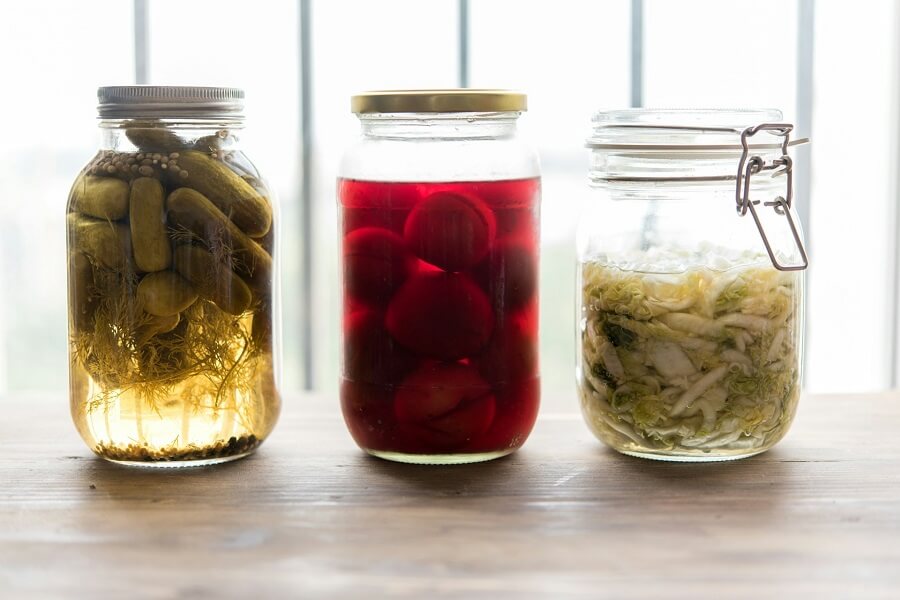
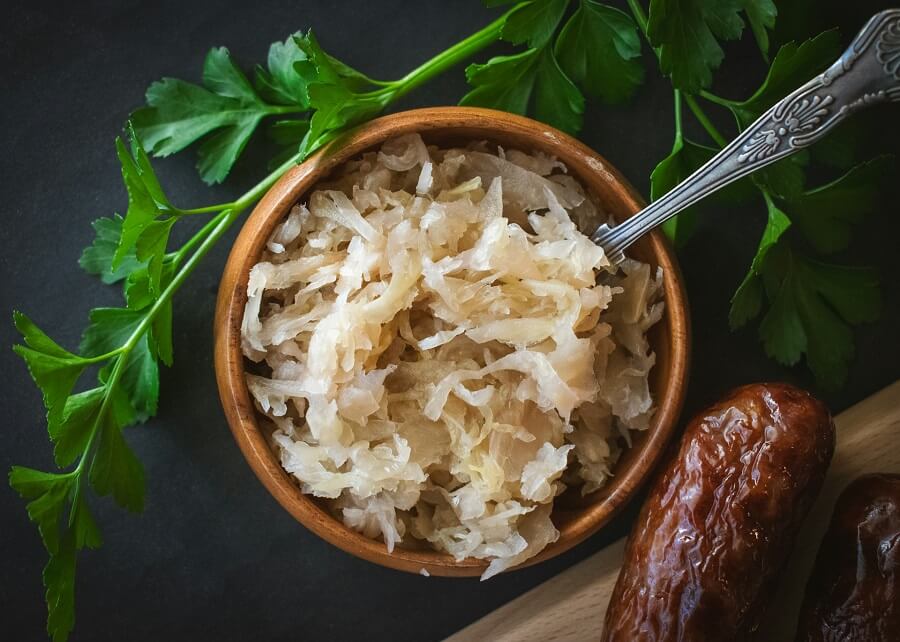
Fermented foods genuinely help your gut, but only the living ones. The benefit comes from the active bacteria the fermentation creates, so the whole game is buying a product that still has them. A 2021 Stanford study published in Cell put healthy adults on a fermented-food diet for ten weeks and saw their gut microbiome diversity rise and inflammation fall, with 19 inflammatory markers dropping. A high-fibre diet, in the same study, did not lift diversity the same way. Living fermented food does something specific.
Which is why the label word to look for is unpasteurised, sometimes written as raw or live. “Just look for non-pasteurised versions,” says Dr Jenna Macciochi, immunologist at the University of Sussex, “pasteurisation kills the live microorganisms.” A shelf-stable, heat-treated or vinegar-pickled kimchi tastes fine and does nothing for your gut. A chilled, unpasteurised one is the real thing. Everything the Fermented Foods range stocks is genuinely fermented and unpasteurised, which does the hard part of the checking for you.
The only word that matters on the jar is unpasteurised, and everything else is flavour.
Food first, as ever: you do not need a probiotic pill if you are eating the real thing, and a few spoonfuls of live kimchi does more than most capsules. If you want the fuller picture on why, our guide to what gut health actually means and the Gut Health edit go deeper.
The Best Organic Kimchi and Fermented Foods, by what you want
Every pick below is organic, unpasteurised and live. Start with one, and build variety over time, since a mix of ferments feeds a wider range of gut microbes than any single jar.
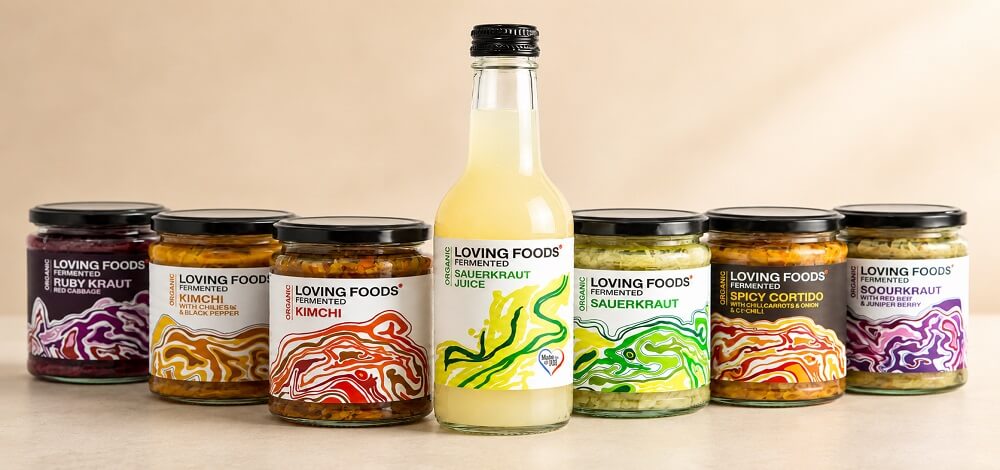
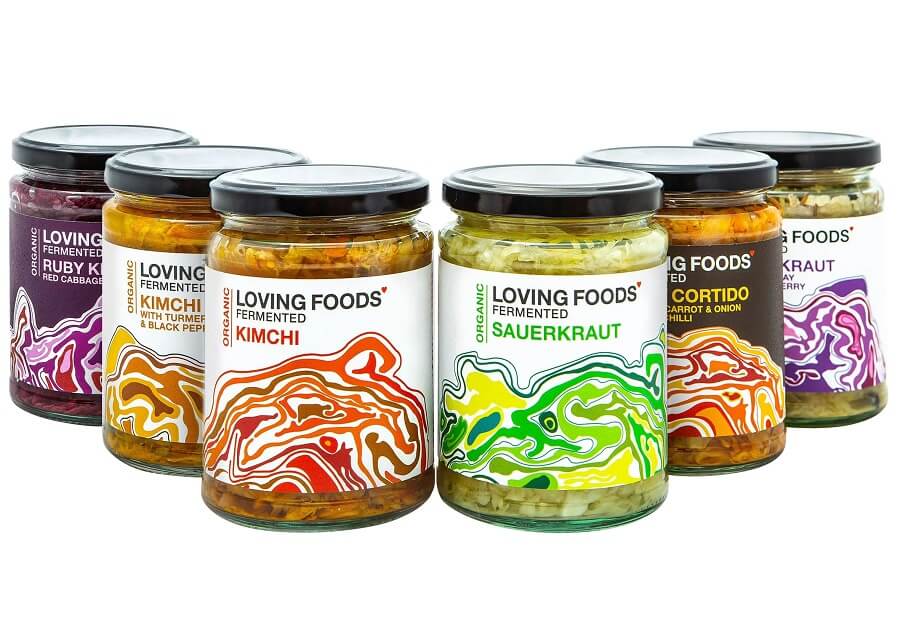
Best organic kimchi:Organic North Kimchi Mixed Case (£22.31). A case of proper unpasteurised, organic kimchi, the direct answer to the search that brought you here. Buy this if kimchi is what you actually want: spicy, complex, and alive, with enough in a case to make it a daily habit rather than a one-off jar.
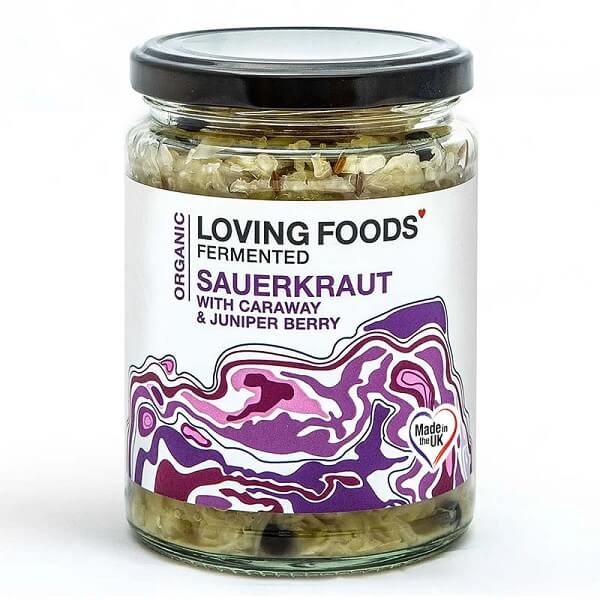
Best everyday sauerkraut:Organic Sauerkraut, Caraway & Juniper Berry (£6.99). The low-effort daily option. Milder than kimchi, a spoonful on the side of almost anything, and the cheapest way to get live cultures in every day. Buy this if you want the habit without the heat.
Best for beginners:Organic Ruby Kraut (£6.99). Fermented red cabbage and beetroot, gentler and slightly sweeter, and a good gateway if strong ferments have put you off before. Buy this if you are easing in.
Best spicy alternative to kimchi:Organic Spicy Cortido Kraut (£6.99). A Latin American style ferment with chilli and oregano, for people who want the kick of kimchi with a different flavour. Buy this to keep variety in the fridge.
Best low-commitment starter:Organic Sauerkraut Juice (£2.99). A small brine “gut shot” if you are not sure you will eat a whole jar, and the exact kind of vegetable brine drink the Stanford study included. Buy this to test the waters for the price of a coffee.
Best for trying everything: Fermented Vegetables Mixed Case (£39.99). Kraut and kimchi together, the efficient way to build the variety that actually moves the needle. Buy this if you already know you are in.
How to Choose, and How to Eat It
Four checks separate a gut-friendly ferment from a decorative one. It must say unpasteurised, raw or live, not pasteurised. It should be sold chilled, because live products live in the fridge, not on a warm shelf. Organic is worth prioritising here, since you are eating the whole vegetable and its skin. And short ingredients, vegetables, salt, spices, beat a long list with added vinegar or preservatives, which usually means the cultures are gone.
Then go slow. Live ferments can cause a bit of bloating or wind at first while your gut adjusts, so start with a tablespoon a day rather than a bowlful, and build up. A daily spoonful of one ferment is a fine start; the bigger gains in the research came from variety and larger regular servings over weeks, not from one heroic portion. This is a habit, not a cleanse, and it doubles as a lever for your immune system, since most of your immune cells live in your gut, which is why the Support Immunity edit overlaps with this one.
Frequently Asked Questions
Is shop-bought organic kimchi actually good for your gut?
Yes, as long as it is unpasteurised and sold chilled, which means the live bacteria are intact. Pasteurised or shelf-stable kimchi has been heat-treated and no longer contains living cultures, so it is really just a spicy pickle. Check the label says raw, live or unpasteurised, and that you found it in the fridge.
How much fermented food should you eat for gut health?
Start with about a tablespoon a day and build up as your gut adjusts, since live ferments can cause temporary bloating at first. Variety matters more than volume, so rotating between kimchi, sauerkraut and a brine drink does more than a large serving of one. A small daily portion is a realistic, sustainable target.
Is kimchi or sauerkraut better?
Both are excellent, and the honest answer is to eat both. Kimchi is spicier and more complex, sauerkraut is milder and cheaper for an everyday habit, and eating a range of ferments feeds a wider set of gut microbes than committing to one. Whichever you choose, the only thing that matters for your gut is that it is unpasteurised.
You have been told to cut carbs and load up on fibre, to fear fat and to fear seed oils, to fast and to never skip breakfast. No wonder eating well feels like an exam you keep failing. It is not an exam. It is a direction, and you are almost certainly closer to it than you think.
The honest answer to how to eat well is duller and far kinder than the diet industry needs it to be. There is no single food that fixes you and no plan you have to follow perfectly. There is a short framework, a handful of changes that carry most of the benefit, and a way of shopping that makes the whole thing cheaper and easier to keep up. This guide to Eat Well lays out the framework, ranks the changes by how much they matter, and ends with the kitchen that makes them the default.
Eating Well is a Framework, Not a Diet
The most useful shift is to stop treating food as a test. A diet is a set of rules you either keep or break, which is why diets end. A framework is a direction you lean in, where a good week and a rough week both count and neither is a verdict on your character.
The UK already has the framework, and it is deliberately loose. The NHS Eatwell Guide sets out rough proportions, plenty of vegetables and fruit, meals based on higher-fibre starchy foods, some protein with more from beans and pulses, some dairy or alternatives, and only small amounts of the fatty, salty, sugary stuff. Its most important line is the one people skip: “You do not need to achieve this balance with every meal, but try to get the balance right over a day or even a week.” Over a week. Not at every meal.
That single idea removes most of the pressure. You are not aiming for a perfect plate three times a day, you are nudging the average. Which means the goal is not restriction, it is direction, and the rest of this is just the directions worth walking in, in order of how much they matter.
Eating well is a direction, not a test, and you do not have to be perfect at it to get almost all of the benefit.
Lever One: Eat Mostly Real Food
The biggest single lever is to eat mostly whole and minimally processed food, and to notice when you are not. This is the change with the most evidence behind it, and it is not about any one nutrient. It is about how much of what you eat has been engineered in a factory rather than cooked in a kitchen.
The scale of it is easy to underestimate. Around 54% of the calories UK adults eat now come from ultra-processed food, according to analysis of the National Diet and Nutrition Survey. And the health signal is not trivial: a 2024 umbrella review in The BMJ, pooling dozens of studies, linked higher ultra-processed consumption to 32 worse health outcomes, from heart disease to poorer mental health. That does not make a single ready meal a disaster, but it makes the overall drift worth reversing.
You do not need an app to spot ultra-processed food. A rough test does most of the work: if the ingredients list is long and full of things you would not keep in a home kitchen, colours, emulsifiers, flavourings, protein isolates, it is probably ultra-processed. A tin of beans, a bag of oats, a block of cheese and a chicken thigh are not. The direction is simply more of the second kind and a bit less of the first, not fear, and not never.
Lever Two: Eat more Plants, and more Kinds of them
The second lever is plants, and the modern version of the advice is about variety as much as volume. Five a day still holds, but the newer, more useful target is diversity: eating many different plants across a week feeds a wider range of gut microbes, which is one of the clearer findings in nutrition science.
“The wider diversity of fibre-packed plants you eat, the happier and more diverse your gut microbiome will be,” says Professor Tim Spector, Professor of Genetic Epidemiology at King’s College London and co-founder of ZOE, whose gut-project research found that people eating 30 or more different plants a week had noticeably more diverse microbiomes than those eating fewer than ten. That gut diversity is tied to how well your body handles food and inflammation, which is why plant variety sits so high on the list. Our Gut Health edit goes deeper on the why.
According to NHS guidance on getting more fibre, UK adults consume around 19g of fibre a day, compared with the recommended 30g, and only about one in ten of us hits the target. The fix is not heroic.
Thirty plants a week, without counting. Plants are not just vegetables. Fruit, wholegrains, beans, lentils, nuts, seeds, herbs and spices all count, and a single one can be a sprinkle of seeds on your porridge. A bowl of mixed-grain porridge with berries and nuts is already five or six. A lentil soup with a handful of herbs is another few. Swap one white loaf for a seeded wholemeal, keep a bag of frozen mixed veg and a few tins of different beans in, and thirty stops being a target you chase and becomes a number you pass without noticing.
Lever Three: Add Before You Subtract
The third lever is a mindset that makes the other two stick: add good things before you cut anything. Restriction is what makes eating “well” feel like punishment, and it is also what makes it fail. Cut a whole food group and you tend to rebound, lose nutrients, and learn nothing you can keep.
“Focus on what we should be eating and doing more of, like increasing fluid and fibre, rather than focussing on restriction,” says Marcela Fiuza, a registered dietitian and British Dietetic Association spokesperson. It is the opposite of the January plan that bans bread. As the BDA puts it, the healthiest and most sustainable approach is small and slow, which is exactly what a fad diet cannot sell you.
In practice, adding looks like a second vegetable at dinner, beans stirred into the mince, fruit and nuts where the biscuit was, fish twice a week with one oily portion, water instead of the third coffee. None of it forbids anything. You are crowding the plate with better defaults until the rest naturally shrinks, and because nothing is banned, there is nothing to fall off.
Lever Four: The Short List Genuinely Worth Cutting Down
There is a “less-of” list, and the honest version is short and specific rather than a war on entire food groups. Four things are worth easing down, and none of them needs to hit zero.
Free sugars are the main one, the sugar added to food and drink plus what is in honey and juice, which UK adults are advised to keep under about 30g a day, roughly seven sugar cubes. The quickest win is drinks: a single can of cola is most of that limit, so swapping sugary drinks for water, tea or coffee does more than fussing over the sugar in your cooking. Salt is the second, with a cap around 6g a day, most of which sneaks in through bread, sauces and processed food rather than the shaker. Third, red and especially processed meat, bacon, ham and sausages, are worth keeping occasional rather than daily. And alcohol is worth honest attention, since it is calories and risk with no nutrition attached.
Notice what is not on the list: fat, carbs, gluten, dairy, or any of the food groups the internet takes turns demonising. For most people, those are not the problem. The processing, the added sugar and the missing plants are.
Lever Five: Where Your Food Comes From is part of Eating Well
Eating well is not only about your body, it is also about what your food does on the way to your plate, and this is the part the official guides leave out. Two meals can be nutritionally identical and worlds apart in how the coffee was grown, how the workers were paid, or how much the packaging and farming cost the planet. Choosing better on that front is part of the framework, not a separate hobby.
The useful version is targeted, not perfectionist. Organic matters most for the produce you eat skin-and-all and for reducing farming’s chemical load, so it is worth prioritising there rather than everywhere; the Organic range makes that easy to shop. Fair trade matters most for the imported crops with the worst records, coffee, cocoa and tea, where certification is a genuine signal that growers were paid properly, which is why The Cellar edit and our sustainable coffee guide focus there. And eating more plants, the lever you are already pulling for your gut, happens to be the single biggest way to lower the footprint of your diet, which our vegan living guide covers without requiring you to go all the way.
You do not have to get every item right. Prioritise the few purchases where sourcing genuinely changes the outcome, and let the rest be ordinary.
So what is worth buying, and how to stock a Kitchen
Real food, more plants and adding-not-cutting do almost all of the work, and none of it is a product. That is the honest starting point. The gap is that eating this way is far easier when your kitchen is set up for it, and a small, well-chosen set of staples is what turns the framework from a good intention into the path of least resistance.
The whole-food pantry is the engine. A few different wholegrains (oats, brown rice, wholemeal pasta), several tins and bags of pulses (chickpeas, lentils, mixed beans), nuts and seeds, a good olive or rapeseed oil, tinned tomatoes, and frozen vegetables and fruit that never go off and are just as nutritious as fresh. With that in, a plant-heavy, thirty-a-week meal is fifteen minutes away on a tired evening. The Pantry edit is built around exactly these staples, and the wider Food & Drink hub is where the plant-forward and ethically sourced versions live, from Vegan basics to better everyday treats.
Two criteria keep it honest. Favour foods close to their raw form over engineered ones, and prioritise the sourcing that matters on the imported crops rather than agonising over everything. Ignore anything sold as a “superfood”, a “detox” or a shortcut, which is marketing, not nutrition.
Eating well on a budget. This is where the framework quietly wins, because whole food is often the cheap food. Dried and tinned pulses are among the lowest-cost protein and fibre there is. Frozen vegetables cost less than fresh, last for months and waste nothing. Oats are pennies a bowl. Buying wholegrains, beans and seasonal veg and cooking from them beats both the ready-meal aisle and the “wellness” aisle on price, and our eco-friendly grocery shopping guide sets out a full shop that eats well for less. Eating well is not a luxury tax. Done this way, it is usually the frugal option.
What to Skip: “Superfoods”, Detoxes, and the Meal-Replacement Aisle
A whole industry sells shortcuts to the framework above, and almost all of it is worth ignoring. “Superfood” is a marketing word with no scientific meaning, and no single berry, powder or seed does anything a varied diet of ordinary plants does not do better and cheaper. “Detox” products are the clearest tell: your liver and kidneys do that job, and a teatox or a juice cleanse does not help them, it just relieves you of money and, briefly, of fibre.
Meal-replacement shakes and greens powders occupy the same space, promising to bottle a good diet. A greens powder is not a substitute for eating actual vegetables, and a shake that replaces a meal usually replaces the chewing, the fibre and the enjoyment along with it. Browse the Nutrition & Superfoods shelf with that filter and it thins out fast, leaving the few genuinely useful basics rather than the reinvented wheel.
The rule of thumb: if a product is selling you a shortcut to eating well, the shortcut is the thing that is not real. The food is.
It was never an exam
Go back to the feeling of failing the test, and the relief is that there was never a test to fail. Eating well is a direction, and the directions are short: mostly real food, more plants and more kinds of them, add before you cut, ease down on sugar and the rest of the short list, and buy the few things where sourcing genuinely matters. Do most of that most of the time and you have almost all of the benefit, without a single rule you have to keep perfectly.
The reassuring part is how ordinary and how cheap the winning version is. A full pantry, a bag of frozen veg and a pot of lentils outperform every plan with a name.
The Food and Drink edit is filtered to the whole-food staples, plant-forward basics and ethically sourced treats that make this the easy option, and our grocery, coffee and plant-based guides walk through the weekly shop one aisle at a time.
Frequently Asked Questions
What does “eating well” actually mean?
Eating well means leaning towards mostly whole, minimally processed food, plenty and variety of plants, and enough protein and healthy fats, over a week rather than at every meal. It is a direction, not a strict diet, and the NHS Eatwell Guide is the loose UK framework for the proportions. You do not have to be perfect to get most of the benefit.
What is the single most important change to eat better?
Shift more of your diet towards whole and minimally processed food and away from ultra-processed products, which now make up around half of UK adults’ calories. If you want one add-on habit, eat more plants and more different kinds of them across the week. Both matter more than any single “superfood” or supplement.
How many plants should I eat a week?
Aim for around 30 different plants a week, counting vegetables, fruit, wholegrains, beans, nuts, seeds, herbs and spices. Research from Professor Tim Spector’s gut project found people hitting 30-plus had more diverse gut microbiomes than those eating fewer than ten. A varied bowl of porridge or a mixed-bean soup gets you several at once.
Is ultra-processed food really that bad?
A single ultra-processed item will not harm you, but the overall drift is worth reversing. A 2024 umbrella review in The BMJ linked higher consumption to 32 worse health outcomes. The practical move is not fear but direction: more food that looks close to how it grew, less that has a long list of ingredients you would not keep at home.
Can you eat well on a budget?
Yes, and it is often the cheaper option. Dried and tinned pulses, oats, frozen vegetables and seasonal produce are among the lowest-cost, highest-value foods there are, and cooking from them beats both the ready-meal and the wellness aisles on price. Eating well is about staples and habits, not expensive “health” products.
You cannot boost your immune system, and if you could, you would not want to. A revved-up immune system has a name, and it is autoimmune disease. What keeps you well is not a stronger system but a balanced one, and almost nothing in the immunity aisle does a thing for it.
The honest answer to how to boost your immune system naturally is that you cannot, but you can support the system you have, and most of that support costs nothing. What follows ranks the levers by the weight of evidence behind them, gives a plain verdict on the products people actually buy, and ends with the short list worth paying for. The Support Immunity edit is filtered to the things that survive that test, and they are fewer than the shelves suggest.
Why “Boost” is the Wrong Word for your Immune System
Your immune system is not a muscle you pump up, it is a balance you keep. Half of it exists to switch the other half off, because an immune response left running does as much damage as the threat it was fighting. Inflammation clears an infection, then has to stop, or it starts attacking you. “Rather than boosting we want to be balancing,” says Dr Jenna Macciochi, Senior Lecturer in Immunology at the University of Sussex and author of Immunity: The Science of Staying Well. “Half of our immune system is designed to turn the other half off.”
That single fact undoes most of the marketing. A product that genuinely “boosted” your immunity would push a finely balanced system in one direction, which is not a benefit, it is a risk. The wellness aisle sells the word anyway, because “support a balanced immune system” does not fit on a bottle and “boost your defences” does.
So the useful question is not how to crank the system up. It is how to give it what it needs and stop getting in its way. That turns out to be a short, dull list, and the things near the top of it are free.
There is no immune system to boost, only one to support, and the things that support it best are mostly free.
Sleep is the Lever with the Hardest Evidence
Sleep is the single best-evidenced thing you can do for your immune system, and the one people sacrifice first. It is not a vague “rest helps” claim. It has been measured directly, in a way few wellness levers ever are.
In a 2015 study in the journal Sleep, researchers led by Aric Prather and Sheldon Cohen tracked the sleep of 164 healthy adults for a week, then quarantined them and dripped a common-cold virus into their noses. The people sleeping less than six hours a night were far more likely to fall ill, and those under five hours were more than four times as likely to develop a cold as those getting more than seven. Same virus, same dose, different sleep, and a fourfold gap in who got sick.
The mechanism is real: short sleep blunts the immune response and raises inflammation, so you both catch more and recover slower. If you do one thing this winter, protect your sleep before you buy anything. The Sleep Better edit and our guide to how to sleep better are a better spend than any “night-time immunity” supplement, because the supplement is mostly trying to sell you back the thing the sleep would have done for free.
Feed the System by Feeding your Gut
What you eat matters for immunity mostly through your gut, and as a pattern rather than a hero ingredient. “An impressive 70 percent of your immune system is also housed in your gut,” says Macciochi, right alongside the microbes that train it. Feed those microbes well and they help regulate the immune response. Starve them and the regulation frays.
Feeding them is not complicated. A diet built mostly on whole foods, with plenty of plants and fibre, gives gut bacteria the raw material to make the compounds that calm inflammation. Fermented foods add live microbes directly: live yoghurt, kefir, kimchi, sauerkraut and other unpasteurised pickles. The Fermented shelf is the easy way in, and a few spoonfuls of real sauerkraut does more than a probiotic capsule promising forty billion of something.
This is also why “immunity” and “gut health” are the same conversation. If you want the longer version, our piece on what gut health actually means and the Gut Health edit go deeper. The headline is simple: variety and fibre beat any single superfood, and no powder replaces a plate.
Move, Worry Less, and the Two Levers the Aisle Ignores
Moderate exercise and lower stress both support immune function, and two more things matter more than any of them, yet nobody sells them. Regular, moderate activity, a brisk daily walk rather than punishing training, is associated with fewer infections. Chronic stress works the other way, keeping the immune system in a state that defends poorly. If stress is your sticking point, the Reduce Stress edit and our guide to how to reduce stress are the place to start, not a cortisol gummy.
Then the two the wellness aisle never mentions, because there is no margin in them. Vaccination is the most effective immune support ever invented, training your defences against a specific threat with an evidence base no supplement approaches. And washing your hands properly remains one of the best ways to not get ill in the first place, because most of what a “boosted” immune system is supposedly fighting could have been kept off your hands and face. Cutting back on smoking and heavy drinking belongs here too, since both measurably weaken your defences.
None of this is glamorous, and that is rather the point. The free, dull levers do the heavy lifting. The bottles do the marketing.
Why “Immune-Boosting” Supplements mostly Sell you a Feeling
Most “immune-boosting” supplements sell reassurance, not protection. The category leans on one ingredient above all, and the evidence does not support the promise on the front. Regular vitamin C does not stop you catching colds. A Cochrane review pooling 29 trials and more than 11,000 people found no reduction in how often people in the general population got colds, only a modest shortening of how long one lasted once it arrived. The daily orange-flavoured shield is mostly a habit, not a defence.
“Much of the nutritional conversations around the immune system sadly still focus on supplements as quick fixes and the legacy of taking vitamin C as all we need,” says Macciochi. The newer products simply swap the hero ingredient: elderberry, echinacea, a mushroom blend, a kitchen-sink “immunity complex” with a long label and trace doses of everything on it. A formula that lists fifteen actives is usually a formula with too little of any of them to matter.
The scepticism here is aimed at the marketing and the formulation, not at supplements as a whole. A single, sensible nutrient for a real reason is a different proposition from a blend sold on a season of fear. You can browse the Supplements and Superfood Powders shelves with that filter and watch most of the “immunity” range fall away.
The Honest Verdict on the Popular Buys
Here is the short version on the things people reach for, so you can stop guessing in the pharmacy.
Vitamin C: will not stop you catching colds, may slightly shorten one you already have. Not the daily shield it is sold as. Cheaper from food.
Zinc: modest evidence that a lozenge started within a day of the first symptom can shorten a cold a little. Not for daily year-round use, and it can cause nausea and a metallic taste. A first-sign tool, not a habit.
Vitamin D: the one with a genuine case, mainly for correcting a shortfall rather than topping up the already-sufficient. More on the dose below.
Elderberry and echinacea: popular, pleasant, and thinly evidenced. Small or inconsistent studies, often funded by sellers. Fine if you like them, not something to rely on.
Fermented foods and probiotics: supporting your gut is reasonable, and whole fermented foods are the better-value way to do it. The evidence for capsules is mixed and strain-specific.
Garlic, manuka, “immunity” shots: comforting rituals more than proven medicine. Enjoy them as food, not as insurance.
So, What is Worth Buying, and how to choose it
Free first: sleep, a whole-food diet, movement, your vaccinations and clean hands do almost all of the available work. That is the honest order, and a bottle is never the opening move. The gap is that one nutrient is genuinely worth supplementing in the UK, and a second is worth keeping in the cupboard for the first day of a cold.
Vitamin D is the real floor. UK sunlight is too weak from October to March for your skin to make enough, which is why the NHS advises everyone in the UK to consider a daily 10 microgram supplement through autumn and winter. The benefit is clearest where there is a deficiency to correct: a 2017 meta-analysis in The BMJ, pooling 25 trials and nearly 11,000 people, found vitamin D supplementation reduced acute respiratory infections, with much larger protection in those who were most deficient to start with. Buy a plain vitamin D3 at around 10 to 25 micrograms (400 to 1,000 IU) for general winter cover, not a megadose, and if you suspect a real shortfall, a test settles it rather than guesswork. The Vitamins edit carries straightforward D3 and at-home vitamin D tests.
Zinc is the only other one worth a place, as a lozenge kept for the first day of a cold, not a daily tablet. And the most useful “immune” spend of all is not a supplement at all: fermented foods and fibre for your gut, which you can fill from the Vegan and Organic ranges as easily as from a pharmacy. Skip the multi-herb blends, the megadose vitamin C and anything promising to “supercharge” anything. One last thing worth saying plainly: if you are catching infection after infection, or they hit unusually hard, that is a reason to see your GP, not to buy a stronger supplement.
Back to Balance
There was never an immune system to boost, only one to support and not sabotage. The version that keeps you well is balanced, not turbocharged, and the levers that keep it balanced are the unglamorous ones the aisle walks past: sleep, food, movement, vaccines, clean hands. The supplement that earns its place does so by filling a real gap, which in the UK means vitamin D in winter, and the rest of the “immunity” shelf is mostly selling the feeling of doing something.
The reassuring part is how little you need to buy, and how much of it you already control.
The Vitamins edit is filtered to plain D3 and the tests that tell you whether you need it, and our guide to vitamin D in the UK winter walks through the dose and the timing in full.
Frequently Asked Questions
Can you actually boost your immune system?
Not in the way the word implies. The immune system is a balance, not a dial, and a genuinely “boosted” one would mean overactivity, which is what happens in autoimmune and inflammatory disease. What you can do is support normal function with sleep, diet, movement and vaccination, and avoid the things that weaken it.
What is the best way to support your immune system naturally?
Sleep is the best-evidenced single lever, followed by a whole-food, high-fibre diet that feeds your gut, regular moderate exercise, and lower stress. Vaccination and handwashing prevent more infection than any supplement. These are free and do most of the work.
Do vitamin C supplements stop you catching colds?
No. A Cochrane review of more than 11,000 people found regular vitamin C did not reduce how often people in the general population caught colds, only modestly shortened the ones they got. You get enough from a normal diet, so a daily high-dose supplement is mostly habit.
Does zinc help with a cold?
Possibly, at the margin. There is modest, inconclusive evidence that a zinc lozenge started within about a day of the first symptom can shorten a cold slightly. It is not worth taking daily year-round, and it can cause nausea and a metallic taste. Treat it as a first-sign tool.
Should I take vitamin D for immunity in the UK?
There is a real case for it. UK sunlight is too weak in autumn and winter to make enough, so the NHS advises considering a daily 10 microgram supplement from October to March. The clearest benefit is correcting a deficiency, so a plain D3 at a sensible dose, not a megadose, is the move, and a test confirms whether you need more.
There is no dial inside you marked hormone balance, and nothing you can buy will turn it. That phrase belongs to marketing, not medicine. What is real is smaller and stranger: a few free habits that move your hormones, a handful of conditions that need a doctor, and one everyday exposure the wellness aisle never mentions.
Search how to balance your hormones naturally and you land in two worlds that never quite meet. One is clinical: pages about polycystic ovary syndrome, thyroid disease and perimenopause, written by the people who treat them. The other is the wellness aisle, where balance is a mood you buy back with a powder. Both use the same word. Only one of them means a medical condition. What works for Hormonal Health sits in the gap between the two, because that gap is where most of the money, and most of the confusion, lives.
What a Hormonal Imbalance Really Is, and What it has come to Mean
A real hormonal imbalance is a measurable medical condition, not a vague sense of being slightly off. Your hormones are chemical messengers, made mostly by the endocrine system, that regulate metabolism, reproduction, mood and sleep, as the Cleveland Clinic describes them. When one of those systems malfunctions, you get a named condition with a test behind it. Polycystic ovary syndrome, which the NHS estimates affects around 1 in 10 women, is one. An underactive or overactive thyroid is another. Perimenopause, the years of falling and lurching oestrogen before periods stop, is a third. Each comes with something the wellness version does not: a diagnosis, a blood test, a treatment that works.
Somewhere in the last decade the same phrase got borrowed for something much smaller. Feeling tired, bloated, irritable, not quite yourself became “hormone imbalance”, a problem you could supposedly fix with a supplement and a bag of seeds. The word did a lot of quiet work in that shift. It took a real clinical idea and stretched it over an ordinary bad week, then sold you the cure.
Your hormones are not out of balance because you feel tired on any given day.
Endocrinologists notice the overreach. “To some degree, I think we are scapegoating hormones,” Dr Caroline Messer, a board-certified endocrinologist in New York, told Fashionista. “Every time we feel tired or sad, it doesn’t mean it’s necessarily a hormone.” That distinction is the whole point. Some of what you feel is a condition that deserves testing. Most of it is life, and responds to the unglamorous things below.
How to Balance your Hormones Naturally: The Free Habits that do the Real Work
If anything earns the phrase how to balance your hormones naturally, it is four free habits, and between them they do most of the available work. They act mainly on two hormones the wellness aisle rarely names: insulin, which manages your blood sugar, and cortisol, your main stress hormone.
Sleep is the lever with the most pull. In a 1999 study in The Lancet, researchers restricted eleven healthy young men to four hours in bed for six nights and watched them start to process glucose like people at risk of diabetes, with raised cortisol by evening. A few bad nights measurably moved their hormones. Protect a consistent wind-down and a regular wake time before you reach for anything else. The how to sleep better guide and the Sleep Better edit go further.
Stress load is next. Cortisol is meant to spike and fall, but a life that never lets it fall keeps it high, and chronically high cortisol nudges appetite, sleep and mood. You cannot delete stress, but one daily practice that reliably drops your shoulders, a walk, breathing, anything you will actually repeat, does more than a cortisol gummy. The Reduce Stress edit is built around the habits, not the supplements.
What you eat matters most through steadiness, not restriction. Meals built around protein, fibre and vegetables keep insulin from spiking and crashing all day, which is most of what “eating for your hormones” honestly means. You do not need a special protocol, you need lunch that is not just fast carbohydrate.
Movement is the quiet one. Muscles pull glucose out of your blood when they contract, which improves insulin sensitivity, and you do not need a gym to get it. A brisk ten-minute walk after a meal counts. None of this is marketed hard, because none of it carries a margin.
Why Most Hormone-Balancing Supplements are Selling you the Gap
Most “hormone-balancing” supplements are selling the gap between wanting a fix and the free habits being dull. The free levers work, but they are repetitive and slow, and a capsule that promises to do the same thing while you carry on is a far easier sell. That gap, not your hormones, is the product.
Dr Annice Mukherjee, a UK consultant endocrinologist and author of The Complete Guide to the Menopause, is blunt about the appetite for a shortcut. On her clinic site she writes that “there are no miracle cures” and “there is no silver bullet”. The supplement aisle exists precisely because we all want one anyway.
The problem is not herbs or vitamins as a category, it is how the category is sold. A multi-herb “balance” blend with a long front-of-pack claim and a proprietary formula that hides the doses is the format to distrust, because the claim is doing the work the evidence cannot. Even the cautious clinical sources land here: few of these blends have real evidence for what the label promises. A single, named ingredient at a sensible dose for a specific, named problem is a different proposition, and we will come back to it. A catch-all blend promising to fix everything is mostly buying you hope. Browse with that filter and most of the Supplements shelf thins out fast.
The Exposure Almost Nobody Mentions: Everyday Endocrine Disruptors
If you want one product-shaped change with a real mechanism behind it, it is reducing your everyday exposure to endocrine-disrupting chemicals. The Endocrine Society defines these as any chemical “that can interfere with any aspect of hormone action”, and they turn up in some plastics, in synthetic fragrance, and in a share of everyday personal-care products. Two of the most studied are bisphenols and phthalates, both common in plastics and packaging.
This is the angle the wellness aisle skips, and it is the one the endocrine scientists actually care about. “A well-established body of scientific research indicates that endocrine-disrupting chemicals that are part of our daily lives are making us more susceptible to reproductive disorders, cancer, diabetes, obesity, heart disease, and other serious health conditions,” says Andrea C. Gore, PhD, of the University of Texas at Austin and lead author of the 2024 Endocrine Society and IPEN report on EDCs.
Here is where calibration matters, because this is where alarmism usually takes over. The mechanism is real and the concern is reasonable. The certainty at the low, everyday doses most of us encounter is not settled, and anyone selling you a “detox” from it is overstepping the science. The honest position is to reduce avoidable exposure because it is cheap and sensible, not because any single product is proven to be harming you.
The exposure worth changing is not in a supplement bottle, it is in the products you already use every day, and the concern there is real even where the certainty is not.
In practice that means fewer heavily fragranced products where they sit on your skin all day, and less plastic where it meets food or warmth. A simpler Deodorant is an easy first swap, and the Plastic Free range covers the food-contact end. Our piece on microplastics in cosmetics goes deeper on the beauty-cabinet side.
So, what is Worth Buying, and how to choose it
Start from what is already settled. The free habits do most of the everyday work, and a real hormonal condition is a doctor’s job, not a shopping decision. Hold both of those before you spend anything.
Now the honest gap. You will still want something to buy, partly because the free levers are dull and partly because a few swaps are worth making on their own merits. That is reasonable. The trick is buying on a criterion instead of a promise.
For everyday products, the criterion is exposure, not detox. Favour fewer synthetic-fragrance options and lower-plastic formats where they meet your skin or your food, and ignore any product claiming to “balance” or “reset” your hormones from the outside. You are lowering avoidable load, not curing anything, and that framing keeps you honest about what you are paying for. Where it touches food or skin, Organic is a defensible default for the same reason.
For cycle or menopause support, the criterion is specificity. A single named herb at a sensible dose for one named need beats any multi-herb “hormone balance” blend promising to fix the lot. If you want gentle period-time support, a proper herbal Tea for that purpose is a smaller, clearer bet than a catch-all capsule, and the Women’s Health edit is filtered to that kind of single-purpose support.
Swap the product you use every day before you buy the one that promises to fix everything.
If you are heading into perimenopause, that is its own decision with real options worth understanding properly, and our perimenopause and menopause guide walks through what genuine support looks like before you reach for a supplement at all.
When it is not a Lifestyle Thing: The Symptoms that need a Doctor
Some symptoms are not a lifestyle project, they are a reason to see your GP. Periods that become irregular, very heavy or stop altogether. Sudden, unexplained weight or mood change. Persistent fatigue paired with feeling cold and sluggish, which can point to the thyroid. Perimenopause that is derailing your work, sleep or relationships. These deserve testing, not a tea.
The reason to take them seriously is that you can do everything right and still have a real condition underneath. “Sometimes you can be the healthiest version of yourself doing everything right and still be left with something that’s not what you want,” says Dr Jaime Knopman, a board-certified reproductive endocrinologist in New York. Lifestyle is the foundation, not a substitute for a diagnosis.
If any of the above fits you, ask your GP for proper assessment and, where it is warranted, referral to an endocrinologist. Blood tests exist for a reason, and a real imbalance is treated, not balanced away with habits. Self-help is for general support. It is not a diagnostic tool, and treating it as one is how genuine conditions get missed for years.
What to Skip: Seed Cycling, At-home Hormone Kits and Cortisol Detoxes
A few specific products are worth naming, because they are marketed hard and deliver little. At-home saliva hormone test kits sound empowering and mostly are not, because the reference ranges they judge you against are not validated for self-diagnosis, so you pay to be worried by a number that means little out of clinical context. Seed cycling, eating particular seeds in each half of your cycle, is harmless and pleasant and has no real evidence that it shifts hormones. And “cortisol detox” or “cortisol cleanse” products misunderstand the biology outright, because cortisol is not a toxin you flush, it is a hormone you regulate with sleep and stress load. Skip all three with a clear conscience.
The Finding
There is no dial marked balance, and that turns out to be good news rather than bad. It means the work is knowable. Real hormonal conditions are diagnosed and treated. The free habits, sleep, stress, food and movement, do most of the everyday lifting. The supplement aisle is mostly selling the gap between those two facts. And the single product-shaped change with a real mechanism behind it is the least glamorous one, lowering your avoidable exposure to everyday endocrine-disrupting chemicals, held at honest confidence rather than sold as a cure.
If you want to act on that, two moves are worth your money: simpler, lower-fragrance and lower-plastic everyday products where they meet your skin and food, and single-purpose cycle or menopause support chosen for a specific need. The women’s health and period-support edits and our perimenopause and menopause guide are the places to start.
Frequently Asked Questions
Can you really balance your hormones naturally?
You can support the systems that regulate your hormones with sleep, food, movement and a lower stress load, and for most everyday symptoms that is most of the available effect. A genuine medical imbalance, such as a thyroid condition or PCOS, is treated by a doctor, not balanced by lifestyle, and no supplement reliably does it for you.
What are the signs of a hormonal imbalance?
Watch for patterns rather than one-off bad days: periods that become irregular, very heavy or stop, unexplained weight or mood change, or persistent fatigue with feeling cold, which can suggest the thyroid. Ordinary tiredness after a busy week is not the same thing. If a symptom is persistent, sudden or worsening, see your GP for testing.
Do hormone-balancing supplements work?
Most multi-herb “balance” blends have little evidence for the claims on the front of the pack, and proprietary formulas that hide their doses are the ones to distrust. A single, named herb at a sensible dose for one specific need is a more defensible choice than a catch-all blend promising to fix everything at once.
Do endocrine disruptors in everyday products actually affect your hormones?
The mechanism is real and endocrine scientists take it seriously, so reducing avoidable exposure is reasonable. The certainty at the low, everyday doses most people encounter is not settled, which is why the sensible response is fewer fragranced and plastic products where they meet skin or food, not a “detox” that claims to undo harm.
When should I see a doctor about my hormones?
See a doctor when symptoms are specific, persistent or sudden: absent or wildly irregular periods, rapid unexplained weight or mood change, or fatigue with cold intolerance. The self-help levers are for general support, not diagnosis, and a real condition needs proper testing rather than a supplement.
Open the bathroom cabinet of almost anyone in a UK city and you find the same small graveyard: a vitamin C gone brown at the neck, three half-used cleansers, a serum bought at 11pm on a bad-skin night, and somewhere at the back, barely touched, the sunscreen. The order is exactly backwards. The cheap, boring thing at the back does the most, and the expensive, exciting thing at the front does the least.
The short answer to how to get healthy skin is shorter and duller than the aisle implies, and most of it is free. What follows ranks the levers by how much evidence sits behind them, names the few products worth buying, and hands you a way to read a label so you stop restocking that graveyard. The Healthy Skin edit is filtered to the things that survive this filter, but you will not need most of it.
The Cabinet is Full and the Order is Backwards
Your skin is a self-maintaining wall, and most of looking after it is not getting in its way. Dermatologists describe it as bricks and mortar. “The bricks are the skin cells and the mortar is the skin barrier made of proteins and lipids,” says Dr Mona Gohara, assistant clinical professor of dermatology at Yale School of Medicine. That wall keeps water in and irritants out, renews itself roughly every month, and asks for very little in return.
The market needs you to forget that. Skincare products were valued at around 149.4 billion US dollars globally in 2024, according to the 2025 review Nutritional Dermatology in the journal Nutrients, and that figure is built on the serum you did not know you needed, not on the cleanser you already own. Growth depends on the routine getting longer.
Longer is where it goes wrong. Every extra step is another fragrance, another acid, another chance to crack the mortar you are trying to protect. The people with the calmest skin are rarely the ones with the fullest cabinets. They are usually the ones who found three things that work and stopped shopping.
So the rest of this is a ranking, not a list. The levers near the top have decades of evidence. The ones near the bottom have a marketing budget. Start at the top.
The Most Powerful Step is the One you Keep Skipping
Daily sun protection is the most evidence-backed thing you can do for your skin, and it is the step most people treat as optional. It does two jobs at once: it prevents the lines, slackness and dark patches that people later spend hundreds trying to undo, and it lowers the risk of skin cancer. Nothing else on the shelf does both.
“A broad-spectrum sunscreen with an SPF 30 or above is essential to shield your skin from the UV,” says Dr Anjali Mahto, consultant dermatologist and founder of the Self London clinic. Broad-spectrum matters because two kinds of UV reach you. UVB burns, and it is what the SPF number measures. UVA ages, passing deeper and more steadily, which is why a face can look weathered without ever catching a burn. You want protection against both.
The stakes are not vanity. Cancer Research UK says 86% of melanoma cases, the most serious skin cancer, are preventable, with the large majority caused by too much UV. A tan is not a glow, it is the skin’s record of damage already done.
The reason it fails in the UK is that it never feels urgent. Cancer Research UK says more than 90% of UV passes through cloud, so a flat grey Tuesday is still doing quiet work, and the protection gets skipped precisely when it would help most. The other common mistake is amount: most people use a third of what they should, which turns an SPF 30 into something far weaker in practice.
The cabinet holds a hundred products, the evidence points to about five, and the one that matters most is the sunscreen at the back.
And the objection everyone reaches for, that sunscreen blocks vitamin D, does not hold up in normal use. Real-world sunscreen application is patchy enough that it has little measurable effect on vitamin D status, and the NHS already advises everyone in the UK to consider a daily 10 microgram vitamin D supplement through autumn and winter, when the sunlight here is too weak to make enough regardless. Protect your skin and supplement the vitamin separately. They are two different problems.
Cleanse, Moisturise, and Stop Doing So Much
A gentle cleanse and a moisturiser do almost everything else, and most people sabotage both by overdoing them. Washing with a high-pH soap or a hot, long shower strips the barrier you are trying to keep intact. Daily exfoliating acids stacked on top tend to cause the dryness, stinging and breakouts they promise to cure. For a lot of people, the single best change is subtraction.
The routine that holds up is short. Use a cleanser that does not leave skin tight or squeaky, and apply moisturiser while skin is still slightly damp so it traps water rather than letting it evaporate. That is it. A cleansing oil or balm is a low-irritation way to handle the first step, and the Oils & Balms edit is filtered to gentle formulas. Exfoliation mostly happens on its own, and it rarely needs help.
Adjusting for your Skin Type
One routine does not fit every face, and the tweaks are small.
Oily or combination: the instinct is to strip, which backfires, since stripped skin often produces more oil. Keep the gentle cleanser, choose a light, non-greasy moisturiser, and let a single active do the regulating rather than ten harsh products.
Dry: the issue is water loss, not dirt. Cleanse once a day rather than twice, pick a richer cream with an occlusive element, and always apply to damp skin.
Sensitive or reactive: fewer ingredients, no added fragrance, and one change at a time. If your skin flushes or stings easily, patch-test anything new on your jaw for a few days before it goes near your whole face.
The Parts of Healthy Skin that Happen in the Kitchen and the Bedroom
What you do away from the cabinet shows up on your face, and none of it costs anything. Sleep, diet, not smoking and a lower stress load all move skin, and they are the levers no brand can bottle. Smoking is the clearest of them: it breaks down collagen and elastin and ages skin visibly in a way no cream reverses.
Food matters, but modestly and as a pattern rather than a hero ingredient. “There is a clear link between nutrition and skin health,” write Sandi Assaf and Owen Kelly of Sam Houston State University in their 2025 Nutrients review, “however, more research needs to be done.” In practice a plate of mostly whole foods does more than any single superfood or sachet, and the American Academy of Dermatology already advises cutting high-glycaemic foods to help acne. The Eat Well edit is the place for the food side, and a collagen drink is not it.
Sleep is the lever people underrate, because skin does much of its repair overnight. A small 2015 study in Clinical and Experimental Dermatology found that poor sleepers showed slower barrier recovery and more visible signs of ageing than good sleepers. If yours is patchy, the Sleep Better approach and our guide to how to sleep better are a better spend than the night cream that promises the same result. Stress works through the same door, raising cortisol that can tip conditions like acne, eczema and psoriasis into a flare.
None of this is sold hard, because none of it has a margin. It is also the part that compounds: the protection and the sleep you bank in your thirties are what your skin spends in your fifties.
The Two Ingredients Worth the Hype, and How the Rest Get Sold
Two topical actives have the evidence to justify their reputation: retinoids and vitamin C. Retinoids, the vitamin A derivatives, are the best-studied ingredient in skincare for lines and texture. “They’ve been at the forefront of the skin care zeitgeist for a long time because they’re very effective and very well studied,” says Dr Angelo Landriscina, a board-certified dermatologist in New York, who adds that they are still “by no means necessary.” Vitamin C, used in the morning, helps with dullness and uneven tone. Almost everything else on a busy front-of-pack is optional.
This is the rare case where putting something on your skin beats swallowing it, which is the reverse of what the supplement aisle implies. “You can get a much higher concentration in the skin by going through the top, so putting a skincare product on and having it soak through, than through the bottom,” says Dr Michelle Wong, cosmetic chemist and founder of Lab Muffin Beauty Science. A retinoid on your face reaches your face. A collagen capsule mostly reaches your bladder.
The problem is rarely the ingredient and almost always the execution. Good actives get sold underdosed, buried three lines down an ingredient list in amounts too small to do anything, or in vitamin C formulas that oxidise to brown before the bottle is half empty. A ten-active serum that lists all of them in trace quantities is a more expensive way of using none of them.
If you want one, introduce it slowly. A retinoid works on a timescale of two to three months, not three days, and starting two or three nights a week heads off the flaking and redness that makes most people quit in week one. A gentler third option, niacinamide, is well tolerated and helps with oil and barrier support if retinoids are too much for now. Whatever you add, keep wearing the sunscreen, because a retinoid makes skin more sun-sensitive, not less.
Where the Money Leaks: Collagen Drinks, Biotin and Step Ten
A handful of popular buys do far less than the marketing implies, and they are worth naming because that marketing is loud. Biotin does almost nothing for skin in people who are not deficient, and most of us are not. Oral collagen has some trial evidence for skin firmness, but it is weak and largely funded by the brands selling it. The twelve-step routine is the bigger drain, since every extra step adds fragrance, cost and a fresh chance to irritate the barrier you are trying to protect. Heavy fragrance is the most common avoidable irritant in the average cabinet.
The deeper trap is the label, which is written to sound like evidence.
Decoding the Front of the Pack
“Fragrance-free” vs “unscented”: not the same. Fragrance-free means no added fragrance. Unscented can mean a masking fragrance was added to hide a smell, which still counts as fragrance to reactive skin. For sensitive skin, fragrance-free is the one to want.
“Clean”, “natural”, “non-toxic”: none of these has a legal definition in cosmetics, so they promise nothing about whether a product works or suits you. They are positioning, not specification.
“Dermatologist-tested” and “hypoallergenic”: the first only means a dermatologist was involved at some point, not that it was proven effective. The second is unregulated and self-declared. Read the ingredient list instead.
If packaging and formulation both matter to you, our piece on microplastics in cosmetics covers the ingredients worth leaving out, and the Cruelty Free and Organic edits screen for animal testing and farming standards so the label-reading is done for you.
The Short Shelf for Healthy Skin: Four Products and How to Spot the Good Ones
Protect first, support second, and most of the aisle never enters the conversation. A barrier you defend with sun protection and a gentle routine does the bulk of the work for free. The honest gap is that protection has to be bought, a moisturiser earns its keep daily, and a retinoid does more than hope. Three or four products, chosen on specifics rather than promises, cover almost everyone.
Sunscreen: broad-spectrum, SPF 30 or higher, used in enough quantity, roughly two fingers’ length for face and neck, every morning, reapplied in strong sun. The format matters less than the habit, so pick the texture you will actually wear daily. The Sun Care edit is filtered to broad-spectrum options.
Moisturiser: fragrance-free, with named humectants and barrier lipids on the list. Look for glycerin, hyaluronic acid and ceramides, and ignore the price tag, which correlates poorly with whether a cream holds water. The Face Creams edit is the place to start.
One active, bought one at a time: a low-strength retinoid, or a vitamin C in a stable form and opaque, air-tight packaging, not an everything-at-once blend where you cannot tell what is working. The Serums edit holds the single-active options worth the money.
Spending your First £50
If you are starting from nothing, buy in this order and stop when the money runs out.
A broad-spectrum SPF 30 or higher. First, always, before anything else. If you buy one product this is it.
A fragrance-free moisturiser. Second. It protects the barrier and makes everything else more comfortable.
A gentle cleanser, if your current one leaves skin tight.
One active, only once the three above are habits. A retinoid for texture and lines, vitamin C for tone.
Buy the sunscreen and the moisturiser before anything that promises to turn back time. If you would rather shop the vetted-brand version, our roundup of the best zero waste beauty brands is filtered to formulas that clear this bar.
Back to the Cabinet
That graveyard of half-used bottles was never a personal failing. It is what happens when a simple job gets sold as a complicated one, in the wrong order, with the cheapest and most useful thing left at the back. The evidence points the other way: protect your skin from the sun, cleanse and moisturise gently, sleep and eat reasonably well, and add one proven active only if you want to. Everything else is fragrance, packaging and steps doing the work of marketing.
The shelf that delivers is short, and every item on it earns its place on specifics you can check yourself: broad-spectrum SPF, a fragrance-free barrier cream, a single active at a real dose.
The Sun Care, Face Creams and Serums edits are filtered to the versions that meet those criteria, and our follow-on guide to choosing a daily SPF walks through the few worth keeping at the front of the cabinet, not the back.
Frequently Asked Questions
Do you actually need a skincare routine, or is it mostly marketing?
You need to protect and support your skin barrier, which is a short routine: a gentle cleanser, a moisturiser and a daily broad-spectrum SPF. Most of the extra steps and buzzy actives are optional rather than necessary, and a longer routine is not automatically a better one. The reliable parts are cheap and dull.
What does the science say works best for healthy skin?
In order of evidence: daily sun protection first, then a gentle cleanse and moisturiser to keep the barrier intact, then lifestyle factors like sleep, diet and not smoking. Retinoids and vitamin C are the topical actives with the strongest evidence if you want to add one. Almost everything else is optional.
Do you need sunscreen every day in the UK, even when it is cloudy?
Yes. Cancer Research UK says more than 90% of UV passes through cloud, so daily broad-spectrum protection is worthwhile year-round, with the strongest case in spring and summer and at altitude. It also links the large majority of melanoma cases to avoidable UV exposure, and it will not block your vitamin D in normal use.
Do collagen drinks and biotin supplements improve your skin?
For people without a deficiency, biotin does almost nothing, and oral collagen has only weak, mostly industry-funded evidence. A balanced diet does the same job, and topical actives reach the skin more directly than oral supplements, so the money is usually better spent on sun protection and a good moisturiser.
What is the simplest effective skincare routine?
A gentle cleanser, a moisturiser and a broad-spectrum SPF 30 or higher in the morning is enough for most skin. An optional retinoid at night covers lines and texture if you want to go further, introduced slowly, two or three nights a week to start, to avoid irritation.
You have read this list before. Move more, sleep more, breathe, repeat. So why are you still wired at 11pm? Because the usual advice treats a free two-minute breathing drill and a £40 calm capsule as equals, and never tells you which one actually moves the needle.
Stress is not a soft problem or a character flaw. An estimated 776,000 workers in Great Britain had work-related stress, depression or anxiety in 2023/24, according to the Health and Safety Executive, and that is only the share that shows up at work. The levers that actually help are mostly free, but they are not equal, and the wellness market tends to sell you the expensive ones first. Here is the order that works, where a product earns its place, and what to ignore. If you want the shop side of it, the Reduce Stress edit is built around the same logic.
What stress actually is, and why the goal is not “calm”
Stress is your body’s cortisol-driven response to a demand, and in short bursts it is doing exactly what it evolved to do. Your heart rate climbs, fuel floods your bloodstream, and your attention narrows. The trouble is not the response. The trouble is that it was built for emergencies that end, and modern life rarely lets it end.
“If you’re a normal mammal, stress is the three minutes of screaming terror on the savanna after which it’s either over with or you’re over with,” says Robert Sapolsky, professor of biology and neurology at Stanford University, in the documentary Stress: Portrait of a Killer. The human problem is that we run the same response for thirty-year mortgages and unread emails, for weeks at a time.
That reframes the goal. You are not chasing a feeling of calm in the moment. You are trying to let the stress response switch off and your system recover, reliably, day after day. Everything that follows is judged on whether it helps your body come down, not on whether it feels nice for five minutes.
Stress is not the enemy. Stress that never switches off is.
The free levers that reduce stress most, ranked
Four things do most of the work, and none of them costs anything: movement, daylight, slow breathing, and other people. The order matters, because the wellness aisle will try to sell you something before you have used any of them.
Movement comes first. A 2023 umbrella review in the British Journal of Sports Medicine, led by Dr Ben Singh, pooled 97 reviews covering more than 128,000 people and found physical activity was around 1.5 times more effective than medication or talking therapy for reducing mild-to-moderate symptoms of depression, anxiety and distress. It does not need to be the gym. A brisk 20-minute walk, most days, on days you would rather not, is the version that works.
Daylight is the cheapest lever you are not using. Morning light anchors the daily cortisol rhythm, so cortisol peaks when it should (early) rather than spiking at night. Get outside within an hour or two of waking, ideally while moving, and you have stacked two levers in one go.
Slow breathing works fastest in the moment. A 2023 study in Cell Reports Medicine from Stanford, led by Dr Melis Yilmaz Balban, tested 114 people across four five-minute daily practices and found that exhale-led “cyclic sighing” improved mood and lowered breathing rate more than box breathing, cyclic hyperventilation, or mindfulness meditation. To do it: two inhales through the nose (a big one, then a small top-up), followed by a long, slow exhale through the mouth. Five minutes is plenty. The daily habits for mental health guide has more on making it stick.
Connection is the long game. The Harvard Study of Adult Development, now directed by Dr Robert Waldinger and running for more than 85 years, has found the quality of your relationships to be the single strongest predictor of long-term health, ahead of wealth or status. A standing weekly call counts. So does saying yes to the coffee.
One properly timed walk outdoors does more for your cortisol than most of what you can buy.
Why sleep sits underneath all of it
Sleep is not one lever among many. It is the floor the others stand on. Poor sleep raises next-day cortisol and blunts your ability to regulate emotion, which makes every other lever harder to do and less effective when you do it. Stress then wrecks your sleep in return, and the loop tightens.
The single highest-leverage move is a consistent wake time, the same every day, weekends included. It is duller than a new pillow spray and it works better. Set your get-up time and the rest of the rhythm tends to follow, more than anything you do at bedtime.
If sleep is the lever you most need, the Sleep Better goal is the place to start, and the products there are filtered on the same evidence-first basis as everything here.
The gut connection most stress advice ignores
Your gut and your brain are in constant conversation, which is why stress so often shows up as a churning stomach, and why feeding your gut is a real stress lever rather than a wellness slogan. The main line between the two is the vagus nerve, and the microbes in your gut are active participants in it.
“We were able to show that if we fed them microbes and nourished the microbes with such a diet, we are able to dampen down the effects of stress,” says Professor John Cryan, principal investigator at APC Microbiome Ireland at University College Cork, describing work feeding people more fibre and fermented foods. The mechanism runs both ways: chronic stress also degrades the microbiome, so the loop can work for you or against you.
In practice this means the unglamorous gut advice is also stress advice: more plants, more fibre, some live fermented food. The Gut Health goal covers it properly, and it pulls double duty here.
Where adaptogens and “calm” supplements actually fit, and where they are oversold
A few stress supplements have real evidence behind them. Most products built around them do not deserve your money, and the two facts are not in tension. Ashwagandha is the clearest case of something that works: a 2019 randomised, double-blind, placebo-controlled trial in the journal Medicine, led by Dr Adrian Lopresti, gave 60 chronically stressed adults 240mg of a standardised ashwagandha extract for 60 days and saw a clear drop in morning cortisol and in measured anxiety against placebo.
So the plant is not the problem. The shelf is. Most “stress support” products underdose the active, fail to say what their extract is standardised to, or bury a token amount inside a proprietary “calm blend” that lists no individual dose at all. The same goes for “aromatherapy” that turns out to be synthetic fragrance, which smells pleasant and does nothing your nervous system can use.
That is the gap a good product fills, and it is a reasonable gap to fill, as long as you can tell the few that earn it from the many that do not.
How to reduce stress with a product, without getting fooled
Behaviour first. Movement, daylight, breath and sleep do the heavy lifting, and no capsule changes that. But most people will not run all four levers every day, and some weeks ask more of you than your routine can absorb. That is not a failure of willpower, it is a Thursday in a hard month, and it is exactly where a well-chosen product helps.
Three things separate a stress product worth buying from the rest, and they are all on the label if the maker is being straight with you. First, every active named with its own dose, not a proprietary “calm blend” that lists nothing in milligrams. Second, for an adaptogen, a meaningful dose of ashwagandha stated on the label, with the form spelled out: the cortisol trials used a concentrated extract standardised to its withanolides, while pure ground root is the gentler, traditional form, so you want to know which one you are buying. Third, for aromatherapy, a pure essential oil that names the plant, never “fragrance” or “parfum.”
Most “calm” blends will not tell you their extract or their dose, which is the one thing that decides whether they do anything at all.
Aromatherapy is where that test is easiest to pass, and the cheapest place to start. Bouclé’s Lavender Stem essential oil (£10) is what the pure end looks like: 100% Lavandula angustifolia, the plant named on the bottle, handmade in London, no synthetic fragrance or filler. A few drops in a diffuser is the version your nervous system can actually use, and at a tenner it undercuts most of the scented “calm” products it beats.
Supplements are where most “calm” blends fail the disclosure test, which is what makes the ones that pass easy to spot. The Herbtender’s Calm & Collected (£27.50) is the rare one that tells you everything: 258mg of ashwagandha per serving alongside holy basil and lion’s mane, each named with its own dose, organic, vegan, and formulated by a medical herbalist, and it took Best Product for Anxiety at the 2025 Beauty Shortlist Wellbeing Awards.
One straight caveat keeps it honest: its ashwagandha is pure root, not the withanolide-standardised extract the trials used, so treat it as a gentle, transparent daily adaptogen blend rather than a single trial-dose extract. If a standardised extract is specifically what you want, read the Supplements and Stress Relief labels for a stated withanolide percentage, and filter either edit to Organic and Cruelty Free where that matters to you.
When stress is more than stress, and what to do
Some stress is not a job for a walk or a supplement. If low mood, worry or physical symptoms have lasted more than a couple of weeks, are getting worse, or are stopping you working, sleeping or seeing people, that is a reason to talk to your GP rather than reach for another product. The behavioural levers here are first-line support for everyday pressure, not a treatment for anxiety or depression. The NHS is the right first stop if you think it has tipped past everyday, and asking for help early is the strong move, not the weak one.
What this comes back to
So the list you had read before was not wrong, it was just flat. The levers are not equal. Movement, daylight, slow breathing, sleep and a fed gut do most of the work, for free, and they beat anything you can buy. A stress product is neither a scam nor a shortcut. It is a sensible floor for the weeks your routine cannot cover, worth buying only when the label names every dose and tells you what form you are getting. Get the free levers in place and most people never need more than that. The reason you were still wired at 11pm was never that you hadn’t found the right capsule. It was the order.When a product does earn a place in that order, the self-care for stress guide walks through the few that clear the bar. If you want one small thing to start with tonight, a few drops of a pure lavender oil in a diffuser costs about a tenner and asks nothing of your willpower.
FAQs
What is the fastest way to reduce stress in the moment?
Slow, exhale-led breathing. A 2023 Stanford study in Cell Reports Medicine found that “cyclic sighing,” two inhales through the nose followed by a long exhale through the mouth, lowered stress and improved mood more than mindfulness meditation, with effects from a single five-minute session. It is free, it works in minutes, and you can do it at your desk.
How do I lower cortisol naturally?
Behaviour beats supplements for cortisol. Morning daylight anchors your cortisol rhythm, regular movement lowers your baseline, consistent sleep stops it spiking at night, and slow breathing brings it down in the moment. A standardised ashwagandha extract has trial evidence for lowering cortisol too, but it sits on top of the free levers, not instead of them.
Do adaptogens like ashwagandha actually work?
Some do, at the right dose. A 2019 randomised controlled trial in Medicine found 240mg of a standardised ashwagandha extract reduced morning cortisol and anxiety in chronically stressed adults over 60 days. The catch is that many products underdose it or hide what their extract is standardised to, so the plant can work while the specific product on the shelf does nothing. Read the label for a stated dose and form.
What is the best supplement for stress?
There is no single best one, and the deciding factor is the label: every active named with its dose, a meaningful ashwagandha amount, and the form stated. On that test, The Herbtender’s Calm & Collected (£27.50) is a strong, fully-disclosed option, 258mg ashwagandha with holy basil and lion’s mane, organic and herbalist-formulated, though its ashwagandha is root rather than a standardised extract. If a product will not tell you its doses at all, treat that as your answer.
When should I see a doctor about stress?
If stress, low mood or worry has lasted more than two weeks, is getting worse, or is interfering with sleep, work or relationships, see your GP. Physical symptoms with no clear cause, or any thoughts of self-harm, mean sooner rather than later. The self-help levers are for everyday pressure, not a substitute for care when you need it.
You have probably been sold the idea that gut health comes in a capsule. The most reliable thing you can do for your gut costs nothing and is already sitting in your vegetable drawer. Meanwhile the £30 probiotic on the shelf may not even name the one thing that decides whether it works.
Here is why this matters to you right now. Your gut does far more than break down lunch, which means the state of it shows up in your energy, your mood and how often you get ill. The trouble is that the people selling you the solution and the people who have studied it rarely say the same thing – we’re trying to bridge that gap. This is the ground floor of Gut Health: what the science backs and what is worth your money. Let us start with what gut health is all about.
What your gut microbiome actually is, in plain terms
Your gut microbiome is the community of trillions of microbes living mostly in your large intestine, and the single best measure of its health is not which species you have but how many different ones. Diversity is the goal. A gut running on a handful of dominant species is more fragile than one running on hundreds, in the same way a field of one crop fails faster than a meadow.
The clearest evidence for this came from the American Gut Project, the largest citizen-science microbiome study of its kind, published in the journal mSystems in 2018. Researchers found that people eating more than 30 different plant types a week had markedly more diverse gut microbiomes than people eating 10 or fewer, and that held true whether they were vegan, vegetarian or omnivore. The variety of plants mattered more than the label on the diet.
Dr Megan Rossi, registered dietitian and research fellow at King’s College London, puts the principle in terms anyone can picture. “Treat your gut bacteria like a pet,” she says. “You want to look after your pet well so it lives its best and most active life possible. The same applies to your gut; you want to feed it everything that it needs to perform at its best.”
A healthy gut is not about one good bacterium. It is about how many different ones you are feeding.
Why your gut runs more than your digestion
Your gut is wired directly to your brain, which is why a struggling gut so often shows up as low mood or fog rather than a stomach ache. The main cable is the vagus nerve, a two-way line carrying signals from the gut up to the brain all day long. This is not mystical; it is plumbing and wiring.
The scale of it surprises most people. “There are more nerve cells in our gut than there are in our spinal cord,” says Professor John Cryan, neuroscientist and principal investigator at APC Microbiome Ireland at University College Cork, whose work helped establish the field. His point is that the gut is not a passive tube. It is an organ the brain listens to.
The gut is also where much of your immune system sits, packed into the wall of the intestine, which is why the state of your microbes touches how often you fall ill. If you want the fuller picture on the mood side of this, we set it out in how food affects mood.
The one thing that does the most, and it is not a supplement
Fibre is the single biggest lever you have, and most people in the UK are nowhere near pulling it. UK adults eat around 18 grams of fibre a day. The government target, set by the Scientific Advisory Committee on Nutrition, is 30 grams. Only about one adult in ten actually hits it.
That gap matters because fibre is the food your gut bacteria live on. When they ferment it, they produce short-chain fatty acids such as butyrate, the compounds that feed the lining of your colon and keep the barrier between your gut and the rest of you intact. No fibre, no fermentation, no butyrate. The American Gut data showed the same pattern from the other end: the people eating the widest range of plants carried more of the bacteria that make these fatty acids.
The practical move is variety more than volume. Different plants feed different microbes, so a plate with several plant types does more than a big serving of one. Wholegrains, beans and lentils, nuts and seeds, fruit, vegetables, herbs and spices all count, and aiming for that 30-plants-a-week range is a more useful target than any single superfood. If you want a starting point, the Eat Well goal is built around exactly this kind of plant variety, and choosing Organic where it suits your budget keeps the range wide without the additives.
Most adults in the UK eat barely more than half the fibre their gut is asking for. Closing that gap is free, and it beats anything you can buy.
The free levers that matter next: stress, sleep and movement
After fibre come stress, sleep and movement. They help, but none of them outranks what is on your plate. Treat them as support, not headline.
Movement has the clearest evidence of the three. A 2023 systematic review in Frontiers in Physiology found that regular exercise is associated with greater microbial diversity and more of those short-chain-fatty-acid producers, with active people consistently showing richer microbiomes than sedentary ones. Sleep pulls in the same direction, with better sleep efficiency linked to greater gut diversity. And chronic stress works against you, which is part of why looking after your head is part of looking after your gut. If that is the lever you most need, Reduce Stress is a sensible place to start. None of these replaces fibre. They stack on top of it.
Where fermented foods fit, and where they are oversold
Live fermented foods do help, but a lot of what is sold as fermented is dead on arrival. The evidence first: a 2021 randomised trial from Stanford University School of Medicine, published in Cell, put 36 adults on a ten-week high-fermented-foods diet and saw their microbial diversity rise and their markers of inflammation fall, with bigger servings giving stronger effects. Yoghurt, kefir, kimchi, kombucha and live sauerkraut earned their reputation here.
The catch is that the version matters enormously. Most shelf-stable supermarket sauerkraut has been pasteurised, which is heat that kills the very bacteria you are buying it for. Many jars labelled as sauerkraut are not fermented at all, just cabbage pickled in vinegar, which never had live cultures to begin with. The tell is simple. Truly live products live in the fridge, say “raw” or “unpasteurised” on the label, and do not list vinegar as the souring agent.
That is the whole test, and Loving Foods’ Organic Sauerkraut (£6.99) is what passing it looks like: raw, unpasteurised, still actively fermenting in the jar, and made from nothing but organic cabbage and Celtic sea salt, with no vinegar and no preservatives. For the drinking version, their Raspberry & Tulsi Kombucha (£2.99) is unpasteurised and still carries its live cultures. Browse the rest of the fermented edit on the same basis, and read best foods for bloating for where these fit in a day.
How to read a probiotic label without getting fooled
Food first. Fibre first. If you are eating a wide range of plants and some live fermented foods most days, you may not need a probiotic supplement at all. That is the honest order, and it does not change.
But most people are not hitting 30 plants and a daily spoon of live kraut every week, and that is not a moral failing, it is a Tuesday. Some situations also call for a targeted strain, such as recovering after a course of antibiotics or managing a specific diagnosed condition with professional advice. That is the gap a supplement fills, and it is a reasonable gap to fill, as long as you buy the right thing. Most of the shelf is not the right thing.
Four things separate a probiotic worth taking from the rest, and they are all on the label if the maker is being straight with you. First, a named strain, not just “probiotic blend” or a genus like “Lactobacillus.” You want the full designation, down to the strain code, because the evidence attaches to specific strains, not to the family. Second, a stated dose, the count of live organisms in CFU, ideally in the range used in clinical trials. Third, and this is the one almost nobody solves, the cultures still being alive by the time you take them, not just at the moment of manufacture. Fourth, a strain matched to what you actually want it to do.
If the label will not tell you the strain and the dose, it is asking you to trust it on the one thing that matters.
That filter rules out most of the category, which is the point, and it makes the few that pass easy to spot. JERMS’ Daily Gut (£32.99 a month) is one of them: it names its strain down to the code, Bacillus clausii BCL19, states the dose at 10 billion CFU, and uses a spore-forming strain built to survive your stomach acid and reach the gut alive, which is the honest answer to the viability problem rather than a refrigerated promise. It is nutritionist-formulated, vegan and free of the fillers and sweeteners that pad out cheaper tubs, and it folds prebiotic fibre and digestive enzymes in alongside the probiotic.
One fair note keeps it in proportion: it is a comprehensive daily gut formula rather than a single targeted strain for a short course, so it suits someone building an everyday habit more than someone patching a one-off gap. Food first, always. But if you are going to buy, this is the kind of label that earns it, and the rest of the supplements shelf is filtered in the same way.
What gut health is not: testing kits, cleanses and the rest
Plenty of gut spending buys you nothing, and two purchases deserve naming. At-home microbiome testing kits feel scientific, but there is no agreed definition of a “healthy” result to measure yours against, the readings shift day to day, and the advice they spit out rarely goes beyond “eat more plants,” which you already knew. Save the money for the plants.
“Cleanses” and “detoxes” are the other one. Your gut is not dirty and does not need flushing, and aggressive colon cleanses can disturb the very microbial balance you are trying to build. The microbiome looks after its own housekeeping when you feed it well.
One honest limit. If you have ongoing symptoms such as persistent pain, blood, unexplained weight loss or a lasting change in bowel habit, that is not a job for food tweaks or supplements. That is a job for your GP, and the NHS is the right first stop.
What this all comes back to
So the capsule was never the answer. The reliable work is done by the unglamorous, free levers: a wide range of plants, enough fibre to feed the microbes that keep you well, and the live fermented foods that add to the mix. A probiotic is not a scam and it is not magic. It is a sensible floor for a specific gap, worth buying only when the label names its strain and its dose. Get the food right and most people never need more than that. The vegetable drawer really was the cheap secret all along, and now you know why it works.
If you have a gap worth filling and want to skip the dead cultures and the vague blends, browse Gut Health filtered to strain-named products, where the labelling test above has already been applied for you.
FAQs
Do probiotic supplements actually work?
Some do, for some purposes, but most of the shelf will not tell you enough to know. The evidence attaches to specific strains at specific doses, so a product worth taking names its exact strain, states its CFU count, and gets the cultures to you alive rather than only at manufacture. If a label gives you a vague “probiotic blend” with no strain and no dose, treat that as your answer.
What is the single best food for gut health?
There is not one. The best thing you can do is eat a wide variety of plants rather than a large amount of any single “superfood.” The American Gut Project found that people eating more than 30 different plant types a week had the most diverse, and therefore most resilient, gut microbiomes. Variety beats any one item, however fashionable.
How long does it take to improve your gut health?
Your microbiome starts shifting within a few days of eating more fibre and plant variety, because the bacteria respond quickly to what you feed them. But a stable change is a matter of weeks of consistency, not a one-off healthy week. Think of it as feeding a community you are trying to keep, not a switch you flip.
Are fermented foods enough, or do I need a supplement?
For most people, live fermented foods plus a varied, fibre-rich diet are enough and a supplement adds little. A targeted probiotic earns its place for specific gaps, such as after a course of antibiotics or alongside professional advice for a diagnosed condition. Even then, the deciding factor is whether the product names its strain and dose.