The best gift is one she reaches for again, not one that sits in a drawer being admired. And “vegan” only means something on the gifts that usually are not: a body oil or balm, where beeswax and lanolin are standard; skincare, which often leans on collagen; chocolate and cheese, which normally start with milk; and a bag or purse, which is normally leather. A vegan candle or a crystal was always going to be vegan, so it is a nice gift but not really a vegan one.
The checking is done for you. Everything in the Vegan Gifts edit is screened as free from animal-derived ingredients and by-products, and the Gifts for Her selection narrows it to presents she will want. The eight below span about seven pounds to eighty, so there is something whether you are buying for a colleague or a partner. If she is newly plant-based, our vegan living guide makes a nice card-filler alongside.
A vegan gift should be something she would have chosen herself, not a compromise she has to be polite about.
The Best Vegan Gifts for Her
At a glance
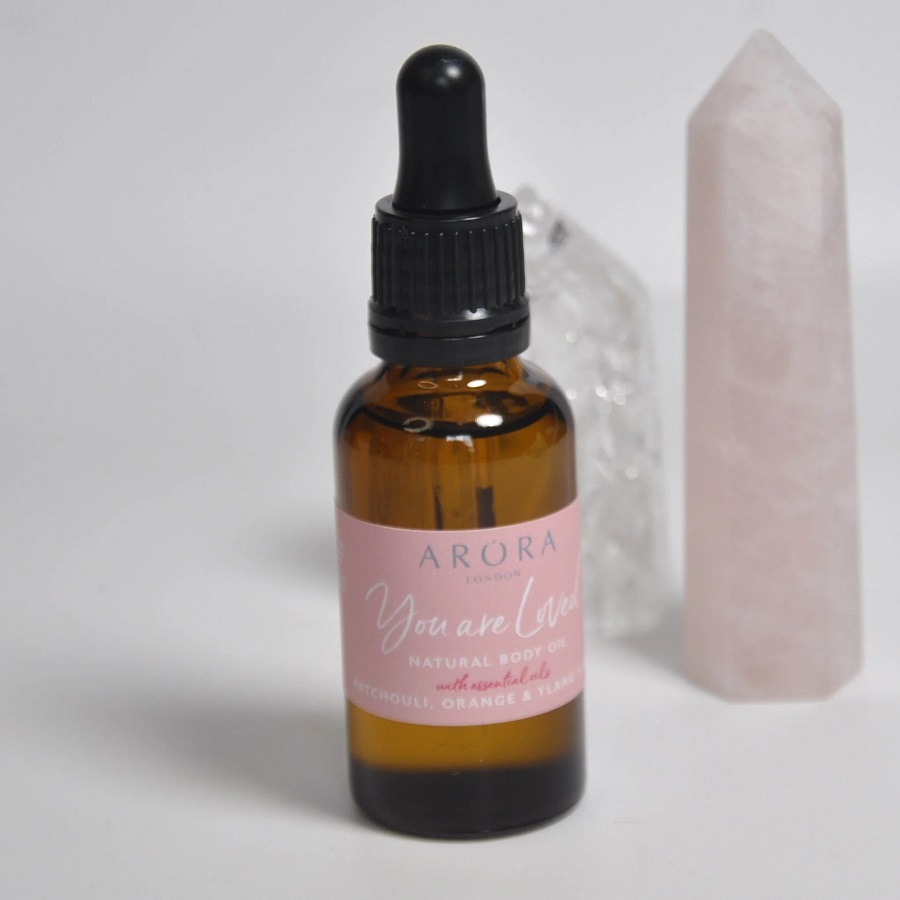
Under £10, a lovely small gift: Arora London “You are Loved” Body Oil (£7.50)
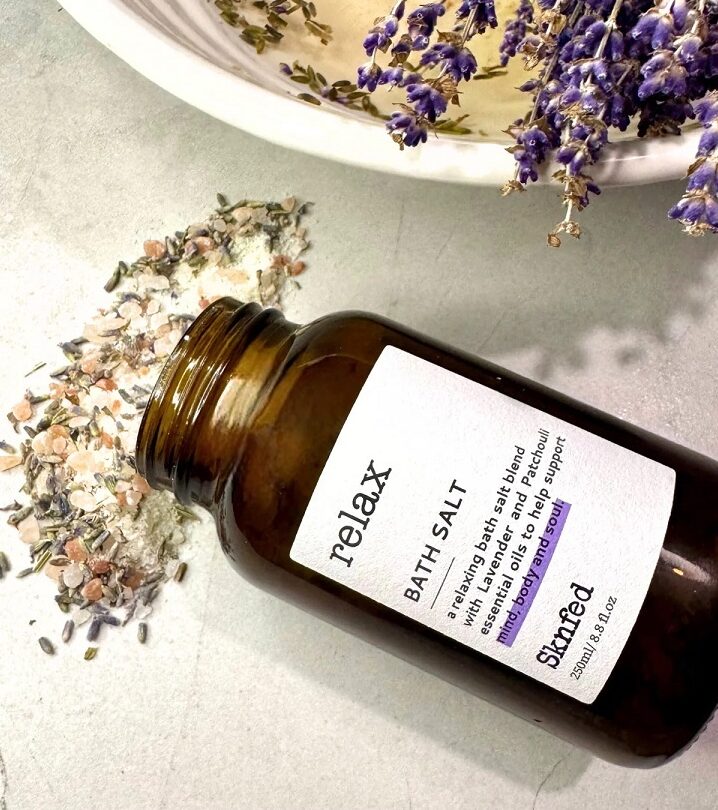
For a pampering bath: SKNFED Relax Bath Salt (£18)
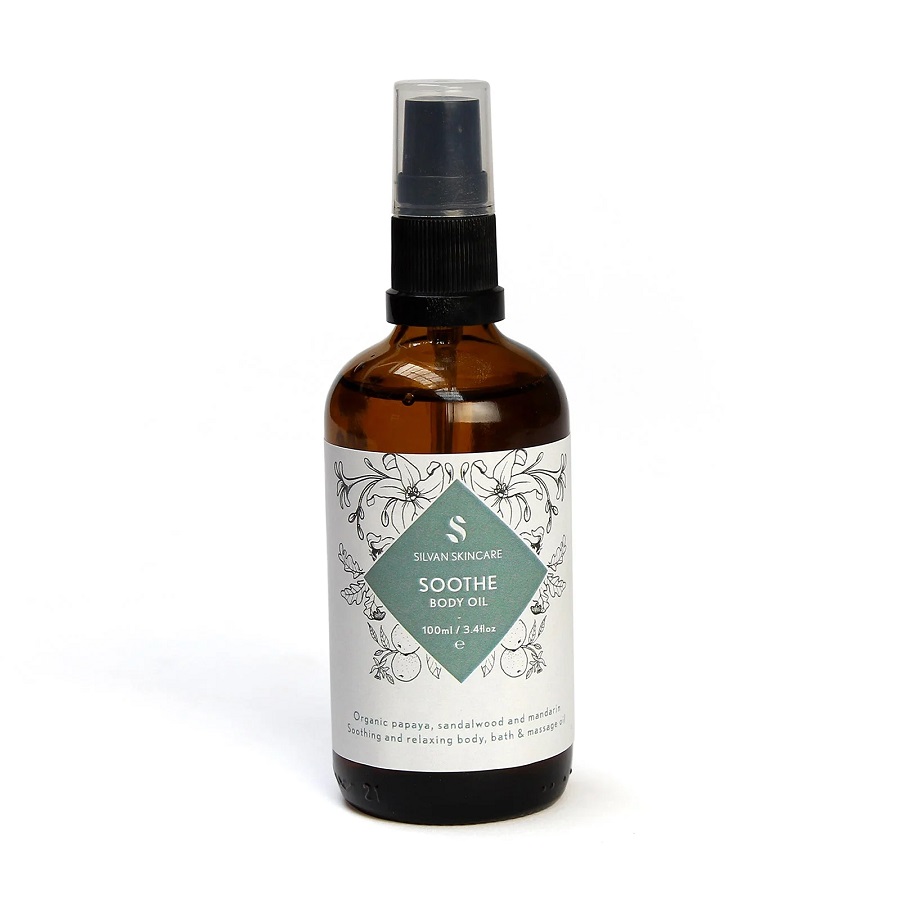
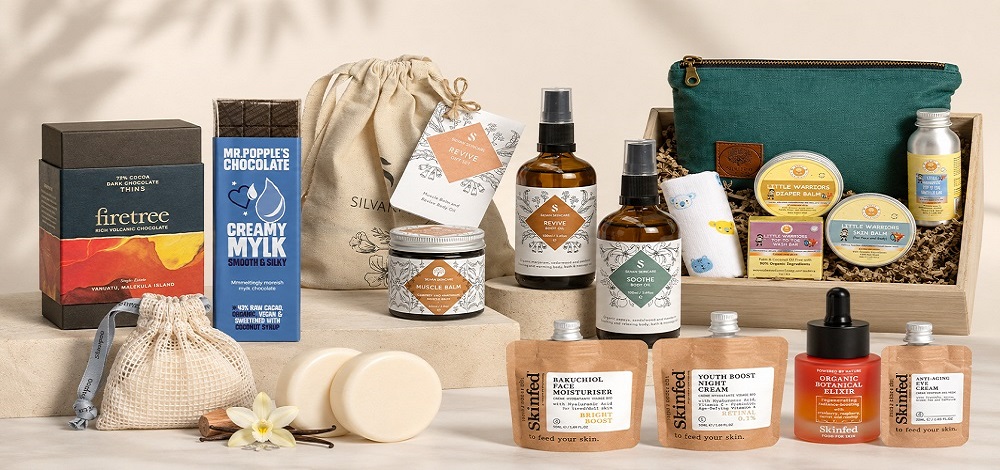
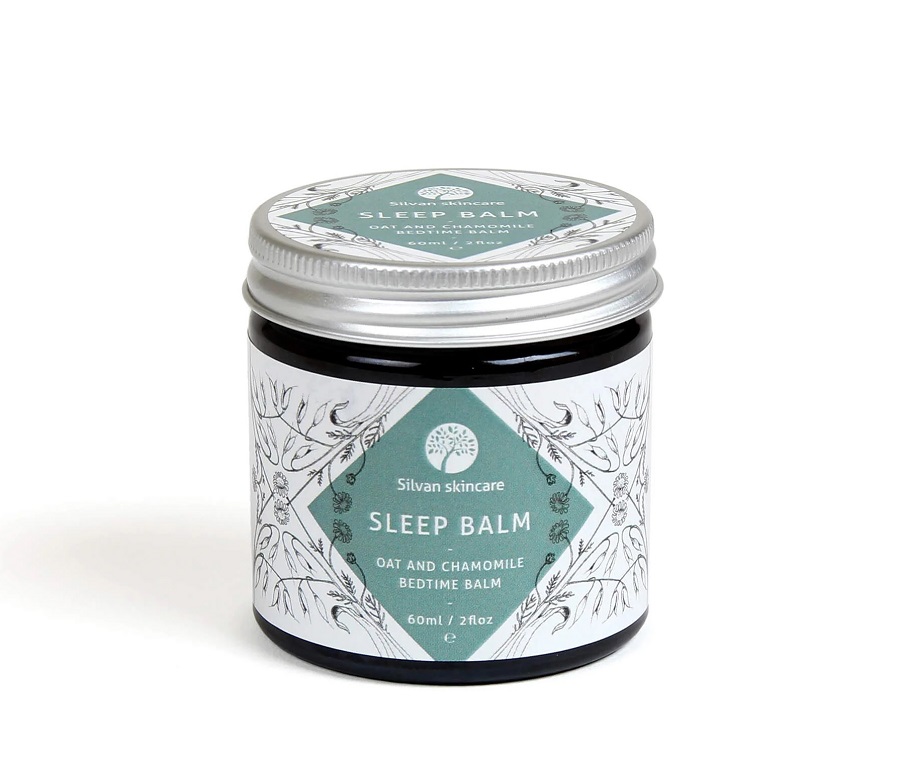
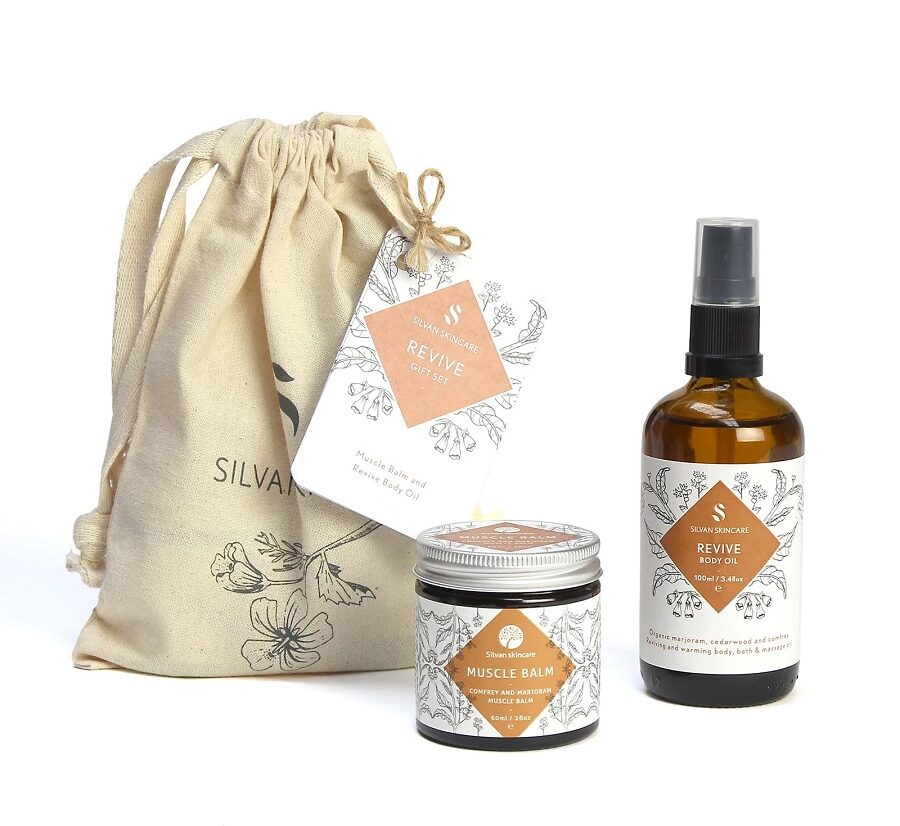
For a self-care lover: Silvan Skincare Soothe Body Oil (£20.50)
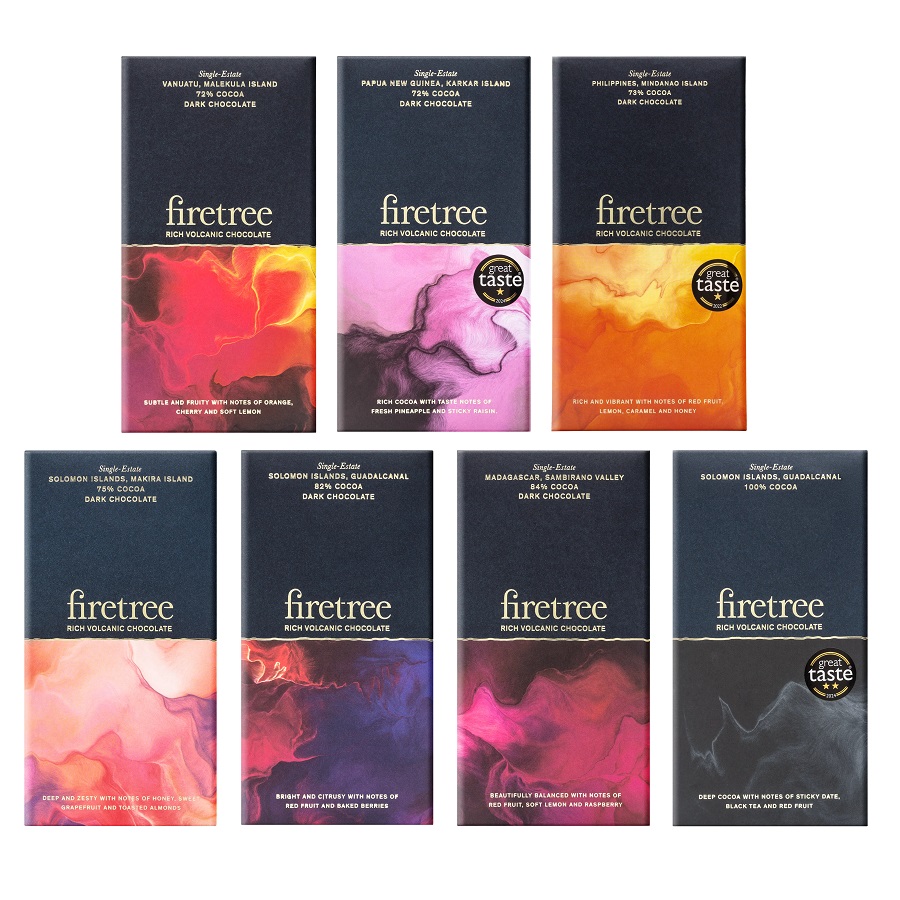
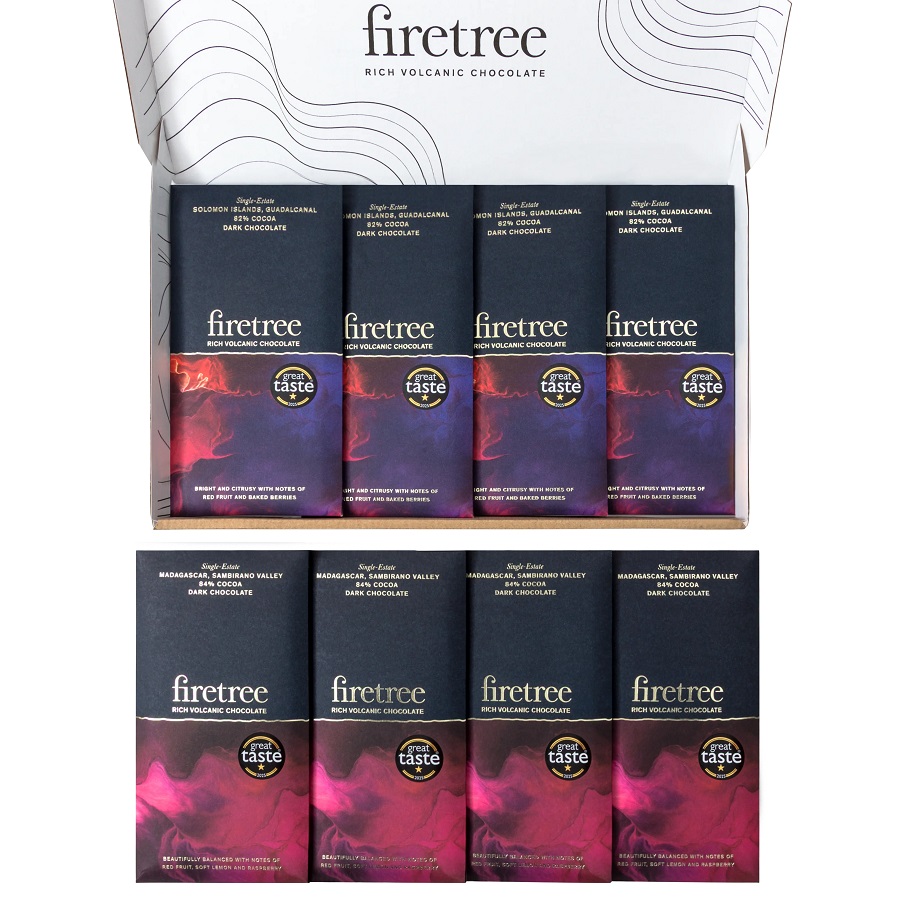
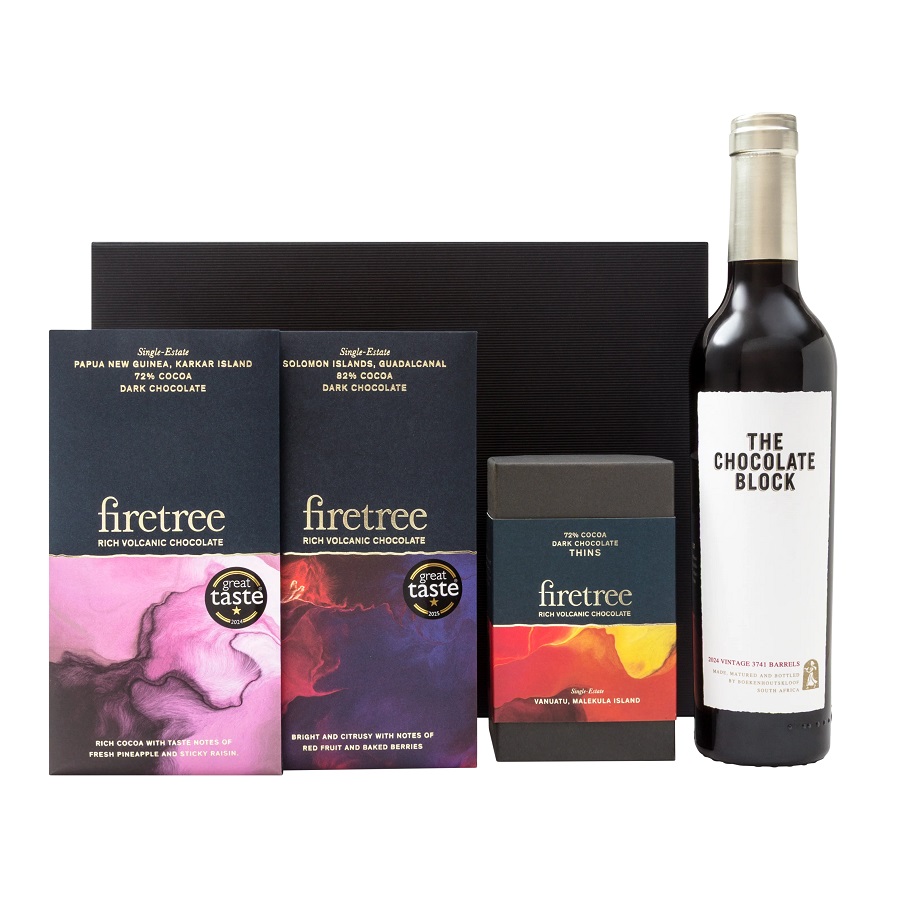
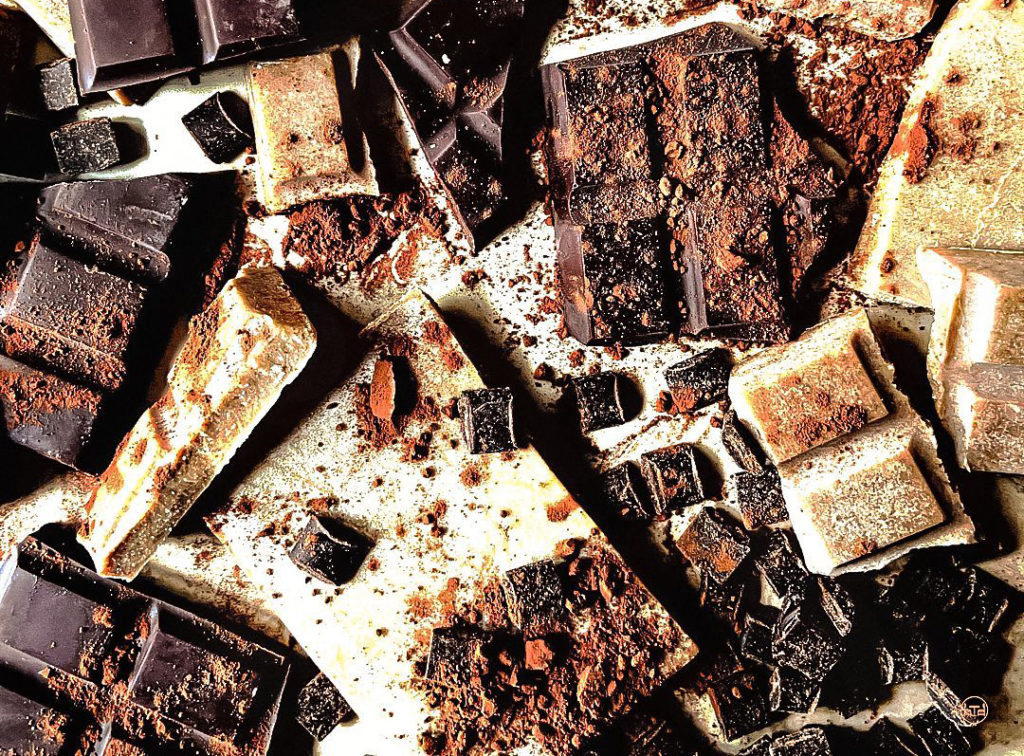
For a chocolate lover: Firetree Dark Chocolate Set (£27)
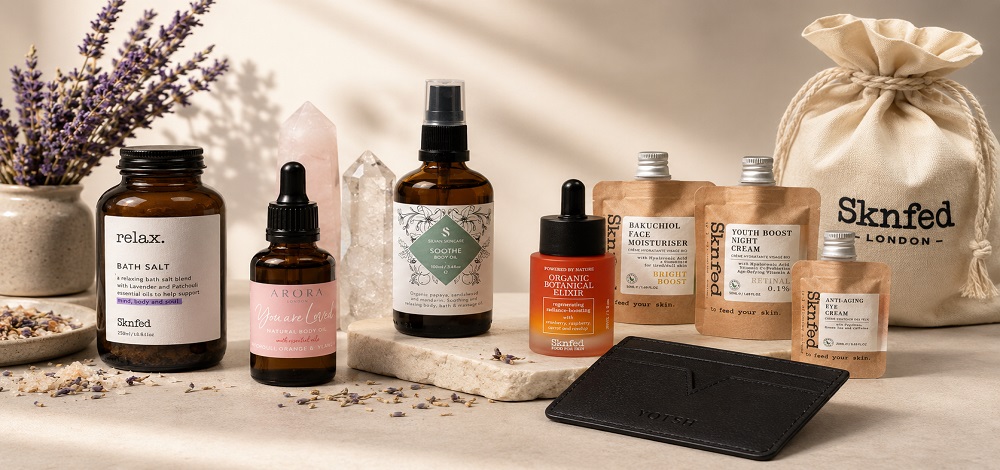
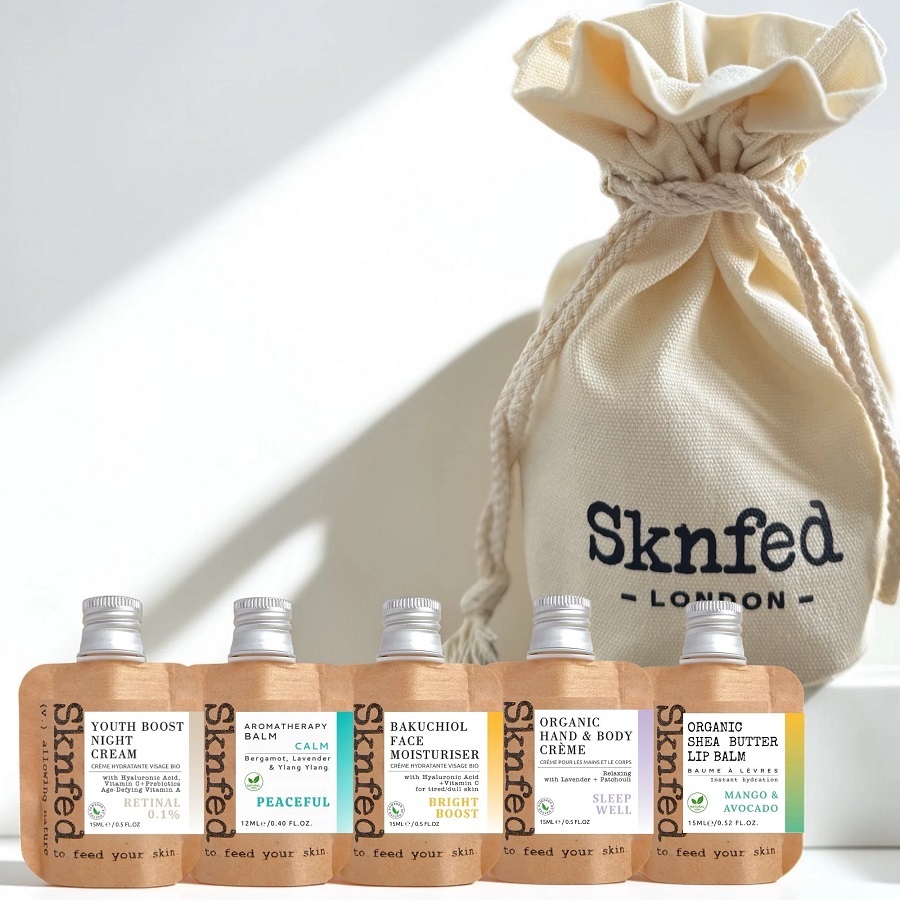
For the skincare fan: SKNFED Wellbeing Discovery Set (£30)
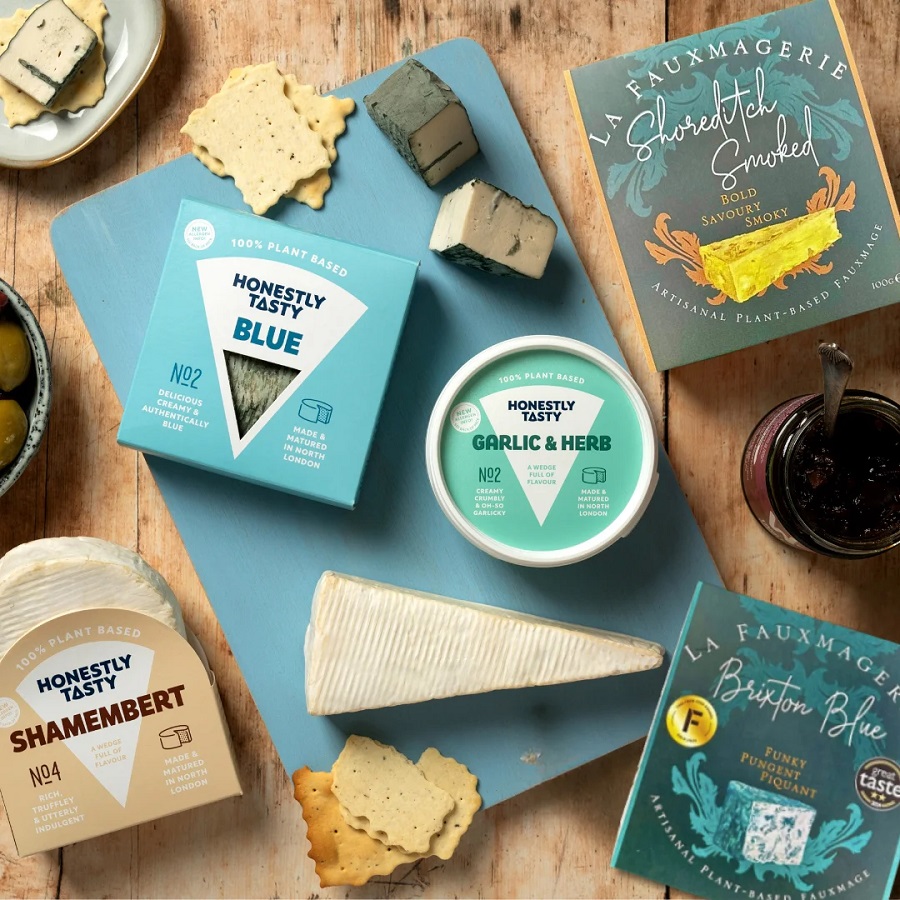
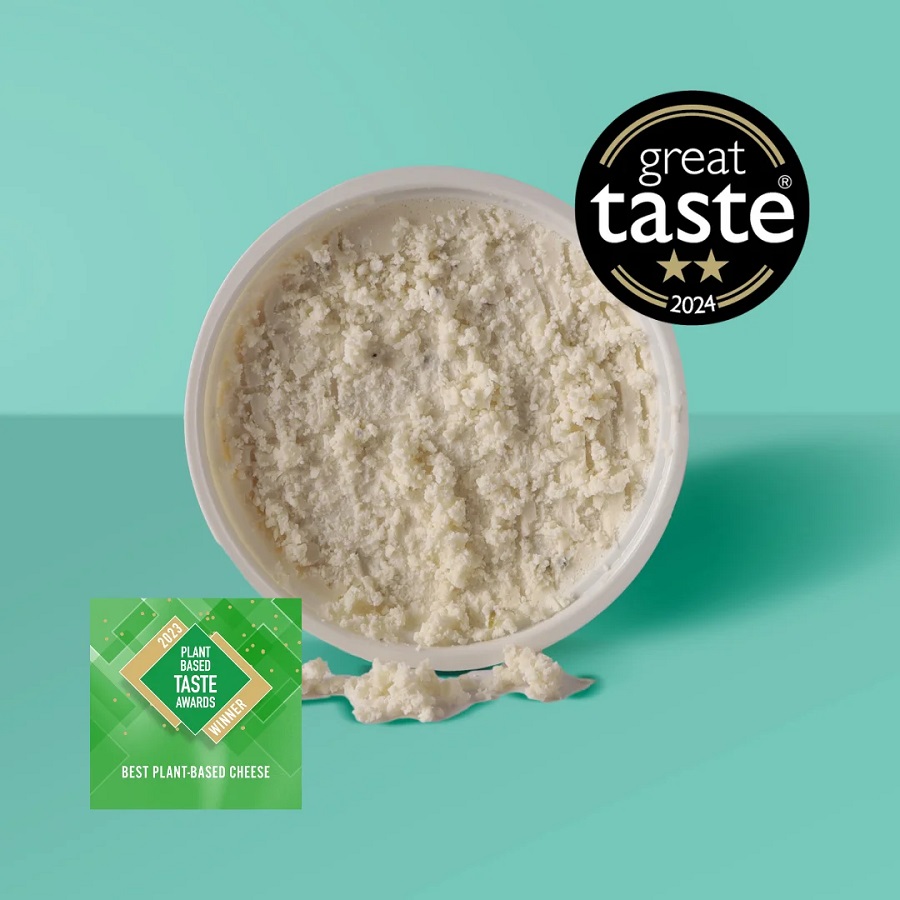
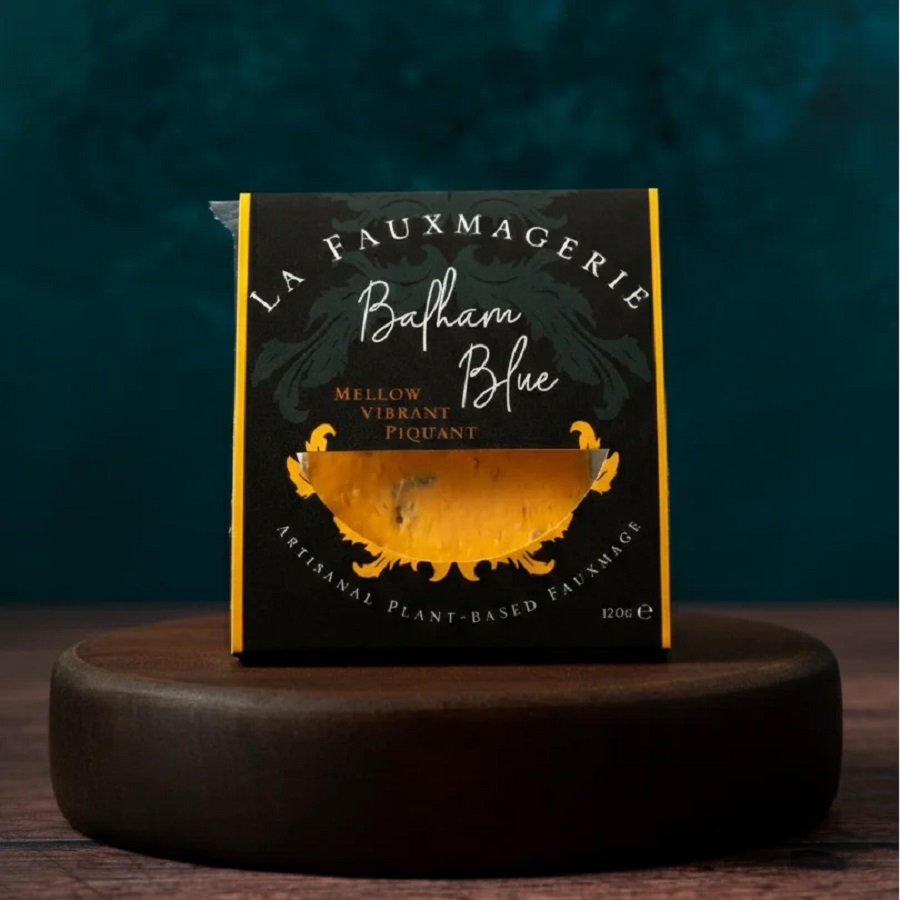
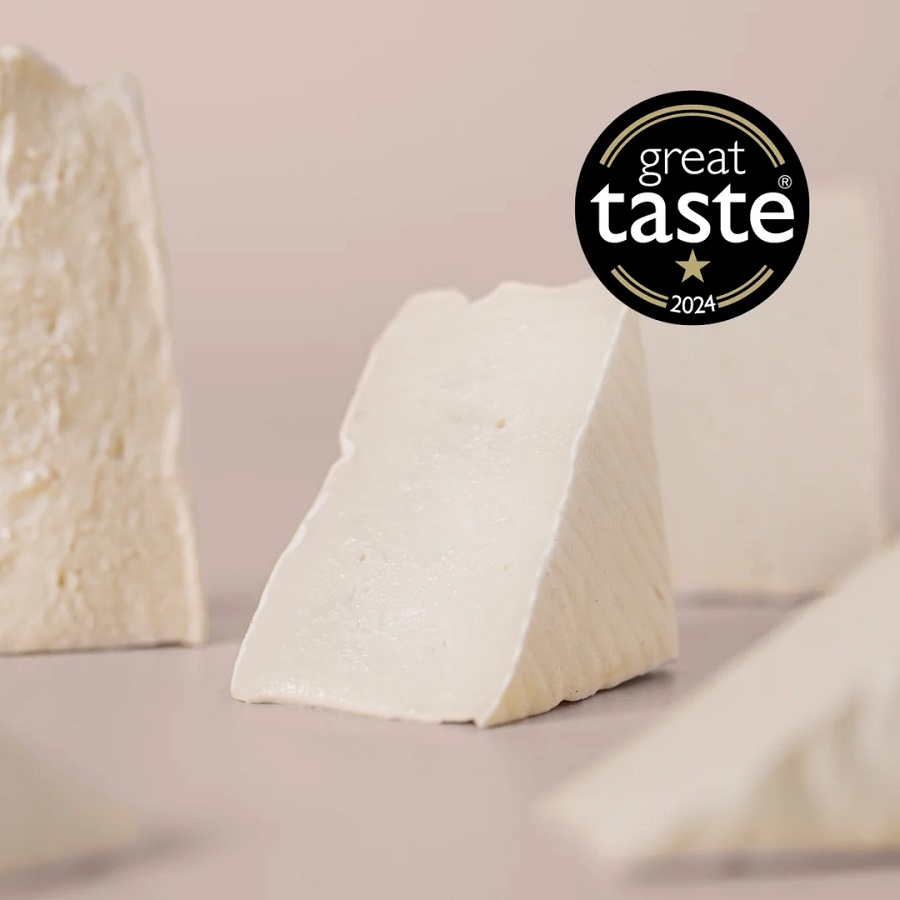
For a foodie: Honestly Tasty Full Plant-Based Cheeseboard (£35.50)
For the everyday carry: Votch Bamboo-Leather Card Holder (£39.20)
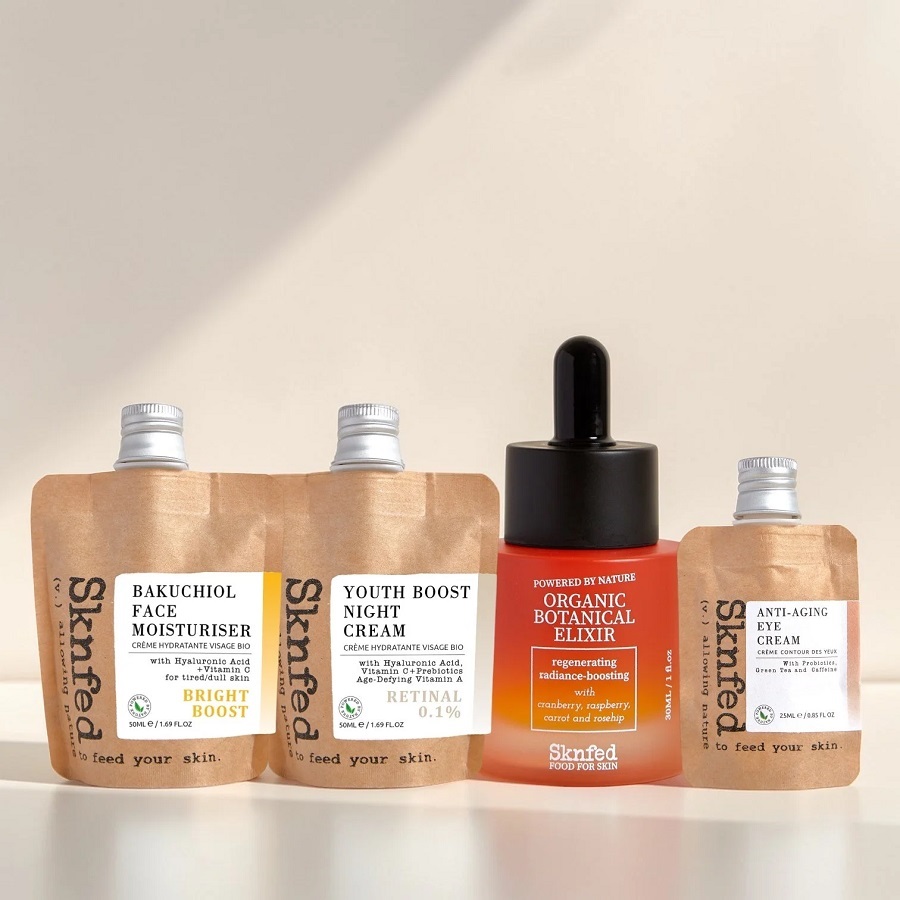
The splurge: SKNFED Anti-Aging Skincare Collection (£79)
Under £10, a lovely small gift. The Arora London “You are Loved” Body Oil (£7.50) is a plant-oil blend of patchouli, sweet orange and ylang ylang, made without the beeswax or lanolin body oils often carry. A considered little gift for a secret Santa or a thank-you, in a size she will use up rather than shelve.
For a pampering bath. The SKNFED Relax Bath Salt (£18) with lavender and patchouli is the low-risk winner for anyone who talks about needing to unwind, and it skips the milk and honey that bath products often lean on. Used up in the nicest way, so there is no clutter, which makes it a good repeat gift year to year.
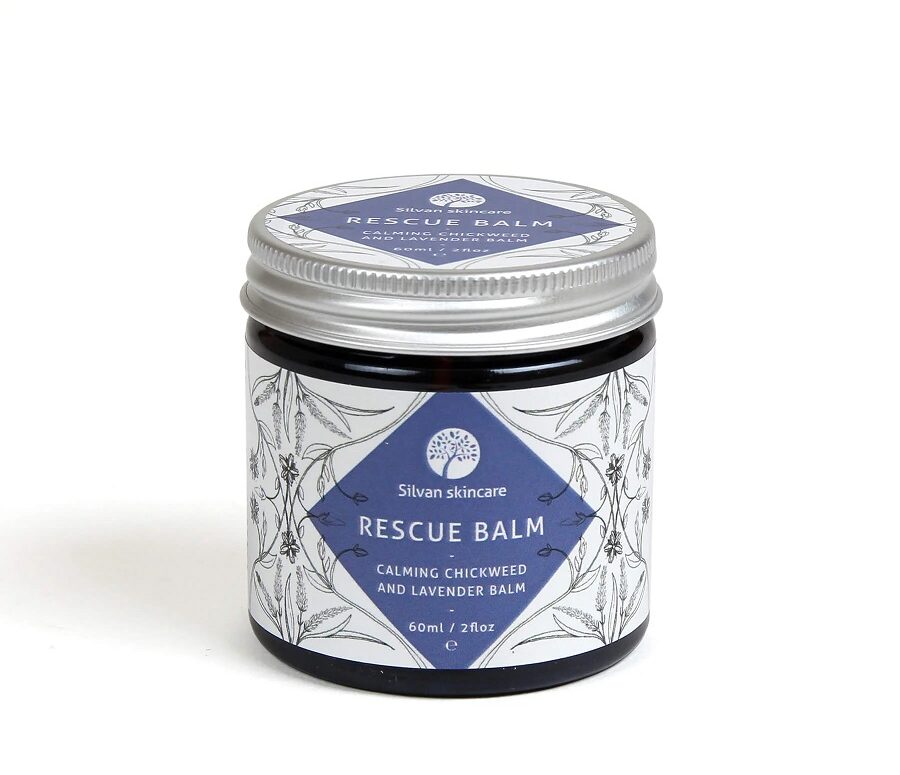
For a self-care lover. The Silvan Skincare Soothe Body Oil (£20.50) with papaya and sandalwood is a spa-at-home present, a body oil made without beeswax and properly cruelty-free. Good for the person who runs a bath and lights everything.
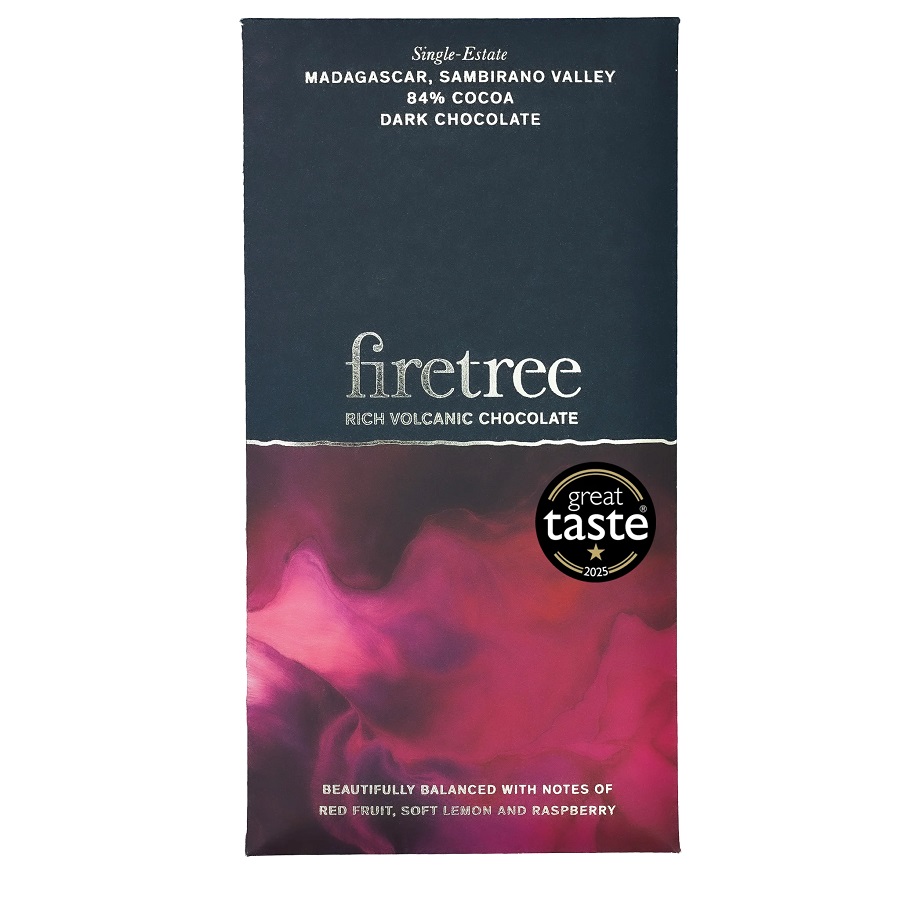
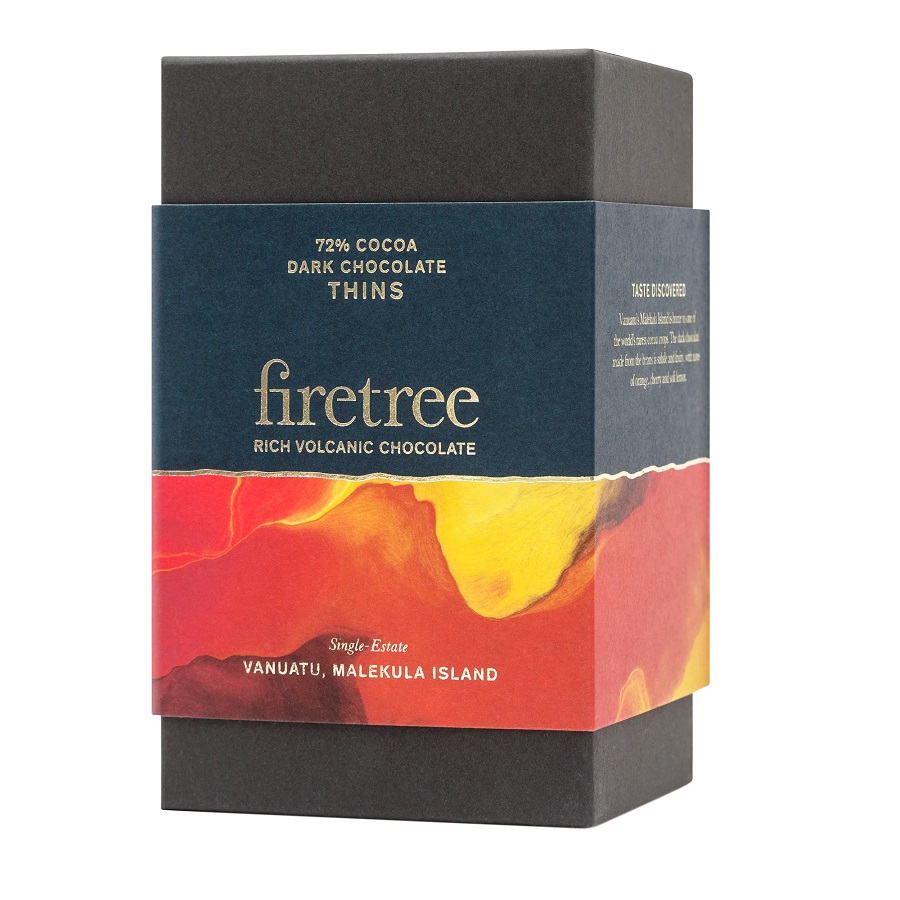
For a chocolate lover. The Firetree Dark Chocolate Set (£27) is seven single-origin bars, dairy-free by nature rather than by compromise, for the woman who tastes chocolate like wine. The gift that proves vegan chocolate is not a downgrade.
For the skincare fan. The SKNFED Wellbeing Discovery Set (£30, down from £47.50) is a set of natural skincare minis made without collagen, the ideal way to gift skincare because she gets to try several things rather than being committed to one you guessed at. Buy this for the person forever screenshotting routines.
For a foodie. The Honestly Tasty Full Plant-Based Cheeseboard (£35.50) is the gift that surprises people, because good dairy-free cheese is not what most expect. A fun present for a dinner-party host or anyone plant-curious, and a talking point rather than a token. More pairings in the Food & Drink Gifts edit.
For the everyday carry. The Votch Bamboo-Leather Card Holder (£39.20, down from £49) is a sleek, bio-based vegan-leather holder, the real alternative to a leather one and a rare vegan gift in the accessories aisle. For the minimalist who carries three cards and a phone.
The splurge. The SKNFED Anti-Aging Skincare Collection (£79, down from £104), built around retinal and bakuchiol rather than collagen, is the statement gift for a partner or a big birthday. It reads as generous and it is the kind of thing she would hesitate to buy herself, which is exactly what a splurge should be. Browse the Beauty Gifts edit for more at this end.
Frequently Asked Questions
What makes a good vegan gift for her?
Something she will use, in a category where being vegan is a real choice rather than a default. Skincare made without collagen or beeswax, body oils and balms without lanolin, dairy-free chocolate and cheese, and vegan leather all qualify, because the animal-free version is the harder one to find. A vegan candle or crystal is a fine present but not really a vegan one.
Are all of these gifts actually vegan and cruelty-free?
Yes. Every product is checked as free from animal-derived ingredients and by-products before it is listed, which matters most for exactly these categories, skincare, chocolate, cheese and leather, where animal ingredients are easy to miss on a label. If it is in the edit, the labels and certifications have been read for you.
What is a good vegan gift for her under £20?
A body oil at £7.50, a lavender bath salt at £18, or a papaya body oil at £20.50 are all lovely and safe, and each sits in a category where the vegan version is the considered one. Under twenty pounds you are best with a consumable she will finish rather than stretching to a full set.
Fermented foods genuinely help your gut, but only the living ones. The benefit comes from the active bacteria the fermentation creates, so the whole game is buying a product that still has them. A 2021 Stanford study published in Cell put healthy adults on a fermented-food diet for ten weeks and saw their gut microbiome diversity rise and inflammation fall, with 19 inflammatory markers dropping. A high-fibre diet, in the same study, did not lift diversity the same way. Living fermented food does something specific.
Which is why the label word to look for is unpasteurised, sometimes written as raw or live. “Just look for non-pasteurised versions,” says Dr Jenna Macciochi, immunologist at the University of Sussex, “pasteurisation kills the live microorganisms.” A shelf-stable, heat-treated or vinegar-pickled kimchi tastes fine and does nothing for your gut. A chilled, unpasteurised one is the real thing. Everything the Fermented Foods range stocks is genuinely fermented and unpasteurised, which does the hard part of the checking for you.
The only word that matters on the jar is unpasteurised, and everything else is flavour.
Food first, as ever: you do not need a probiotic pill if you are eating the real thing, and a few spoonfuls of live kimchi does more than most capsules. If you want the fuller picture on why, our guide to what gut health actually means and the Gut Health edit go deeper.
The Best Organic Kimchi and Fermented Foods, by what you want
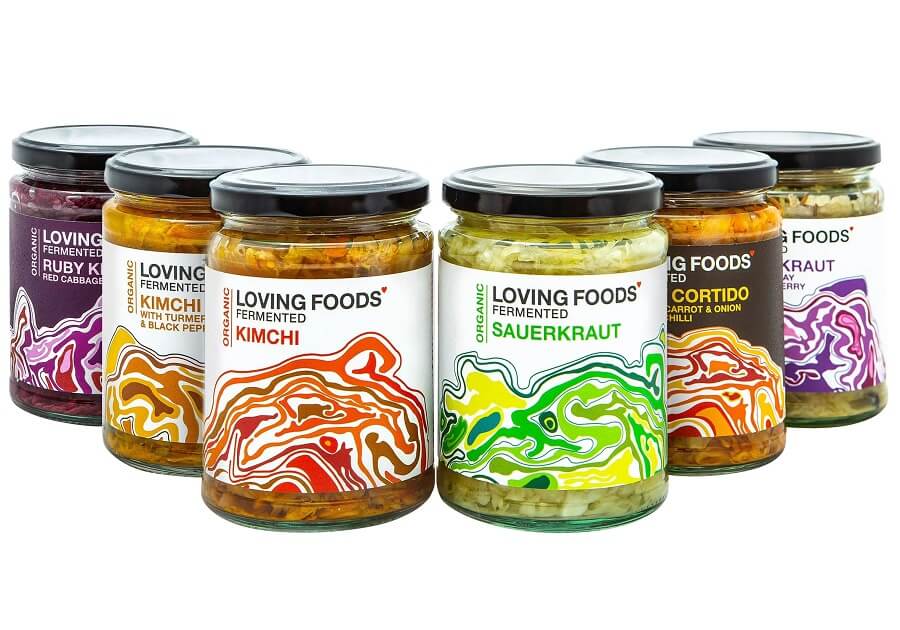
Every pick below is organic, unpasteurised and live. Start with one, and build variety over time, since a mix of ferments feeds a wider range of gut microbes than any single jar.
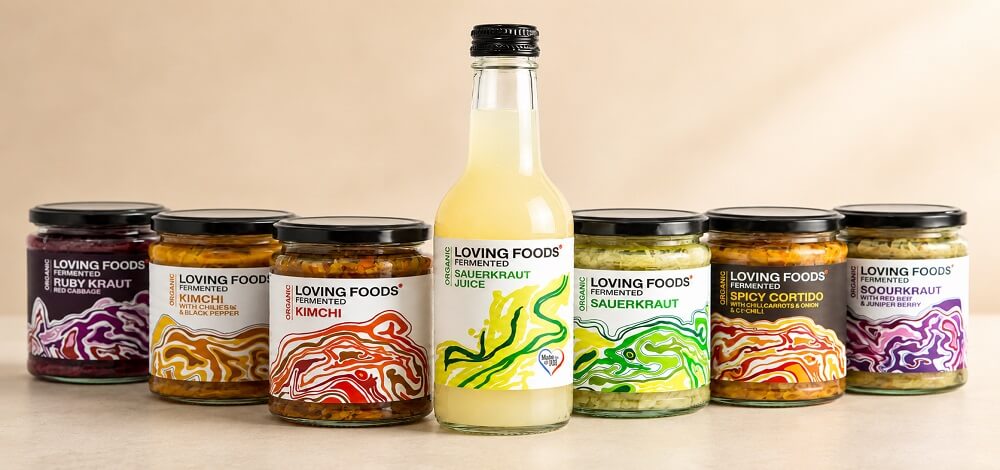
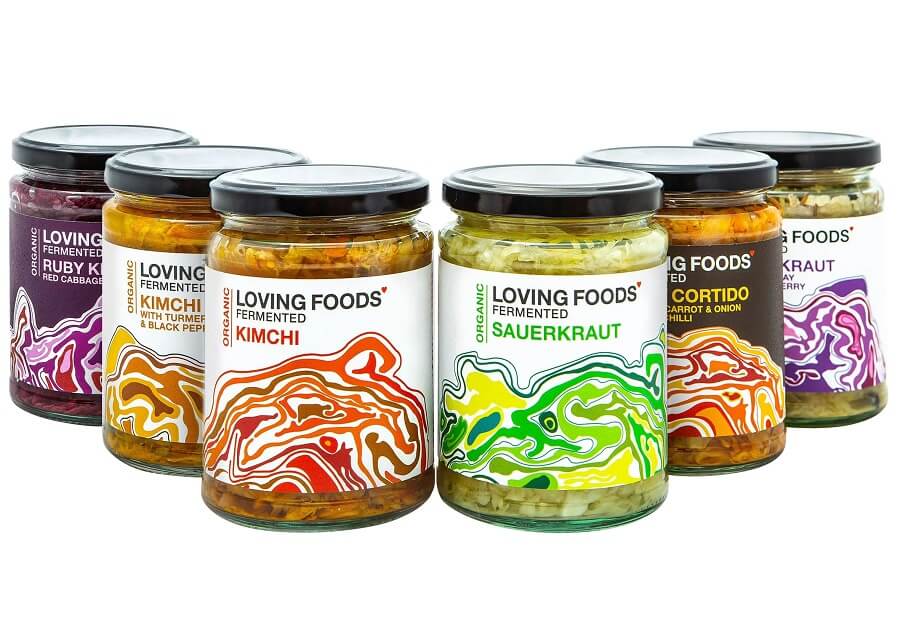
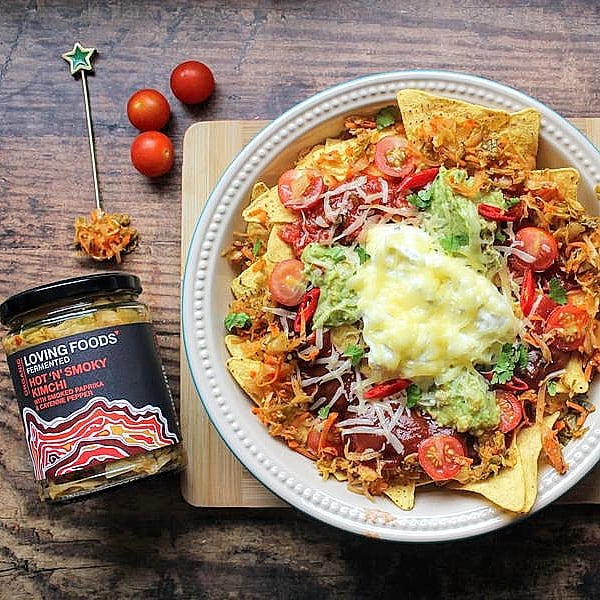
Best organic kimchi:Organic North Kimchi Mixed Case (£22.31). A case of proper unpasteurised, organic kimchi, the direct answer to the search that brought you here. Buy this if kimchi is what you actually want: spicy, complex, and alive, with enough in a case to make it a daily habit rather than a one-off jar.
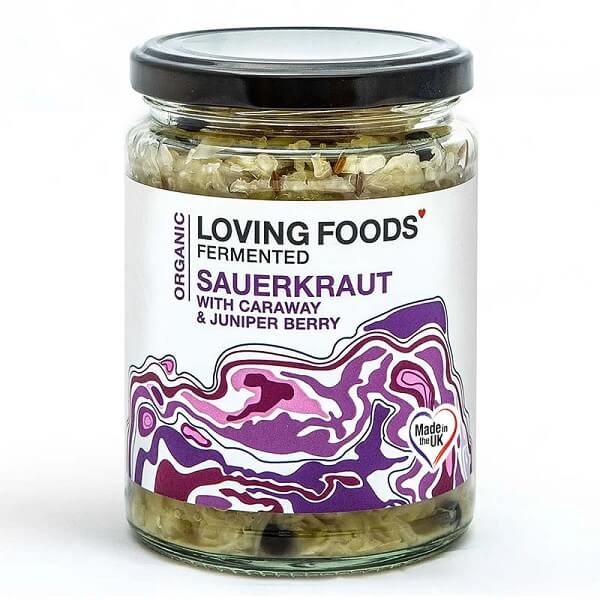
Best everyday sauerkraut:Organic Sauerkraut, Caraway & Juniper Berry (£6.99). The low-effort daily option. Milder than kimchi, a spoonful on the side of almost anything, and the cheapest way to get live cultures in every day. Buy this if you want the habit without the heat.
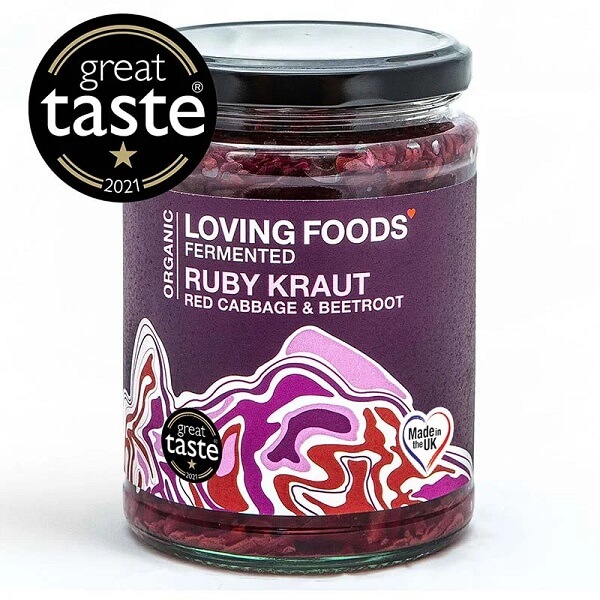
Best for beginners:Organic Ruby Kraut (£6.99). Fermented red cabbage and beetroot, gentler and slightly sweeter, and a good gateway if strong ferments have put you off before. Buy this if you are easing in.
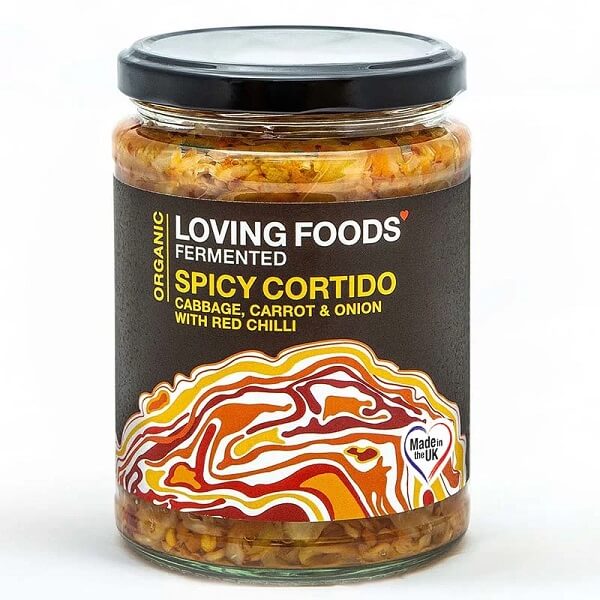
Best spicy alternative to kimchi:Organic Spicy Cortido Kraut (£6.99). A Latin American style ferment with chilli and oregano, for people who want the kick of kimchi with a different flavour. Buy this to keep variety in the fridge.
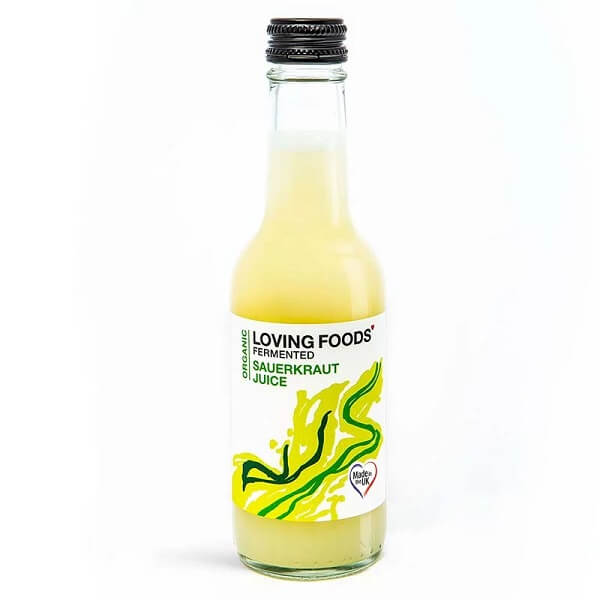
Best low-commitment starter:Organic Sauerkraut Juice (£2.99). A small brine “gut shot” if you are not sure you will eat a whole jar, and the exact kind of vegetable brine drink the Stanford study included. Buy this to test the waters for the price of a coffee.
Best for trying everything: Fermented Vegetables Mixed Case (£39.99). Kraut and kimchi together, the efficient way to build the variety that actually moves the needle. Buy this if you already know you are in.
How to Choose, and How to Eat It
Four checks separate a gut-friendly ferment from a decorative one. It must say unpasteurised, raw or live, not pasteurised. It should be sold chilled, because live products live in the fridge, not on a warm shelf. Organic is worth prioritising here, since you are eating the whole vegetable and its skin. And short ingredients, vegetables, salt, spices, beat a long list with added vinegar or preservatives, which usually means the cultures are gone.
Then go slow. Live ferments can cause a bit of bloating or wind at first while your gut adjusts, so start with a tablespoon a day rather than a bowlful, and build up. A daily spoonful of one ferment is a fine start; the bigger gains in the research came from variety and larger regular servings over weeks, not from one heroic portion. This is a habit, not a cleanse, and it doubles as a lever for your immune system, since most of your immune cells live in your gut, which is why the Support Immunity edit overlaps with this one.
Frequently Asked Questions
Is shop-bought organic kimchi actually good for your gut?
Yes, as long as it is unpasteurised and sold chilled, which means the live bacteria are intact. Pasteurised or shelf-stable kimchi has been heat-treated and no longer contains living cultures, so it is really just a spicy pickle. Check the label says raw, live or unpasteurised, and that you found it in the fridge.
How much fermented food should you eat for gut health?
Start with about a tablespoon a day and build up as your gut adjusts, since live ferments can cause temporary bloating at first. Variety matters more than volume, so rotating between kimchi, sauerkraut and a brine drink does more than a large serving of one. A small daily portion is a realistic, sustainable target.
Is kimchi or sauerkraut better?
Both are excellent, and the honest answer is to eat both. Kimchi is spicier and more complex, sauerkraut is milder and cheaper for an everyday habit, and eating a range of ferments feeds a wider set of gut microbes than committing to one. Whichever you choose, the only thing that matters for your gut is that it is unpasteurised.
You have been told to cut carbs and load up on fibre, to fear fat and to fear seed oils, to fast and to never skip breakfast. No wonder eating well feels like an exam you keep failing. It is not an exam. It is a direction, and you are almost certainly closer to it than you think.
The honest answer to how to eat well is duller and far kinder than the diet industry needs it to be. There is no single food that fixes you and no plan you have to follow perfectly. There is a short framework, a handful of changes that carry most of the benefit, and a way of shopping that makes the whole thing cheaper and easier to keep up. This guide to Eat Well lays out the framework, ranks the changes by how much they matter, and ends with the kitchen that makes them the default.
Eating Well is a Framework, Not a Diet
The most useful shift is to stop treating food as a test. A diet is a set of rules you either keep or break, which is why diets end. A framework is a direction you lean in, where a good week and a rough week both count and neither is a verdict on your character.
The UK already has the framework, and it is deliberately loose. The NHS Eatwell Guide sets out rough proportions, plenty of vegetables and fruit, meals based on higher-fibre starchy foods, some protein with more from beans and pulses, some dairy or alternatives, and only small amounts of the fatty, salty, sugary stuff. Its most important line is the one people skip: “You do not need to achieve this balance with every meal, but try to get the balance right over a day or even a week.” Over a week. Not at every meal.
That single idea removes most of the pressure. You are not aiming for a perfect plate three times a day, you are nudging the average. Which means the goal is not restriction, it is direction, and the rest of this is just the directions worth walking in, in order of how much they matter.
Eating well is a direction, not a test, and you do not have to be perfect at it to get almost all of the benefit.
Lever One: Eat Mostly Real Food
The biggest single lever is to eat mostly whole and minimally processed food, and to notice when you are not. This is the change with the most evidence behind it, and it is not about any one nutrient. It is about how much of what you eat has been engineered in a factory rather than cooked in a kitchen.
The scale of it is easy to underestimate. Around 54% of the calories UK adults eat now come from ultra-processed food, according to analysis of the National Diet and Nutrition Survey. And the health signal is not trivial: a 2024 umbrella review in The BMJ, pooling dozens of studies, linked higher ultra-processed consumption to 32 worse health outcomes, from heart disease to poorer mental health. That does not make a single ready meal a disaster, but it makes the overall drift worth reversing.
You do not need an app to spot ultra-processed food. A rough test does most of the work: if the ingredients list is long and full of things you would not keep in a home kitchen, colours, emulsifiers, flavourings, protein isolates, it is probably ultra-processed. A tin of beans, a bag of oats, a block of cheese and a chicken thigh are not. The direction is simply more of the second kind and a bit less of the first, not fear, and not never.
Lever Two: Eat more Plants, and more Kinds of them
The second lever is plants, and the modern version of the advice is about variety as much as volume. Five a day still holds, but the newer, more useful target is diversity: eating many different plants across a week feeds a wider range of gut microbes, which is one of the clearer findings in nutrition science.
“The wider diversity of fibre-packed plants you eat, the happier and more diverse your gut microbiome will be,” says Professor Tim Spector, Professor of Genetic Epidemiology at King’s College London and co-founder of ZOE, whose gut-project research found that people eating 30 or more different plants a week had noticeably more diverse microbiomes than those eating fewer than ten. That gut diversity is tied to how well your body handles food and inflammation, which is why plant variety sits so high on the list. Our Gut Health edit goes deeper on the why.
According to NHS guidance on getting more fibre, UK adults consume around 19g of fibre a day, compared with the recommended 30g, and only about one in ten of us hits the target. The fix is not heroic.
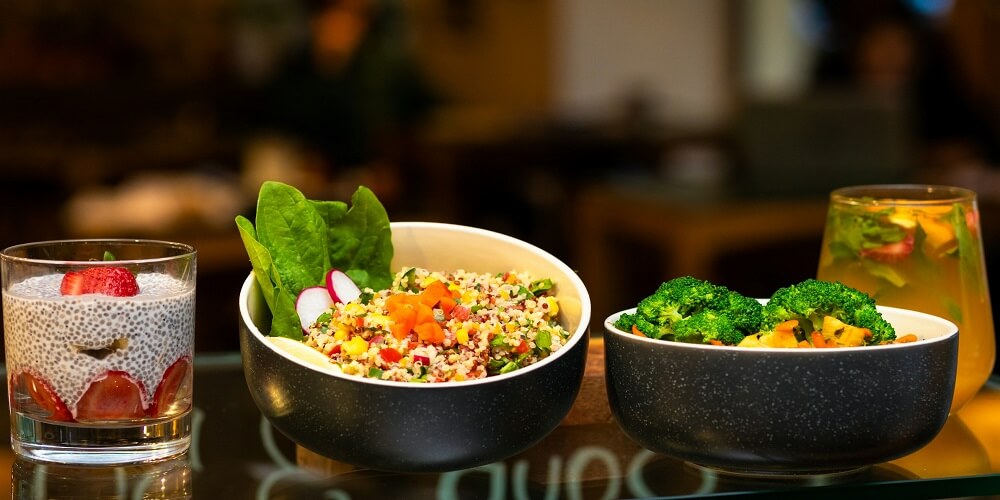
Thirty plants a week, without counting. Plants are not just vegetables. Fruit, wholegrains, beans, lentils, nuts, seeds, herbs and spices all count, and a single one can be a sprinkle of seeds on your porridge. A bowl of mixed-grain porridge with berries and nuts is already five or six. A lentil soup with a handful of herbs is another few. Swap one white loaf for a seeded wholemeal, keep a bag of frozen mixed veg and a few tins of different beans in, and thirty stops being a target you chase and becomes a number you pass without noticing.
Lever Three: Add Before You Subtract
The third lever is a mindset that makes the other two stick: add good things before you cut anything. Restriction is what makes eating “well” feel like punishment, and it is also what makes it fail. Cut a whole food group and you tend to rebound, lose nutrients, and learn nothing you can keep.
“Focus on what we should be eating and doing more of, like increasing fluid and fibre, rather than focussing on restriction,” says Marcela Fiuza, a registered dietitian and British Dietetic Association spokesperson. It is the opposite of the January plan that bans bread. As the BDA puts it, the healthiest and most sustainable approach is small and slow, which is exactly what a fad diet cannot sell you.
In practice, adding looks like a second vegetable at dinner, beans stirred into the mince, fruit and nuts where the biscuit was, fish twice a week with one oily portion, water instead of the third coffee. None of it forbids anything. You are crowding the plate with better defaults until the rest naturally shrinks, and because nothing is banned, there is nothing to fall off.
Lever Four: The Short List Genuinely Worth Cutting Down
There is a “less-of” list, and the honest version is short and specific rather than a war on entire food groups. Four things are worth easing down, and none of them needs to hit zero.
Free sugars are the main one, the sugar added to food and drink plus what is in honey and juice, which UK adults are advised to keep under about 30g a day, roughly seven sugar cubes. The quickest win is drinks: a single can of cola is most of that limit, so swapping sugary drinks for water, tea or coffee does more than fussing over the sugar in your cooking. Salt is the second, with a cap around 6g a day, most of which sneaks in through bread, sauces and processed food rather than the shaker. Third, red and especially processed meat, bacon, ham and sausages, are worth keeping occasional rather than daily. And alcohol is worth honest attention, since it is calories and risk with no nutrition attached.
Notice what is not on the list: fat, carbs, gluten, dairy, or any of the food groups the internet takes turns demonising. For most people, those are not the problem. The processing, the added sugar and the missing plants are.
Lever Five: Where Your Food Comes From is part of Eating Well
Eating well is not only about your body, it is also about what your food does on the way to your plate, and this is the part the official guides leave out. Two meals can be nutritionally identical and worlds apart in how the coffee was grown, how the workers were paid, or how much the packaging and farming cost the planet. Choosing better on that front is part of the framework, not a separate hobby.
The useful version is targeted, not perfectionist. Organic matters most for the produce you eat skin-and-all and for reducing farming’s chemical load, so it is worth prioritising there rather than everywhere; the Organic range makes that easy to shop. Fair trade matters most for the imported crops with the worst records, coffee, cocoa and tea, where certification is a genuine signal that growers were paid properly, which is why The Cellar edit and our sustainable coffee guide focus there. And eating more plants, the lever you are already pulling for your gut, happens to be the single biggest way to lower the footprint of your diet, which our vegan living guide covers without requiring you to go all the way.
You do not have to get every item right. Prioritise the few purchases where sourcing genuinely changes the outcome, and let the rest be ordinary.
So what is worth buying, and how to stock a Kitchen
Real food, more plants and adding-not-cutting do almost all of the work, and none of it is a product. That is the honest starting point. The gap is that eating this way is far easier when your kitchen is set up for it, and a small, well-chosen set of staples is what turns the framework from a good intention into the path of least resistance.
The whole-food pantry is the engine. A few different wholegrains (oats, brown rice, wholemeal pasta), several tins and bags of pulses (chickpeas, lentils, mixed beans), nuts and seeds, a good olive or rapeseed oil, tinned tomatoes, and frozen vegetables and fruit that never go off and are just as nutritious as fresh. With that in, a plant-heavy, thirty-a-week meal is fifteen minutes away on a tired evening. The Pantry edit is built around exactly these staples, and the wider Food & Drink hub is where the plant-forward and ethically sourced versions live, from Vegan basics to better everyday treats.
Two criteria keep it honest. Favour foods close to their raw form over engineered ones, and prioritise the sourcing that matters on the imported crops rather than agonising over everything. Ignore anything sold as a “superfood”, a “detox” or a shortcut, which is marketing, not nutrition.
Eating well on a budget. This is where the framework quietly wins, because whole food is often the cheap food. Dried and tinned pulses are among the lowest-cost protein and fibre there is. Frozen vegetables cost less than fresh, last for months and waste nothing. Oats are pennies a bowl. Buying wholegrains, beans and seasonal veg and cooking from them beats both the ready-meal aisle and the “wellness” aisle on price, and our eco-friendly grocery shopping guide sets out a full shop that eats well for less. Eating well is not a luxury tax. Done this way, it is usually the frugal option.
What to Skip: “Superfoods”, Detoxes, and the Meal-Replacement Aisle
A whole industry sells shortcuts to the framework above, and almost all of it is worth ignoring. “Superfood” is a marketing word with no scientific meaning, and no single berry, powder or seed does anything a varied diet of ordinary plants does not do better and cheaper. “Detox” products are the clearest tell: your liver and kidneys do that job, and a teatox or a juice cleanse does not help them, it just relieves you of money and, briefly, of fibre.
Meal-replacement shakes and greens powders occupy the same space, promising to bottle a good diet. A greens powder is not a substitute for eating actual vegetables, and a shake that replaces a meal usually replaces the chewing, the fibre and the enjoyment along with it. Browse the Nutrition & Superfoods shelf with that filter and it thins out fast, leaving the few genuinely useful basics rather than the reinvented wheel.
The rule of thumb: if a product is selling you a shortcut to eating well, the shortcut is the thing that is not real. The food is.
It was never an exam
Go back to the feeling of failing the test, and the relief is that there was never a test to fail. Eating well is a direction, and the directions are short: mostly real food, more plants and more kinds of them, add before you cut, ease down on sugar and the rest of the short list, and buy the few things where sourcing genuinely matters. Do most of that most of the time and you have almost all of the benefit, without a single rule you have to keep perfectly.
The reassuring part is how ordinary and how cheap the winning version is. A full pantry, a bag of frozen veg and a pot of lentils outperform every plan with a name.
The Food and Drink edit is filtered to the whole-food staples, plant-forward basics and ethically sourced treats that make this the easy option, and our grocery, coffee and plant-based guides walk through the weekly shop one aisle at a time.
Frequently Asked Questions
What does “eating well” actually mean?
Eating well means leaning towards mostly whole, minimally processed food, plenty and variety of plants, and enough protein and healthy fats, over a week rather than at every meal. It is a direction, not a strict diet, and the NHS Eatwell Guide is the loose UK framework for the proportions. You do not have to be perfect to get most of the benefit.
What is the single most important change to eat better?
Shift more of your diet towards whole and minimally processed food and away from ultra-processed products, which now make up around half of UK adults’ calories. If you want one add-on habit, eat more plants and more different kinds of them across the week. Both matter more than any single “superfood” or supplement.
How many plants should I eat a week?
Aim for around 30 different plants a week, counting vegetables, fruit, wholegrains, beans, nuts, seeds, herbs and spices. Research from Professor Tim Spector’s gut project found people hitting 30-plus had more diverse gut microbiomes than those eating fewer than ten. A varied bowl of porridge or a mixed-bean soup gets you several at once.
Is ultra-processed food really that bad?
A single ultra-processed item will not harm you, but the overall drift is worth reversing. A 2024 umbrella review in The BMJ linked higher consumption to 32 worse health outcomes. The practical move is not fear but direction: more food that looks close to how it grew, less that has a long list of ingredients you would not keep at home.
Can you eat well on a budget?
Yes, and it is often the cheaper option. Dried and tinned pulses, oats, frozen vegetables and seasonal produce are among the lowest-cost, highest-value foods there are, and cooking from them beats both the ready-meal and the wellness aisles on price. Eating well is about staples and habits, not expensive “health” products.
Most “vegan gift guides” pad themselves with things that were never going to contain an animal: a candle, a notebook, a pebble on a string. Useful to know they are vegan, but hardly a decision. The gifts where vegan genuinely matters are the ones you would normally have to check: chocolate that usually has milk in it, cheese, balms and creams that lean on beeswax and lanolin, and bags and wallets made of leather. Get those right and you have given something they can enjoy without a second thought.
Everything below is screened as free from animal-derived ingredients before it is listed, so the checking is done. Browse the full Vegan Gifts edit to go wider, the Gifts for Her shortlist to narrow it, or our vegan living guide if the recipient is newly plant-based.
A vegan crystal is just a crystal. Vegan chocolate, cheese and leather are the gifts where the label actually earns its place.
Vegan Chocolate
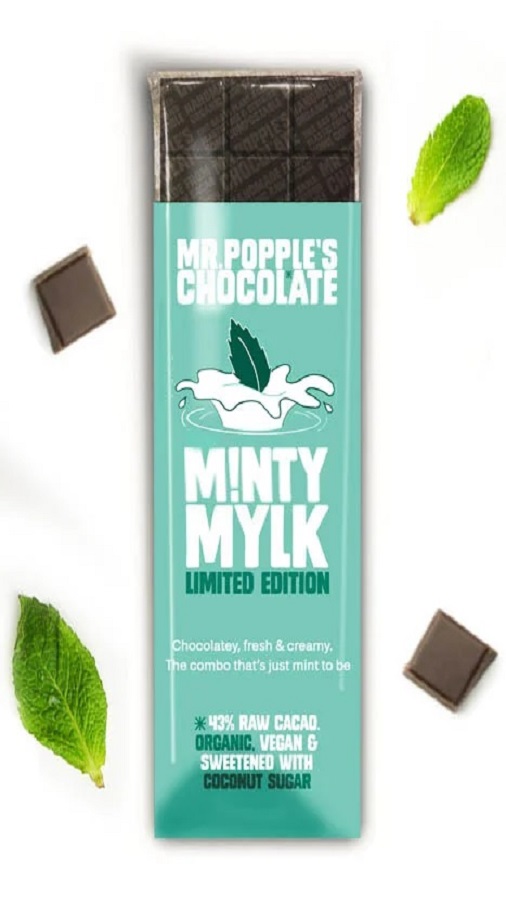
Milk chocolate is the obvious trap, so a good dairy-free bar is the easiest win here. Firetree makes single-origin dark that a chocolate snob will respect, and Mr Popple’s does the harder trick: convincing dairy-free “mylk”.
1.Mr Popple’s Creamy Mylk, £2.65. A dairy-free take on milk chocolate, the stocking filler for the person who thinks vegan chocolate has to be dark.
2.Mr Popple’s Minty Mylk, £2.65. The mint version, for the after-dinner-chocolate crowd.
Cheese is the category people do not believe until they try it, which makes it the most surprising gift on this list. Honestly Tasty’s cashew-based range is the one to send a sceptic.
This is where animal ingredients hide in plain sight: beeswax in balms, lanolin in creams, honey in bath products, collagen in serums. A vegan version is a real choice, not a default.
Shampoo often carries silk protein or honey, leather is leather, and even a massage candle usually means beeswax, so these are all categories worth checking.
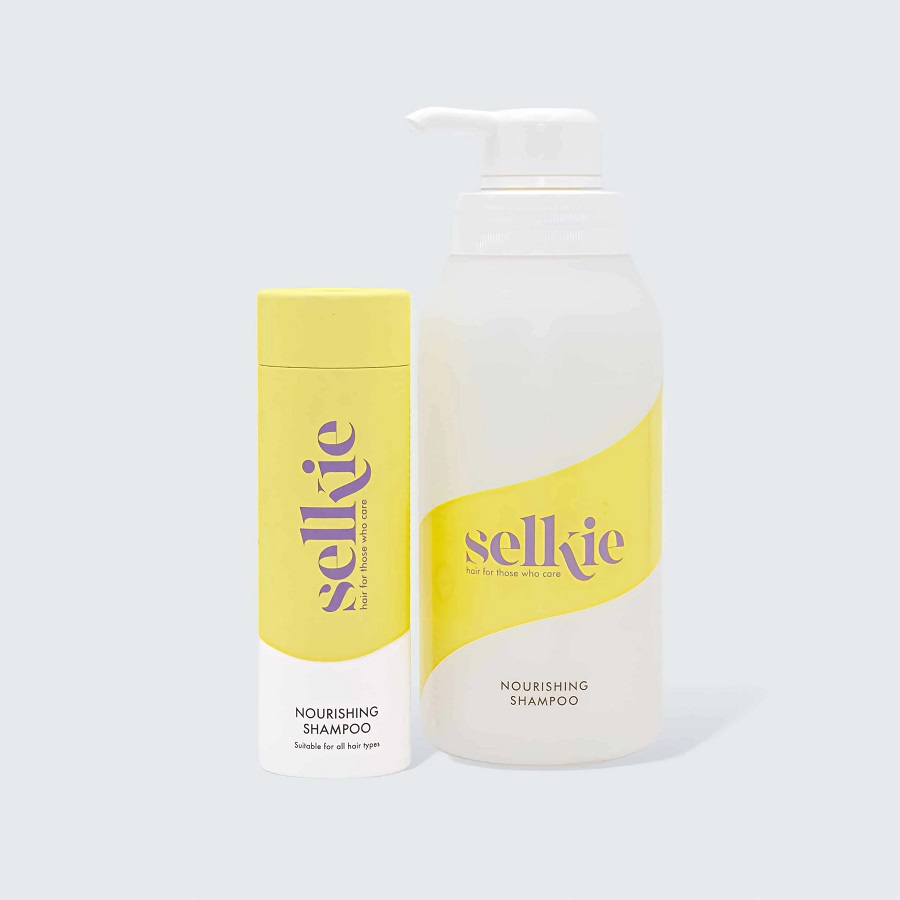
20.Selkie Shampoo Starter Kit, £14.99. Plastic-free haircare made without the silk and honey common in shampoo.
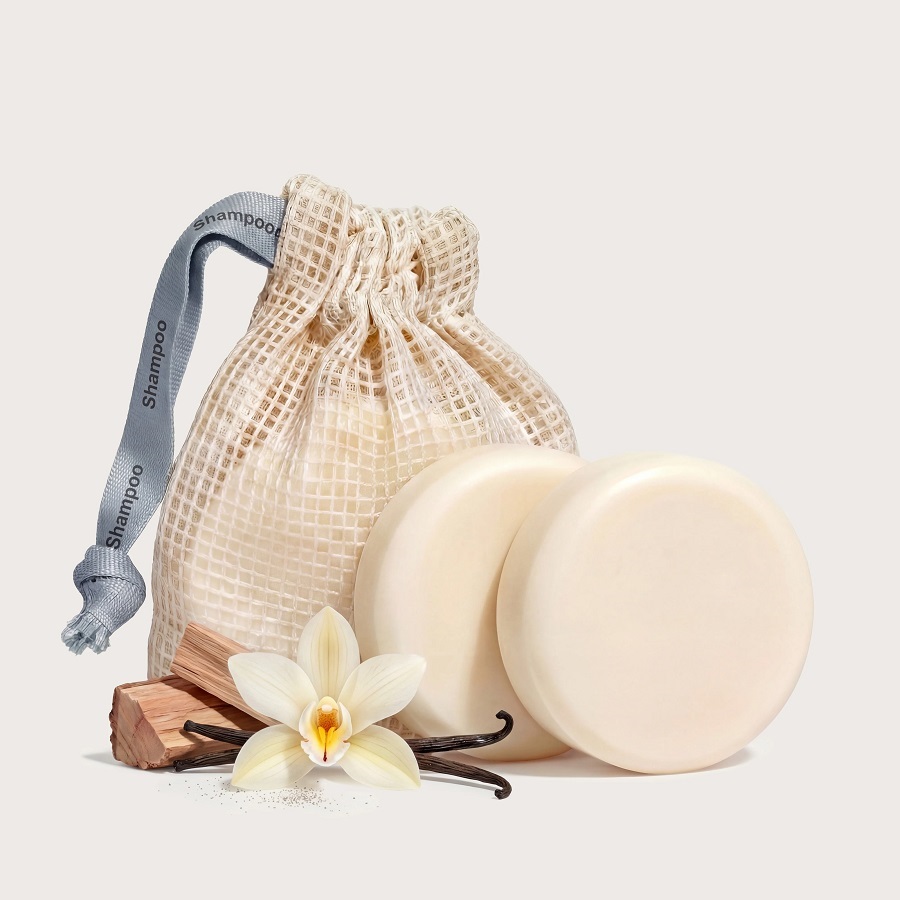
21.Vove Shampoo Bars Set, £17. Rice protein and ginseng bars, a good-looking bathroom gift.
22.Votch Sol Bamboo Leather Card Holder, £39.20 (was £49). A sleek bio-based vegan-leather holder, the real alternative to a leather wallet, and a strong gift for him or her.
The ones in categories that usually are not vegan, so the choice actually counts: dairy-free chocolate, vegan cheese, skincare and balms made without beeswax or lanolin, and vegan-leather accessories. A gift that is vegan by default, like a candle-free crystal or a notebook, is fine but not really a vegan gift.
What is a good vegan birthday present?
For a birthday, the surprising ones land best: a plant-based cheeseboard, a single-origin chocolate set, or a proper skincare gift set. Around £15 to £40 gives you the most choice, and you can scale up to the cheeseboard or the skincare collection for a bigger occasion.
Are these presents all vegan and cruelty-free?
Yes. Every product is checked as free from animal-derived ingredients and by-products before it goes into the range, which matters most for exactly these categories, chocolate, cheese, skincare and leather, where animal ingredients are easy to miss on a label.
The word “vegan” still puts a lot of people off. But the research on plant-based eating does not require you to go all the way to get most of the benefit. Here is what the evidence says, what to stock, and how to make it work.
It sounds like a commitment, a label, a lifestyle. But eating more plants, not exclusively plants, is one of the most well-evidenced things you can do for your health and for the planet.
This guide is for people who want to eat better, not for people who want an identity. Here is what the evidence actually says, what to stock, and how to make it easy.
Why plant-based eating is worth trying even if you are not going fully vegan
There is a wide spectrum between eating a standard Western diet and being fully vegan. Flexitarian, vegetarian, pescatarian – all involve eating more plants and less meat, and all deliver meaningful benefits relative to where most people currently are.
A 2025 modelling study in Frontiers in Nutrition, with Dr Noelia Rodríguez-Martín of the Instituto de la Grasa-CSIC and the University of Granada as corresponding author, found that a vegan diet cut daily greenhouse gas emissions by 46% compared to an omnivorous Mediterranean diet, while ovo-lacto and pesco-vegetarian diets cut emissions by up to 35%. The headline: you do not need to go fully vegan to move the needle. Every meal with more plants counts.
On the health side, the picture is equally clear. A 2024 analysis by the Office of Health Economics, commissioned by The Vegan Society, estimated that if everyone in England adopted a plant-based diet, the NHS could save around £6.7 billion a year, with 2.1 million fewer cases of disease and more than 170,000 additional quality-adjusted life years. The conditions with the strongest evidence for improvement were cardiovascular disease, type 2 diabetes, and several forms of cancer.
None of this requires perfection. It requires direction.
What does the evidence actually say about plant-based diets and health?
Plant-based diets are typically lower in saturated fat and higher in fibre, antioxidants and phytochemicals. The evidence linking plant-based eating to cardiovascular disease prevention is strong, with improvements in weight, cholesterol, blood pressure and blood glucose all well-documented in both observational studies and randomised controlled trials.
The NHS is clear on this: a well-planned plant-based diet can meet all nutritional needs at every life stage, and the guidance was reviewed and reconfirmed by the NHS in June 2026. The word “planned” is doing important work in that sentence. A handful of nutrients need attention.
There is now compelling evidence that plant-based diets can benefit people’s health. – Dr Chris Sampson, Senior Economist, Office of Health Economics (2024)
Vitamin B12 is the one that matters most, because it is not found in plants and the NHS recommends vegans either eat fortified foods at least twice a day or take a supplement, with the UK’s Reference Nutrient Intake set at 1.5mcg per day for adults. The Vegan Society and British Dietetic Association more specifically recommend either fortified foods providing at least 3mcg of B12 twice daily, or a daily supplement of 10mcg. NHS dietetic guidance confirms this is the single most important nutrient to plan for on a plant-based diet. That does not mean plant-based eating is compromised – a £3 supplement covers it. But the requirement is non-negotiable, not a technicality.
Iron from plant sources is absorbed less efficiently than iron from meat. Eating iron-rich plants (lentils, chickpeas, tofu, and dark leafy greens) alongside vitamin C-rich foods improves absorption considerably. Not complicated, but worth knowing.
Vitamin D is relevant for everyone in the UK, plant-based or not. The NHS recommends everyone considers a supplement through autumn and winter regardless of diet.
Iodine and calcium need attention if dairy is removed. Fortified plant milks, seaweed and iodised salt cover iodine. Calcium comes from fortified plant milks, tofu, tahini and green leafy vegetables.
The reassuring summary: the nutrients that need managing are manageable. A good multivitamin designed for plant-based eaters covers most of them in one go. Browse our Wellness and Vitality range for options that meet the standard.
The practical bit: what to eat, what to stock, and where people go wrong
The biggest mistake people make when moving toward plant-based eating is treating it as subtraction. Remove the meat. What is left? Not much that is interesting. The better approach is addition first: add the foods that make plant-based eating good, then let meat naturally take a smaller role.
The foods that do the heavy lifting:
Legumes – lentils, chickpeas, black beans and cannellini beans – are the backbone of plant-based eating. Cheap, filling, high in protein and fibre, and delicious when cooked properly. A tin of chickpeas and a jar of tahini will take you further than almost anything else in the cupboard.
Whole grains – brown rice, oats, quinoa, farro and barley – provide sustained energy and texture. Most of the fibre comes from here.
Nuts and seeds – walnuts, almonds, hemp seeds, chia seeds and pumpkin seeds – add fat, protein and flavour. A handful on top of most things makes it better.
Tofu and tempeh are worth learning to cook properly. Pressed tofu, dried and cooked at high heat, bears no resemblance to the soft, watery version most people encounter first. Tempeh has a nuttier, more complex flavour and holds together better.
What to keep in the cupboard at all times: tinned chickpeas, lentils, cannellini beans and black beans. Tinned tomatoes. Tahini. Good olive oil. Miso paste. Soy sauce. Nutritional yeast. These things make everything taste like it took more effort than it did.
Where people go wrong: relying on ultra-processed meat substitutes as the main protein source. Some are fine occasionally. But a diet built around vegan sausages and plant-based burgers is a different thing from a diet built around whole plant foods, and the evidence for health benefits applies to the latter.
The products that make it easy
This is where Ziracle’s job is to have done the work already. Every product in the Nutrition & Superfoods range has passed the same standard on efficacy, ethics and transparency. For plant-based eating, that means organic where it counts, no unnecessary additives, and brands that are honest about what is in the product and where it comes from.
What to look for: good-quality tinned legumes, organic plant milks without unnecessary additives, tahini that is just sesame seeds, nut butters without palm oil or added sugar, and supplements certified fully Vegan rather than plant-adjacent.
The brands that make the best plant-based eating possible are the ones making food that tastes good, not food that tastes like a compromise. That is the bar. For more on how what you eat affects how you feel, read our guide to how food affects mood.
How to make it stick without making it a project
The research on behaviour change is consistent: starting small and staying consistent beats starting ambitious and dropping off. One or two plant-based meals a week is a real change. Three or four is a meaningful shift. Five is most of the week.
Pick one meal to change first. Most people find breakfast or lunch easier than dinner, because there is less social pressure and fewer expectations. Porridge with seeds and fruit. A lentil soup. A chickpea salad. None of these require a recipe book.
Cook in batches. A big pot of lentil dal, a tray of roasted vegetables, a pan of rice. These take 30 minutes once and feed you several times. The people who eat well consistently are not the ones who cook every day – they are the ones who cook a few things that stretch across the week.
Do not make it a rule. Rules create failure states. If you eat meat at a friend’s dinner and enjoy it, that is fine. The overall direction matters more than any individual meal. Every choice adds up, not because you are obligated to be perfect, but because small consistent changes compound into something real over time.
Plant-based does not have to mean all-in. Direction, not identity. Browse Eat Well for the products that have already passed the Ziracle standard on efficacy, ethics and transparency.
FAQ
Do I need to go fully vegan to see the benefits of plant-based eating?
No. A 2025 modelling study in Frontiers in Nutrition found that ovo-lacto and pesco-vegetarian diets cut carbon emissions by up to 35%, compared to 46% for a fully vegan diet. The health evidence follows a similar pattern: the biggest gains come from shifting in a plant-based direction, not from arriving at 100%. One or two plant-based meals a week is a real change.
What nutrients do I need to pay attention to on a plant-based diet?
Vitamin B12 is the non-negotiable, because it is not found in plants and the NHS recommends fortified foods twice a day or a daily supplement. Iron absorbs better when eaten with vitamin C. Iodine and calcium matter if you have cut dairy. Vitamin D is recommended for everyone in the UK through autumn and winter, plant-based or not. A well-planned diet, with one good multivitamin, covers most of this.
Is tofu actually healthy, or is it processed?
Tofu is minimally processed. It is made from soybeans, water and a coagulant, in the same way cheese is made from milk. Large observational studies have linked regular tofu consumption to better cardiovascular outcomes. The brand matters: look for organic, non-GMO soy, and avoid highly seasoned or breaded versions if you want the cleanest product.
Are plant-based meat substitutes actually good for you?
It depends. Some are fine occasionally. But many ultra-processed meat substitutes are high in saturated fat, salt and additives, and the evidence for health benefits applies to diets built around whole plant foods, not around vegan burgers. Use them as a bridge when you are starting out or a convenience when you need one. Do not make them the protein foundation of the diet.
What’s the easiest first step if I want to eat more plants?
Pick one meal to change and stick with it for a month. Breakfast or lunch is usually easier than dinner, because there is less social pressure around it. Porridge with seeds and fruit. A lentil soup. A chickpea salad. Build from there once that meal is effortless. The people who shift their diets long-term are the ones who start small.
Ten years ago, the non-alcoholic aisle was a lineup of fruit juice and lime and soda. Now it runs from distilled 0% spirits to fermented teas to seriously considered low-ABV options, and the quality gap with the alcoholic versions has closed faster than almost any category in drinks. For anyone reconsidering how often they drink, the practical question has changed. It is no longer whether there is a decent alternative. It is which one.
This is a guide to three categories worth your money, what the evidence says about drinking less, and how to shop without getting taken in by marketing.
Why this category has finally caught up
The UK’s Chief Medical Officers’ Low Risk Drinking Guidelines — published by the UK Government and last reviewed in 2016 — recommend no more than 14 units of alcohol a week, spread across three or more days, with several drink-free days. The NHS summarises the health risks of exceeding these guidelines, including increased risk of cancer, heart disease and liver damage even at lower levels of regular drinking. A generation of drinkers has taken that seriously, and the drinks industry has followed. Non-alcoholic beer has grown into a real category in UK supermarkets. 0% spirits have moved from novelty to restaurant lists. Kombucha and other fermented drinks have gone from health-food-shop niche to standard stock.
The old assumption that the only alternative to wine was water has dated badly.
0% spirits: the aperitif that behaves like one
Non-alcoholic botanical spirits are the newest serious category. Brands distil them using the same botanicals that give gin, vermouth and amari their character, then finish them without alcohol. The good ones are built to be mixed, not sipped neat, and behave in a cocktail the way their alcoholic counterparts do. The ritual works. The glass looks right. The evening holds.
What they deliver, and do not, is specific. They give you complex flavour and the shape of a pre-dinner drink. They do not give you the sedative hit. That is the point, and it is why they work at dinner on a Tuesday when you want a grown-up drink but not a grown-up hangover.
Price is the honest trade. A good 0% spirit costs roughly what a mid-range gin costs, which surprises people expecting something cheaper. You are paying for distillation and botanicals, not for alcohol duty, and the production cost is similar.
Low-ABV: the middle ground
Low-ABV drinks, typically between 0.5% and 5% alcohol, are where the category has improved most recently. Early attempts tasted thin. Modern craft versions hold up. You can have one with dinner and still drive home, sleep properly, and wake up clear.
The case for low-ABV over 0% is social and sensory. Sometimes you want the edge of a proper drink, not the shape of one. A low-ABV vermouth in a spritz, a 3% pale ale with a Friday curry. One drink, still within the CMO’s guidance, no consequences the next morning. The combination is what makes this category useful for people who drink socially but want to drink less.
Kombucha: the fermented middle option
Kombucha is fermented sweetened tea, made with a symbiotic culture of bacteria and yeast. It arrives with a fine fizz, a tart-sweet flavour, and a label that usually claims gut-health benefits. The honest state of the evidence is more nuanced than the marketing.
A 2024 clinical trial published in Scientific Reports found that four weeks of daily kombucha consumption produced measurable shifts in the gut microbiome, including enrichment of Weizmannia coagulans, a probiotic strain associated with digestive health. A 2025 systematic review of eight clinical trials in the journal Fermentation concluded that kombucha consumption was associated with improvements in gastrointestinal symptoms, particularly stool consistency, with modest effects on gut microbiota composition overall. Claims about energy, immunity and sleep remain largely untested in humans.
The takeaway: kombucha is probably good for your gut at the margin. It is not a cure for anything. It is a genuinely nice drink that does more for digestion than a diet cola and contains a fraction of the sugar of a regular soft drink, if you choose the right brand.
What actually happens when you drink less
The evidence for better sleep is the strongest of the benefits people cite. A 2024 systematic review and meta-analysis in Sleep Medicine Reviews, pooling 27 studies, found that even a low dose of alcohol (around two standard drinks) reduced REM sleep, with effects worsening as the dose went up.
An earlier review in Alcoholism: Clinical and Experimental Research (Ebrahim et al., 2013) established the pattern still cited today: alcohol gets you to sleep faster, then fragments the second half of the night as it metabolises. Less REM means less emotional processing and less memory consolidation, which is why you can sleep a full eight hours after drinking and still feel depleted.
Beyond sleep, the effects are real but less dramatic than wellness content often suggests. Most people notice steadier mood and better morning energy within a week or two of cutting back. Skin can look clearer. Digestion often settles. Weight change, where it happens, is usually slow rather than dramatic, and usually follows from reduced late-night eating and alcohol calories combined rather than from any metabolic magic.
The single honest summary: less alcohol means better sleep, and better sleep improves almost everything else.
For more on why sleep architecture matters, see our sleep guide.
What to look for when you shop
A few rules hold across the three categories.
Shorter ingredient lists almost always beat longer ones. In 0% spirits, look for real botanicals rather than flavourings. In kombucha, look for live cultures, a short sugar list, and ideally the specific strains named on the label. In low-ABV, look for craft brewers rather than re-labelled supermarket lager.
Avoid artificial sweeteners. The whole point of the category is that these drinks are enjoyable on their own terms, not as diet versions of something else.
Taste before you commit. Buy one bottle rather than a case, and try it properly. A drink you actively enjoy is one you will keep reaching for. A drink you tolerate goes back of the cupboard within a month.
Price to quality ratio matters more here than in most drinks categories. A £25 0% spirit that makes a cocktail you look forward to is better value than a £10 one you stop using after two weekends.
Where to start on Ziracle
Every brand in our Food and Drink edit has passed the same standard: honest ingredients, transparent sourcing, and production that takes ethics seriously. Filter by Organic for whole-ingredient options, or browse by category: Kombucha, Low and No Alcohol, or the full Cellar range including teas and coffees.
If you are using drinks changes as part of a broader digestive reset, our bloating guide covers the food side.
For integrated support across digestion and daily choices, Gut Health is the goal page to bookmark.
FAQs
Is low-alcohol drinking actually better than sober?
For most people who are not avoiding alcohol for medical or recovery reasons, low-ABV can work well as a stepping stone or as a long-term pattern. The CMO’s 14-units-a-week guidance was built around the assumption that most people will still drink sometimes. The evidence against drinking heavily is strong. The evidence against having one low-ABV beer with dinner is not. The right choice depends on why you are cutting back and what works for your life.
Does kombucha really help your gut?
The evidence points to modest benefits rather than dramatic ones. The 2024 Scientific Reports trial found measurable but subtle changes in gut microbiome composition after four weeks of daily kombucha consumption. A 2025 systematic review in Fermentation found consistent improvements in stool consistency and some microbiota shifts, with most other health claims not yet supported by clinical evidence. Kombucha is a reasonable daily drink for digestive comfort. It is not a cure for IBS, a weight-loss aid, or a replacement for a varied diet.
How long does it take to notice the effects of drinking less?
Most people notice improved sleep quality within the first week. Mood, morning energy and skin appearance usually shift within two to four weeks. Longer-term markers like liver enzymes and blood pressure tend to move over a few months. The Drinkaware website summarises what to expect on a typical month-long reduction.
Are 0% spirits just expensive tonic water?
The well-made ones are distilled using the same botanicals and processes as their alcoholic counterparts, which is why they cost what they cost. A good 0% spirit in a cocktail behaves differently from tonic water alone, with bitterness, depth and botanical complexity you cannot get from a mixer. If you are only drinking them straight over ice, the difference is smaller. If you are building cocktails, it matters.
Why does alcohol disrupt sleep even when it helps me fall asleep faster?
Because it changes the architecture of the night. The 2024 Sleep Medicine Reviews meta-analysis found that even two standard drinks reduce REM sleep, the stage where your brain processes emotion and memory. You fall asleep faster because alcohol is a sedative, and wake up less rested because the second half of the night becomes fragmented as the alcohol metabolises. The net effect, especially above two drinks, is worse sleep than you would have had sober.
Each September in the UK, the Soil Association runs Organic September, a month-long campaign to raise awareness of what organic farming is, what it does for soil, wildlife and animals, and why it matters for what ends up on your plate and in your bathroom. You don’t have to wait for September to think about it. The case for organic holds all year round, and the easiest way to act on it is to pick the categories where you use the most and switch them over first.
The organic movement isn’t new. Interest in personal and environmental health built through the 1970s, and production expanded through the 1980s and 1990s, the same decades that saw official standards defining organic produce come in and grant aid for organic farming introduced across the European Union. The real public breakthrough came in the early 2000s, as consumers started joining the dots between diet, health and environment. Organic now covers fruit and veg, meat and dairy, fermented food and drink, beauty and toiletries, household textiles and clothing.
Here’s what organic actually means, why it’s worth the effort, and where to start.
What organic actually means
Organic is a system of farming and food production held to a strict set of standards. Growers and producers work without synthetic pesticides, manufactured herbicides or artificial fertilisers, follow higher animal welfare requirements, and aim to keep local ecosystems and soil healthy in the process. The Soil Association’s definition puts it simply: higher levels of animal welfare, lower levels of pesticides, no manufactured herbicides or artificial fertilisers.
What’s often missed is that organic isn’t only a food label. The same principles run through clothing (organic cotton, organic linen), beauty (plant oils and botanicals grown without synthetic pesticides), household textiles (organic cotton bedding and towels) and a growing list of other categories. If you’re trying to reduce the chemical load on the land, on farm workers and on the animals in between, organic certification is one of the clearest signals you can follow.
Why organic is worth the switch
Better for pollinators and wildlife
The UK Government’s National Pollinator Strategy set out the pressures on bees, hoverflies, butterflies, and other pollinators, with intensive agriculture named as one of the main drivers of decline. The UK Biodiversity Indicator for Pollinating Insects (JNCC, 2024) — the official government-commissioned measure covering 393 wild pollinator species — found an overall decrease in pollinator distribution of 23% compared to 1980, confirming that the pressure on pollinators has not eased despite conservation efforts.
The Rodale Institute’s Farming Systems Trial, which has compared organic and conventional plots side by side for over 40 years, finds that organic plots use around 45% less energy, produce around 40% lower carbon emissions and build soil organic matter over time rather than depleting it. A 2025 study from the UK Centre for Ecology and Hydrology (UKCEH) and Rothamsted Research, published in collaboration with NERC and BBSRC funding, confirmed that agroecological farming — of which organic is a core example — promotes biodiversity and can support sustainable yields through increased ecosystem services, substituting for chemical fertilisers and pesticides.
None of this means organic is a silver bullet. Yields can be lower in some crops, and scaling organic to feed the world involves trade-offs worth having open arguments about. What it does mean is that every time you pick an organic version of something you were going to buy anyway, you are supporting a system that is measurably kinder to insects, soil and the farmers working the land.
Organic farms support around 50% more wildlife than non-organic equivalents.
Start with what you use every day
The easiest place to build an organic habit is in the things you already use daily: food, drink, and what you put on your skin. You’re in contact with them multiple times a day, they get used up and replaced regularly, and the quality gap between organic and non-organic is often the most obvious.
Organic food and drink
Fermented foods are one of the best categories to start with because the difference between raw, unpasteurised organic ferments and mass-market supermarket versions is genuinely noticeable. Traditional sauerkrauts and kimchis, kvass and live ferments carry the friendly bacteria that often get pasteurised out of mainstream fermented products. A 2019 review in Nutrients found that regular consumption of fermented foods is associated with improved gut microbial diversity and markers of digestive health. Browse the Fermented Foods edit for options.
For everyday staples, the Pantry covers grains, oils, pulses and baking goods produced without synthetic pesticides or artificial fertilisers. Organic versions of the highest-turnover items in your kitchen (oats, flour, olive oil, rice) compound quickly, because these are the products you buy most often.
Organic beauty and body care
The ingredients on the outside of a bottle eventually end up on the inside of your skin, which is why organic beauty matters. The Soil Association’s COSMOS organic standard certifies beauty products that meet organic farming requirements for their plant ingredients and exclude a long list of synthetic chemicals. Look for that mark specifically, since ‘natural’ and ‘organic’ are used loosely in beauty marketing but only certified organic carries the actual audit behind it. Browse the skincare edit to filter by certification.
Oral care is one of the worst-offending corners of the bathroom for single-use plastic, and one of the best places to make an organic and zero-waste switch at the same time. Toothpaste in glass jars, toothpaste tablets, floss in reusable packaging and compostable toothbrushes now come in organic formulations that work as well as the mass-market versions. Browse the Oral Care edit.
Making organic an everyday choice
Organic September is a good annual prompt, but the real point of it is the habit it tries to build. If you take one month to audit your kitchen cupboards and bathroom shelf, and swap two or three staples for organic versions the next time they run out, you’re most of the way there. You don’t need to replace everything at once.
Every brand in the Food and Drink and Beauty and Self-Care categories on Ziracle has passed the same standard: honest ingredients, transparent supply chains, and certifications that actually mean something. For products that meet the organic standard specifically, filter by Organic across both departments.
Ready to shop? Take Organic September as the nudge to start building organic into your everyday shop.
FAQs
What does the organic label actually guarantee?
In the UK, ‘organic’ is a legally protected term under UK organic farming regulations enforced by Defra. For food, it guarantees production without synthetic pesticides, manufactured herbicides, or artificial fertilisers, alongside higher animal welfare standards and audit trail requirements, certified by bodies such as the Soil Association or OF&G. For beauty, the COSMOS organic standard covers plant ingredients grown to organic farming requirements, plus the exclusion of a specific list of synthetic chemicals. Anything not certified can legally be called ‘natural’ or ‘botanical’ but can’t be called ‘organic.’ If you’re paying for the premium, check for the actual certification mark.
Is organic food actually better for you than conventional food?
The evidence on direct nutritional benefit is mixed. Some studies have found slightly higher levels of certain antioxidants and omega-3s in organic produce, but the effect sizes are modest. The clearer benefits are indirect: lower pesticide residue exposure, higher animal welfare standards, and support for farming systems that are better for soil, pollinators and farm workers. The case for organic is stronger on environmental and ethical grounds than on direct nutritional ones, though both arguments sit in the mix.
Why is organic food more expensive?
Because the production costs are higher. Organic farming is more labour-intensive, yields are often lower in some crops, and certification involves ongoing audit fees. The price reflects what food costs to produce without shortcuts. Fast food and conventional produce prices are only possible because external costs (pesticide pollution, soil degradation, low farmer incomes) are absorbed somewhere else in the system. Organic prices are closer to the real cost. That doesn’t make it universally affordable, which is why targeting the staples you use most is usually the pragmatic starting point.
Which categories give the biggest benefit when I switch to organic?
The categories where you use the most, where pesticide residue is highest, and where you’re in closest contact. For food, fruit and vegetables with edible skins (apples, strawberries, grapes, leafy greens) typically carry the highest pesticide residues, so switching those first gives the clearest direct benefit. For beauty, anything leave-on (moisturisers, serums, body lotions) is in contact with your skin longest, so organic certifications matter more there than on rinse-off products.
What’s the difference between ‘natural’ and ‘organic’?
In food and beauty, ‘natural’ is a marketing term with no legal definition. It can mean anything from ‘contains some plant ingredients’ to ‘mostly synthetic but derived from natural sources.’ ‘Organic’ is a regulated term that requires independent certification against a specific standard. If the label says ‘natural’ but not ‘certified organic,’ it’s a marketing claim rather than an audited one. Look for the certification body’s logo (Soil Association, OF&G, COSMOS Organic) to know you’re getting the real thing.
Bloating is one of those symptoms that’s easy to dismiss. It’s not serious. You just ate too much. But when it’s chronic, bloating becomes a daily barrier. Brain fog from the bloating itself, then fatigue from the stress of managing it, then the anxiety of never quite knowing when you’ll feel okay. Your gut is connected to your whole system, and a struggling gut affects everything. This isn’t just digestion.
Your gut produces many of the neurotransmitters that regulate mood and stress response. Chronic bloating is often a sign that gut bacteria need support. Here’s what’s actually going on, what triggers the problem, and which foods have the strongest evidence for rebuilding the system.
Understanding the gut-brain connection
Your gut doesn’t only break down food. It communicates with your brain. A 2015 review in Annals of Gastroenterology summarised the evidence that gut microbiota produce neurotransmitters including serotonin, GABA and dopamine, which are delivered to the brain through the vagus nerve. When your gut is inflamed or imbalanced, you feel it everywhere. Some people get brain fog. Others get anxiety that doesn’t have a logical trigger. Some people feel flat and unmotivated. The physical bloating is the obvious symptom. The mental impact runs deeper.
The research on this connection has grown significantly over the last decade. A 2019 study in Nature Microbiology led by researchers at KU Leuven identified specific bacterial species in the gut whose relative abundance correlated with self-reported quality of life, including markers of depression. Gut health directly influences mental clarity, emotional stability and energy levels. When gut bacteria are imbalanced, your body can’t produce enough of the neurotransmitters that keep you calm and focused. These aren’t personality flaws. They’re physical symptoms of a depleted gut environment. For a fuller treatment of this connection, see our guide to how food affects mood.
What triggers bloating in the first place
Bloating usually signals one of three things: food intolerance, insufficient fibre, or bacterial imbalance. You’re either reacting to something specific in your diet, your gut bacteria are struggling to process what you’re eating, or you don’t have enough beneficial bacteria to regulate things properly.
Most people try the standard advice to just ‘eat more fibre’ and wonder why it makes things worse. If your gut bacteria are depleted, adding more fibre without first rebuilding the bacteria that process it can increase gas production and worsen bloating in the short term. The NHS’s guidance on bloating reflects this: it recommends an incremental approach to fibre, identifying trigger foods and considering professional advice if symptoms persist. NICE clinical guidelines on irritable bowel syndrome (CG61) — the most authoritative UK clinical standard for gut symptoms including bloating — specifically recommend that insoluble fibre (such as bran) should be reduced or avoided if it worsens symptoms, and that any increase in dietary fibre should use soluble fibre such as oats or ispaghula. Healthcare professionals are advised to review fibre intake carefully while monitoring its effect on symptoms rather than simply recommending more of it. You need to rebuild the bacterial team before asking it to do more work. That’s where fermented foods come in.
Fermented foods and bacterial rebalancing
Fermented foods contain live bacteria that can help rebalance the gut microbiome. A 2021 randomised trial from Stanford University School of Medicine, published in Cell, found that a ten-week high-fermented-foods diet significantly increased microbial diversity and reduced markers of inflammation compared with a high-fibre control diet.
Kimchi, made from fermented cabbage, introduces beneficial strains and contains compounds that reduce inflammation. The fermentation process also breaks down certain sugars that might otherwise cause bloating, making the food easier to digest. Kombucha, fermented from tea, serves a similar function. Miso, tempeh, sauerkraut and kefir all follow the same principle: fermentation creates an environment where beneficial bacteria flourish. These aren’t trendy foods. They’re functional tools for rebuilding bacterial ecosystems. Browse the Fermented Foods edit for options.
Dark chocolate and flavonoid metabolism
Dark chocolate contains flavonoids, which are antioxidant compounds. These flavonoids are broken down by your gut bacteria into smaller molecules that have anti-inflammatory effects throughout the body. A 2019 study in the Journal of Nutritional Biochemistry found that regular consumption of cocoa flavanols was associated with changes in gut microbial composition and reduced inflammatory markers.
The mechanism is chemistry, not magic. Your gut bacteria eat the flavonoids and convert them into anti-inflammatory compounds called phenolic metabolites. The quality of your bacteria determines how well this works. If your gut bacteria are healthy, dark chocolate becomes a functional food. If they’re depleted, you won’t get the benefit, which is why starting with fermented foods before layering in dark chocolate often makes sense. Choose dark chocolate with at least 70% cocoa content for meaningful flavonoid levels. Browse the Chocolate edit for higher-cocoa options.
Your gut bacteria produce many of the neurotransmitters that affect your mood.
Peppermint for muscle relaxation
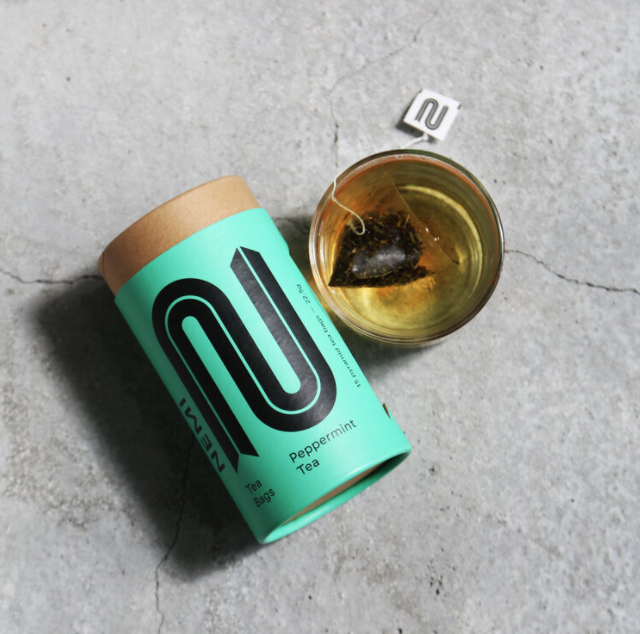
Peppermint tea works through a different mechanism than fermented foods. The menthol in peppermint relaxes the smooth muscles in the digestive tract, reducing spasms that trap gas and cause bloating. A 2019 meta-analysis in BMC Complementary Medicine and Therapies reviewed 12 randomised controlled trials on peppermint oil and found significant reductions in abdominal pain and IBS symptoms compared with placebo.
For many people, a cup of peppermint tea after meals becomes part of the routine that keeps bloating at bay. It’s not addressing the root cause if the issue is bacterial imbalance, but if the bloating is coming from muscle tension and trapped gas, it’s functional relief. Peppermint also stimulates bile production, which supports fat digestion. Browse the Tea edit for peppermint and other gut-supporting blends.
Building your bloating-free routine
None of this works in isolation. You’re looking for a combination approach. Introduce fermented foods regularly to rebuild your bacteria, and give your gut time to adjust. Start with small portions: a spoonful of sauerkraut or kimchi with one meal per day. Gradually increase over weeks as your system adapts. Peppermint tea can become part of your daily routine, especially after larger meals. Dark chocolate becomes a snack that’s also functional.
You’re not forcing any one food to be a cure. You’re building a food environment where your gut can stabilise. This takes consistency and patience, and the results compound over weeks and months rather than days.
What you eat affects how you feel, right down to mood and energy. That’s not about calories. It’s about whether your gut has the resources to function properly. The bacteria need fibre to eat. They need fermented foods to establish and flourish. They need anti-inflammatory support from dark chocolate and peppermint. They need variety from different food sources. Start by adding one fermented food to your week. Pay attention to what changes in digestion, energy and mood. After a few weeks, add another layer. This is how you move from chronic bloating to occasional comfort.
If bloating is persistent, worsening, or accompanied by weight loss, blood in stools, or severe pain, see your GP. The advice above is for everyday digestive discomfort, not for conditions that need clinical investigation.
Every brand in the Food and Drink category on Ziracle has passed the same standard: honest ingredients, transparent sourcing, and production that takes ethics seriously. For gut-supporting products specifically, filter by Organic.
Ready to start? Browse the Gut Health edit and pick one fermented food to add to your week.
FAQs
Do fermented foods actually reduce bloating, or is it hype?
The evidence is stronger than most gut-health claims. A 2021 randomised trial from Stanford University School of Medicine, published in Cell, found that a ten-week high-fermented-foods diet increased microbial diversity and reduced inflammatory markers compared with a high-fibre control. The effect was specifically tied to consuming multiple fermented foods daily (yoghurt, kefir, kombucha, kimchi, sauerkraut), not a single product. Build up slowly. Two to four weeks of consistency is usually enough to notice a difference.
How long does it take to see results from fermented foods?
Two to four weeks for most people. The Stanford trial measured changes over ten weeks, but participants reported noticing digestive differences much earlier. If you’re starting from a low-diversity baseline (lots of processed food, recent antibiotic courses, chronic bloating), the first few days can actually feel worse as your gut adjusts. Start with a spoonful of one fermented food daily and build from there rather than dumping multiple new foods into your diet at once.
Is peppermint tea safe to drink every day?
For most adults, yes. Peppermint tea is generally well tolerated and has a long history of safe traditional use for digestion. The main exception is gastro-oesophageal reflux: peppermint can relax the lower oesophageal sphincter, which may worsen reflux symptoms in some people. If you have persistent reflux, check with your GP before making peppermint a daily habit. For most people without reflux, a cup after meals is a reasonable addition.
Can dark chocolate really help with bloating?
Indirectly, through its effects on gut bacteria rather than directly on bloating. A 2019 study in the Journal of Nutritional Biochemistry found that cocoa flavanols influence gut microbial composition and reduce inflammatory markers. This is a long-game benefit, not an acute one. A square of dark chocolate won’t stop bloating in the moment, but regular consumption of 70%+ dark chocolate as part of a broader gut-supporting diet contributes to a healthier bacterial ecosystem. Don’t rely on it alone.
When should I see a GP rather than trying food-based approaches?
If bloating is persistent (lasting more than two to three weeks), worsening over time, or accompanied by unexplained weight loss, blood in stools, changes in bowel habit, severe pain, or difficulty swallowing. These can be symptoms of conditions (including IBS, IBD, coeliac disease, or more serious causes) that need clinical investigation rather than dietary self-management. The food-based approaches above are for everyday digestive discomfort and general gut health maintenance, not for ongoing or worsening symptoms.
Body image in the UK isn’t in a good place. A 2020 inquiry by the UK Parliament’s Women and Equalities Committee heard extensive evidence that negative body image affects a majority of British adults, with measurable effects on mental health, self-esteem, and quality of life. The inquiry’s findings prompted a 2021 government response acknowledging the issue but stopping short of the statutory regulation of social media advertising that the committee had recommended. Eating disorder support charity Beat estimates that at least 1.25 million people in the UK have an eating disorder at any time — more than 1 in 50 people — with youth prevalence rising sharply: an NHS England Adult Psychiatric Morbidity Survey 2023–24 found that 12.5% of 17 to 19-year-olds now show signs consistent with an eating disorder, four times the rate recorded in 2017. Hospital admissions for eating disorders in England have increased by approximately 50% between 2013/14 and 2023/24, according to NHS England Digital data.
Despite all of this, the diet industry continues to market restriction as the path to health. Diet culture tells you your body is the problem. The real problem is the narrative.
Here’s what diet culture actually costs, why the restriction model keeps failing, and what a healthier relationship with food can look like instead.
The body image crisis underneath diet culture
The negative feelings people have about their bodies don’t arrive from nowhere. They’re cultivated. Marketing, social media, the medical establishment, family conversations, wellness apps. All of it converges to tell you your body is wrong and needs fixing. You’ve internalised these messages so completely that you might believe they’re your own thoughts.
A 2019 review in Body Image summarised a large body of evidence that exposure to idealised, filtered images on social media is associated with reduced body satisfaction, increased anxiety and disordered eating behaviours across a wide range of populations.
The cost is real. People develop eating disorders. They develop orthorexia, an unhealthy preoccupation with ‘clean’ eating that becomes psychologically harmful. A 2001 review in the International Journal of Obesity summarising long-term weight loss studies found that the majority of dieters regain lost weight within five years, often with significant additional gain. Chronic stress from constant self-monitoring becomes normal. Your nervous system stays activated. Your mental health suffers. The cycle of shame and restriction benefits no one except the diet industry.
Diet culture tells you your body is the problem. The real problem is the narrative.
Why restriction-based dieting doesn’t work long-term
Your body isn’t a simple maths problem. The calories-in-calories-out framing oversimplifies how metabolism, hormones and digestion actually work. Different foods have different effects on satiety, hormonal response and energy use, even at the same calorie count.
Your body also resists restriction actively. A 2011 study in the New England Journal of Medicine led by researchers at the University of Melbourne tracked hormonal changes after weight loss and found that levels of ghrelin (the hormone that increases appetite) and leptin (which signals fullness) shifted significantly and persistently, in ways that drove hunger up and fullness signals down for at least a year after dieting ended. Your body is biologically built to push back against sustained restriction. Restriction-based dieting works short-term because of willpower. Long-term, you’re fighting biology, and biology usually wins.
This isn’t about willpower or personal failure. It’s about a model that doesn’t match how human physiology works.
Set point theory and why bodies resist change
Y our body has a set point, a genetically and environmentally shaped weight range it tends to maintain. The hypothalamus monitors signals related to this range and adjusts appetite and energy expenditure to return the body toward it. A 2018 review in F1000Research summarised the evidence for weight set-point theory and the hormonal mechanisms involved.
Credit: Stephanie Buttermore
This isn’t failure. It’s your body doing what evolved to do over hundreds of thousands of years: protect you from starvation. Fad diets try to override this system through willpower. The body wins eventually. Once people stop restricting (and most do, because sustained restriction is unsustainable), the body returns toward its set point. The cycle begins again. The individual blames themselves. The industry blames their willpower. No one blames the flawed model.
Orthorexia and the perfectionist trap
Orthorexia, a term coined by Dr Steven Bratman in 1996, describes an unhealthy preoccupation with eating ‘pure’ or ‘perfect’ food. It often starts as health-consciousness and evolves into rigidity, anxiety and psychological harm. Beat describes orthorexic patterns as including inability to be flexible with food, eating alone to avoid judgment, distress when certain foods are present, and the preoccupation with food quality consuming mental energy that could go elsewhere.
Orthorexia isn’t currently recognised as a distinct clinical diagnosis in the DSM-5 or ICD-11, but researchers and clinicians increasingly take it seriously as a real pattern of disordered eating. It often develops when perfectionism is applied to ‘clean eating’. Someone can think they’re being healthy while actually becoming disordered. The line between health-consciousness and disorder is thinner than most people realise.
A neutral relationship with food
The alternative to diet culture isn’t another diet. It’s a fundamental shift in how food is framed.
Food isn’t morally good or bad. You aren’t ‘being good’ by eating a salad or ‘being bad’ by eating cake. You’re simply eating. Neutrality replaces morality. The approach broadly described as intuitive eating, developed by Evelyn Tribole and Elyse Resch and summarised on the Intuitive Eating website, rests on this neutrality and on learning to recognise internal hunger and fullness signals rather than external rules.
This doesn’t mean eating only what tastes good in the moment. It means eating cake without the anxiety and shame, then eating vegetables because they nourish you, not to ‘compensate’ for earlier choices. It means a relationship with food that’s neutral rather than fraught.
Moving beyond restriction
If you’re coming out of diet culture, letting go of restriction can feel radical. It’s worth doing gradually and, ideally, with support. A 2021 systematic review in the Journal of the Academy of Nutrition and Dietetics summarising intuitive eating intervention studies found the approach was associated with improvements in psychological wellbeing, reductions in disordered eating behaviours, and more stable long-term eating patterns compared with restriction-based approaches.
Some people find a flexitarian approach (reducing but not eliminating animal products) works, alongside a focus on whole foods and how food makes you feel rather than calorie arithmetic. Adding nourishing foods and, where needed, supplements to fill specific nutritional gaps is about nutrition, not restriction. Browse Wellness and Vitality for evidence-based supplements and The Pantry range for whole-food staples.
The shift is subtle but complete: eating becomes something the body asks for rather than something the brain polices.
When to seek professional support
If your relationship with food, eating or your body is affecting your daily life, mental health, relationships or physical health, please speak to a GP or contact Beat. Eating disorders, orthorexia and disordered eating patterns are treatable, and early support usually leads to better outcomes. This article is intended as a starting point for rethinking food’s place in your life, not as a replacement for professional care.
Beat’s helpline is free and confidential: 0808 801 0677 (adults) or 0808 801 0711 (under 18), seven days a week. The Samaritans are available on 116 123, free, 24/7. Your GP can refer you to specialist eating disorder services on the NHS.
Every brand in the Food and Drink category on Ziracle has passed the same standard: honest ingredients, transparent sourcing, and production that takes ethics seriously. Filter by Organic for whole-food options made without synthetic additives.
Ready to step away from the cycle? Browse the Eat Well edit and start with one meal at a time.
FAQs
What is diet culture, exactly?
Diet culture is the combination of social, commercial and cultural pressures that frame certain bodies as better than others, certain foods as morally good or bad, and restriction as the path to health and self-worth. It shows up in marketing, social media, health apps, family conversations and medical advice. The 2020 UK Parliament body image inquiry documented its effects on British adults’ mental health and wellbeing. Diet culture isn’t one message from one source. It’s a diffuse pattern that most people absorb without noticing.
Why do most diets fail long-term?
Because they rely on sustained restriction, which the body is biologically built to resist. A 2001 International Journal of Obesity review summarising long-term weight loss studies found that the majority of dieters regain lost weight within five years. A 2011 New England Journal of Medicine study found hormonal changes after dieting that drive hunger up and fullness signals down for at least a year after the diet ends. These aren’t willpower failures. They’re predictable biological responses.
What’s the difference between healthy eating and orthorexia?
Healthy eating is flexible and occupies a reasonable share of your mental energy. You can eat dinner at a friend’s house without anxiety, have a cake at a birthday, and feel neutral about it. Orthorexia, as described by clinicians and organisations like Beat, involves rigidity, anxiety around ‘imperfect’ food, distress when ‘forbidden’ foods are present, social withdrawal around eating, and the preoccupation with food quality consuming significant mental energy. If your relationship with food sounds closer to the second description than the first, it’s worth talking to a GP or to Beat.
Is intuitive eating the same as eating whatever you want?
No. Intuitive eating is a framework developed by Evelyn Tribole and Elyse Resch that rests on rejecting dieting rules, learning to recognise internal hunger and fullness cues, and treating food without moral judgment. It doesn’t mean eating only what tastes good in the moment. It means eating in response to the body’s signals rather than external rules, which usually leads to a varied diet that includes both vegetables and cake without anxiety attached to either. A 2021 systematic review in the Journal of the Academy of Nutrition and Dietetics found intuitive eating was associated with improvements in psychological wellbeing and reductions in disordered eating behaviours.
Where can I get professional help for an eating disorder?
Beat is the UK’s eating disorder charity. Their helpline is free and confidential: 0808 801 0677 (adults), 0808 801 0711 (under 18), seven days a week. Beat’s website has extensive resources and a webchat service too. Your GP can refer you to specialist NHS eating disorder services. If you’re in immediate distress, the Samaritans are available 24/7 on 116 123.
You’ve switched the shampoo bar. You’ve swapped the kitchen spray. The bathroom cabinet looks different, the cupboard under the sink looks different, and yet the recycling bin is still full every week, still mostly plastic, still mostly from food. That’s not a failure of effort. It’s where the problem actually lives.
So here’s what’s worth changing in the food aisle, what’s genuinely difficult, and why the hardest parts aren’t yours to fix.
Why food and drink is where most household plastic starts
The 2024 Big Plastic Count, run by Greenpeace UK and Everyday Plastic with academic support from the University of Portsmouth — the UK’s largest household plastic survey, involving 225,000 participants from 77,000 households — found that 81% of the plastic counted came from food and drink packaging, consistent with the 83% recorded in the first count in 2022. That isn’t shampoo bottles or cleaning products. That’s the packaging your food arrives in, week after week, from the supermarket.
The two largest categories within that: snack packaging and fruit and veg packaging. Between them they make up most of what the average household throws away. WRAP estimates that fresh fruit and vegetables alone generate tens of thousands of tonnes of hard-to-recycle plastic each year, and most of it is film. Soft plastic film is one of the hardest consumer materials to recycle at scale, and the vast majority of it in UK households ends up in general waste.
This matters for how you approach the food aisle. The cleaning and beauty swaps covered elsewhere in this series sit largely within your control. You choose the format, you swap the product. Food packaging is different. Some of it you can change. Some of it is a supermarket and supply-chain problem wearing a consumer-choice costume.
The swaps that are actually within reach
Buy loose fruit and veg where you can
The single most impactful food swap on the list. WRAP’s 2022 research found that removing plastic packaging from a handful of the most commonly bought fruit and vegetable items could prevent around 100,000 tonnes of food and plastic waste each year in the UK, in part by letting people buy only what they need rather than being forced into a pre-weighed pack. The plastic on most pre-packed fresh produce is film, which is rarely kerbside-recyclable and usually ends up incinerated.
Most supermarkets now offer at least some loose options. Bring a paper bag or a reusable produce bag. Where loose isn’t available, go for cardboard or paper over plastic film where there’s a choice. It isn’t always possible. When it is, it’s the highest-return swap in the food aisle.
Switch to a reusable bottle and cup
A reusable water bottle removes the most avoidable category of single-use plastic from most people’s days. The same applies to a reusable coffee cup if you buy coffee on the go. Both are low-cost, immediate, and ask for no adjustment once the habit lands. Browse the Water Bottles edit and Reusable Coffee Cups edit.
Choose glass, cardboard or aluminium over plastic where the product is identical
For pantry staples: passata in a carton rather than a plastic bottle, tinned tomatoes rather than plastic pouches, glass jars of nut butter rather than plastic tubs. The product inside is identical. The packaging choice isn’t. This is the kind of swap that costs no extra effort at the point of purchase and compounds across dozens of items a year. See The Pantry range for staples already packaged well.
Buy in bulk where you use something reliably
A large bag of oats produces less packaging per portion than five small ones. Same with rice, lentils, flour, and most dried goods. Buying the largest practical size of products you’ll definitely get through is one of the lower-effort packaging reductions available. Many independent shops and zero-waste retailers now offer loose options for dried goods, coffee, and oils.
Reusable produce bags
Swapping the single-use plastic bags in the fruit and veg aisle for lightweight mesh or cotton reusables is a small but consistent win. They wash easily and last for years. Not transformative on their own, but they add up alongside the other changes.
What’s harder than it looks, and why it’s not your fault
Some of it you can change. Some of it is a supermarket and supply-chain problem wearing a consumer-choice costume.
Crisps, biscuits, cereal bars, confectionery. The hardest food category to improve. Almost all of it is plastic film or foil-laminate. Neither is collected by most UK councils. Neither has a widely available plastic-free alternative that performs comparably at the supermarket scale. TerraCycle runs collection schemes for some brands, but these require dropping packaging at specific points rather than putting it in the kerbside bin.
Ready meals, deli packaging, pre-marinated meat trays fall into the same category. The plastic trays and film lids are rarely recyclable at home. Alternatives exist in some supermarkets (paper-based trays, cardboard sleeves) but they’re inconsistent and not always clearly labelled.
Plastic film on multipacks: the wrap holding together a four-pack of tinned tomatoes or a six-pack of yoghurt pots is almost never recyclable at home. According to WRAP’s 2025 report, Circular Films: Pathways to Scalable Recycling, consumer plastic film and flexible packaging makes up more than a quarter of all plastic packaging placed on the UK market, yet only 7% of it is currently recycled. Under the government’s Simpler Recycling reforms, mandatory kerbside collection of plastic films is due to begin across England by March 2027 — until then, the larger supermarkets have installed soft-plastic collection points in many stores. Using these is worth doing. Relying on them as the main solution is not.
The honest position: a lot of food packaging waste isn’t within the consumer’s control at current supermarket infrastructure. Buying better where you can, supporting refill and loose options where they exist, and accepting that the rest is a supply-chain problem is the most realistic stance. Every choice adds up. But not every choice is yours to make. For the same approach applied to your bathroom and home, see our guides to eco swaps for beauty and eco swaps for home.
What to buy when you’re shopping well
Every product in the Food and Drink category on Ziracle has passed the same standard: good food, responsibly sourced, packaged with as little unnecessary plastic as possible. For this category specifically, that means Organic where it matters, minimal or plastic-free packaging, and brands that are transparent about what’s in the product and where it came from. Many carry Fair Trade certification for supply-chain transparency beyond the packaging question.
The formats worth looking for: glass jars, cardboard, aluminium, and brands with refillable or return schemes. The brands that earn their place are the ones where the food itself is worth buying and the packaging is a considered choice rather than an afterthought.
You now know where most of the plastic in your kitchen actually comes from, which swaps are worth making, and which ones are beyond what any single shopper can solve. Which means the next supermarket trip looks a bit different.Ready to switch?
Browse the Plastic Free edit and start with one item at a time.
FAQs
What percentage of household plastic comes from food and drink?
According to the 2024 Big Plastic Count, run by Greenpeace UK and Everyday Plastic across 225,000 UK participants, food and drink packaging accounted for 81% of the plastic items counted in the average household’s weekly waste — broadly consistent with the 83% recorded in the first count in 2022. That’s why the food aisle is where the biggest opportunity sits, even after you’ve switched cleaning and beauty products.
Is buying loose fruit and vegetables actually worth the effort?
Yes. WRAP’s 2022 research found that removing plastic from a small handful of the most-bought fresh items could prevent around 100,000 tonnes of food and plastic waste a year in the UK, in part because loose produce lets people buy only what they need rather than being forced into pre-weighed packs that often go off. Bring a paper bag or a reusable mesh produce bag.
Can I recycle the plastic film on multipacks or fresh produce?
Rarely at home. Soft plastic film is one of the hardest consumer materials to recycle at scale —WRAP’s 2025 Circular Films report found only 7% of it is currently recycled in the UK, though mandatory kerbside collection is due across England by March 2027 under the government’s Simpler Recycling reforms. Many larger supermarkets (Tesco, Sainsbury’s, Co-op) now have in-store soft plastic collection points. Use them where you can. Don’t count on them as the main solution.
Are reusable water bottles really a meaningful swap?
For single-use plastic bottles specifically, yes. It removes one of the most avoidable categories of daily plastic. The environmental payback depends on the material (a stainless steel bottle takes a few months of regular use to break even against single-use plastic, a glass one longer), but once you’re past that threshold the maths works. Same applies to a reusable coffee cup if you buy coffee out.
What about snacks and biscuits?
The hardest category. Almost all mainstream snack packaging is plastic film or foil-laminate, neither of which is typically recyclable at home. TerraCycle runs collection schemes for some brands, and supermarket soft plastic bins accept some types. Beyond that, buying fewer individually wrapped items and choosing brands that use cardboard or paper where possible is the realistic stance. Much of it isn’t a consumer problem to solve alone.