
Veo and Wearth are now Ziracle. Same mission, better platform. See what's new

What gut health actually means, and what actually moves it

Gut health is built, not bought. Here is what the evidence actually backs, where fermented foods earn their place,

Muhammad Sarwar

Published : June 4, 2026

Updated : June 4, 2026

by Muhammad Sarwar
9 min read
Open fridge vegetable drawer full of plants and greens in morning light, the foundation of gut health

Gut health is built, not bought. Here is what the evidence actually backs, where fermented foods earn their place, and the one line on a probiotic label that tells you whether it is worth your money.

You have probably been sold the idea that gut health comes in a capsule. The most reliable thing you can do for your gut costs nothing and is already sitting in your vegetable drawer. Meanwhile the £30 probiotic on the shelf may not even name the one thing that decides whether it works.

Here is why this matters to you right now. Your gut does far more than break down lunch, which means the state of it shows up in your energy, your mood and how often you get ill. The trouble is that the people selling you the solution and the people who have studied it rarely say the same thing – we’re trying to bridge that gap. This is the ground floor of Gut Health: what the science backs and what is worth your money. Let us start with what gut health is all about.

What your gut microbiome actually is, in plain terms

Your gut microbiome is the community of trillions of microbes living mostly in your large intestine, and the single best measure of its health is not which species you have but how many different ones. Diversity is the goal. A gut running on a handful of dominant species is more fragile than one running on hundreds, in the same way a field of one crop fails faster than a meadow.

The clearest evidence for this came from the American Gut Project, the largest citizen-science microbiome study of its kind, published in the journal mSystems in 2018. Researchers found that people eating more than 30 different plant types a week had markedly more diverse gut microbiomes than people eating 10 or fewer, and that held true whether they were vegan, vegetarian or omnivore. The variety of plants mattered more than the label on the diet.

Dr Megan Rossi, registered dietitian and research fellow at King’s College London, puts the principle in terms anyone can picture. “Treat your gut bacteria like a pet,” she says. “You want to look after your pet well so it lives its best and most active life possible. The same applies to your gut; you want to feed it everything that it needs to perform at its best.”

A healthy gut is not about one good bacterium. It is about how many different ones you are feeding.

Why your gut runs more than your digestion

Your gut is wired directly to your brain, which is why a struggling gut so often shows up as low mood or fog rather than a stomach ache. The main cable is the vagus nerve, a two-way line carrying signals from the gut up to the brain all day long. This is not mystical; it is plumbing and wiring.

The scale of it surprises most people. “There are more nerve cells in our gut than there are in our spinal cord,” says Professor John Cryan, neuroscientist and principal investigator at APC Microbiome Ireland at University College Cork, whose work helped establish the field. His point is that the gut is not a passive tube. It is an organ the brain listens to.

The gut is also where much of your immune system sits, packed into the wall of the intestine, which is why the state of your microbes touches how often you fall ill. If you want the fuller picture on the mood side of this, we set it out in how food affects mood.

The one thing that does the most, and it is not a supplement
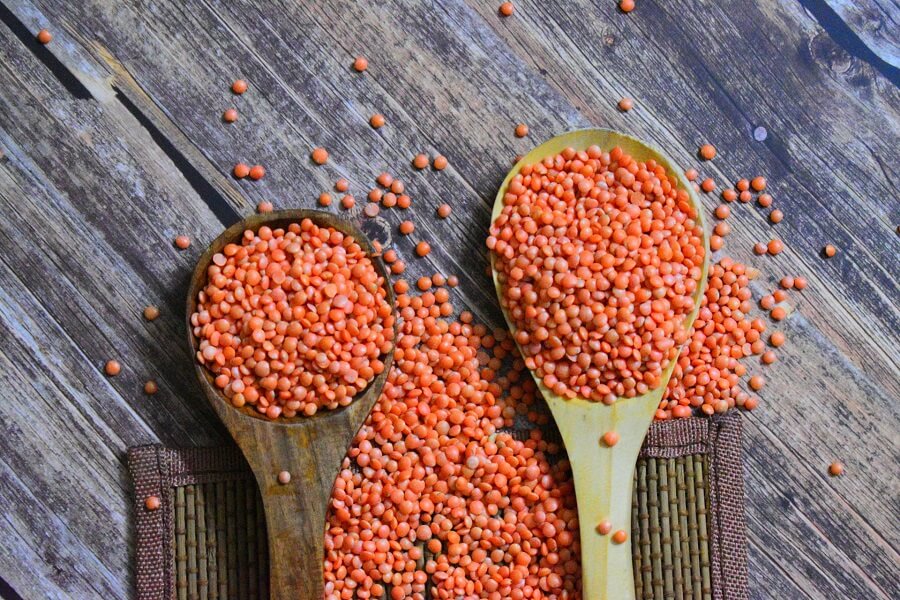
Wooden board of lentils, wholegrains and seeds in natural light, high-fibre plant variety for gut health

Fibre is the single biggest lever you have, and most people in the UK are nowhere near pulling it. UK adults eat around 18 grams of fibre a day. The government target, set by the Scientific Advisory Committee on Nutrition, is 30 grams. Only about one adult in ten actually hits it.

That gap matters because fibre is the food your gut bacteria live on. When they ferment it, they produce short-chain fatty acids such as butyrate, the compounds that feed the lining of your colon and keep the barrier between your gut and the rest of you intact. No fibre, no fermentation, no butyrate. The American Gut data showed the same pattern from the other end: the people eating the widest range of plants carried more of the bacteria that make these fatty acids.

The practical move is variety more than volume. Different plants feed different microbes, so a plate with several plant types does more than a big serving of one. Wholegrains, beans and lentils, nuts and seeds, fruit, vegetables, herbs and spices all count, and aiming for that 30-plants-a-week range is a more useful target than any single superfood. If you want a starting point, the Eat Well goal is built around exactly this kind of plant variety, and choosing Organic where it suits your budget keeps the range wide without the additives.

Most adults in the UK eat barely more than half the fibre their gut is asking for. Closing that gap is free, and it beats anything you can buy.

The free levers that matter next: stress, sleep and movement

After fibre come stress, sleep and movement. They help, but none of them outranks what is on your plate. Treat them as support, not headline.

Movement has the clearest evidence of the three. A 2023 systematic review in Frontiers in Physiology found that regular exercise is associated with greater microbial diversity and more of those short-chain-fatty-acid producers, with active people consistently showing richer microbiomes than sedentary ones. Sleep pulls in the same direction, with better sleep efficiency linked to greater gut diversity. And chronic stress works against you, which is part of why looking after your head is part of looking after your gut. If that is the lever you most need, Reduce Stress is a sensible place to start. None of these replaces fibre. They stack on top of it.

Where fermented foods fit, and where they are oversold
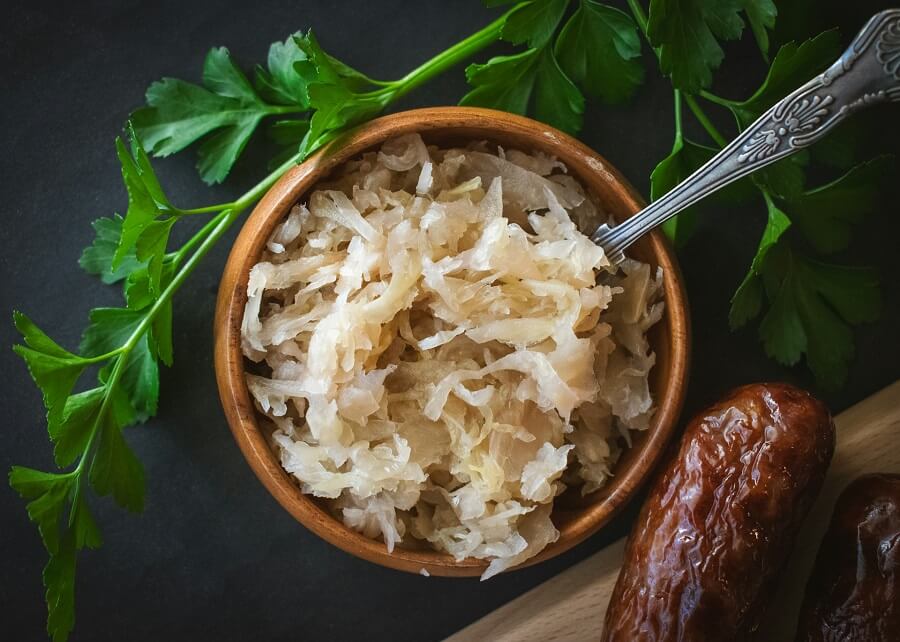
Open jar of raw unpasteurised sauerkraut on a kitchen counter in daylight, live fermented food for gut health

Live fermented foods do help, but a lot of what is sold as fermented is dead on arrival. The evidence first: a 2021 randomised trial from Stanford University School of Medicine, published in Cell, put 36 adults on a ten-week high-fermented-foods diet and saw their microbial diversity rise and their markers of inflammation fall, with bigger servings giving stronger effects. Yoghurt, kefir, kimchi, kombucha and live sauerkraut earned their reputation here.

The catch is that the version matters enormously. Most shelf-stable supermarket sauerkraut has been pasteurised, which is heat that kills the very bacteria you are buying it for. Many jars labelled as sauerkraut are not fermented at all, just cabbage pickled in vinegar, which never had live cultures to begin with. The tell is simple. Truly live products live in the fridge, say “raw” or “unpasteurised” on the label, and do not list vinegar as the souring agent.

That is the whole test, and Loving Foods’ Organic Sauerkraut (£6.99) is what passing it looks like: raw, unpasteurised, still actively fermenting in the jar, and made from nothing but organic cabbage and Celtic sea salt, with no vinegar and no preservatives. For the drinking version, their Raspberry & Tulsi Kombucha (£2.99) is unpasteurised and still carries its live cultures. Browse the rest of the fermented edit on the same basis, and read best foods for bloating for where these fit in a day.

How to read a probiotic label without getting fooled

A scoop of gut health probiotic powder beside a glass of water in natural light, a strain-named daily supplement

Food first. Fibre first. If you are eating a wide range of plants and some live fermented foods most days, you may not need a probiotic supplement at all. That is the honest order, and it does not change.

But most people are not hitting 30 plants and a daily spoon of live kraut every week, and that is not a moral failing, it is a Tuesday. Some situations also call for a targeted strain, such as recovering after a course of antibiotics or managing a specific diagnosed condition with professional advice. That is the gap a supplement fills, and it is a reasonable gap to fill, as long as you buy the right thing. Most of the shelf is not the right thing.

Four things separate a probiotic worth taking from the rest, and they are all on the label if the maker is being straight with you. First, a named strain, not just “probiotic blend” or a genus like “Lactobacillus.” You want the full designation, down to the strain code, because the evidence attaches to specific strains, not to the family. Second, a stated dose, the count of live organisms in CFU, ideally in the range used in clinical trials. Third, and this is the one almost nobody solves, the cultures still being alive by the time you take them, not just at the moment of manufacture. Fourth, a strain matched to what you actually want it to do.

If the label will not tell you the strain and the dose, it is asking you to trust it on the one thing that matters.

That filter rules out most of the category, which is the point, and it makes the few that pass easy to spot. JERMS’ Daily Gut (£32.99 a month) is one of them: it names its strain down to the code, Bacillus clausii BCL19, states the dose at 10 billion CFU, and uses a spore-forming strain built to survive your stomach acid and reach the gut alive, which is the honest answer to the viability problem rather than a refrigerated promise. It is nutritionist-formulated, vegan and free of the fillers and sweeteners that pad out cheaper tubs, and it folds prebiotic fibre and digestive enzymes in alongside the probiotic. 

One fair note keeps it in proportion: it is a comprehensive daily gut formula rather than a single targeted strain for a short course, so it suits someone building an everyday habit more than someone patching a one-off gap. Food first, always. But if you are going to buy, this is the kind of label that earns it, and the rest of the supplements shelf is filtered in the same way.

What gut health is not: testing kits, cleanses and the rest

Plenty of gut spending buys you nothing, and two purchases deserve naming. At-home microbiome testing kits feel scientific, but there is no agreed definition of a “healthy” result to measure yours against, the readings shift day to day, and the advice they spit out rarely goes beyond “eat more plants,” which you already knew. Save the money for the plants.

“Cleanses” and “detoxes” are the other one. Your gut is not dirty and does not need flushing, and aggressive colon cleanses can disturb the very microbial balance you are trying to build. The microbiome looks after its own housekeeping when you feed it well.

One honest limit. If you have ongoing symptoms such as persistent pain, blood, unexplained weight loss or a lasting change in bowel habit, that is not a job for food tweaks or supplements. That is a job for your GP, and the NHS is the right first stop.

What this all comes back to

So the capsule was never the answer. The reliable work is done by the unglamorous, free levers: a wide range of plants, enough fibre to feed the microbes that keep you well, and the live fermented foods that add to the mix. A probiotic is not a scam and it is not magic. It is a sensible floor for a specific gap, worth buying only when the label names its strain and its dose. Get the food right and most people never need more than that. The vegetable drawer really was the cheap secret all along, and now you know why it works.

If you have a gap worth filling and want to skip the dead cultures and the vague blends, browse Gut Health filtered to strain-named products, where the labelling test above has already been applied for you.

FAQs

Do probiotic supplements actually work?

Some do, for some purposes, but most of the shelf will not tell you enough to know. The evidence attaches to specific strains at specific doses, so a product worth taking names its exact strain, states its CFU count, and gets the cultures to you alive rather than only at manufacture. If a label gives you a vague “probiotic blend” with no strain and no dose, treat that as your answer.

What is the single best food for gut health?

There is not one. The best thing you can do is eat a wide variety of plants rather than a large amount of any single “superfood.” The American Gut Project found that people eating more than 30 different plant types a week had the most diverse, and therefore most resilient, gut microbiomes. Variety beats any one item, however fashionable.

How long does it take to improve your gut health?

Your microbiome starts shifting within a few days of eating more fibre and plant variety, because the bacteria respond quickly to what you feed them. But a stable change is a matter of weeks of consistency, not a one-off healthy week. Think of it as feeding a community you are trying to keep, not a switch you flip.

Are fermented foods enough, or do I need a supplement?

For most people, live fermented foods plus a varied, fibre-rich diet are enough and a supplement adds little. A targeted probiotic earns its place for specific gaps, such as after a course of antibiotics or alongside professional advice for a diagnosed condition. Even then, the deciding factor is whether the product names its strain and dose.


READ NEXT

What gut health actually means, and what actually moves it

Gut health is built, not bought. Here is what the evidence actually backs, where fermented foods earn their place, and the one line on a probiotic label that tells you whether it is worth your money.

You have probably been sold the idea that gut health comes in a capsule. The most reliable thing you can do for your gut costs nothing and is already sitting in your vegetable drawer. Meanwhile the £30 probiotic on the shelf may not even name the one thing that decides whether it works.

Here is why this matters to you right now. Your gut does far more than break down lunch, which means the state of it shows up in your energy, your mood and how often you get ill. The trouble is that the people selling you the solution and the people who have studied it rarely say the same thing – we’re trying to bridge that gap. This is the ground floor of Gut Health: what the science backs and what is worth your money. Let us start with what gut health is all about.

What your gut microbiome actually is, in plain terms

Your gut microbiome is the community of trillions of microbes living mostly in your large intestine, and the single best measure of its health is not which species you have but how many different ones. Diversity is the goal. A gut running on a handful of dominant species is more fragile than one running on hundreds, in the same way a field of one crop fails faster than a meadow.

The clearest evidence for this came from the American Gut Project, the largest citizen-science microbiome study of its kind, published in the journal mSystems in 2018. Researchers found that people eating more than 30 different plant types a week had markedly more diverse gut microbiomes than people eating 10 or fewer, and that held true whether they were vegan, vegetarian or omnivore. The variety of plants mattered more than the label on the diet.

Dr Megan Rossi, registered dietitian and research fellow at King’s College London, puts the principle in terms anyone can picture. “Treat your gut bacteria like a pet,” she says. “You want to look after your pet well so it lives its best and most active life possible. The same applies to your gut; you want to feed it everything that it needs to perform at its best.”

A healthy gut is not about one good bacterium. It is about how many different ones you are feeding.

Why your gut runs more than your digestion

Your gut is wired directly to your brain, which is why a struggling gut so often shows up as low mood or fog rather than a stomach ache. The main cable is the vagus nerve, a two-way line carrying signals from the gut up to the brain all day long. This is not mystical; it is plumbing and wiring.

The scale of it surprises most people. “There are more nerve cells in our gut than there are in our spinal cord,” says Professor John Cryan, neuroscientist and principal investigator at APC Microbiome Ireland at University College Cork, whose work helped establish the field. His point is that the gut is not a passive tube. It is an organ the brain listens to.

The gut is also where much of your immune system sits, packed into the wall of the intestine, which is why the state of your microbes touches how often you fall ill. If you want the fuller picture on the mood side of this, we set it out in how food affects mood.

The one thing that does the most, and it is not a supplement

Wooden board of lentils, wholegrains and seeds in natural light, high-fibre plant variety for gut health

Fibre is the single biggest lever you have, and most people in the UK are nowhere near pulling it. UK adults eat around 18 grams of fibre a day. The government target, set by the Scientific Advisory Committee on Nutrition, is 30 grams. Only about one adult in ten actually hits it.

That gap matters because fibre is the food your gut bacteria live on. When they ferment it, they produce short-chain fatty acids such as butyrate, the compounds that feed the lining of your colon and keep the barrier between your gut and the rest of you intact. No fibre, no fermentation, no butyrate. The American Gut data showed the same pattern from the other end: the people eating the widest range of plants carried more of the bacteria that make these fatty acids.

The practical move is variety more than volume. Different plants feed different microbes, so a plate with several plant types does more than a big serving of one. Wholegrains, beans and lentils, nuts and seeds, fruit, vegetables, herbs and spices all count, and aiming for that 30-plants-a-week range is a more useful target than any single superfood. If you want a starting point, the Eat Well goal is built around exactly this kind of plant variety, and choosing Organic where it suits your budget keeps the range wide without the additives.

Most adults in the UK eat barely more than half the fibre their gut is asking for. Closing that gap is free, and it beats anything you can buy.

The free levers that matter next: stress, sleep and movement

After fibre come stress, sleep and movement. They help, but none of them outranks what is on your plate. Treat them as support, not headline.

Movement has the clearest evidence of the three. A 2023 systematic review in Frontiers in Physiology found that regular exercise is associated with greater microbial diversity and more of those short-chain-fatty-acid producers, with active people consistently showing richer microbiomes than sedentary ones. Sleep pulls in the same direction, with better sleep efficiency linked to greater gut diversity. And chronic stress works against you, which is part of why looking after your head is part of looking after your gut. If that is the lever you most need, Reduce Stress is a sensible place to start. None of these replaces fibre. They stack on top of it.

Where fermented foods fit, and where they are oversold

Open jar of raw unpasteurised sauerkraut on a kitchen counter in daylight, live fermented food for gut health

Live fermented foods do help, but a lot of what is sold as fermented is dead on arrival. The evidence first: a 2021 randomised trial from Stanford University School of Medicine, published in Cell, put 36 adults on a ten-week high-fermented-foods diet and saw their microbial diversity rise and their markers of inflammation fall, with bigger servings giving stronger effects. Yoghurt, kefir, kimchi, kombucha and live sauerkraut earned their reputation here.

The catch is that the version matters enormously. Most shelf-stable supermarket sauerkraut has been pasteurised, which is heat that kills the very bacteria you are buying it for. Many jars labelled as sauerkraut are not fermented at all, just cabbage pickled in vinegar, which never had live cultures to begin with. The tell is simple. Truly live products live in the fridge, say “raw” or “unpasteurised” on the label, and do not list vinegar as the souring agent.

That is the whole test, and Loving Foods’ Organic Sauerkraut (£6.99) is what passing it looks like: raw, unpasteurised, still actively fermenting in the jar, and made from nothing but organic cabbage and Celtic sea salt, with no vinegar and no preservatives. For the drinking version, their Raspberry & Tulsi Kombucha (£2.99) is unpasteurised and still carries its live cultures. Browse the rest of the fermented edit on the same basis, and read best foods for bloating for where these fit in a day.

How to read a probiotic label without getting fooled

A scoop of gut health probiotic powder beside a glass of water in natural light, a strain-named daily supplement

Food first. Fibre first. If you are eating a wide range of plants and some live fermented foods most days, you may not need a probiotic supplement at all. That is the honest order, and it does not change.

But most people are not hitting 30 plants and a daily spoon of live kraut every week, and that is not a moral failing, it is a Tuesday. Some situations also call for a targeted strain, such as recovering after a course of antibiotics or managing a specific diagnosed condition with professional advice. That is the gap a supplement fills, and it is a reasonable gap to fill, as long as you buy the right thing. Most of the shelf is not the right thing.

Four things separate a probiotic worth taking from the rest, and they are all on the label if the maker is being straight with you. First, a named strain, not just “probiotic blend” or a genus like “Lactobacillus.” You want the full designation, down to the strain code, because the evidence attaches to specific strains, not to the family. Second, a stated dose, the count of live organisms in CFU, ideally in the range used in clinical trials. Third, and this is the one almost nobody solves, the cultures still being alive by the time you take them, not just at the moment of manufacture. Fourth, a strain matched to what you actually want it to do.

If the label will not tell you the strain and the dose, it is asking you to trust it on the one thing that matters.

That filter rules out most of the category, which is the point, and it makes the few that pass easy to spot. JERMS’ Daily Gut (£32.99 a month) is one of them: it names its strain down to the code, Bacillus clausii BCL19, states the dose at 10 billion CFU, and uses a spore-forming strain built to survive your stomach acid and reach the gut alive, which is the honest answer to the viability problem rather than a refrigerated promise. It is nutritionist-formulated, vegan and free of the fillers and sweeteners that pad out cheaper tubs, and it folds prebiotic fibre and digestive enzymes in alongside the probiotic. 

One fair note keeps it in proportion: it is a comprehensive daily gut formula rather than a single targeted strain for a short course, so it suits someone building an everyday habit more than someone patching a one-off gap. Food first, always. But if you are going to buy, this is the kind of label that earns it, and the rest of the supplements shelf is filtered in the same way.

What gut health is not: testing kits, cleanses and the rest

Plenty of gut spending buys you nothing, and two purchases deserve naming. At-home microbiome testing kits feel scientific, but there is no agreed definition of a “healthy” result to measure yours against, the readings shift day to day, and the advice they spit out rarely goes beyond “eat more plants,” which you already knew. Save the money for the plants.

“Cleanses” and “detoxes” are the other one. Your gut is not dirty and does not need flushing, and aggressive colon cleanses can disturb the very microbial balance you are trying to build. The microbiome looks after its own housekeeping when you feed it well.

One honest limit. If you have ongoing symptoms such as persistent pain, blood, unexplained weight loss or a lasting change in bowel habit, that is not a job for food tweaks or supplements. That is a job for your GP, and the NHS is the right first stop.

What this all comes back to

So the capsule was never the answer. The reliable work is done by the unglamorous, free levers: a wide range of plants, enough fibre to feed the microbes that keep you well, and the live fermented foods that add to the mix. A probiotic is not a scam and it is not magic. It is a sensible floor for a specific gap, worth buying only when the label names its strain and its dose. Get the food right and most people never need more than that. The vegetable drawer really was the cheap secret all along, and now you know why it works.

If you have a gap worth filling and want to skip the dead cultures and the vague blends, browse Gut Health filtered to strain-named products, where the labelling test above has already been applied for you.

FAQs

Do probiotic supplements actually work?

Some do, for some purposes, but most of the shelf will not tell you enough to know. The evidence attaches to specific strains at specific doses, so a product worth taking names its exact strain, states its CFU count, and gets the cultures to you alive rather than only at manufacture. If a label gives you a vague “probiotic blend” with no strain and no dose, treat that as your answer.

What is the single best food for gut health?

There is not one. The best thing you can do is eat a wide variety of plants rather than a large amount of any single “superfood.” The American Gut Project found that people eating more than 30 different plant types a week had the most diverse, and therefore most resilient, gut microbiomes. Variety beats any one item, however fashionable.

How long does it take to improve your gut health?

Your microbiome starts shifting within a few days of eating more fibre and plant variety, because the bacteria respond quickly to what you feed them. But a stable change is a matter of weeks of consistency, not a one-off healthy week. Think of it as feeding a community you are trying to keep, not a switch you flip.

Are fermented foods enough, or do I need a supplement?

For most people, live fermented foods plus a varied, fibre-rich diet are enough and a supplement adds little. A targeted probiotic earns its place for specific gaps, such as after a course of antibiotics or alongside professional advice for a diagnosed condition. Even then, the deciding factor is whether the product names its strain and dose.

Leave a Comment