Veo and Wearth are now Ziracle. Same mission, better platform. See what's new

How to Bring More Hygge into your Life

|||||||||||

Hygge is one of those words that sounds more complicated than it actually is. Pronounced hoo-gah, borrowed from Danish, and adopted by the rest of the world over the last decade, it translates loosely as a quality of cosy, unhurried enjoyment, usually shared with people you like. A hot drink on the sofa while rain runs down the window. A candlelit meal with two close friends instead of a busy dinner party. A book, a blanket, and nowhere to be.

It’s often described as a winter thing, and winter does suit it well, but hygge is really a year-round practice. A garden chair at dusk with a glass of something cold. An afternoon in the kitchen baking with someone. The ingredients change by season. The point doesn’t. Here’s what hygge actually means, why the feeling behind it is worth building into your life, and a few ways to make your home a better home for it.

What hygge really is

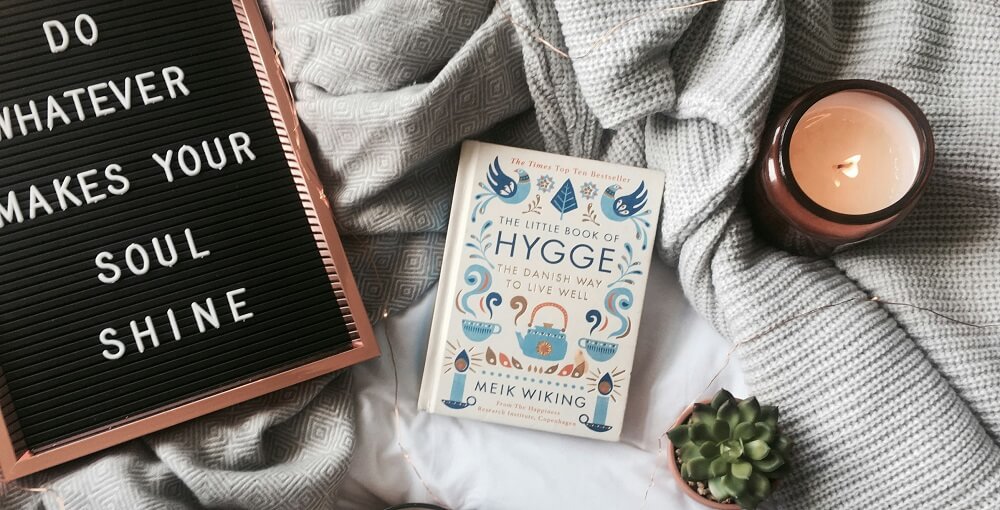
Hygge is Denmark’s national shorthand for a particular kind of contentment. VisitDenmark, the country’s official tourism board, describes it as the feeling of warmth and togetherness that comes from savouring a simple pleasure with someone you care about. The word has been in common Danish use since at least the 18th century, and it picked up international momentum from 2016 onwards after Meik Wiking, CEO of the Happiness Research Institute in Copenhagen, published The Little Book of Hygge.

Wiking’s argument was worth the attention. Denmark consistently ranks among the happiest countries in the world despite having long winters and not much daylight between November and February. The 2024 World Happiness Report placed Denmark in the top three globally for the eighth year running, alongside Finland and Iceland, all countries with dark winters and strong home-life cultures. Hygge is part of how Danes explain that consistency. It’s not about luxury or aesthetic. It’s about the deliberate creation of small, warm moments, and the choice to notice them.

Why the feeling matters, not only in winter

There’s a mental-health case for taking hygge seriously. The NHS describes seasonal affective disorder as a type of depression that follows a seasonal pattern, with symptoms including low mood, low energy and social withdrawal through the darker months. Its advice includes getting as much natural light as possible, staying active, and creating environments at home that feel warm and restorative rather than cold and over-lit.

You don’t need a clinical diagnosis to feel the pull of that. Most of us notice a mood shift when the days get shorter, when work blurs into evenings, when the house starts to feel more like a base than a home. A 2022 review in BMC Public Health found that the perceived quality of domestic environments (warmth, social connection, control over the space) is consistently associated with lower self-reported stress and improved mood.

Hygge is the everyday antidote: a practice of deliberately slowing the pace indoors, paying attention to texture and light and company, and accepting that the answer to a hard week is sometimes an unambitious evening on the sofa with good food and good people.

The summer version is less written about but just as real. A slow Sunday breakfast in the garden. A shared picnic blanket. Candles on the patio as the light goes. Hygge is about the small orchestration of a moment, whatever season it happens to be in.

Hygge is not about luxury or aesthetic. It’s about the deliberate creation of small, warm moments.

Build a room that invites it

The physical side of hygge is less about buying things and more about cutting clutter, softening light and layering texture. A few useful principles.

Light in layers

One overhead light on full does not work for hygge. A few smaller sources (a lamp, a candle, a string of lights) at lower heights will always read cosier than a ceiling fitting on its own. The goal is warm, directional light that feels like it’s inviting you to settle into the room rather than flood-lighting you through it. Browse the Lighting edit for options.

Soft surfaces within reach

A wool blanket over the arm of the sofa, a cushion you actually want to lean into, a rug that welcomes bare feet. Natural fibres (wool, cotton, linen, hemp) last longer, feel better and age more gracefully than synthetics. Browse the Bedspreads and Throws edit for pieces that move between sofa and bed.

Scent, but quietly

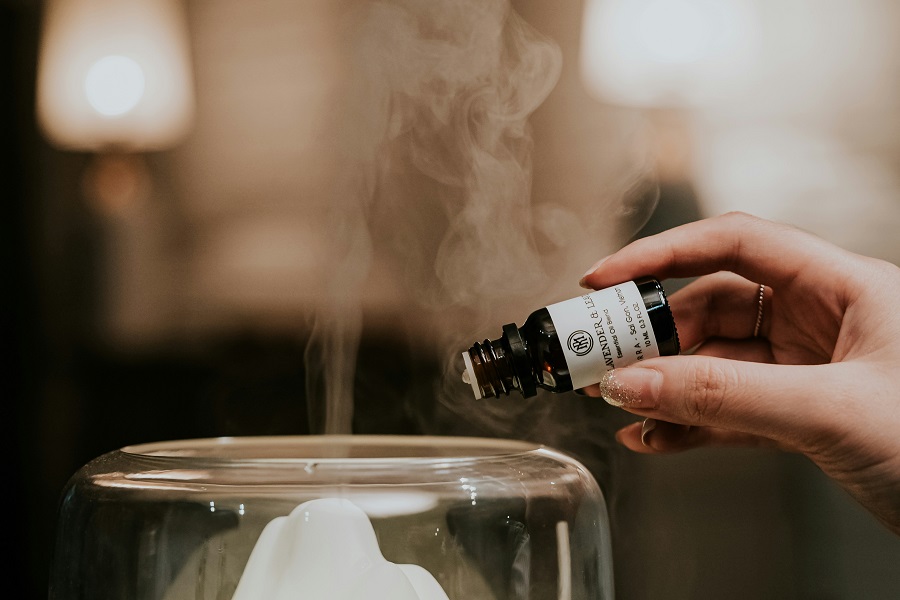
A plant-based candle or a simple essential-oil diffuser does more than any aerosol air freshener, and without the chemical residue. A single scent (woodsmoke, beeswax, cedar, lavender) reads cleaner than a mix. Browse the Home Fragrance edit.

A corner for the ritual

Hygge tends to gather around a point: a reading chair by a window, a kitchen table that seats four properly, a corner of the sofa that is yours. Decide where yours is. Make it good.

Clothes built for the sofa

The Danes aren’t precious about what you wear for hygge. The only rule is comfort that you don’t want to take off. Loungewear and sleepwear in organic cotton, bamboo or hemp, knitwear you can pull over your hands, waffle bathrobes, thick socks, sheepskin slippers. All of it is better in natural fibres than in synthetics, for the same reason as everything else: they breathe, they last, they feel right. Browse the Pyjamas edit and the Dressing Gowns and Robes edit.

A useful shortcut when you’re building a cosy wardrobe: aim for three or four high-quality pieces rather than a drawer full of cheap ones. One dressing gown you love is worth more than three you tolerate, and it will be on you most weekends for years.

Treats that earn their place

Food and drink are half of hygge. A pot of good tea. Proper hot chocolate made with a real bar of chocolate rather than a sachet. A bowl of something popped on the stove rather than microwaved out of plastic. Spiced nuts, a round of sourdough, a soft cheese you bought because someone told you about it. The only trick is presence: sit down with it, don’t eat it standing up over the sink, share it with someone if you can. Browse The Cellar for tea and coffee, and the Snacks and Social edit for the chocolate and nuts side.

The same applies in summer. A cold drink in a proper glass, sliced fruit on a plate, a cake you took half an hour to make. Hygge is uninterested in convenience. It’s interested in the small ceremony of good things done properly.

Hygge is a habit, not a shopping list

The last thing to say about hygge is that it isn’t really something you buy. A thirty-pound blanket used every night beats a three-hundred-pound one that lives in a cupboard. A candle lit on a Tuesday evening because you felt like lighting it beats a whole shelf of candles you’re saving for a special occasion. The most important ingredient is the decision to treat a normal evening as worth some care.

For the broader picture, read our guides to daily habits for mental health and how to sleep better.

Every brand in the Home and Sanctuary category on Ziracle has passed the same standard: built to last, honest about materials, and made by people paid properly. For pieces that fit the hygge brief specifically, filter by Organic to narrow the selection to natural fibres and clean ingredients.

Ready to start? Light a candle. Pick something from the Reduce Stress edit if you need a nudge.

FAQs

How do you actually pronounce hygge?

Hoo-gah. The stress is on the first syllable, and the g is soft, closer to a breathy ‘huh’ than a hard English g. Danes will cheerfully tell you that English speakers never get it quite right and don’t need to. The word matters more than the pronunciation.

Is hygge only a winter thing?

It’s most associated with winter because long Danish winters gave rise to the practice, but it’s not limited to cold weather. A slow summer breakfast in the garden is hygge. A picnic with candles on the patio as the light goes is hygge. The shape of the moment (deliberate, warm, shared, unhurried) matters more than the season. Summer hygge tends to involve sunlight and open doors where winter hygge involves candles and blankets, but both versions are recognised by Danes.

Do I need to buy specific things to make my home hygge?

No. The most important change is how you use the space you already have. Lower the overhead lights and turn on lamps. Pull a blanket over the sofa. Put a candle on the coffee table. Sit down with a proper cup of tea and don’t scroll through your phone while you drink it. If you do want to buy something, natural-fibre blankets, plant-wax candles and essential-oil diffusers earn their place more than novelty decor. Cost per use is the right frame: one thing you love and use every day beats a shelf of things you save for special occasions.

Is there evidence that hygge actually improves wellbeing?

Not for hygge as a named practice, because it’s a cultural concept rather than a clinical intervention. There’s stronger evidence for the components: a 2022 review in BMC Public Health linked the perceived quality of domestic environments to lower self-reported stress and improved mood. The NHS cites warm, low-lit indoor environments as part of its guidance for managing seasonal affective disorder. The specific label is Danish. The underlying ideas (social connection, deliberate slowness, warmth, light) show up in a lot of wellbeing research.

How is hygge different from self-care?

Self-care is often individual: a bath alone, a night in with a face mask, a phone turned off. Hygge is usually shared: the same evening spent with a partner or a friend or a small group. The Danish concept specifically involves togetherness as part of the definition, which is why VisitDenmark and most Danish sources describe it as a feeling of warmth ‘with someone you care about.’ You can hygge alone, and many people do, but the fuller version tends to involve other people.

Eco-Home Essentials Worth Building a Room Around

||||sustainable houswarming gifts | marble two tone serving board|||

Making a house feel like a home is a quiet kind of craft. A candle that smells like early evening, a cushion that pulls a room together, a cleaning spray that doesn’t announce itself the moment you walk in. The eco version of all of this isn’t about looking ascetic or cutting back for its own sake. It’s about choosing the version of each object that works just as well, looks just as good, and doesn’t leave a plastic bottle or a questionable ingredient list behind.

The case for being careful about what you bring into the home is well-documented. The US Environmental Protection Agency has tracked for years how volatile organic compounds (VOCs) from conventional cleaning products, air fresheners and paraffin candles raise the VOC load of indoor air, often to levels several times higher than outdoor air. A 2019 review in the International Journal of Environmental Research and Public Health linked sustained exposure to indoor VOCs with respiratory irritation and long-term health effects. Choosing plant-based cleaners, natural-wax candles and non-toxic fragrance isn’t a niche preference. It’s an everyday way to cut your home’s exposure to the stuff you don’t want to be breathing in.

What follows is a room-by-room approach to building an eco home, organised around the categories where home essentials tend to stack up. Five areas, each with the format worth looking for and the reasoning behind it.

The eco version isn’t about looking ascetic. It’s about choosing the version of each object that works just as well and looks just as good.

Living room: plant-based scent over synthetic diffusers

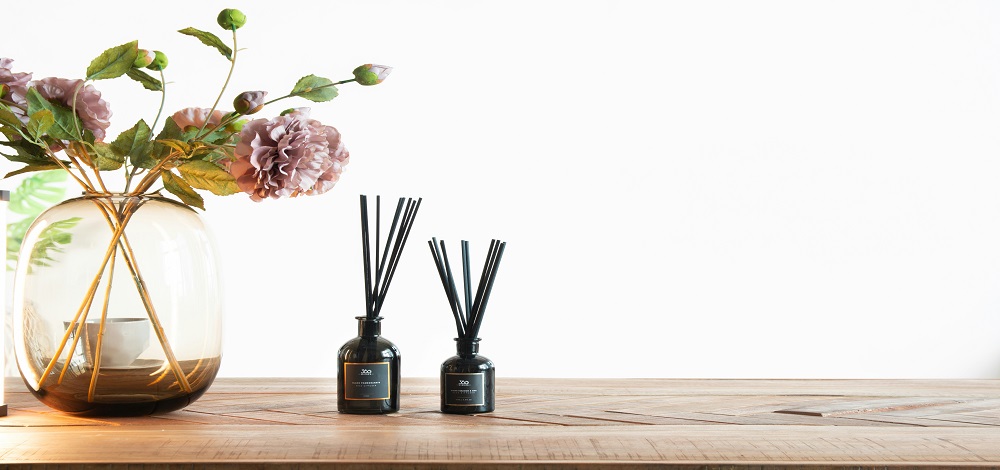
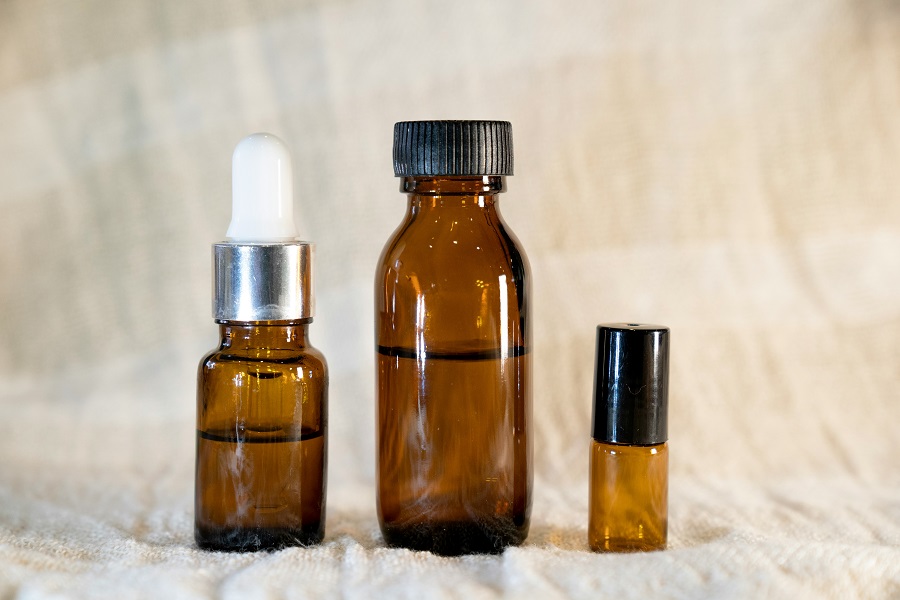
Most supermarket diffusers carry essential-oil-adjacent synthetic fragrance compounds in a petrochemical carrier oil. They’re cheap, they throw scent far, and they contribute a steady trickle of VOCs to the air you breathe at home. The better version uses real essential-oil blends in a natural plant-based carrier, usually a light vegetable oil, with simple reed delivery and glass packaging.

Scents that read as calming in a living room tend to sit in the woody and soft-floral families: cedarwood, linden, sandalwood, rose geranium. Packaging worth looking for is clear or amber glass with paper labelling. Avoid plug-ins, perfume aerosols and anything with ‘air freshener’ in the name, which usually indicates synthetic fragrance concentrates rather than essential oil. Browse the Home Fragrance edit for options.

Sofa and soft furnishings: handmade textiles that change a room

A cushion is a small purchase that changes the tone of a whole room. The eco version usually comes down to two questions: what’s the fibre (organic cotton, linen, recycled cotton, hemp) and who made it (a machine-press factory, or a cooperative of artisan weavers).

Hand-loomed or hand-printed textiles cost more than their mass-produced equivalents for the reasons the Fair Trade movement has documented for decades: the people making them are paid properly, the techniques (block printing, traditional looming, natural dyes) take time, and the pieces are genuinely unique rather than batch-identical. A 2023 UN Women report found that women working in artisan textile cooperatives globally see meaningful income improvements when production moves to Fair Trade partnerships rather than conventional supply chains. Browse the Cushions and Covers edit and filter by Fair Trade to find pieces produced this way.

Kitchen and dining: artisan serving ware over mass-produced sets

The kitchen accumulates serving pieces faster than almost any other room. The eco approach isn’t to own fewer of them. It’s to choose pieces that work as everyday gear and as statement objects, so you don’t need a separate set of each.

Wood and marble serving boards, finished by hand and often made from offcuts of ancient hardwoods or marble waste, are one of the best examples. Each piece is slightly different. They’re sturdy enough to use every day and attractive enough to put on the table for dinner. Cooperative-made kitchenware from countries with strong artisan traditions typically returns a higher share of the retail price to the maker than a conventional retail supply chain does, which is part of the case for paying more for a hand-finished piece. Browse the Dinnerware edit for options.

Reclaimed materials are worth looking for specifically. Coconut shell bowls, made from the shells left over after the coconut flesh is harvested, are one of the clearer upcycling stories in homeware. The shells would otherwise be burned as agricultural waste. Hand-carved and finished with food-safe oils, they work as breakfast bowls, snack bowls, jewellery catchers or bathroom organisers.

Utility and cleaning: refillable over disposable

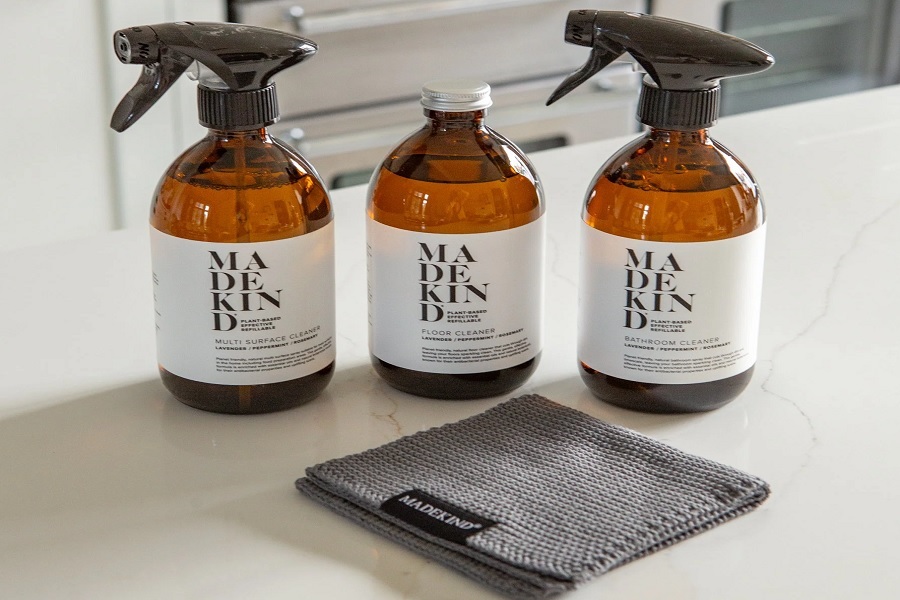
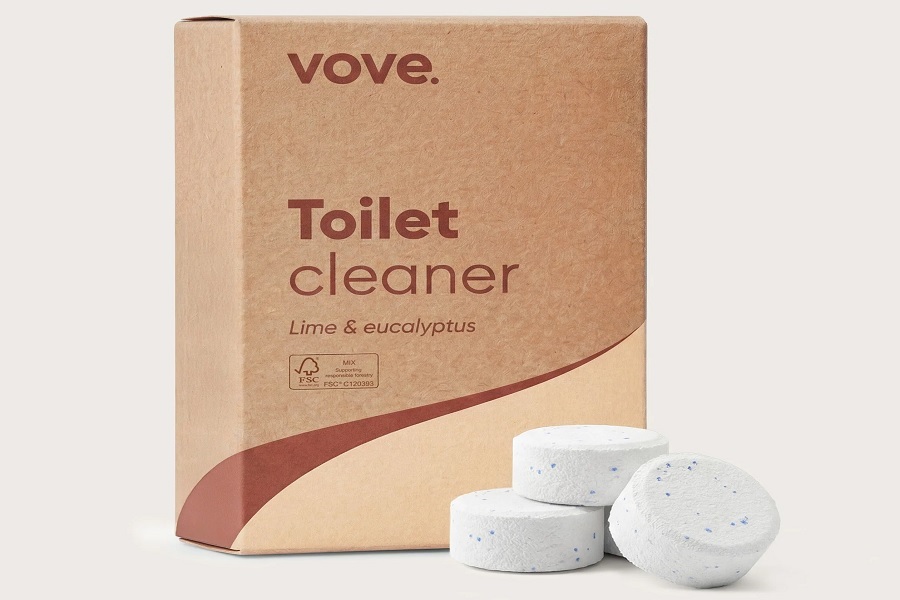
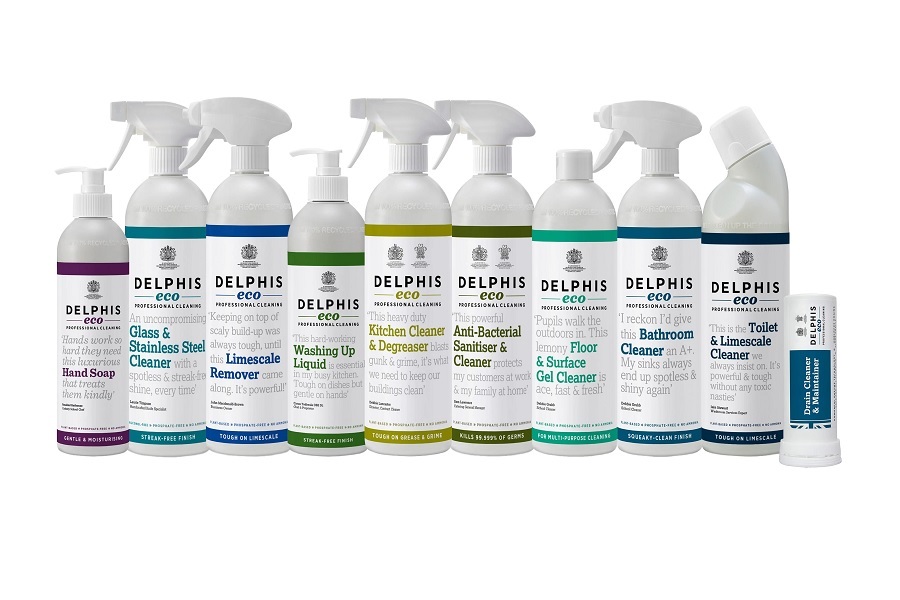
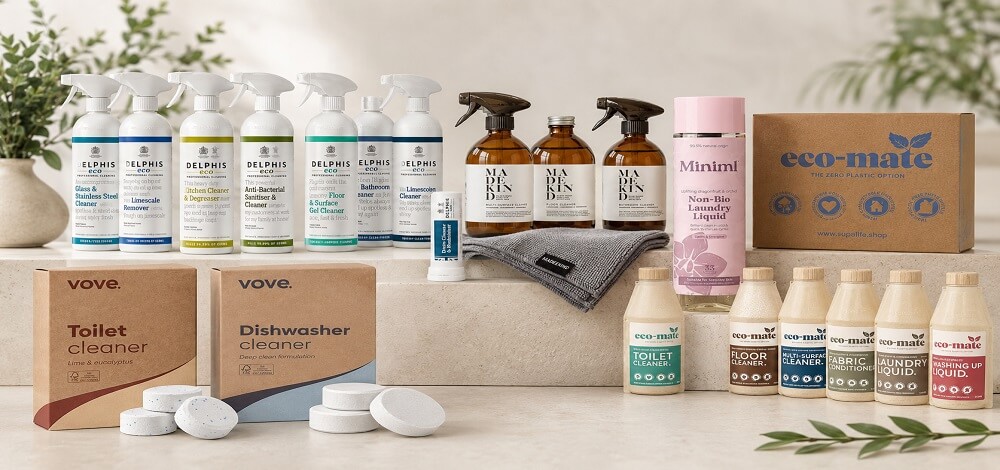
Cleaning products are one of the worst-offending categories for single-use plastic in the home, and also one of the easiest to fix. The swap is straightforward: a refillable glass or aluminium dispenser kept indefinitely, with concentrated refills in compostable sachets or tablets that dissolve in water.

A 2023 Which? review found that concentrated refillable cleaning products use substantially less plastic and far less water than ready-mixed sprays, because you’re not shipping water around the country. Plant-based formulas (rosemary, lemon and juniper oils for bathroom cleaners; bicarbonate-based pastes for kitchen surfaces) clean well without the chemical residue of conventional sprays, and once you have the dispenser, the only thing that enters your house with each reorder is the refill itself. Browse the Refillable Multi-Surface edit or the Refillable Washing Up edit for options.

Bedroom: natural-fibre bedding over synthetic

Bedding is worth getting right because you spend a third of your life in contact with it. Synthetic bedding (polyester, polyester blends) sheds microfibres with every wash and traps heat in a way that most people find uncomfortable. Natural-fibre bedding (organic cotton, linen, bamboo) breathes better, lasts longer, and washes cleanly into wastewater that doesn’t carry microplastics into rivers.

Certifications worth looking for: GOTS (Global Organic Textile Standard) for organic cotton, OEKO-TEX Standard 100 for chemical safety in the finished fabric, and Fair Trade for supply-chain fairness. Linen in particular is worth knowing about. It uses far less water to grow than cotton, needs no irrigation in European climates, and its longevity is measured in decades rather than years. Browse the Bedding edit.

Small pieces, calmer rooms

An eco home isn’t built in a weekend or with one big order. It’s built one replacement at a time: when the old thing runs out, you choose a better version of it. A diffuser that isn’t a plug-in. A cushion that came from a loom rather than a factory. A cleaning spray that refills rather than multiplies. After a few months of these small decisions, the rooms you live in start to feel different, partly because the air is cleaner, partly because everything in them was chosen with some thought.

For more on building the habit, see our guides to eco swaps for home and eco swaps for beauty.

Every brand in the Home and Sanctuary category on Ziracle has passed the same standard: built to last, transparent about materials and supply chain, and made by people paid properly. Filter by Plastic Free or Organic to narrow the selection to products that meet the stricter end of the standard.

Ready to shop? Browse the Home and Decor edit and start with the room you spend the most time in.

FAQs

Are plant-based cleaners actually as effective as conventional ones?

For everyday cleaning, yes. Which?’s 2023 testing found that concentrated plant-based cleaners perform comparably to mainstream brand sprays on common household surfaces, while using substantially less plastic packaging. Where conventional chemical cleaners still have an edge is in heavy-duty disinfection (bleach-based products for deep cleaning during illness, for example) and in removing mould or persistent limescale. For the 90% of weekly cleaning that isn’t about disinfection, plant-based refillable formats are a clean substitute.

Why are natural wax candles better than paraffin?

Paraffin is a petroleum by-product, and burning it indoors releases VOCs and fine particulates into the air you breathe. Soy, coconut and beeswax candles burn cleaner, with significantly lower particulate emissions. The EPA’s indoor air quality guidance has flagged candle soot from paraffin as a meaningful contributor to indoor air pollution over time. The scent performance of well-made natural wax candles is comparable to paraffin, especially when scented with real essential oils rather than synthetic fragrance.

Are handmade textiles worth the price premium?

For pieces you’ll use every day for years, usually yes. Handmade cushions, throws and bedding are more durable than machine-pressed equivalents because the construction is denser and the fibres are typically higher-grade. The Fair Trade premium funds better wages and working conditions for the makers, which is part of what you’re paying for. Cost per use tends to favour handmade pieces over time, the same way cost per wear favours well-made clothing over fast fashion.

Which eco-home swap gives the biggest benefit?

Refillable cleaning products. Cleaning sprays and laundry detergent cycle through the home faster than almost any other packaged category, so switching to refillable formats removes a significant volume of single-use plastic from your household waste. It’s also the category where the performance gap between eco and conventional options has closed most completely. Start there.

How do I tell if a candle or diffuser is genuinely natural?

Look at the wax base on candles (soy, coconut or beeswax, not paraffin) and the carrier oil on diffusers (a named vegetable oil, not an unspecified ‘fragrance carrier’). For the scent itself, the ingredient list should name specific essential oils (bergamot, cedarwood, rose geranium) rather than the generic ‘parfum’ or ‘fragrance,’ which in cosmetics labelling can cover any combination of synthetic fragrance compounds. Certifications worth looking for include natural cosmetic marks like Soil Association COSMOS or Ecocert.

Eco Swaps for Home: The Ones that Actually Move the Needle

Most eco swap guides treat the home as one undifferentiated problem. The house is not that. It’s a few high-impact rooms and a lot of noise, and if you don’t know the difference, you end up with a drawer full of bamboo cutlery and a cupboard still stacked with plastic bottles.

So here’s the honest version. Where the plastic actually comes from, which swaps shift the numbers, and which ones you can skip without losing sleep.

Where household plastic actually comes from

According to a 2022 Greenpeace study, UK households throw away an average of 66 pieces of plastic packaging every week. That isn’t forgotten bottles at the back of the recycling bin. That’s the packaging that cycles through the house week after week: cleaning sprays, laundry detergent, food wrap, bin liners.

Cleaning and laundry are where the opportunity lives. Both categories are almost entirely liquid, almost entirely plastic-packaged, and almost entirely replaceable with formats that work as well. The average household gets through dozens of spray bottles, detergent bottles, washing-up bottles, and fabric softener bottles a year, all of them single-use.

Most of them can’t be recycled in kerbside collection either. The trigger-spray mechanism on a kitchen cleaner combines several plastic types that can’t be separated at the recycling plant, which means the whole bottle tends to be down-cycled or landfilled. The kitchen and bathroom contribute the rest: food wrap, sponges, bin liners, cotton buds, miscellaneous single-use packaging. Some of that is hard to replace. Most of it isn’t.

The swaps that actually make a difference

Concentrated, refillable cleaning products: the biggest single win

Switching from ready-to-use spray cleaners to concentrated refillable formats is the most impactful swap in the house. Which? tested concentrated cleaning products in 2023 and found they use substantially less plastic and far less water than the standard ready-mixed equivalent, because you’re not shipping water in a bottle across the country. Performance has caught up: concentrated cleaners from dedicated refillable brands clean as well as conventional products. Browse the Refillable Multi-Surface range for options.

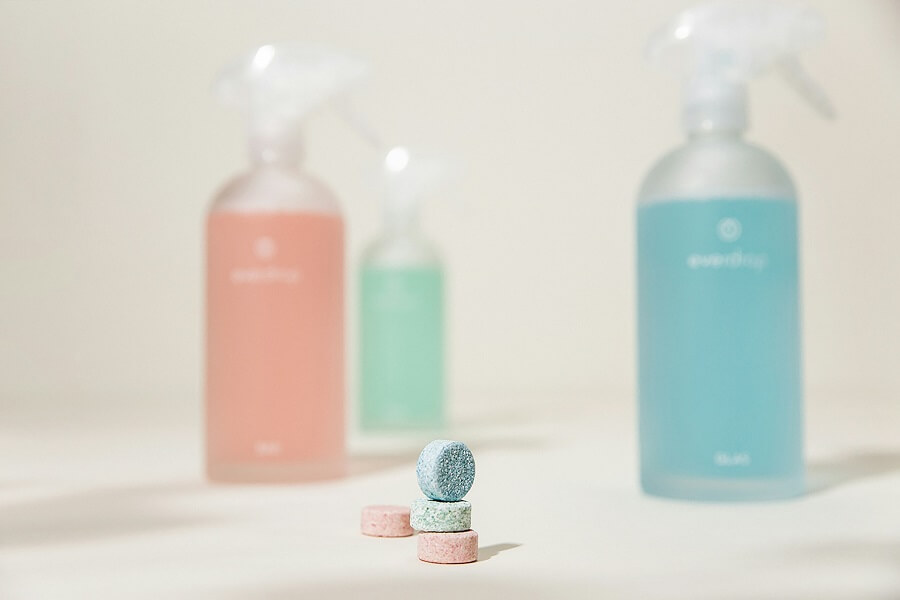
The format worth looking for is a refillable glass or aluminium bottle plus concentrated tablets or drops that dissolve in water. One bottle, kept indefinitely. Refills ordered when you need them. The plastic is pulled out of the cycle almost entirely.

Laundry sheets and strips: yes

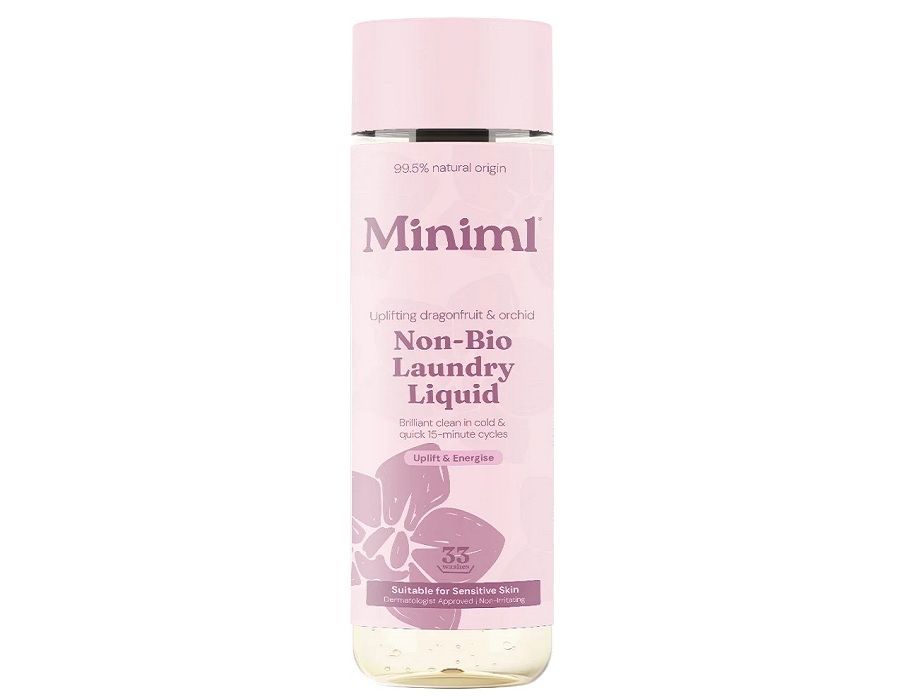
Laundry detergent bottles are bulky, heavy, and almost never made from easily recyclable plastic. Laundry sheets, which dissolve in the wash and come in cardboard, replace them cleanly. Performance has improved a lot from the first generation. They work in standard and high-efficiency machines, at all temperatures, and take up a fraction of the space. See the Refillable Laundry edit.

Washing-up liquid: switch to concentrate or a solid bar

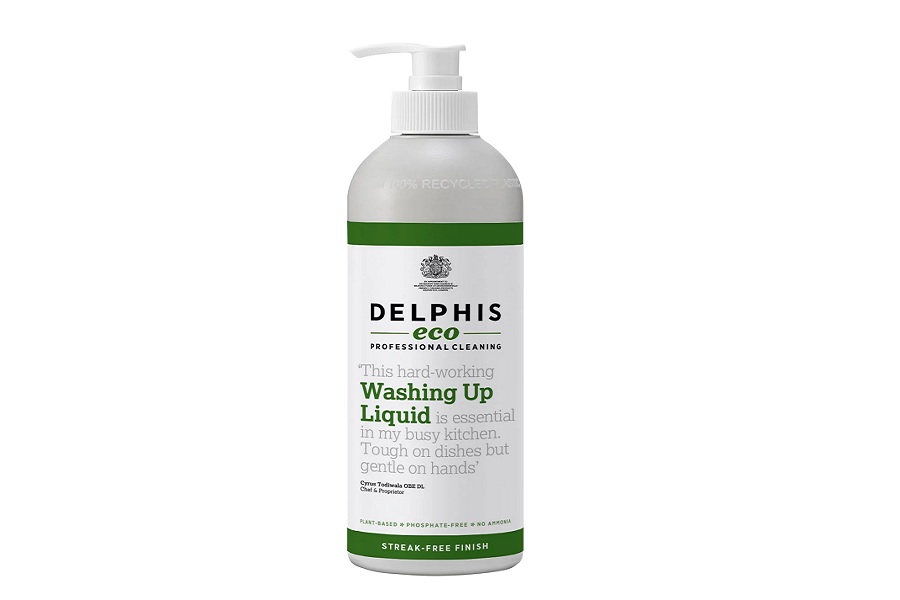
One of the highest-turnover plastic items in most kitchens. Concentrated washing-up liquid diluted into a refillable bottle cuts the number of bottles dramatically. Solid washing-up bars, used with a wooden dish brush, remove plastic altogether. Both work. The bar asks for the most adjustment. The concentrate is the gentler switch. Browse the Refillable Washing Up range.

Kitchen sponges: swap immediately

Conventional synthetic sponges shed microplastics into wastewater with every wash-up and go in the bin within weeks. Research published in 2022 in Science of the Total Environment estimated that a single kitchen sponge can release millions of microplastic fibres over its lifetime. Compostable alternatives (loofah, wood-pulp cellulose sponges, natural sisal scourers) do the same job without the plastic. Low cost, immediate swap, no adjustment. You’ll find them in the Cleaning Tools edit.

Beeswax wrap and reusable food covers: yes for most uses

Cling film is one of the few plastic products that can’t be recycled by most UK councils. Beeswax wrap covers bowls, wraps sandwiches, and keeps cut vegetables fresh. It doesn’t work for raw meat, and it washes in cold water only. For most other uses it’s a direct replacement. Silicone stretch lids are the alternative for bowls and containers if beeswax isn’t practical.

Bin liners: trickier than it looks

Compostable liners are worth using for your food waste caddy, where they go into food waste collection and break down properly under the industrial composting conditions those facilities provide. For general waste bins the picture is messier. Compostable liners need the same industrial conditions to break down, which most UK councils don’t provide. Recycled-content plastic bin liners are the more honest swap for general waste until the infrastructure catches up.

Dishwasher tablets: switch to plastic-free packaging

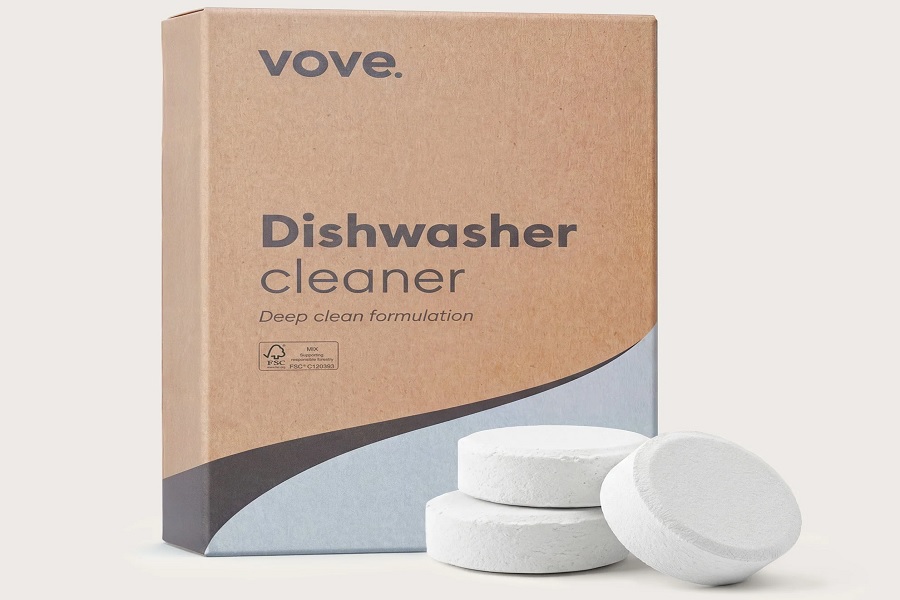
Most dishwasher tablets come individually wrapped in plastic film inside a plastic tub. Plastic-free alternatives in cardboard boxes or compostable wrappers are widely available now and perform comparably. Simple swap, no adjustment. See the Refillable Washing Up range again for tablet options.

What doesn’t need changing

Most kitchen appliances, Storage & Most furniture. The home swap conversation focuses disproportionately on things that either aren’t plastic-heavy or can’t yet be replaced at equivalent quality. The cleaning and laundry aisle is where the wins are. Start there.

How to switch without replacing everything at once

The principle holds here too: the most sustainable product in the house is the one you already own. Use what you have. Replace with better when it runs out.

Cleaning products cycle through every few weeks, which makes them the fastest category to improve. Pick one item. The kitchen spray is a good place to start. When it’s empty, replace it with a refillable bottle and a concentrated refill. Then do the same for the next thing that runs out. Within a few months, most of the cleaning aisle sorts itself without a single bottle wasted.

The cleaning aisle is where most household plastic hides. It’s also where the alternatives work best.

Laundry is the next target. A box of sheets lasts as long as a bottle of liquid detergent and produces none of the packaging. After that, the kitchen: sponges, food wrap, washing-up liquid. By the time you’ve worked through those, the remaining plastic in the house is mostly packaging that came home with your food. That’s a supply-chain problem, not a consumer one. For the same approach applied to your bathroom, see our guide to eco swaps for beauty. For the kitchen specifically, the eco swaps for food and drink guide picks up where this one stops.

What to buy when something runs out

Every product in the Clean Home category on Ziracle has passed the same standard: effective, transparently formulated, plastic-free or refillable wherever that’s possible. For home cleaning specifically, that means biodegradable ingredients, refillable formats, and no misleading claims about what the packaging actually does to the environment. Many of the brands are certified B Corp or are Plastic Free.

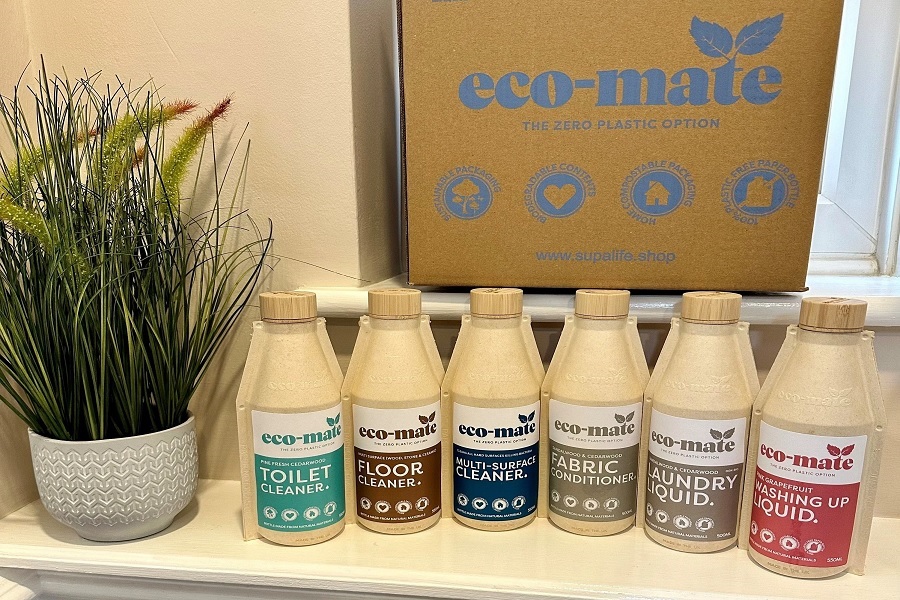
The formats worth prioritising: concentrated cleaning tablets or drops with a refillable bottle, laundry sheets in cardboard, compostable sponges, washing-up concentrate. The brands that earn their place are the ones that have thought through the whole system, beyond the label on the front.

Next time a cleaning bottle runs empty, you know what to replace it with.

Ready to switch? Browse the Refillable edit and pick the first thing that runs out.

FAQ

What’s the single biggest eco swap I can make in my home?

Switch from conventional ready-to-use spray cleaners to concentrated, refillable alternatives. Which?’s 2023 testing found concentrated cleaners use substantially less plastic and water than ready-mixed sprays, because you’re not paying to ship water around the country. One refillable bottle, kept indefinitely, plus tablets or drops that dissolve in tap water. Performance is comparable to conventional cleaners.

Do laundry sheets actually work as well as liquid detergent?

For most households, yes. Modern laundry sheets dissolve fully in both standard and high-efficiency machines, work at all temperatures, and clean comparably to liquid detergents for everyday loads. They struggle more with heavily soiled items or stains that need pre-treating. For households with small children or sports kits, a liquid detergent refill may still be the better fit. For the average weekly wash, sheets are a clean swap.

Are compostable bin liners worth using?

For the food waste caddy, yes. Food waste goes to industrial composting facilities where compostable liners break down as designed. For general waste bins, compostable liners rarely get the industrial conditions they need and end up behaving much like plastic in landfill. Recycled-content plastic liners are the more honest swap for general waste until kerbside infrastructure catches up.

How bad are conventional kitchen sponges?

Bad enough to swap. A 2022 study in Science of the Total Environment estimated that each synthetic kitchen sponge releases millions of microplastic fibres across its lifetime, mostly into wastewater during washing-up. Compostable alternatives (loofah, cellulose, natural sisal) do the same job and go on the compost heap when they wear out. Low cost, no adjustment period. Swap when the current one wears out.

Where should I start if I only want to change one thing?

The kitchen spray cleaner. It’s the item that cycles fastest, the format where refills work best, and the swap that compounds most quickly as you replace each bottle. When it runs out, order a refillable bottle and a concentrate refill. Next time something else runs out, repeat.

How to Declutter your Home Sustainably

|Easy eco swaps for a more healthy and sustainable lifestyle: health and beauty|

Minimalism: for some people it’s the path to a calmer life, for others it’s a luxury only a few can afford to think about. Whatever you make of the label, most of us can agree on one thing. Our homes carry a lot of stuff. The question isn’t really whether you should own less. It’s whether the things you already own are being used well, and what happens to the things you decide to let go of.

It’s worth being specific about why this matters. A 2010 study by Saxbe and Repetti, published in Personality and Social Psychology Bulletin, found that people who described their homes as cluttered had higher levels of cortisol, the body’s main stress hormone, across the day than those who described their homes as restorative. Follow-up research by Vartanian, Kernan and Wansink, published in 2017 in Environment and Behavior, showed that a chaotic kitchen environment led people to eat substantially more sweet snacks than people in a tidy one. Clutter isn’t only a visual problem. It changes how you feel and how you behave.

The problem with decluttering is that it can become a wasteful practice in its own right. In the rush to that clean-space feeling, we throw out things that could have been used, worn, passed on or repaired. A sustainable declutter doesn’t mean filling a bin bag and feeling lighter. It means finding the route for each item that keeps it out of landfill for as long as possible. Here’s how to work through the three rooms where clutter tends to stack up fastest.

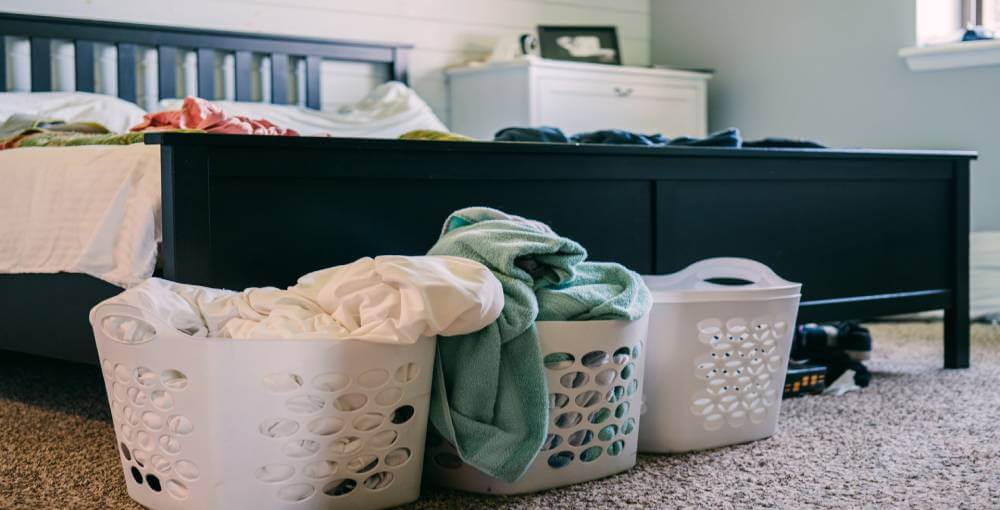
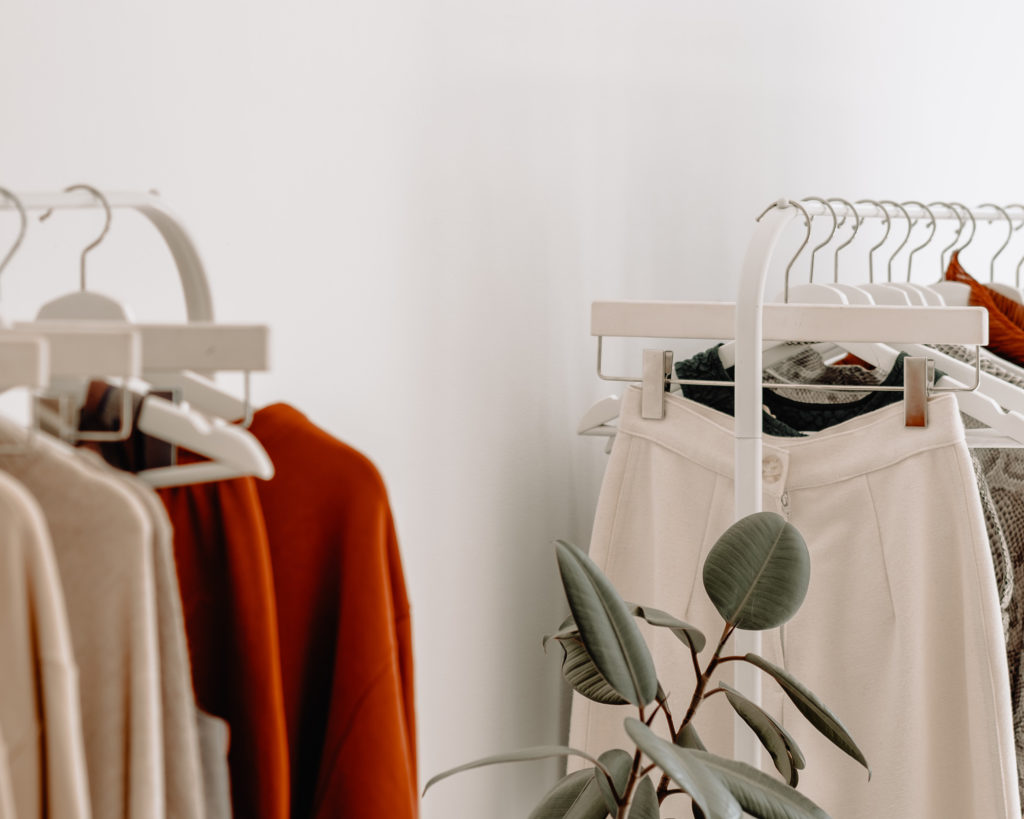
Bedroom and wardrobe

Credit: Thom Bradley

A wardrobe reset is often the first thing people reach for when they want a clean-out. The instinct is right. The execution matters. Throwing fast-fashion pieces straight into a bin bag, whether for waste or for the local charity shop, isn’t the answer it feels like.

Charity shops in the UK receive far more clothing than they can sell, particularly in the lower-quality fast-fashion end of the pile. What doesn’t sell on the shop floor is often baled up and exported. A 2023 Greenpeace investigation documented how large volumes of discarded UK and European clothing end up in East African countries including Kenya, where unsellable textile imports have been dumped in landfills, rivers and wetlands for years. Sending clothes ‘away’ usually means sending them somewhere else’s problem.

A better order of operations.

First, repair. Anything still wearable that only needs a button, a seam or a zip should go to a separate repair pile and then to a local tailor, cobbler or community repair cafe.

Second, pass on directly. Clothing swaps with friends and family, Depop, Vinted, eBay and local selling groups move clothes to people who want them, without going through the charity-shop sort.

Third, donate with care. If you’re giving to a charity shop, be honest about condition. Good-quality, clean, fully functional pieces are useful. Pilled fast-fashion basics usually aren’t. Look into specialist charities for work clothing, winter coats and maternity wear where the donation goes directly to someone who needs it.

Finally, textile recycling as a last resort. If a piece is truly beyond repair, textile recycling banks or brand take-back schemes are better than the general waste bin.

If you do need to replace pieces, that’s where the deeper principles of slow fashion kick in: buy less, buy better, and choose pieces you’ll wear for years. For the full argument, see our guide to what slow fashion actually is.

Sending clothes ‘away’ usually means sending them somewhere else’s problem.

Bathroom and beauty products

Credit: Annie Spratt

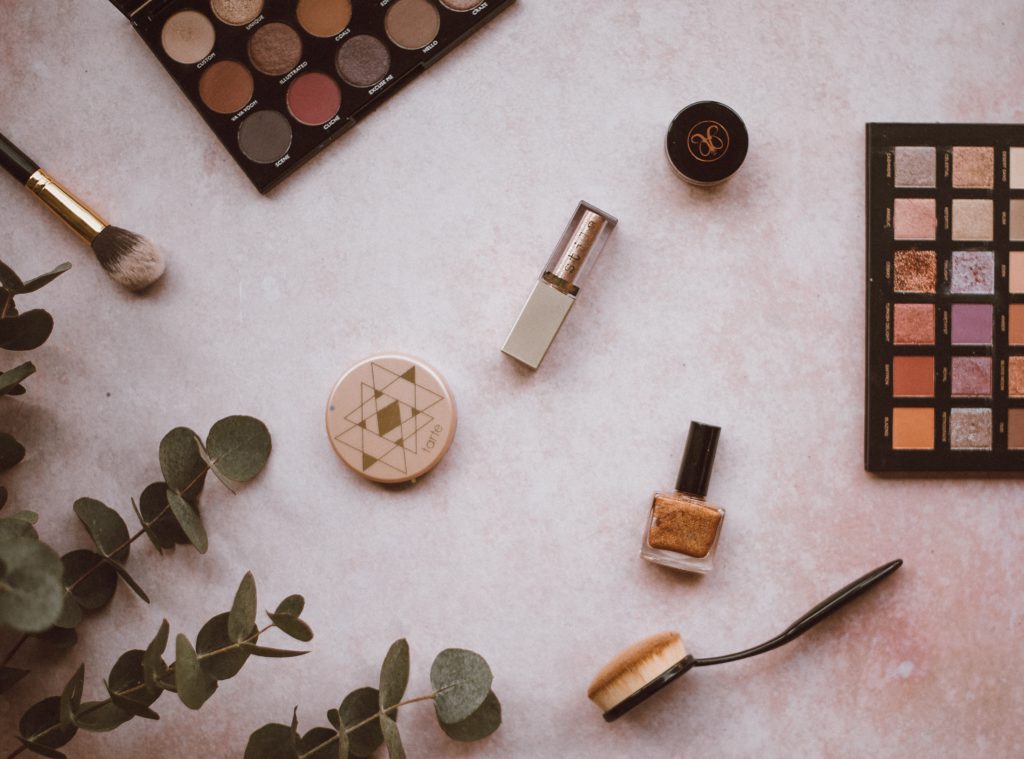
Beauty cabinets accumulate quickly. A trend you tried once, a gift that wasn’t quite right, a moisturiser you meant to finish. Throwing half-full bottles into the bin doesn’t clear clutter so much as move it, from your shelf into a landfill.

A more useful split.

If it’s expired, irritated your skin, or smells off, it goes. The NHS advises against using out-of-date skincare because bacterial contamination is a real risk once preservatives break down, and expired cosmetics should not be passed on.

If it’s unopened or lightly used and you know you won’t reach for it, give it away. A friend, a family member, a local women’s shelter or a community swap event will often take unopened products. Beauty Banks specifically distributes unused toiletries to people experiencing hygiene poverty in the UK. Some retailers also run take-back programmes for empty packaging. Check the brand before you bin.

If it’s something you originally bought for a reason and just stopped reaching for, use it. Rotate it to the front of the cabinet for a month and see whether it earns a place. If it doesn’t, you’ve at least finished it rather than wasted it.

When the time comes to restock, clean, cruelty-free and lower-waste replacements are easier to find than they used to be. Our guide to eco swaps for beauty is a useful starting point.

Kitchen and pantry

Credit: Nadia Pimenova

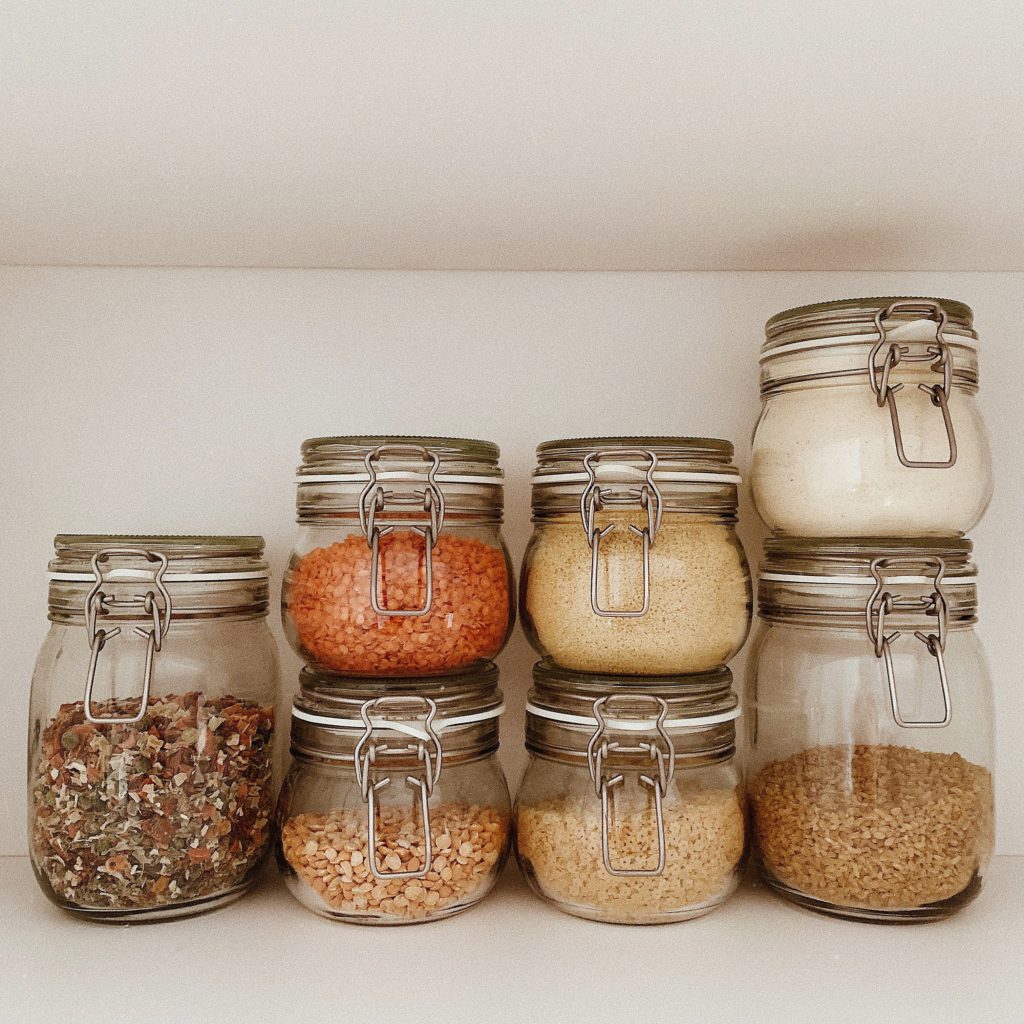
Zero-waste kitchen organisation is one of the most photogenic corners of the internet, and one of the easiest to get wrong. Matching glass jars, woven baskets and a labelled everything look clean on a phone screen. Buying them all in one sweep isn’t particularly clean for the planet.

The more useful version of the same instinct: work with what you have. The Tupperware in the back of the cupboard, the jam jars with labels still on, the takeaway containers you washed out. All of it is already in your house and already paid for. Pool them, sort them, label them clearly. Your pantry won’t look Pinterest-perfect. It’ll work just as well, and you won’t have added a new haul of containers to the world to hold the same amount of food.

The pattern is the same in every kitchen drawer. Before you buy a new version of something, check whether an existing version could do the job. The sustainable answer is almost always the one you already own. If you genuinely do need new storage (glass jars for bulk-bought grains, for instance), browse the Kitchen Storage edit for options made to last.

The sustainable declutter, in one line

Decluttering sustainably isn’t about getting rid of everything you own. It’s about using what you have more fully, finding careful next homes for the things you can’t, and being honest with yourself about what you actually need to replace. Fewer things bought badly. More things used well.

For more on the second half of that equation, see our guides to eco swaps for home and how to make better fashion choices.

Every brand in the Home and Sanctuary and Beauty and Self-Care categories on Ziracle has passed the same standard: built to last, transparent about materials and supply chain, and designed around longevity rather than disposability. Filter by Refillable across both departments to find products that don’t add to the stack you’re trying to clear.

Ready to shop? Browse the Clean Home edit for the things you will use and finish.

FAQs

Is decluttering really worth it, beyond aesthetics?

Yes, measurably. A 2010 study in Personality and Social Psychology Bulletin found that people who described their homes as cluttered had higher cortisol levels throughout the day than people who described their homes as restorative. Follow-up research in Environment and Behavior linked chaotic kitchen environments to meaningfully higher snack intake. The effect isn’t huge in any single moment, but it compounds over the hours you spend at home each week. A calmer space isn’t vanity. It’s measurable stress reduction.

What’s wrong with just donating everything to a charity shop?

Charity shops are overwhelmed, particularly with low-quality fast-fashion donations. A significant share of what doesn’t sell on the shop floor gets baled up and exported to countries in East Africa and elsewhere, where it often ends up in landfills, rivers or wetlands. Greenpeace’s 2023 investigation documented this route clearly. Donation isn’t wrong. Indiscriminate donation is. Sort honestly: good quality, clean, fully functional pieces are genuinely useful to charity shops. Pilled fast-fashion basics usually aren’t.

Where can I pass on clothes that are too worn for charity shops?

Textile recycling banks (usually at supermarket car parks or recycling centres), brand take-back schemes, H&M’s garment collecting programme, and online marketplaces like Vinted and eBay for anything still wearable. Some local councils also run fabric recycling collections. The general waste bin should be the genuine last resort, not the default.

What do I do with expired beauty products?

Bin the product itself, but recycle the packaging where you can. Most empty plastic bottles with a recycling symbol go in your kerbside recycling. Some brands (including MAC, Kiehl’s and L’Occitane) run take-back programmes for their own empty packaging. TerraCycle runs collection schemes for harder-to-recycle items like mascara tubes and lipstick bullets. If the product is unopened and in date, Beauty Banks distributes unused toiletries to people experiencing hygiene poverty in the UK.

How often should I declutter, realistically?

Less often than Instagram suggests. A full wardrobe and bathroom audit once or twice a year is plenty for most people. More useful is a running one-in, one-out habit: when you buy something new, pass on something already in the wardrobe or cupboard. That stops the accumulation in the first place, which is a better problem to solve than the declutter it would otherwise require.