

Shopping with your values used to feel like homework. Twenty years ago, finding a pair of jeans that wasn’t made in a sweatshop required hours of digging and usually ended in a frustrated compromise. Now the landscape has shifted. Labels tell you more. Certifications exist. Entire marketplaces have been built around the question.
What has not shifted is the time most people have to spend on it. If conscious consumerism means researching every brand before every purchase, nobody does it for long. Burnout is real, and the shopping-as-homework model is how sustainable intentions die in month three.
This guide is about the opposite approach. Conscious consumerism done well is a set of mental shortcuts, not a research project. A handful of questions you learn to ask, a few certifications that do the verification for you, and a willingness to choose imperfect-but-better over paralysed-by-perfection. Done this way, it stops feeling like effort and starts feeling like ordinary shopping, just pointed in a slightly better direction.
The honest starting point
Conscious consumerism is not about moral perfection. Nobody shops ethically across every category all the time. Budget, time, access, and life all constrain what is possible in any given week. Setting the bar at total consistency is the surest way to give up the whole project within a year.
The better framing: every purchase is information. You are telling companies, quietly and cumulatively, which practices you support and which you do not. The aggregate of millions of people making slightly better choices is what has pushed the B Corp movement past 10,000 certified companies globally across 160 industries in 102 countries, shifted the high-street response to fair pay, and moved organic from speciality to supermarket aisle. Your individual purchase does not save the world. Your pattern of purchases, multiplied by millions, is what changes the market.
This frees you from the perfection trap. Done is better than perfect, in this as in most things.
The five questions that do most of the work
Five questions, asked of any product you are about to buy, will sort most of the genuinely-better options from the genuinely-worse ones in under a minute.
Where was this made, and by whom? A specific factory in a named city beats “imported” every time. A named workshop is better still.
Were the people who made it paid fairly? You usually cannot verify this directly. What you can verify is whether the brand participates in a fair-pay certification that audits it.
What is it made of, and where did the raw material come from? Cotton from a GOTS-certified farm is different from cotton whose origin the brand cannot trace. Recycled aluminium is different from newly mined.
Was any animal harmed in production or testing? For cosmetics, this is the cruelty-free question. For clothing, it is whether any animal-derived materials came from certified welfare-standard operations.
Is there a certification backing the brand’s claims, or is it marketing? This is the meta-question. A brand that has paid for independent verification has agreed to be held accountable to a named standard. A brand that has not is asking you to trust them on their own word.
Most of the time, the fifth question answers the first four at once.
The four certifications that do the most work
Four certifications are worth learning. They are the shorthand that removes most of the research burden.
Fair Trade certification, run in the UK by the Fairtrade Foundation, audits for minimum prices, a community premium paid on top, safe working conditions, and restrictions on the worst agrochemicals. It applies across coffee, cocoa, bananas, cotton, gold, and a growing list of other commodities. A Fairtrade mark on a product means the producer was paid above a defined floor, regardless of what the open market did that season.
Organic certification (in the UK, this is usually the Soil Association, and for textiles specifically, GOTS -the Global Organic Textile Standard) means the crop was grown without synthetic pesticides, synthetic fertilisers or genetically modified seeds. GOTS goes further on textiles and covers the manufacturing process as well.
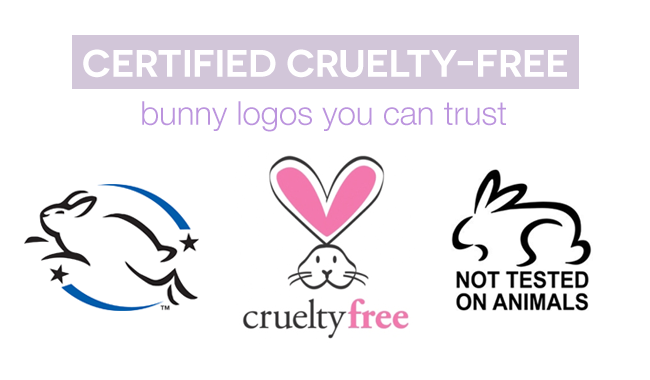
Cruelty Free certification (Leaping Bunny is the internationally recognised mark) means no animal testing occurred at any stage of the supply chain, including by third-party suppliers. “Not tested on animals” as an unverified claim is weaker: it often applies only to the final product, not the ingredients.
B Corp status applies to the whole business rather than a specific product. It signals that a company has been independently audited against standards on environmental impact, worker welfare, community engagement and governance. Over 10,000 businesses globally now hold B Corp certification, employing more than one million people across 102 countries. It is not material-specific, but B Corp brands tend to take sourcing seriously as a matter of course.
None of these certifications is perfect. All require ongoing independent scrutiny. But a brand that carries several of them has chosen to be held accountable in ways that a brand with none has not.
The buy-less-but-better principle, without the moralising
The single most effective thing most people can do, across almost every category, is consume less and keep what they do buy for longer. This is not a new insight. What is often missing from it is the cost-per-wear maths that makes it work.
A £12 T-shirt you wear five times before it loses shape costs £2.40 per wear. A £45 organic-cotton T-shirt you wear forty times costs £1.13 per wear. The second option is better for your wardrobe, better for your wallet, and considerably better for the people and land involved in making it. The cheap item feels cheaper. It is not.
The same maths applies to a £9 face cream that lasts three weeks versus a £28 one that lasts three months. To a £15 pair of earrings that tarnishes in a summer versus a £60 pair in recycled silver worn for a decade. To a £20 cushion cover that fades in six months versus a £45 organic-cotton one that holds up for years.
The habit that matters is doing the maths before the purchase rather than after the disappointment.
The food question, and why small shifts matter more than big gestures
Food is where conscious consumerism scales fastest, because most people eat three times a day. A single purchase decision times 1,000 repetitions is a meaningful footprint change without requiring any single moment of heroic commitment.
The Veganuary movement -which recorded roughly 25.8 million global participants across 20+ countries in January 2025 -has made the point that reducing rather than eliminating is the more achievable path for most people. Veganuary’s own participant survey for 2025 found that 81% of participants who were not already vegan planned to at least halve their animal-product intake permanently after the month ended. The interesting finding is not that everyone becomes vegan, but that most people stay somewhere on the spectrum between where they started and where they finished.
The smaller shifts are the reliable ones. A few meat-free dinners a week. A weekly vegetable box from a local grower. Cooking slightly more and eating out slightly less. Buying loose rather than packaged items where your supermarket allows it. Eat Well is the goal page to bookmark if food is where you want to start.
Why small system changes beat individual willpower
The UK’s 5p plastic bag charge, introduced in October 2015 and extended to 10p across all retailers in May 2021, is the case study worth learning from. According to DEFRA’s most recent carrier bag charge data (2024–25), single-use carrier bag sales by major retailers in England are down 79% since the first full year of reporting in 2016–17, equivalent to around 8 bags per person per year, compared to an estimated 140 bags per person before the charge was introduced, representing an almost 94% reduction. The DEFRA data also shows that since its introduction, the charge has raised over £1.3 billion, much of which has been donated to good causes by retailers.
One small policy change shifted behaviour across millions of people without requiring any individual effort of willpower. That pattern is worth internalising. Systems that remove the path of least resistance do more than moral persuasion ever will.
The consumer version of this principle: make the better choice the default. Keep a reusable bag in every coat pocket. Keep a refillable water bottle in the kitchen and the car. Set up a weekly box delivery rather than trying to shop ethically on a rushed Thursday. Most consistent sustainable behaviour comes from designing the system, not from remembering the intention.
Where to start
Pick one category. Food, clothing, personal care, or home cleaning. Try one swap in that category for a month. A reusable water bottle. One Fairtrade brand of coffee. One GOTS-certified item of underwear. A compostable or refillable version of something you already buy.
Live with it for four weeks. Notice whether it works for your life. If it does, keep it and move to the next category. If it does not, try a different version of the same swap before giving up. The second attempt almost always works better than the first, because you have learned something about what matters to you in practice.
The categories compound. By year two, the shift that felt like effort in month one has become the default. By year three, you stop noticing you are doing it. That is the point at which conscious consumerism becomes ordinary consumerism, done slightly more thoughtfully, with less time spent thinking about it.
Where to start on Ziracle
Every brand in the Ziracle edit has been assessed against the same four-part question: does it do what it claims, is it made the way the brand says, is the brand honest about both, and is there independent verification to back it up. You can browse by value – Fair Trade, Organic, Cruelty Free, or B Corp – to filter the edit according to what matters most to you.
For the longer argument about why well-made basics hold up over time, our sustainable denim guide works through the maths on a single category. For the packaging side of the same argument, the plastic-free living guide covers practical, habit-level changes at home.
The honest summary of this entire guide: conscious consumerism is not about self-denial or moral purity. It is about a few mental shortcuts, a handful of certifications worth knowing, and the willingness to let imperfect-but-better be good enough.
FAQs
Sometimes, yes. There are plenty of “ethical” products priced well above what their actual sourcing justifies, and plenty of mass-market brands that produce well-sourced basics at competitive prices. The defence is the certification question. A £45 T-shirt with no independent verification is a premium. A £45 T-shirt with GOTS and Fairtrade certification is paying for those audits. Price alone does not signal ethics. Paid-for third-party verification does.
B Corp, if you want the broadest signal. B Corp applies to the whole business and covers environmental, social, governance and worker-welfare standards. It does not replace specific material certifications (like GOTS for organic textile or Fairtrade for coffee) but it does mean the business behind the product has agreed to be independently audited against a broad standard.
Yes, with a different approach. The entry points for tight-budget conscious shopping are not premium brands. They are buying less, buying secondhand, using what you own for longer, cooking more from basic ingredients, and picking one or two categories where paying slightly more is worth it. Most genuinely sustainable behaviour is not about expensive purchases. It is about fewer purchases, and the things you already own lasting longer.
Two quick tests. Does the brand name its specific certifications (with licence numbers where applicable), or does it use vague terms like “eco-friendly,” “natural,” or “green”? And is the claim specific and measurable (this cotton is GOTS-certified), or is it aspirational (we care about the planet)? The first type is verifiable. The second is marketing.
Statistically, if you eat meat daily, moving to meat a few times a week is the biggest single environmental swap most people can make. If you already eat little meat, the biggest single swap is usually buying fewer clothes and keeping them longer. Both apply to most people. Either is a reasonable place to start.