Veo and Wearth are now Ziracle. Same mission, better platform. See what's new

Beyond diet culture

Body image in the UK isn’t in a good place. A 2020 inquiry by the UK Parliament’s Women and Equalities Committee heard extensive evidence that negative body image affects a majority of British adults, with measurable effects on mental health, self-esteem, and quality of life. The inquiry’s findings prompted a 2021 government response acknowledging the issue but stopping short of the statutory regulation of social media advertising that the committee had recommended. Eating disorder support charity Beat estimates that at least 1.25 million people in the UK have an eating disorder at any time — more than 1 in 50 people — with youth prevalence rising sharply: an NHS England Adult Psychiatric Morbidity Survey 2023–24 found that 12.5% of 17 to 19-year-olds now show signs consistent with an eating disorder, four times the rate recorded in 2017. Hospital admissions for eating disorders in England have increased by approximately 50% between 2013/14 and 2023/24, according to NHS England Digital data.

Despite all of this, the diet industry continues to market restriction as the path to health. Diet culture tells you your body is the problem. The real problem is the narrative.

Here’s what diet culture actually costs, why the restriction model keeps failing, and what a healthier relationship with food can look like instead.

The body image crisis underneath diet culture

The negative feelings people have about their bodies don’t arrive from nowhere. They’re cultivated. Marketing, social media, the medical establishment, family conversations, wellness apps. All of it converges to tell you your body is wrong and needs fixing. You’ve internalised these messages so completely that you might believe they’re your own thoughts.

A 2019 review in Body Image summarised a large body of evidence that exposure to idealised, filtered images on social media is associated with reduced body satisfaction, increased anxiety and disordered eating behaviours across a wide range of populations.

The cost is real. People develop eating disorders. They develop orthorexia, an unhealthy preoccupation with ‘clean’ eating that becomes psychologically harmful. A 2001 review in the International Journal of Obesity summarising long-term weight loss studies found that the majority of dieters regain lost weight within five years, often with significant additional gain. Chronic stress from constant self-monitoring becomes normal. Your nervous system stays activated. Your mental health suffers. The cycle of shame and restriction benefits no one except the diet industry.

Diet culture tells you your body is the problem. The real problem is the narrative.

Why restriction-based dieting doesn’t work long-term

Your body isn’t a simple maths problem. The calories-in-calories-out framing oversimplifies how metabolism, hormones and digestion actually work. Different foods have different effects on satiety, hormonal response and energy use, even at the same calorie count.

Your body also resists restriction actively. A 2011 study in the New England Journal of Medicine led by researchers at the University of Melbourne tracked hormonal changes after weight loss and found that levels of ghrelin (the hormone that increases appetite) and leptin (which signals fullness) shifted significantly and persistently, in ways that drove hunger up and fullness signals down for at least a year after dieting ended. Your body is biologically built to push back against sustained restriction. Restriction-based dieting works short-term because of willpower. Long-term, you’re fighting biology, and biology usually wins.

This isn’t about willpower or personal failure. It’s about a model that doesn’t match how human physiology works.

Set point theory and why bodies resist change

Y our body has a set point, a genetically and environmentally shaped weight range it tends to maintain. The hypothalamus monitors signals related to this range and adjusts appetite and energy expenditure to return the body toward it. A 2018 review in F1000Research summarised the evidence for weight set-point theory and the hormonal mechanisms involved.

Credit: Stephanie Buttermore

This isn’t failure. It’s your body doing what evolved to do over hundreds of thousands of years: protect you from starvation. Fad diets try to override this system through willpower. The body wins eventually. Once people stop restricting (and most do, because sustained restriction is unsustainable), the body returns toward its set point. The cycle begins again. The individual blames themselves. The industry blames their willpower. No one blames the flawed model.

Orthorexia and the perfectionist trap

Orthorexia, a term coined by Dr Steven Bratman in 1996, describes an unhealthy preoccupation with eating ‘pure’ or ‘perfect’ food. It often starts as health-consciousness and evolves into rigidity, anxiety and psychological harm. Beat describes orthorexic patterns as including inability to be flexible with food, eating alone to avoid judgment, distress when certain foods are present, and the preoccupation with food quality consuming mental energy that could go elsewhere.

Credit: Better Nature

Orthorexia isn’t currently recognised as a distinct clinical diagnosis in the DSM-5 or ICD-11, but researchers and clinicians increasingly take it seriously as a real pattern of disordered eating. It often develops when perfectionism is applied to ‘clean eating’. Someone can think they’re being healthy while actually becoming disordered. The line between health-consciousness and disorder is thinner than most people realise.

A neutral relationship with food

The alternative to diet culture isn’t another diet. It’s a fundamental shift in how food is framed.

Food isn’t morally good or bad. You aren’t ‘being good’ by eating a salad or ‘being bad’ by eating cake. You’re simply eating. Neutrality replaces morality. The approach broadly described as intuitive eating, developed by Evelyn Tribole and Elyse Resch and summarised on the Intuitive Eating website, rests on this neutrality and on learning to recognise internal hunger and fullness signals rather than external rules.

This doesn’t mean eating only what tastes good in the moment. It means eating cake without the anxiety and shame, then eating vegetables because they nourish you, not to ‘compensate’ for earlier choices. It means a relationship with food that’s neutral rather than fraught.

Moving beyond restriction

If you’re coming out of diet culture, letting go of restriction can feel radical. It’s worth doing gradually and, ideally, with support. A 2021 systematic review in the Journal of the Academy of Nutrition and Dietetics summarising intuitive eating intervention studies found the approach was associated with improvements in psychological wellbeing, reductions in disordered eating behaviours, and more stable long-term eating patterns compared with restriction-based approaches.

Some people find a flexitarian approach (reducing but not eliminating animal products) works, alongside a focus on whole foods and how food makes you feel rather than calorie arithmetic. Adding nourishing foods and, where needed, supplements to fill specific nutritional gaps is about nutrition, not restriction. Browse Wellness and Vitality for evidence-based supplements and The Pantry range for whole-food staples.

The shift is subtle but complete: eating becomes something the body asks for rather than something the brain polices.

When to seek professional support

If your relationship with food, eating or your body is affecting your daily life, mental health, relationships or physical health, please speak to a GP or contact Beat. Eating disorders, orthorexia and disordered eating patterns are treatable, and early support usually leads to better outcomes. This article is intended as a starting point for rethinking food’s place in your life, not as a replacement for professional care.

Beat’s helpline is free and confidential: 0808 801 0677 (adults) or 0808 801 0711 (under 18), seven days a week. The Samaritans are available on 116 123, free, 24/7. Your GP can refer you to specialist eating disorder services on the NHS.

For more on the broader picture, read our guides to how food affects mood and our self-care guide.

Every brand in the Food and Drink category on Ziracle has passed the same standard: honest ingredients, transparent sourcing, and production that takes ethics seriously. Filter by Organic for whole-food options made without synthetic additives.

Ready to step away from the cycle? Browse the Eat Well edit and start with one meal at a time.

FAQs

What is diet culture, exactly?

Diet culture is the combination of social, commercial and cultural pressures that frame certain bodies as better than others, certain foods as morally good or bad, and restriction as the path to health and self-worth. It shows up in marketing, social media, health apps, family conversations and medical advice. The 2020 UK Parliament body image inquiry documented its effects on British adults’ mental health and wellbeing. Diet culture isn’t one message from one source. It’s a diffuse pattern that most people absorb without noticing.

Why do most diets fail long-term?

Because they rely on sustained restriction, which the body is biologically built to resist. A 2001 International Journal of Obesity review summarising long-term weight loss studies found that the majority of dieters regain lost weight within five years. A 2011 New England Journal of Medicine study found hormonal changes after dieting that drive hunger up and fullness signals down for at least a year after the diet ends. These aren’t willpower failures. They’re predictable biological responses.

What’s the difference between healthy eating and orthorexia?

Healthy eating is flexible and occupies a reasonable share of your mental energy. You can eat dinner at a friend’s house without anxiety, have a cake at a birthday, and feel neutral about it. Orthorexia, as described by clinicians and organisations like Beat, involves rigidity, anxiety around ‘imperfect’ food, distress when ‘forbidden’ foods are present, social withdrawal around eating, and the preoccupation with food quality consuming significant mental energy. If your relationship with food sounds closer to the second description than the first, it’s worth talking to a GP or to Beat.

Is intuitive eating the same as eating whatever you want?

No. Intuitive eating is a framework developed by Evelyn Tribole and Elyse Resch that rests on rejecting dieting rules, learning to recognise internal hunger and fullness cues, and treating food without moral judgment. It doesn’t mean eating only what tastes good in the moment. It means eating in response to the body’s signals rather than external rules, which usually leads to a varied diet that includes both vegetables and cake without anxiety attached to either. A 2021 systematic review in the Journal of the Academy of Nutrition and Dietetics found intuitive eating was associated with improvements in psychological wellbeing and reductions in disordered eating behaviours.

Where can I get professional help for an eating disorder?

Beat is the UK’s eating disorder charity. Their helpline is free and confidential: 0808 801 0677 (adults), 0808 801 0711 (under 18), seven days a week. Beat’s website has extensive resources and a webchat service too. Your GP can refer you to specialist NHS eating disorder services. If you’re in immediate distress, the Samaritans are available 24/7 on 116 123.

How Food Affects your Mood

The 3pm crash after a sugary lunch. The low mood that follows a weekend of takeaways. The subtle shift in how manageable everything feels after two weeks of proper meals. None of this is personality. It is biochemistry, and it is one of the more useful things to understand about your own brain.

Food does not just fuel the body. It builds the chemicals the brain uses to regulate mood, motivation, sleep, and stress tolerance. Once you see the pathway, your choices around food start to feel less moral and more mechanical. The work becomes adjusting inputs, not managing guilt.

The gut-brain axis, briefly

Around 90% of the body’s serotonin, the neurotransmitter most closely associated with mood and calm, is produced in the gut rather than the brain. The 2015 Cell paper by Yano and colleagues at Caltech showed that specific gut bacteria signal intestinal cells to produce it. Take those bacteria away in germ-free mice, and serotonin drops by more than half.

silhouette of a man against a circular blue light
Credit: Ben Sweet

The gut and brain are in constant two-way conversation through the vagus nerve, the immune system, and the hormones they each produce. What you eat changes the microbiome. The microbiome changes the neurotransmitters. The neurotransmitters change how you feel, which changes what you reach for next. This is why a bad-eating week lowers mood, and a low mood drives the bad-eating week. The loop is the point.

A 2024 review in Medicine pulled this together across the current literature: gut microbiota modulate serotonin, dopamine, GABA, and glutamate, all of which are directly implicated in depression, anxiety, and stress response. This is no longer fringe nutrition. It is mainstream psychiatric research.

Amino acids build specific feelings

Neurotransmitters are built from amino acids you get from food. Tryptophan becomes serotonin (calm, contentment, steady mood). Tyrosine becomes dopamine (motivation, focus, drive). The body cannot synthesise tryptophan at all, so every molecule you have came from something you ate.

Tryptophan-rich foods: chickpeas, oats, eggs, tofu, turkey, salmon, bananas, almonds, pumpkin seeds. Research published in Nutrients confirmed that tryptophan crosses the blood-brain barrier more efficiently when paired with a carbohydrate, which is why oatcakes with almond butter or lentils with brown rice works better than either alone.

Tyrosine-rich foods: seeds, wholegrains, lentils, nuts, eggs, dairy, lean meat, dark chocolate. Useful for the mornings when the problem is motivation rather than anxiety. Protein at breakfast, rather than leaving it until dinner, front-loads tyrosine for the day.

Why sugar does work, briefly, and then doesn’t

Refined sugar genuinely does raise serotonin in the short term. This is the frustrating part of the comfort-eating loop: it is not imagined. The crash is also not imagined. Blood sugar spikes, then drops below where it started. Mood follows. The brain logs “sugar fixed it” and the pattern reinforces.

The workaround is not willpower. It is choosing foods that raise serotonin without the crash: slow carbohydrates paired with protein, fermented foods that feed the microbiome, consistent meals rather than long gaps followed by collapse. If you want to go deeper on this, the companion piece is natural ways to boost serotonin and dopamine.

The foods that actually build resilience

Omega-3 fatty acids. The brain is roughly 60% fat, and omega-3s (from oily fish, walnuts, flaxseeds) are structural components of brain cells. A 2019 meta-analysis in Translational Psychiatry found omega-3 supplementation produced measurable antidepressant effects, particularly at higher EPA doses.

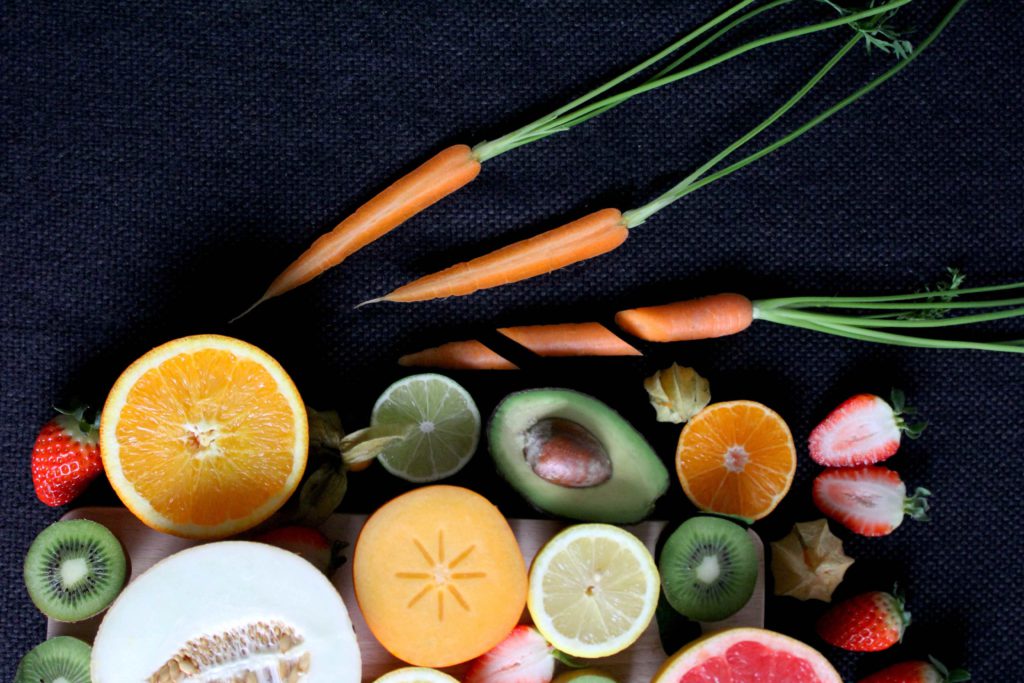
A selection of fruits and vegetables, including carrots, orange, melon, kiwi, avocado and strawberries against a black textured background.
Credit: Amoon Ra

Fermented foods. Kefir, kimchi, sauerkraut, miso, live yoghurt, kombucha. They introduce bacterial strains that the microbiome uses to produce and modulate neurotransmitters. A 2015 study in Psychiatry Research from William & Mary and the University of Maryland found fermented food intake was associated with reduced social anxiety symptoms in young adults.

B vitamins, zinc, magnesium. Cofactors in the chemistry that converts tryptophan to serotonin and tyrosine to dopamine. Deficiency shows up as a flat mood before it shows up as anything clinical. Wholegrains, leafy greens, nuts, seeds, and eggs cover most of it.

Polyphenols from plants. The colour pigments in berries, dark leafy greens, olive oil, and cacao. Antioxidant effects, anti-inflammatory effects, measurable microbiome effects. Variety matters more than any single “superfood.”

Consistency beats perfection

One salmon dinner will not fix anything. A consistent pattern of protein at breakfast, a mix of plants across the week, fermented foods a few times a week, and less reliance on refined sugar will shift how you feel. A 2017 Australian SMILES trial in BMC Medicine randomised adults with moderate-to-severe depression into either dietary counselling (towards a Mediterranean-style pattern) or social support. After 12 weeks, the diet group showed clinically meaningful improvements in depression scores. A food-as-medicine trial, with food as the only intervention. The SMILES findings have since been largely replicated: a 2025 systematic review and meta-analysis in Nutrition Reviews covering randomised controlled trials found Mediterranean diet interventions significantly alleviated depressive symptoms in adults with depression, and a 2025 meta-analysis in Annals of Internal Medicine confirmed that dietary interventions produce moderate-term reductions in depressive symptoms compared with no specific dietary advice.

A note on absorption: if bloating, IBS, or reflux is disrupting digestion, nutrient uptake drops and the rest of the strategy falters. The best foods for bloating guide covers the absorption side.

When food is part of the answer, and when it is not

Food matters. It is rarely the whole picture. Clinical depression, anxiety disorders, and other mental health conditions usually need more than a dietary shift, and sometimes need medication, therapy, or both. Food supports those treatments, it does not replace them. If mood is sustained low for more than two weeks, or if it is interfering with daily life, talk to your GP. Mind UK’s depression treatment guidance has clear, non-alarmist information on the treatment pathways available, from talking therapies to medication. The NHS clinical depression treatment page is also a useful starting point for understanding what is available on the NHS.

If what you want is a steadier baseline, start small. Protein and slow carbs at breakfast for two weeks. Notice what shifts. The connection becomes undeniable once you feel it.

Explore more in Gut Health, or browse Eat Well for the full set of food-and-mood guides.

FAQs

How quickly does food affect mood?

Some effects are almost immediate: blood sugar stability changes how you feel within a few hours of a meal. Microbiome-level changes take longer. The SMILES trial in BMC Medicine found clinically meaningful improvement in depression scores after 12 weeks of a Mediterranean-style dietary pattern. Most people notice a steadier baseline within two to three weeks of consistent eating.

Does the gut really produce 90% of your serotonin?

Yes, and it is well-established. A 2015 study by Jessica Yano and Elaine Hsiao at Caltech, published in Cell, showed that specific gut bacteria signal intestinal cells to produce serotonin. When the bacteria were removed, serotonin levels dropped by more than half in germ-free mice. The 90% figure refers to where serotonin is produced; only around 5% sits in the brain.

What foods raise serotonin naturally?

Tryptophan-rich foods paired with slow-release carbohydrates. Chickpeas with brown rice, oats with almond butter, eggs on wholegrain toast, salmon with sweet potato. Fermented foods help too, by supporting the gut bacteria that drive serotonin production. B vitamins, found in wholegrains and leafy greens, are essential for the conversion.

Can diet replace antidepressants?

No. Diet is a supporting intervention, not a replacement for clinical treatment. Medication and therapy do work that food cannot do on its own, particularly for moderate-to-severe depression. Food supports those treatments by stabilising the underlying biochemistry. Never stop medication without your GP.

What’s the single most useful change for mood?

Protein at breakfast. Most people eat their protein late in the day (lunch, dinner), which means the brain has limited tyrosine and tryptophan through the morning when motivation and mood tend to be most fragile. Front-loading protein changes the shape of the whole day for more people than any other single intervention.

Vegan living guide

Your gut produces a significant share of your body’s serotonin. If serotonin production shapes how you feel, and your gut produces most of it, then what you eat directly shapes your mood. This connection is one of the most practical reasons to move toward vegan or plant-based eating: not for ethics alone, not for the planet alone, but because you’ll likely feel better as a result. Your mental health is partly a direct result of what you feed your gut microbiome.

Here’s the difference between vegan and plant-based, the link between plant foods and mental health, and the practical foods that actually do the work.

Vegan vs plant-based: they aren’t the same thing

Plant-based describes your diet. Vegan describes your entire life. Someone eating a plant-based diet has removed or significantly reduced animal products from their meals. They eat plants, plant-based alternatives and plant-derived foods. Someone living vegan, as defined by The Vegan Society, seeks to exclude all forms of exploitation of animals for food, clothing or any other purpose, as far as is possible and practicable. Every choice aims to exclude animal exploitation and suffering.

Both can be healthy. Neither is inherently better than the other.

The distinction matters because if you’re moving toward veganism, you’re committing to more than food choices. You’re examining every purchase, every product, every decision through the lens of animal welfare. Your clothes, your toiletries, your household cleaners, your shoes. If you’re moving toward plant-based eating, you’re optimising your diet without necessarily changing everything else. You might eat plant-based but still wear leather, use wool, or use products with animal by-products. Both are valid approaches. Know which one you’re aiming for so your expectations match your commitment.

How your gut talks to your brain

The gut-brain axis is a two-way conversation between your digestive system and your central nervous system. Your gut microbiome (the bacteria, fungi and other microorganisms living in your digestive system) directly influences your brain chemistry. A 2015 review in Annals of Gastroenterology summarised the evidence that gut microbiota produce neurotransmitters including serotonin, GABA and dopamine, which communicate with the brain through the vagus nerve.

A significant share of your serotonin is produced in the gut. What you eat directly affects your mood.

Plant-based and vegetarian diets tend to create more stable, varied microbiota with a healthier population of beneficial bacteria. A 2019 study in Nature Microbiology led by researchers at KU Leuven identified specific bacterial species in the gut whose relative abundance correlated with self-reported quality of life, including markers of depression. Plant-based diets are typically higher in fibre, which feeds beneficial bacteria, which in turn produce short-chain fatty acids that support brain function. A 2020 meta-analysis in Neuroscience and Biobehavioral Reviews found that dietary patterns high in fruits, vegetables, wholegrains and legumes were associated with reduced risk of depressive symptoms across a large number of studies.

The effect isn’t small. It’s measurable. People report feeling better, sleeping better and managing stress more effectively.

This doesn’t mean plant-based eating is a cure for mental illness. It means it’s a foundational support for mental health. It works best alongside professional support, therapy and medical treatment when needed. As a baseline intervention, food is one of the more powerful tools you have.

The ‘junk food vegan’ trap

You can eat vegan and eat poorly. Processed vegan ice cream, sugary sweets, refined carbohydrates and ultra-processed alternatives don’t give your gut or your brain what they need. They satisfy cravings but not nutrition. They’re still vegan, but they’re not nourishing.

If you’re moving toward plant-based eating for your mental health, these don’t count. They won’t support your microbiome. They might taste good in the moment, but they leave you crashing later. Focus instead on whole foods: every colour of fruit and vegetable you can fit in, wholegrains, legumes, nuts, seeds and fermented foods. These do the actual work of feeding your microbiome and supporting serotonin production. The difference between vegan junk food and nourishing vegan food is the difference between restriction and genuine change.

What to eat

Start with vegetables. Dark leafy greens (spinach, kale, chard), broccoli, sweet potatoes, bell peppers, leafy herbs. These are nutrient-dense and full of fibre. The darker the green, the more nutrients it tends to contain.

Add fruit. Berries are particularly nutrient-dense, but eat what’s in season and what you enjoy. Apples, pears, bananas, oranges all support your microbiome.

Protein comes from beans, lentils, pulses, tofu, tempeh. These are rich in amino acids and fibre, inexpensive and versatile. Browse the Pulses edit for bulk options.

Healthy fats from avocado, nuts, seeds and olive oil support brain function and help nutrient absorption. Browse the Oils edit and the Nuts and Seeds edit.

Wholegrains. Oats, quinoa, brown rice, and wholewheat bread. Sustained energy and resistant starch that feeds your gut bacteria. Browse The Pantry range for staples.

Fermented foods. Sauerkraut, kimchi, tempeh, miso. These introduce beneficial bacteria directly into your digestive system. A 2021 randomised trial from Stanford University School of Medicine, published in Cell, found that a ten-week high-fermented-foods diet increased microbial diversity and reduced inflammatory markers. Browse the Fermented Foods edit.

Hydration matters more than people realise. Your brain needs water to function properly. The NHS recommends six to eight glasses of fluid a day, with water, lower-fat milks and sugar-free drinks contributing to the total. Dehydration affects mood, cognitive function and energy. Herbal teas count too.

Nutrients worth paying attention to on a vegan diet

The British Dietetic Association’s Vegetarian, Vegan and Plant-Based Diet Food Fact Sheet notes that well-planned vegan diets are healthful and nutritionally adequate, but they do require attention to several specific nutrients that are harder to get from plants alone. This position is reinforced by the Academy of Nutrition and Dietetics’ updated 2025 position statement, which confirmed that appropriately planned vegan dietary patterns can be nutritionally adequate and offer long-term health benefits in adults, while noting specific nutrients require monitoring.

Vitamin B12 is the most important. B12 is produced by bacteria and is found reliably only in animal products and fortified foods. Vegans need to either eat B12-fortified foods daily (fortified plant milks, nutritional yeast, some breakfast cereals) or take a supplement. Long-term B12 deficiency causes fatigue, nerve damage and cognitive issues, so this isn’t optional.

Vitamin D, iron, calcium, iodine and omega-3 fatty acids (specifically the long-chain DHA and EPA forms) also need attention. Vitamin D is harder to get in the UK through skin synthesis in winter and is worth supplementing October to March regardless of diet, per NHS guidance on vitamin D. The UK Government’s Scientific Advisory Committee on Nutrition (SACN) recommends 10 micrograms (400 IU) of vitamin D daily for everyone aged four and over throughout the year, and particularly through autumn and winter — making supplementation straightforward regardless of dietary pattern. Iron from plants (non-haem iron) is absorbed less efficiently than iron from meat, so pairing iron-rich foods with vitamin C helps. Algae-based supplements provide DHA and EPA without fish oil. Browse the Supplements edit for B12 and omega-3 options.

What your body also needs

Food is foundational, but not everything. Movement matters. The NHS recommends at least 150 minutes of moderate exercise a week. A 2023 umbrella review in the British Journal of Sports Medicine synthesising 97 meta-analyses found that regular physical activity produced reductions in symptoms of depression and anxiety comparable in magnitude to psychotherapy for many populations. Walking, cycling, swimming, dancing all count. Consistent movement matters more than intensity.

Time with people does work too. Connection matters to mental health. Fresh air and sunlight regulate your circadian rhythm and support vitamin D production. Journalling and meditation give your nervous system a chance to down-regulate. These aren’t optional add-ons. They’re essential components of wellbeing.

Plant-based eating is an accessible lever to pull, but it works best alongside everything else. Food, movement, connection, sleep and sunlight work together to create mental health. No single factor carries the whole burden.

For more on the specific food-mood link, read our how food affects mood guide, and our plant-based diet and mental health deep-dive.

Every brand in the Food and Drink category on Ziracle has passed the same standard: honest ingredients, transparent sourcing, and production that takes ethics seriously. For products that fit a vegan diet specifically, filter by Vegan or Organic.

Ready to start? Browse the Eat Well edit and pick one meal a day to shift toward whole, plant-based food.

FAQs

What’s the difference between vegan and plant-based?

Plant-based describes what you eat: mostly or entirely plants, with animal products reduced or removed. Vegan describes a whole lifestyle: avoiding animal products in food, clothing, cosmetics, household items and anywhere else practicable, framed around excluding animal exploitation. Both can be healthy. The distinction matters for setting expectations. A plant-based eater might wear leather and use wool. A vegan won’t. Know which one you’re aiming for.

Can a vegan diet actually support mental health?

The evidence is moderately strong. A 2020 meta-analysis in Neuroscience and Biobehavioral Reviews found that dietary patterns high in fruits, vegetables, wholegrains and legumes (which describes well-constructed vegan and plant-based diets) were associated with reduced risk of depressive symptoms across many studies. The mechanism involves gut microbiome diversity, fibre intake and the fatty acids produced by beneficial bacteria. It’s not a cure for diagnosed mental illness, and it shouldn’t replace professional support. It is a foundational layer for everyday mental wellbeing.

What nutrients should I watch on a vegan diet?

Vitamin B12 is the most important. B12 is only reliably found in animal products and fortified foods, so vegans need either fortified foods daily or a supplement. The British Dietetic Association also flags vitamin D, iron, calcium, iodine and long-chain omega-3 fatty acids (DHA and EPA) as nutrients that need specific attention. Most of these can be covered with a well-planned diet plus a B12 supplement and a vitamin D supplement through UK winters, but it’s worth taking seriously rather than assuming the diet covers everything by default.

What’s wrong with processed vegan foods?

Nothing, if they’re occasional. The issue is relying on them as the bulk of a vegan diet. Ultra-processed vegan foods (sweet snacks, meat alternatives high in saturated fat and salt, refined carbohydrates) are still vegan but don’t deliver the microbiome or mental health benefits that come from whole plant foods. If you’re moving to vegan or plant-based eating partly for how you feel, the whole-food version is what does the work. Processed vegan junk food satisfies a craving but leaves the fibre, diversity and nutrient-density out.

How long does it take to feel a difference after switching?

Two to four weeks for most people, if the shift is toward whole foods rather than processed vegan alternatives. The Stanford fermented foods study measured meaningful microbial changes over ten weeks, but digestive differences and energy changes often appear earlier. Giving any dietary shift at least a month of consistency before judging it is the realistic approach. If you feel worse after two to three weeks, check that you’re getting enough protein, iron, B12 and calories, and consider a consultation with a dietitian.

How to Practise Self-Love

Self-love has become shorthand for bubble baths and face masks, and the wellness industry is happy to keep it that way. The real version is less photogenic and more useful: the daily choices that keep your body working and your mind settled. Five habits below, each with evidence behind it, each small enough to start tonight.

Most of us already know what we should be doing. The gap between knowing and doing is where self-love lives.

This is a guide to closing that gap without taking on a second job. Start where the evidence is strongest and the rest gets lighter. One habit at a time, built properly, tends to carry the next with it.

Why sleep has to come first

If sleep is broken, nothing else lands. The American Heart Association added sleep to its Life’s Essential 8 health behaviours in 2022, placing it alongside diet and exercise as a core determinant of long-term health. Poor sleep degrades mood, immunity, digestion and decision-making, often before anyone notices the pattern.

woman asleep

The first fixes are environmental. A dark, cool bedroom beats a warm, lit one by a wide margin. Screens off an hour before bed, because blue light suppresses the melatonin rise that starts the falling-asleep process. The mattress, the pillow, the pyjama fabric against your skin are not optional upgrades once you have tried the alternative.

Then the inputs. Caffeine has a half-life of around five hours for most adults, according to the Sleep Foundation, which means a 4pm flat white still carries meaningful stimulant effect at 9pm. Alcohol feels sedating and is not: it fragments the second half of the night and cuts deep sleep. Neither needs to go forever. Both need to be timed.

A good bedroom is the closest thing to free medicine.

Our sleep guide goes deep on timing, architecture and the one change that makes the biggest difference. For products that support rest, start at Sleep Better.

How food actually changes how you feel

A 2019 meta-analysis in Psychosomatic Medicine pooled 16 randomised controlled trials and found that dietary improvements produced meaningful reductions in depressive symptoms, with effects most pronounced in women. Food is not a cure, but it is a lever most people underuse.

nicely presented healthy meal consisting of fruits, vegetables, eggs and meat.

The pattern matters more than any single food. Plenty of vegetables and fruit, enough protein to stabilise energy, fermented foods a few times a week to feed gut bacteria, fewer ultra-processed meals than the UK average. The ZOE research led by Professor Tim Spector has made the strongest recent case for plant diversity, around thirty different plant foods across a week, as a practical marker of gut health that in turn shapes mood and inflammation.

The useful rule: notice how you feel two hours after eating, not two minutes. Energy that holds, mood that stays steady, hunger that arrives when it should. Keep a rough note for a week and the pattern becomes obvious.

Skin, considered

Skincare is worth taking seriously and worth not overcomplicating. A routine is a quiet form of care you give yourself twice a day, and the evidence for consistent use of sunscreen, moisturiser and a basic cleanser is better than the evidence for almost any premium active.

mens natural skincare

The ingredient list does matter for some skin types. Sulphates like SLS strip the skin barrier. Denatured alcohol high in a formula dehydrates. Plant-based and gentler formulations are not a moral choice, they are often the more effective one for reactive skin. Where the barrier is compromised, look for jojoba, squalane, or oat-derived humectants. For blemishes, low-dose retinoids and azelaic acid have the strongest clinical evidence, per NHS guidance on acne.

Hydration matters too, but the eight-glasses-a-day rule is more folklore than fact. Drink when thirsty, more in the heat, and pay attention to urine colour. That is enough.

Browse Beauty and Self-Care for the full edit. For plant-led formulations specifically, filter by Organic.

What ten minutes of slow breathing actually does

Slow breathing, roughly six breaths per minute, reliably shifts the autonomic nervous system toward parasympathetic dominance. A 2018 review in Frontiers in Neuroscience found that slow-breathing techniques increase heart rate variability and reduce self-reported anxiety across a wide range of studies. The mechanism is the vagus nerve, which is engaged more strongly during the exhale. Longer exhales, more vagal tone, calmer state.

woman doing yoga

You do not need a practice, an app, or a candle. Inhale for four, exhale for six, for two minutes, and the nervous system registers the change. Do it before a meeting you are dreading. Do it when your toddler has thrown something.

Meditation layers on top. Even ten minutes a day produces measurable cortisol reductions across most studies, with the caveat that consistency beats duration by a wide margin. Five minutes daily outperforms thirty minutes once a week.

For tools and support, Mindfulness and Meditation collects what we think is worth the money.

Why a walk still works

A 2007 report by UK mental health charity Mind, drawing on studies commissioned from the University of Essex, found that a countryside walk reduced depressive symptoms in 71% of participants, while a walk around an indoor shopping centre increased tension in 50% and worsened depression in 22%. A later meta-analysis by Barton and Pretty, published in Environmental Science and Technology in 2010 and pooling ten studies with over 1,250 participants, confirmed that even five minutes of green exercise produced measurable mood improvements. The evidence has since been strengthened significantly at government level: the NHS England Green Social Prescribing Programme (2021–2025) — the largest nature-based social prescribing study ever conducted, involving over 8,000 people across seven areas, backed by HM Treasury, Defra, DHSC and Natural England — found statistically significant improvements in mental health and wellbeing, with participants’ happiness and sense of life being worthwhile rising to near national averages and anxiety levels falling significantly. For every £1 invested, the programme generated a social return of up to £2.42.

woman walking in nature

The Ramblers estimate there are 140,000 miles of public rights of way across England and Wales. A weekly walk in a park or along a footpath is one of the highest-return self-care practices available, and it is free. Green spaces lower cortisol within minutes. Trees release compounds called phytoncides that measurably lift immune markers. The brain shifts out of the rumination network and into an observational state, which is meditation by another name.

Forty minutes outside beats most of what the wellness industry sells.

How to make any of this stick

Pick one. Build it for two weeks before you add another. The implementation problem is the only real problem: everything on this list has been known for years.

Sleep first, because it carries everything else. Food next. A weekly walk after that. The breath practice and the skincare routine fold in around the edges once the foundation holds. A single habit kept for a month is worth more than five attempted for a weekend. If a habit starts to feel like a performance, make it smaller until it does not.

Self-love that costs time is often self-love that pays back in time. Better sleep returns the hour you spent on bedroom routine. Walking returns energy. The trick is to stop waiting for a quieter week to begin, and to begin in the week you actually have.

Start with sleep tonight. Everything else follows from there.

For integrated support across stress, rest and daily self-care, Reduce Stress is the goal page to bookmark.

FAQs

Is self-love the same as self-care?

Not quite. Self-care is often framed as a treat: the massage, the bath, the rest day. Self-love is the underlying decision that you are worth the time those things take, which means it shows up in unglamorous choices too. Going to bed on time, keeping the kitchen stocked, saying no when you mean no. The treats are optional. The decision is not.

How long does it take to feel the effects of better sleep habits?

Most people notice changes within two weeks of consistent sleep timing and a dark, cool room. Deeper effects on mood, skin and energy build over a month or two. The Sleep Foundation suggests around four to six weeks for a new sleep routine to feel automatic rather than effortful.

What is the single most useful self-love habit to start with?

Sleep. It is the one that makes every other habit easier. Fix the bedroom, time the caffeine, and protect the last hour before bed. Mood, skin, food choices and energy all improve once sleep is working, often without any other intervention.

Does diet really affect mental health?

The evidence points to an overall pattern, not to any single food. The 2019 Psychosomatic Medicine meta-analysis found the largest effects came from whole-food, nutrient-dense eating, with vegetables, pulses, oily fish, olive oil and fermented foods featuring heavily. Restriction produced smaller effects than addition. Adding nourishing foods tends to outperform cutting things out.

Is walking really enough to count as exercise for mental health?

Yes. The University of Essex green-exercise research suggests five minutes in nature produces a measurable mood effect. For cardiovascular benefit, the NHS recommends 150 minutes of moderate activity a week, which three or four brisk walks comfortably cover.