



Veo and Wearth are now Ziracle. Same mission, better platform. See what's new

Lydia Oyeniran

MSc Fashion Analytics, London College of Fashion (UAL)

Lydia Oyeniran is a researcher, writer, and product development lead at CircKit, the circular design toolkit for fashion. She holds an MSc with Distinction in Fashion Analytics and Forecasting from London College of Fashion, University of the Arts London, where her dissertation built an AI-powered recommender system for mindful consumption. She spent over four years as senior marketing executive at Veo World, the ethical marketplace that became Ziracle, where she wrote many of the articles now in the Journal. She writes about gut health, skincare, sustainable materials, plastic-free living, meditation, diet culture, and eco-friendly home products.

Lydia Oyeniran has published 13 articles

Author Journal

|||||
|Easy eco swaps for a more healthy and sustainable lifestyle: health and beauty|

Live Sustainably

How to Declutter your Home Sustainably

By Lydia Oyeniran ·

April 29, 2021 ·

eco-friendly grocery shop|||||||

Live Sustainably

The Grocery Shop that Actually Cuts Waste

By Lydia Oyeniran ·

April 15, 2021 ·

Beyond Diet Culture: Why the Restriction Model keeps Failing, and what works instead

|||||

Body image in the UK isn’t in a good place. A 2020 inquiry by the UK Parliament’s Women and Equalities Committee heard extensive evidence that negative body image affects a majority of British adults, with measurable effects on mental health, self-esteem and quality of life. Eating disorder support charity Beat estimates that approximately 1.25 million people in the UK have an eating disorder. Hospital admissions for eating disorders have climbed substantially in recent years, according to NHS Digital data.

Despite all of this, the diet industry continues to market restriction as the path to health. Diet culture tells you your body is the problem. The real problem is the narrative.

Here’s what diet culture actually costs, why the restriction model keeps failing, and what a healthier relationship with food can look like instead.

The body image crisis underneath diet culture

The negative feelings people have about their bodies don’t arrive from nowhere. They’re cultivated. Marketing, social media, the medical establishment, family conversations, wellness apps. All of it converges to tell you your body is wrong and needs fixing. You’ve internalised these messages so completely that you might believe they’re your own thoughts.

A 2019 review in Body Image summarised a large body of evidence that exposure to idealised, filtered images on social media is associated with reduced body satisfaction, increased anxiety and disordered eating behaviours across a wide range of populations.

The cost is real. People develop eating disorders. They develop orthorexia, an unhealthy preoccupation with ‘clean’ eating that becomes psychologically harmful. A 2001 review in the International Journal of Obesity summarising long-term weight loss studies found that the majority of dieters regain lost weight within five years, often with significant additional gain. Chronic stress from constant self-monitoring becomes normal. Your nervous system stays activated. Your mental health suffers. The cycle of shame and restriction benefits no one except the diet industry.

Diet culture tells you your body is the problem. The real problem is the narrative.

Why restriction-based dieting doesn’t work long-term

Your body isn’t a simple maths problem. The calories-in-calories-out framing oversimplifies how metabolism, hormones and digestion actually work. Different foods have different effects on satiety, hormonal response and energy use, even at the same calorie count.

Your body also resists restriction actively. A 2011 study in the New England Journal of Medicine led by researchers at the University of Melbourne tracked hormonal changes after weight loss and found that levels of ghrelin (the hormone that increases appetite) and leptin (which signals fullness) shifted significantly and persistently, in ways that drove hunger up and fullness signals down for at least a year after dieting ended. Your body is biologically built to push back against sustained restriction. Restriction-based dieting works short-term because of willpower. Long-term, you’re fighting biology, and biology usually wins.

This isn’t about willpower or personal failure. It’s about a model that doesn’t match how human physiology works.

Set point theory and why bodies resist change

Y our body has a set point, a genetically and environmentally shaped weight range it tends to maintain. The hypothalamus monitors signals related to this range and adjusts appetite and energy expenditure to return the body toward it. A 2018 review in F1000Research summarised the evidence for weight set-point theory and the hormonal mechanisms involved.

Credit: Stephanie Buttermore

This isn’t failure. It’s your body doing what evolved to do over hundreds of thousands of years: protect you from starvation. Fad diets try to override this system through willpower. The body wins eventually. Once people stop restricting (and most do, because sustained restriction is unsustainable), the body returns toward its set point. The cycle begins again. The individual blames themselves. The industry blames their willpower. No one blames the flawed model.

Orthorexia and the perfectionist trap

Orthorexia, a term coined by Dr Steven Bratman in 1996, describes an unhealthy preoccupation with eating ‘pure’ or ‘perfect’ food. It often starts as health-consciousness and evolves into rigidity, anxiety and psychological harm. Beat describes orthorexic patterns as including inability to be flexible with food, eating alone to avoid judgment, distress when certain foods are present, and the preoccupation with food quality consuming mental energy that could go elsewhere.

Credit: Better Nature | veo.world/betternature

Orthorexia isn’t currently recognised as a distinct clinical diagnosis in the DSM-5 or ICD-11, but researchers and clinicians increasingly take it seriously as a real pattern of disordered eating. It often develops when perfectionism is applied to ‘clean eating’. Someone can think they’re being healthy while actually becoming disordered. The line between health-consciousness and disorder is thinner than most people realise.

A neutral relationship with food

The alternative to diet culture isn’t another diet. It’s a fundamental shift in how food is framed.

Food isn’t morally good or bad. You aren’t ‘being good’ by eating a salad or ‘being bad’ by eating cake. You’re simply eating. Neutrality replaces morality. The approach broadly described as intuitive eating, developed by Evelyn Tribole and Elyse Resch and summarised on the Intuitive Eating website, rests on this neutrality and on learning to recognise internal hunger and fullness signals rather than external rules.

This doesn’t mean eating only what tastes good in the moment. It means eating cake without the anxiety and shame, then eating vegetables because they nourish you, not to ‘compensate’ for earlier choices. It means a relationship with food that’s neutral rather than fraught.

Moving beyond restriction

If you’re coming out of diet culture, letting go of restriction can feel radical. It’s worth doing gradually and, ideally, with support. A 2021 systematic review in the Journal of the Academy of Nutrition and Dietetics summarising intuitive eating intervention studies found the approach was associated with improvements in psychological wellbeing, reductions in disordered eating behaviours, and more stable long-term eating patterns compared with restriction-based approaches.

Some people find a flexitarian approach (reducing but not eliminating animal products) works, alongside a focus on whole foods and how food makes you feel rather than calorie arithmetic. Adding nourishing foods and, where needed, supplements to fill specific nutritional gaps is about nutrition, not restriction. Browse Wellness and Vitality for evidence-based supplements and The Pantry range for whole-food staples.

The shift is subtle but complete: eating becomes something the body asks for rather than something the brain polices.

When to seek professional support

If your relationship with food, eating or your body is affecting your daily life, mental health, relationships or physical health, please speak to a GP or contact Beat. Eating disorders, orthorexia and disordered eating patterns are treatable, and early support usually leads to better outcomes. This article is intended as a starting point for rethinking food’s place in your life, not as a replacement for professional care.

Beat’s helpline is free and confidential: 0808 801 0677 (adults) or 0808 801 0711 (under 18), seven days a week. The Samaritans are available on 116 123, free, 24/7. Your GP can refer you to specialist eating disorder services on the NHS.

For more on the broader picture, read our guides to how food affects mood and our self-care guide.

Every brand in the Food and Drink category on Ziracle has passed the same standard: honest ingredients, transparent sourcing, and production that takes ethics seriously. Filter by Organic for whole-food options made without synthetic additives.

Ready to step away from the cycle? Browse the Eat Well edit and start with one meal at a time.

FAQs

What is diet culture, exactly?

Diet culture is the combination of social, commercial and cultural pressures that frame certain bodies as better than others, certain foods as morally good or bad, and restriction as the path to health and self-worth. It shows up in marketing, social media, health apps, family conversations and medical advice. The 2020 UK Parliament body image inquiry documented its effects on British adults’ mental health and wellbeing. Diet culture isn’t one message from one source. It’s a diffuse pattern that most people absorb without noticing.

Why do most diets fail long-term?

Because they rely on sustained restriction, which the body is biologically built to resist. A 2001 International Journal of Obesity review summarising long-term weight loss studies found that the majority of dieters regain lost weight within five years. A 2011 New England Journal of Medicine study found hormonal changes after dieting that drive hunger up and fullness signals down for at least a year after the diet ends. These aren’t willpower failures. They’re predictable biological responses.

What’s the difference between healthy eating and orthorexia?

Healthy eating is flexible and occupies a reasonable share of your mental energy. You can eat dinner at a friend’s house without anxiety, have a cake at a birthday, and feel neutral about it. Orthorexia, as described by clinicians and organisations like Beat, involves rigidity, anxiety around ‘imperfect’ food, distress when ‘forbidden’ foods are present, social withdrawal around eating, and the preoccupation with food quality consuming significant mental energy. If your relationship with food sounds closer to the second description than the first, it’s worth talking to a GP or to Beat.

Is intuitive eating the same as eating whatever you want?

No. Intuitive eating is a framework developed by Evelyn Tribole and Elyse Resch that rests on rejecting dieting rules, learning to recognise internal hunger and fullness cues, and treating food without moral judgment. It doesn’t mean eating only what tastes good in the moment. It means eating in response to the body’s signals rather than external rules, which usually leads to a varied diet that includes both vegetables and cake without anxiety attached to either. A 2021 systematic review in the Journal of the Academy of Nutrition and Dietetics found intuitive eating was associated with improvements in psychological wellbeing and reductions in disordered eating behaviours.

Where can I get professional help for an eating disorder?

Beat is the UK’s eating disorder charity. Their helpline is free and confidential: 0808 801 0677 (adults), 0808 801 0711 (under 18), seven days a week. Beat’s website has extensive resources and a webchat service too. Your GP can refer you to specialist NHS eating disorder services. If you’re in immediate distress, the Samaritans are available 24/7 on 116 123.

How to Declutter your Home Sustainably

|Easy eco swaps for a more healthy and sustainable lifestyle: health and beauty|

Minimalism: for some people it’s the path to a calmer life, for others it’s a luxury only a few can afford to think about. Whatever you make of the label, most of us can agree on one thing. Our homes carry a lot of stuff. The question isn’t really whether you should own less. It’s whether the things you already own are being used well, and what happens to the things you decide to let go of.

It’s worth being specific about why this matters. A 2010 study by Saxbe and Repetti, published in Personality and Social Psychology Bulletin, found that people who described their homes as cluttered had higher levels of cortisol, the body’s main stress hormone, across the day than those who described their homes as restorative. Follow-up research by Vartanian, Kernan and Wansink, published in 2017 in Environment and Behavior, showed that a chaotic kitchen environment led people to eat substantially more sweet snacks than people in a tidy one. Clutter isn’t only a visual problem. It changes how you feel and how you behave.

The problem with decluttering is that it can become a wasteful practice in its own right. In the rush to that clean-space feeling, we throw out things that could have been used, worn, passed on or repaired. A sustainable declutter doesn’t mean filling a bin bag and feeling lighter. It means finding the route for each item that keeps it out of landfill for as long as possible. Here’s how to work through the three rooms where clutter tends to stack up fastest.

Bedroom and wardrobe

Credit: Thom Bradley

A wardrobe reset is often the first thing people reach for when they want a clean-out. The instinct is right. The execution matters. Throwing fast-fashion pieces straight into a bin bag, whether for waste or for the local charity shop, isn’t the answer it feels like.

Charity shops in the UK receive far more clothing than they can sell, particularly in the lower-quality fast-fashion end of the pile. What doesn’t sell on the shop floor is often baled up and exported. A 2023 Greenpeace investigation documented how large volumes of discarded UK and European clothing end up in East African countries including Kenya, where unsellable textile imports have been dumped in landfills, rivers and wetlands for years. Sending clothes ‘away’ usually means sending them somewhere else’s problem.

A better order of operations.

First, repair. Anything still wearable that only needs a button, a seam or a zip should go to a separate repair pile and then to a local tailor, cobbler or community repair cafe.

Second, pass on directly. Clothing swaps with friends and family, Depop, Vinted, eBay and local selling groups move clothes to people who want them, without going through the charity-shop sort.

Third, donate with care. If you’re giving to a charity shop, be honest about condition. Good-quality, clean, fully functional pieces are useful. Pilled fast-fashion basics usually aren’t. Look into specialist charities for work clothing, winter coats and maternity wear where the donation goes directly to someone who needs it.

Finally, textile recycling as a last resort. If a piece is truly beyond repair, textile recycling banks or brand take-back schemes are better than the general waste bin.

If you do need to replace pieces, that’s where the deeper principles of slow fashion kick in: buy less, buy better, and choose pieces you’ll wear for years. For the full argument, see our guide to what slow fashion actually is.

Sending clothes ‘away’ usually means sending them somewhere else’s problem.

Bathroom and beauty products

Credit: Annie Spratt

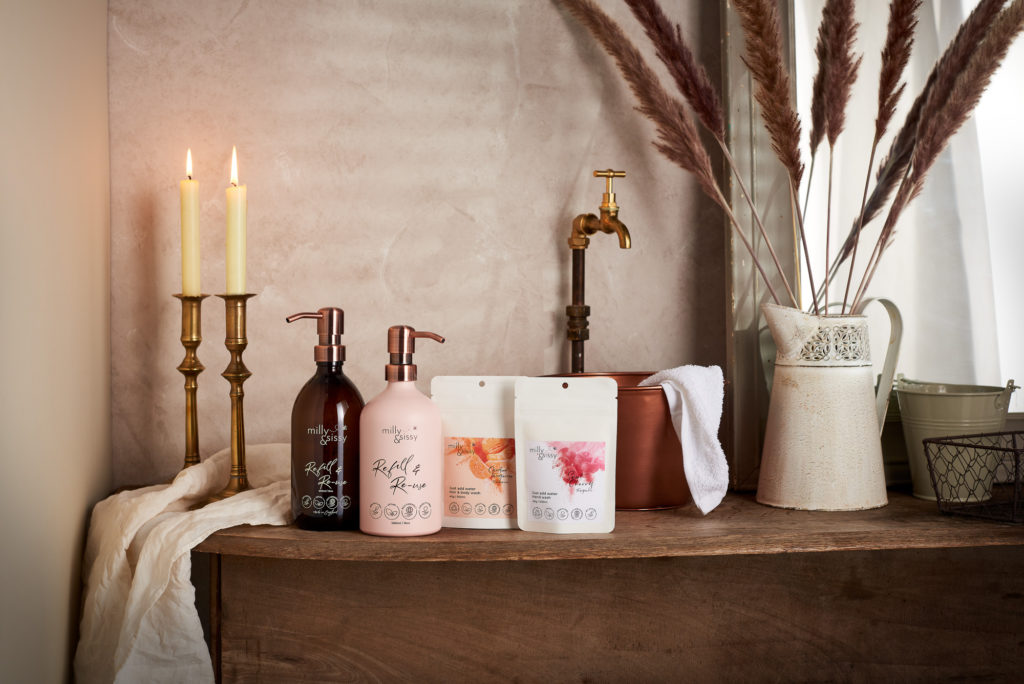
Beauty cabinets accumulate quickly. A trend you tried once, a gift that wasn’t quite right, a moisturiser you meant to finish. Throwing half-full bottles into the bin doesn’t clear clutter so much as move it, from your shelf into a landfill.

A more useful split.

If it’s expired, irritated your skin, or smells off, it goes. The NHS advises against using out-of-date skincare because bacterial contamination is a real risk once preservatives break down, and expired cosmetics should not be passed on.

If it’s unopened or lightly used and you know you won’t reach for it, give it away. A friend, a family member, a local women’s shelter or a community swap event will often take unopened products. Beauty Banks specifically distributes unused toiletries to people experiencing hygiene poverty in the UK. Some retailers also run take-back programmes for empty packaging. Check the brand before you bin.

If it’s something you originally bought for a reason and just stopped reaching for, use it. Rotate it to the front of the cabinet for a month and see whether it earns a place. If it doesn’t, you’ve at least finished it rather than wasted it.

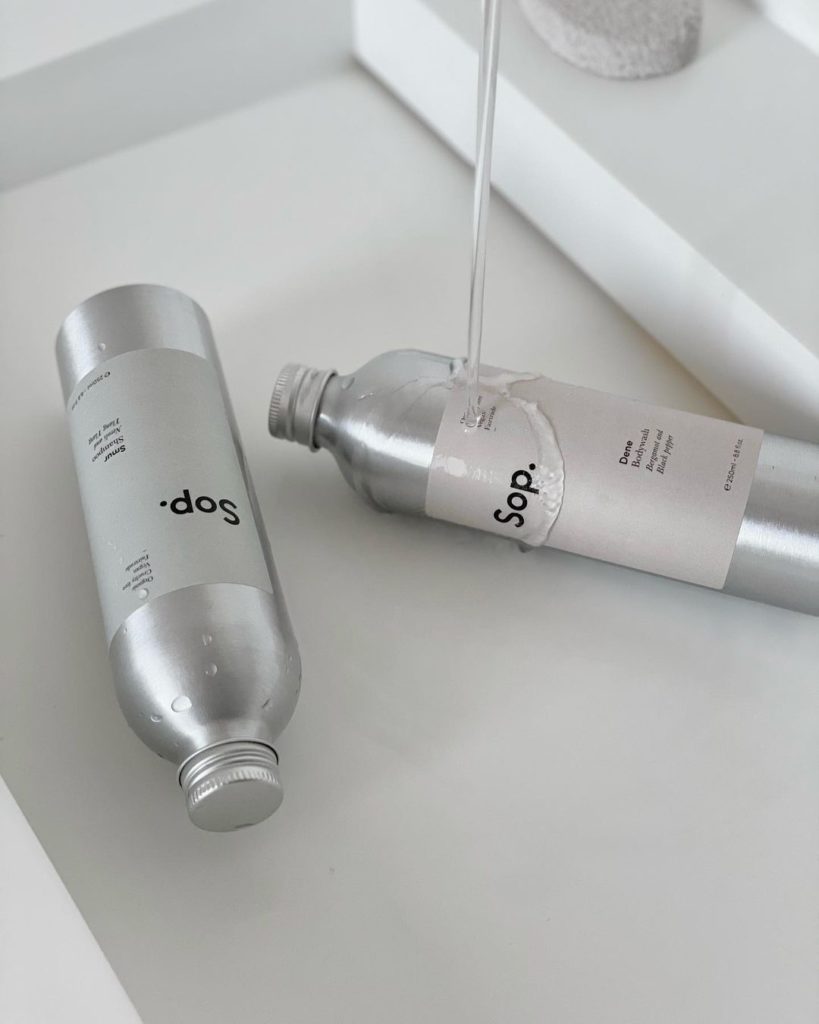
When the time comes to restock, clean, cruelty-free and lower-waste replacements are easier to find than they used to be. Our guide to eco swaps for beauty is a useful starting point.

Kitchen and pantry

Credit: Nadia Pimenova

Zero-waste kitchen organisation is one of the most photogenic corners of the internet, and one of the easiest to get wrong. Matching glass jars, woven baskets and a labelled everything look clean on a phone screen. Buying them all in one sweep isn’t particularly clean for the planet.

The more useful version of the same instinct: work with what you have. The Tupperware in the back of the cupboard, the jam jars with labels still on, the takeaway containers you washed out. All of it is already in your house and already paid for. Pool them, sort them, label them clearly. Your pantry won’t look Pinterest-perfect. It’ll work just as well, and you won’t have added a new haul of containers to the world to hold the same amount of food.

The pattern is the same in every kitchen drawer. Before you buy a new version of something, check whether an existing version could do the job. The sustainable answer is almost always the one you already own. If you genuinely do need new storage (glass jars for bulk-bought grains, for instance), browse the Kitchen Storage edit for options made to last.

The sustainable declutter, in one line

Decluttering sustainably isn’t about getting rid of everything you own. It’s about using what you have more fully, finding careful next homes for the things you can’t, and being honest with yourself about what you actually need to replace. Fewer things bought badly. More things used well.

For more on the second half of that equation, see our guides to eco swaps for home and how to make better fashion choices.

Every brand in the Home and Sanctuary and Beauty and Self-Care categories on Ziracle has passed the same standard: built to last, transparent about materials and supply chain, and designed around longevity rather than disposability. Filter by Refillable across both departments to find products that don’t add to the stack you’re trying to clear.

Ready to shop? Browse the Clean Home edit for the things you will use and finish.

FAQs

Is decluttering really worth it, beyond aesthetics?

Yes, measurably. A 2010 study in Personality and Social Psychology Bulletin found that people who described their homes as cluttered had higher cortisol levels throughout the day than people who described their homes as restorative. Follow-up research in Environment and Behavior linked chaotic kitchen environments to meaningfully higher snack intake. The effect isn’t huge in any single moment, but it compounds over the hours you spend at home each week. A calmer space isn’t vanity. It’s measurable stress reduction.

What’s wrong with just donating everything to a charity shop?

Charity shops are overwhelmed, particularly with low-quality fast-fashion donations. A significant share of what doesn’t sell on the shop floor gets baled up and exported to countries in East Africa and elsewhere, where it often ends up in landfills, rivers or wetlands. Greenpeace’s 2023 investigation documented this route clearly. Donation isn’t wrong. Indiscriminate donation is. Sort honestly: good quality, clean, fully functional pieces are genuinely useful to charity shops. Pilled fast-fashion basics usually aren’t.

Where can I pass on clothes that are too worn for charity shops?

Textile recycling banks (usually at supermarket car parks or recycling centres), brand take-back schemes, H&M’s garment collecting programme, and online marketplaces like Vinted and eBay for anything still wearable. Some local councils also run fabric recycling collections. The general waste bin should be the genuine last resort, not the default.

What do I do with expired beauty products?

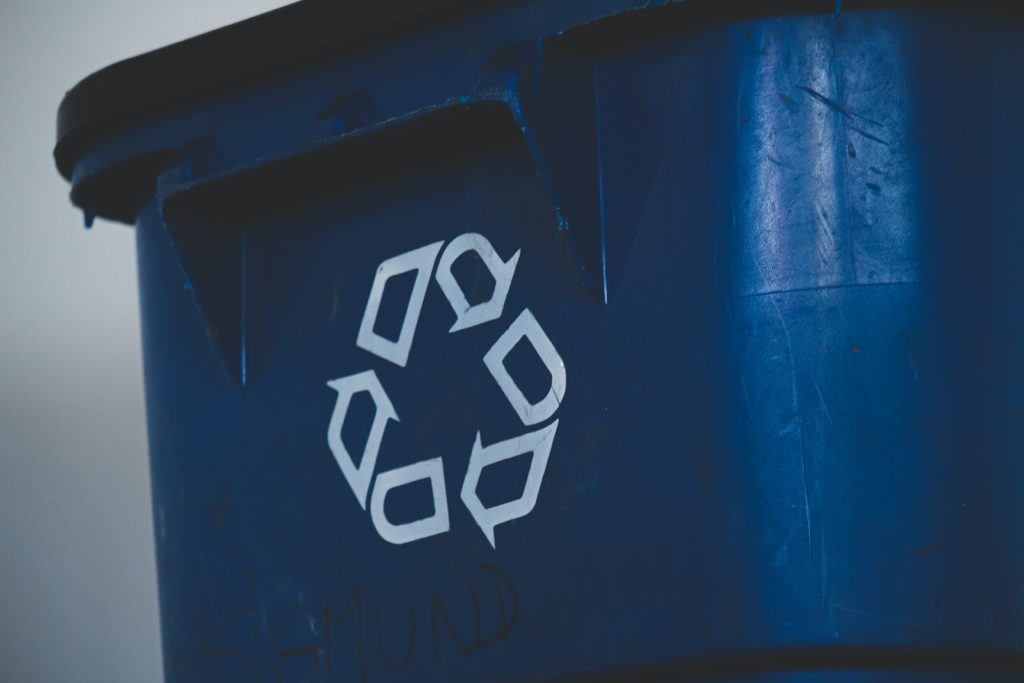
Bin the product itself, but recycle the packaging where you can. Most empty plastic bottles with a recycling symbol go in your kerbside recycling. Some brands (including MAC, Kiehl’s and L’Occitane) run take-back programmes for their own empty packaging. TerraCycle runs collection schemes for harder-to-recycle items like mascara tubes and lipstick bullets. If the product is unopened and in date, Beauty Banks distributes unused toiletries to people experiencing hygiene poverty in the UK.

How often should I declutter, realistically?

Less often than Instagram suggests. A full wardrobe and bathroom audit once or twice a year is plenty for most people. More useful is a running one-in, one-out habit: when you buy something new, pass on something already in the wardrobe or cupboard. That stops the accumulation in the first place, which is a better problem to solve than the declutter it would otherwise require.

The Grocery Shop that Actually Cuts Waste

eco-friendly grocery shop|||||||

Household food waste in the UK runs at around 6 million tonnes a year, of which 4.4 million tonnes is edible food thrown away, according to WRAP’s 2022 Household Food and Drink Waste report. That comes to roughly 210 kilos per household, and a financial cost of around £1,000 per year for a family of four. The emissions cost is about 16 million tonnes of CO2 equivalent, which is more than some small countries’ total annual output.

The point of this statistic is not to make you feel bad. It is that the single highest-leverage sustainability intervention most UK households can make – higher than switching to a green tariff, higher than cutting car journeys, higher than almost any specific eco-swap you could name – is wasting less of the food they already buy. The environmental saving is real. The financial saving is substantial. And the behaviour change required is smaller than people expect.

This is a guide to the grocery shop that makes that shift happen in practice. Not a new diet. Not a shopping list of unfamiliar products. Just the specific habits that WRAP’s own research consistently finds separate households that waste a lot of food from households that waste very little.

The single fact that matters most

Nearly 40% of edible food wasted in UK homes is thrown away because it was not used in time, according to WRAP’s research. Another quarter is because people cooked, prepared or served too much. A further 22% is waste because people decided they did not want to eat something.

None of that is primarily a product problem. All of it is a planning problem. The bread goes stale, the salad wilts, the second half of the yogurt pot times out, the ambitious Thursday dinner does not actually get cooked. What happens in the kitchen is downstream of what happened at the shop. The shop is where most of this gets fixed.

Six steps, applied in order, do most of the work.

Step one: shop your kitchen before you shop the shop

Fifteen minutes at home before you write a list. Open the fridge, the freezer, the dry-goods cupboard, the fruit bowl. Note what is about to turn. Note what is already there. Build the week’s meals around using those things first.

Credit: Toa Heftiba

This step alone prevents duplicate buying, catches the food about to expire, and puts the ingredients you already own at the front of the week rather than at the back. A half-onion, a wilting pepper, and a handful of frozen peas become the base of a curry on Monday rather than bin contents on Sunday.

The mental shift: search for recipes that use what you have, not recipes that require you to buy everything. A quick search on any recipe site, or the BBC Good Food “what’s in your cupboard” function, will turn up four or five options for almost any combination of leftovers.

Step two: plan seven days on paper

Fifteen more minutes with a piece of paper. Breakfast, lunch, dinner, for seven days. Not elaborate. Beans on toast counts. Jacket potato counts. A repeat of Tuesday’s dinner on Wednesday with the leftovers counts.

Credit: Ella Olsson

Assume two meals will go off-plan (unexpected takeaway, dinner at a friend’s, a rushed Tuesday when you grab a sandwich at work). Build five or six meals into the plan rather than seven. The flex matters. A rigid seven-meal plan that collapses on Thursday leaves ingredients stranded.

From this plan, write your shopping list. This single habit – planning meals before writing the list – is what WRAP research repeatedly identifies as the largest behavioural lever on household food waste.

Step three: buy only what you can actually store

The family-pack temptation is the biggest single driver of supermarket over-buying. A five-pack of peppers at a 20% discount is only a saving if you eat all five. For a household of two, it usually is not.

Credit: Nadia Pimenova

The rule that works: buy the quantity your meal plan calls for, plus a small buffer for sandwiches or breakfast. Not a discount-triggered quantity. Not a “might-need-it” quantity. The supermarket’s per-unit discount is often worse value than the smaller pack you will actually finish, once spoilage is factored in.

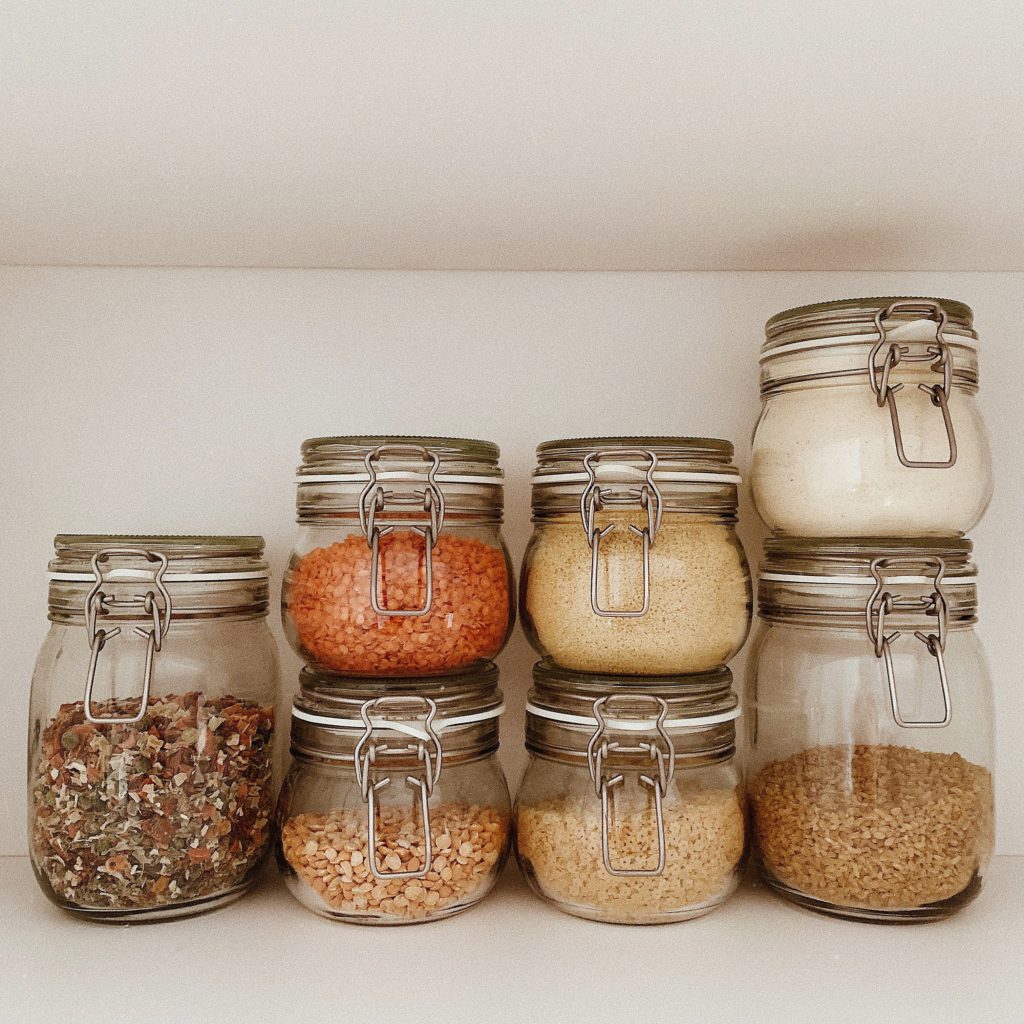
Good storage extends what you do buy. Glass jars for dry goods let you see what you have and how much is left. A fridge with clear containers at the front, rather than a drawer of opaque Tupperware at the bottom, means food you meant to eat gets eaten. The best storage tends to be clear, airtight, and visible. Most of it does not have to be new: repurposed jam jars and takeaway containers work as well as anything sold for the purpose.

Step four: take bags, and containers, to the shop

The UK’s 5p bag charge introduced in 2015, extended to 10p across all retailers in 2021, has reduced single-use bag sales in England’s main supermarkets by more than 95%, according to DEFRA. Most households now have a small collection of reusable bags. The question is whether you remember to bring them.

Credit: Gaelle Marcel

The habit that works: keep a rolled-up tote bag in every coat pocket, handbag, and glove compartment you use. The single thing that breaks this habit is leaving the bags at home. Store them where they will be picked up automatically rather than where they have to be remembered.

For the next step up, bring reusable containers for counter services: butcher, deli, fishmonger, bakery. Many counter staff will happily tare your container on the scales. Some supermarkets now accept the same at their fresh counters. The small friction of asking disappears after two or three tries.

Step five: shop loose where you can, local where it works

Loose fruit and vegetables are usually cheaper than the pre-packed versions. The packaging accounts for a meaningful part of the supermarket price, and buying loose lets you take exactly the quantity you need. Most UK supermarkets now offer loose variants for common items. The selection expands every year.

Credit: Tim Mossholder

Local greengrocers, market stalls and farmers’ markets tend to stock loose produce as the default, often at prices below supermarket pre-packed equivalents. They are also useful for the things supermarkets do badly: properly ripe fruit, seasonal vegetables, bread with a short ingredient list.

Not everything has to shift. A weekly supermarket shop for the majority of your groceries, plus one weekly visit to a greengrocer or market for fresh produce, is a realistic split for most urban households. For the broader category of refillable and reusable groceries, our plastic-free living guide covers the household-wide version of this habit.

Step six: buy versatile, cook repeatedly

The single biggest predictor of whether a specialist ingredient gets used is whether it appears in more than one recipe you cook regularly. The fancy jar of miso, the unfamiliar grain, the single-recipe sauce – these are the items most likely to sit in the cupboard for a year and then be thrown out.

Credit: Syd Wachs

Stock versatile staples. Tinned tomatoes. Dried lentils and beans. Rice, pasta, oats. Onions, garlic, ginger. Olive oil, stock cubes, a small selection of dried herbs and spices you use often rather than a large selection you use rarely. These cover hundreds of meals between them.

Treat the specialist ingredient differently. Either buy the smallest quantity available (many spice shops and zero-waste shops sell spices by the gram), or commit to cooking the dish that uses it at least twice within a month. The second-cook principle converts most single-recipe buys into regular-pantry items.

What this looks like after six weeks

The honest end-state for most households who adopt these six steps is:

Shopping trips are slightly shorter because the list is specific and the store layout is familiar. The weekly bill is typically 15 to 25% lower, because the over-buying has stopped. The bin of edible food thrown away at the end of the week has dropped substantially. The fridge, at the point of the next shop, is empty rather than stacked with things to be rushed through. The occasional genuinely ambitious meal – the Sunday roast, the birthday dinner – still happens, but on top of a steady rhythm of simpler weeknight meals rather than in place of them.

This is not a lifestyle. It is a slightly better version of something you already do every week. The environmental benefit is a side effect of the fact that shopping with a plan is also cheaper, calmer, and quicker.

Where to start on Ziracle

Every brand in our Food and Drink edit has been assessed against the same standard: honest ingredients, transparent sourcing, and packaging that earns its place rather than only its marketing. Filter by Organic for produce and pantry staples certified to proper standards, or by Plastic Free for the items where the packaging is as considered as the contents.

For the storage side of the shift, Refills and Reusables covers containers, bags, wraps and the other small items that make the rest of this guide easier to maintain.

For the wider argument about how grocery shopping fits into household consumption overall, see our guide to what is conscious consumerism.

If food is where you are starting your broader sustainability shift, Eat Well is the goal page to bookmark.

FAQs

How much money can meal planning actually save?

WRAP’s estimate is that UK households of four waste around £1,000 of food a year on average. A meal plan that cuts that waste in half saves roughly £500, which is more than most people save through any single other sustainable-living change. The bigger saving often comes from shopping to a list, which reliably reduces impulse purchases by a significant margin across most households.

Isn’t cooking from scratch more expensive than ready meals?

Per-meal, almost never. Staples bought in reasonable quantities – rice, pasta, pulses, onions, tinned tomatoes, a few vegetables – make meals at under £2 per person that compete with the cheapest end of ready meals. The gap grows as you move up the ready-meal price range. The argument against cooking from scratch is almost always time rather than money, and batch-cooking (cooking once, eating twice) closes most of that gap too.

Are loose vegetables actually cheaper than pre-packaged?

Usually yes, by 10-30% on unit price, because you are not paying for the plastic wrap and the portion decision is yours. There are exceptions – some multi-buy offers on pre-packed items beat loose prices – but in general, loose is the better default. Check per-kilo prices rather than pack prices if you want to be sure.

What should I do with food that’s about to go off?

The core techniques are batch cooking, freezing, and casual improvisation. Wilting vegetables become soup. Stale bread becomes croutons, breadcrumbs or French toast. Yoghurt approaching its date works in marinades, baking and smoothies. The Love Food Hate Waste website has sections on “what can I do with” specific ingredients if improvisation is not your strength. Freezing is dramatically underused: most things freeze well if bagged properly, and the freezer is where your edible food waste largely stops being waste.

Is the environmental impact of food waste really that large?

Yes, substantially. WRAP estimates that UK household food waste alone produces the equivalent of around 16 million tonnes of CO2 a year, partly from the emissions embedded in producing the food and partly from methane when it rots in landfill. Globally, food waste accounts for an estimated 8 to 10% of greenhouse gas emissions. Reducing food waste is genuinely one of the highest-leverage household interventions on the climate side as well as the financial side.