

Veo and Wearth are now Ziracle. Same mission, better platform. See what's new

Hamish Lawson

Hamish Lawson has published 12 articles

Author Journal

Amber glass bottle on a linen bathroom shelf in morning light, balancing your hormones naturally and everyday wellness

Live Well

Balancing your Hormones: What Helps, What is Hype, and What to Change

By Hamish Lawson ·

June 13, 2026 ·

Healthy Skin
Amber glass bottle on a linen bathroom shelf in morning light, balancing your hormones naturally and everyday wellness

There is no dial inside you marked hormone balance, and nothing you can buy will turn it. That phrase belongs to marketing, not medicine. What is real is smaller and stranger: a few free habits that move your hormones, a handful of conditions that need a doctor, and one everyday exposure the wellness aisle never mentions.

Search how to balance your hormones naturally and you land in two worlds that never quite meet. One is clinical: pages about polycystic ovary syndrome, thyroid disease and perimenopause, written by the people who treat them. The other is the wellness aisle, where balance is a mood you buy back with a powder. Both use the same word. Only one of them means a medical condition. What works for Hormonal Health sits in the gap between the two, because that gap is where most of the money, and most of the confusion, lives.

What a Hormonal Imbalance Really Is, and What it has come to Mean

A real hormonal imbalance is a measurable medical condition, not a vague sense of being slightly off. Your hormones are chemical messengers, made mostly by the endocrine system, that regulate metabolism, reproduction, mood and sleep, as the Cleveland Clinic describes them. When one of those systems malfunctions, you get a named condition with a test behind it. Polycystic ovary syndrome, which the NHS estimates affects around 1 in 10 women, is one. An underactive or overactive thyroid is another. Perimenopause, the years of falling and lurching oestrogen before periods stop, is a third. Each comes with something the wellness version does not: a diagnosis, a blood test, a treatment that works.

Somewhere in the last decade the same phrase got borrowed for something much smaller. Feeling tired, bloated, irritable, not quite yourself became “hormone imbalance”, a problem you could supposedly fix with a supplement and a bag of seeds. The word did a lot of quiet work in that shift. It took a real clinical idea and stretched it over an ordinary bad week, then sold you the cure.

Your hormones are not out of balance because you feel tired on any given day.

Endocrinologists notice the overreach. “To some degree, I think we are scapegoating hormones,” Dr Caroline Messer, a board-certified endocrinologist in New York, told Fashionista. “Every time we feel tired or sad, it doesn’t mean it’s necessarily a hormone.” That distinction is the whole point. Some of what you feel is a condition that deserves testing. Most of it is life, and responds to the unglamorous things below.

How to Balance your Hormones Naturally: The Free Habits that do the Real Work

Rumpled linen bedsheets in early morning light, sleep as a free Hormonal Health habit

If anything earns the phrase how to balance your hormones naturally, it is four free habits, and between them they do most of the available work. They act mainly on two hormones the wellness aisle rarely names: insulin, which manages your blood sugar, and cortisol, your main stress hormone.

Sleep is the lever with the most pull. In a 1999 study in The Lancet, researchers restricted eleven healthy young men to four hours in bed for six nights and watched them start to process glucose like people at risk of diabetes, with raised cortisol by evening. A few bad nights measurably moved their hormones. Protect a consistent wind-down and a regular wake time before you reach for anything else. The how to sleep better guide and the Sleep Better edit go further.

Stress load is next. Cortisol is meant to spike and fall, but a life that never lets it fall keeps it high, and chronically high cortisol nudges appetite, sleep and mood. You cannot delete stress, but one daily practice that reliably drops your shoulders, a walk, breathing, anything you will actually repeat, does more than a cortisol gummy. The Reduce Stress edit is built around the habits, not the supplements.

What you eat matters most through steadiness, not restriction. Meals built around protein, fibre and vegetables keep insulin from spiking and crashing all day, which is most of what “eating for your hormones” honestly means. You do not need a special protocol, you need lunch that is not just fast carbohydrate.

Movement is the quiet one. Muscles pull glucose out of your blood when they contract, which improves insulin sensitivity, and you do not need a gym to get it. A brisk ten-minute walk after a meal counts. None of this is marketed hard, because none of it carries a margin.

Why Most Hormone-Balancing Supplements are Selling you the Gap

Most “hormone-balancing” supplements are selling the gap between wanting a fix and the free habits being dull. The free levers work, but they are repetitive and slow, and a capsule that promises to do the same thing while you carry on is a far easier sell. That gap, not your hormones, is the product.

Dr Annice Mukherjee, a UK consultant endocrinologist and author of The Complete Guide to the Menopause, is blunt about the appetite for a shortcut. On her clinic site she writes that “there are no miracle cures” and “there is no silver bullet”. The supplement aisle exists precisely because we all want one anyway.

The problem is not herbs or vitamins as a category, it is how the category is sold. A multi-herb “balance” blend with a long front-of-pack claim and a proprietary formula that hides the doses is the format to distrust, because the claim is doing the work the evidence cannot. Even the cautious clinical sources land here: few of these blends have real evidence for what the label promises. A single, named ingredient at a sensible dose for a specific, named problem is a different proposition, and we will come back to it. A catch-all blend promising to fix everything is mostly buying you hope. Browse with that filter and most of the Supplements shelf thins out fast.

The Exposure Almost Nobody Mentions: Everyday Endocrine Disruptors

Unlabelled glass personal-care bottle on a windowsill in daylight, reducing everyday endocrine disruptor exposure

If you want one product-shaped change with a real mechanism behind it, it is reducing your everyday exposure to endocrine-disrupting chemicals. The Endocrine Society defines these as any chemical “that can interfere with any aspect of hormone action”, and they turn up in some plastics, in synthetic fragrance, and in a share of everyday personal-care products. Two of the most studied are bisphenols and phthalates, both common in plastics and packaging.

This is the angle the wellness aisle skips, and it is the one the endocrine scientists actually care about. “A well-established body of scientific research indicates that endocrine-disrupting chemicals that are part of our daily lives are making us more susceptible to reproductive disorders, cancer, diabetes, obesity, heart disease, and other serious health conditions,” says Andrea C. Gore, PhD, of the University of Texas at Austin and lead author of the 2024 Endocrine Society and IPEN report on EDCs.

Here is where calibration matters, because this is where alarmism usually takes over. The mechanism is real and the concern is reasonable. The certainty at the low, everyday doses most of us encounter is not settled, and anyone selling you a “detox” from it is overstepping the science. The honest position is to reduce avoidable exposure because it is cheap and sensible, not because any single product is proven to be harming you.

The exposure worth changing is not in a supplement bottle, it is in the products you already use every day, and the concern there is real even where the certainty is not.

In practice that means fewer heavily fragranced products where they sit on your skin all day, and less plastic where it meets food or warmth. A simpler Deodorant is an easy first swap, and the Plastic Free range covers the food-contact end. Our piece on microplastics in cosmetics goes deeper on the beauty-cabinet side.

So, what is Worth Buying, and how to choose it
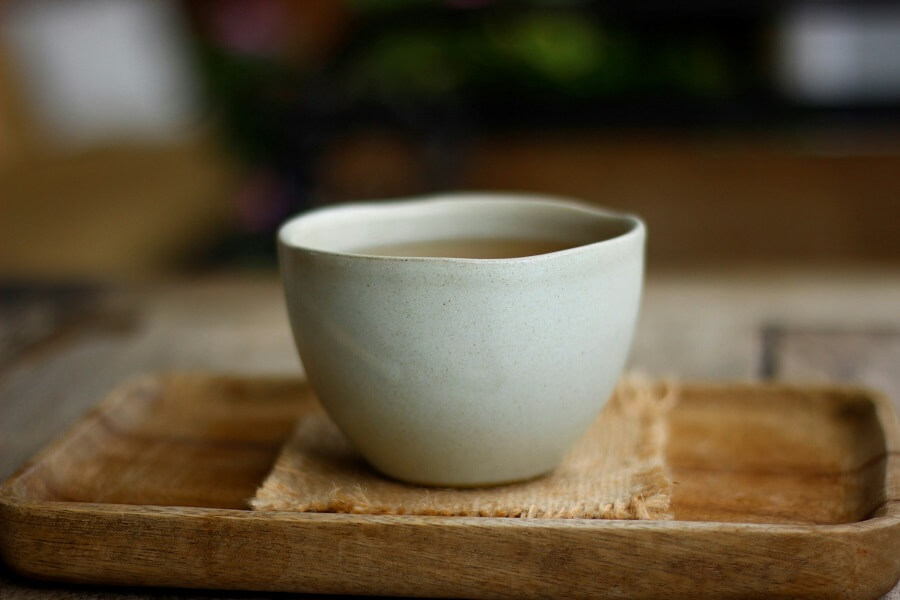
Loose herbal tea on a wooden spoon in kitchen window light, single-purpose Hormonal Health cycle support

Start from what is already settled. The free habits do most of the everyday work, and a real hormonal condition is a doctor’s job, not a shopping decision. Hold both of those before you spend anything.

Now the honest gap. You will still want something to buy, partly because the free levers are dull and partly because a few swaps are worth making on their own merits. That is reasonable. The trick is buying on a criterion instead of a promise.

For everyday products, the criterion is exposure, not detox. Favour fewer synthetic-fragrance options and lower-plastic formats where they meet your skin or your food, and ignore any product claiming to “balance” or “reset” your hormones from the outside. You are lowering avoidable load, not curing anything, and that framing keeps you honest about what you are paying for. Where it touches food or skin, Organic is a defensible default for the same reason.

For cycle or menopause support, the criterion is specificity. A single named herb at a sensible dose for one named need beats any multi-herb “hormone balance” blend promising to fix the lot. If you want gentle period-time support, a proper herbal Tea for that purpose is a smaller, clearer bet than a catch-all capsule, and the Women’s Health edit is filtered to that kind of single-purpose support.

Swap the product you use every day before you buy the one that promises to fix everything.

If you are heading into perimenopause, that is its own decision with real options worth understanding properly, and our perimenopause and menopause guide walks through what genuine support looks like before you reach for a supplement at all.

When it is not a Lifestyle Thing: The Symptoms that need a Doctor

Some symptoms are not a lifestyle project, they are a reason to see your GP. Periods that become irregular, very heavy or stop altogether. Sudden, unexplained weight or mood change. Persistent fatigue paired with feeling cold and sluggish, which can point to the thyroid. Perimenopause that is derailing your work, sleep or relationships. These deserve testing, not a tea.

The reason to take them seriously is that you can do everything right and still have a real condition underneath. “Sometimes you can be the healthiest version of yourself doing everything right and still be left with something that’s not what you want,” says Dr Jaime Knopman, a board-certified reproductive endocrinologist in New York. Lifestyle is the foundation, not a substitute for a diagnosis.

If any of the above fits you, ask your GP for proper assessment and, where it is warranted, referral to an endocrinologist. Blood tests exist for a reason, and a real imbalance is treated, not balanced away with habits. Self-help is for general support. It is not a diagnostic tool, and treating it as one is how genuine conditions get missed for years.

What to Skip: Seed Cycling, At-home Hormone Kits and Cortisol Detoxes

A few specific products are worth naming, because they are marketed hard and deliver little. At-home saliva hormone test kits sound empowering and mostly are not, because the reference ranges they judge you against are not validated for self-diagnosis, so you pay to be worried by a number that means little out of clinical context. Seed cycling, eating particular seeds in each half of your cycle, is harmless and pleasant and has no real evidence that it shifts hormones. And “cortisol detox” or “cortisol cleanse” products misunderstand the biology outright, because cortisol is not a toxin you flush, it is a hormone you regulate with sleep and stress load. Skip all three with a clear conscience.

The Finding

There is no dial marked balance, and that turns out to be good news rather than bad. It means the work is knowable. Real hormonal conditions are diagnosed and treated. The free habits, sleep, stress, food and movement, do most of the everyday lifting. The supplement aisle is mostly selling the gap between those two facts. And the single product-shaped change with a real mechanism behind it is the least glamorous one, lowering your avoidable exposure to everyday endocrine-disrupting chemicals, held at honest confidence rather than sold as a cure.

If you want to act on that, two moves are worth your money: simpler, lower-fragrance and lower-plastic everyday products where they meet your skin and food, and single-purpose cycle or menopause support chosen for a specific need. The women’s health and period-support edits and our perimenopause and menopause guide are the places to start.

Frequently Asked Questions

Can you really balance your hormones naturally?

You can support the systems that regulate your hormones with sleep, food, movement and a lower stress load, and for most everyday symptoms that is most of the available effect. A genuine medical imbalance, such as a thyroid condition or PCOS, is treated by a doctor, not balanced by lifestyle, and no supplement reliably does it for you.

What are the signs of a hormonal imbalance?

Watch for patterns rather than one-off bad days: periods that become irregular, very heavy or stop, unexplained weight or mood change, or persistent fatigue with feeling cold, which can suggest the thyroid. Ordinary tiredness after a busy week is not the same thing. If a symptom is persistent, sudden or worsening, see your GP for testing.

Do hormone-balancing supplements work?

Most multi-herb “balance” blends have little evidence for the claims on the front of the pack, and proprietary formulas that hide their doses are the ones to distrust. A single, named herb at a sensible dose for one specific need is a more defensible choice than a catch-all blend promising to fix everything at once.

Do endocrine disruptors in everyday products actually affect your hormones?

The mechanism is real and endocrine scientists take it seriously, so reducing avoidable exposure is reasonable. The certainty at the low, everyday doses most people encounter is not settled, which is why the sensible response is fewer fragranced and plastic products where they meet skin or food, not a “detox” that claims to undo harm.

When should I see a doctor about my hormones?

See a doctor when symptoms are specific, persistent or sudden: absent or wildly irregular periods, rapid unexplained weight or mood change, or fatigue with cold intolerance. The self-help levers are for general support, not diagnosis, and a real condition needs proper testing rather than a supplement.

Healthy Skin

Open the bathroom cabinet of almost anyone in a UK city and you find the same small graveyard: a vitamin C gone brown at the neck, three half-used cleansers, a serum bought at 11pm on a bad-skin night, and somewhere at the back, barely touched, the sunscreen. The order is exactly backwards. The cheap, boring thing at the back does the most, and the expensive, exciting thing at the front does the least.

The short answer to how to get healthy skin is shorter and duller than the aisle implies, and most of it is free. What follows ranks the levers by how much evidence sits behind them, names the few products worth buying, and hands you a way to read a label so you stop restocking that graveyard. The Healthy Skin edit is filtered to the things that survive this filter, but you will not need most of it.

The Cabinet is Full and the Order is Backwards

Your skin is a self-maintaining wall, and most of looking after it is not getting in its way. Dermatologists describe it as bricks and mortar. “The bricks are the skin cells and the mortar is the skin barrier made of proteins and lipids,” says Dr Mona Gohara, assistant clinical professor of dermatology at Yale School of Medicine. That wall keeps water in and irritants out, renews itself roughly every month, and asks for very little in return.

The market needs you to forget that. Skincare products were valued at around 149.4 billion US dollars globally in 2024, according to the 2025 review Nutritional Dermatology in the journal Nutrients, and that figure is built on the serum you did not know you needed, not on the cleanser you already own. Growth depends on the routine getting longer.

Longer is where it goes wrong. Every extra step is another fragrance, another acid, another chance to crack the mortar you are trying to protect. The people with the calmest skin are rarely the ones with the fullest cabinets. They are usually the ones who found three things that work and stopped shopping.

So the rest of this is a ranking, not a list. The levers near the top have decades of evidence. The ones near the bottom have a marketing budget. Start at the top.

The Most Powerful Step is the One you Keep Skipping

Straw sun hat on a wooden table in bright daylight, daily sun protection for Healthy Skin

Daily sun protection is the most evidence-backed thing you can do for your skin, and it is the step most people treat as optional. It does two jobs at once: it prevents the lines, slackness and dark patches that people later spend hundreds trying to undo, and it lowers the risk of skin cancer. Nothing else on the shelf does both.

“A broad-spectrum sunscreen with an SPF 30 or above is essential to shield your skin from the UV,” says Dr Anjali Mahto, consultant dermatologist and founder of the Self London clinic. Broad-spectrum matters because two kinds of UV reach you. UVB burns, and it is what the SPF number measures. UVA ages, passing deeper and more steadily, which is why a face can look weathered without ever catching a burn. You want protection against both.

The stakes are not vanity. Cancer Research UK says 86% of melanoma cases, the most serious skin cancer, are preventable, with the large majority caused by too much UV. A tan is not a glow, it is the skin’s record of damage already done.

The reason it fails in the UK is that it never feels urgent. Cancer Research UK says more than 90% of UV passes through cloud, so a flat grey Tuesday is still doing quiet work, and the protection gets skipped precisely when it would help most. The other common mistake is amount: most people use a third of what they should, which turns an SPF 30 into something far weaker in practice.

The cabinet holds a hundred products, the evidence points to about five, and the one that matters most is the sunscreen at the back.

And the objection everyone reaches for, that sunscreen blocks vitamin D, does not hold up in normal use. Real-world sunscreen application is patchy enough that it has little measurable effect on vitamin D status, and the NHS already advises everyone in the UK to consider a daily 10 microgram vitamin D supplement through autumn and winter, when the sunlight here is too weak to make enough regardless. Protect your skin and supplement the vitamin separately. They are two different problems.

Cleanse, Moisturise, and Stop Doing So Much

A gentle cleanse and a moisturiser do almost everything else, and most people sabotage both by overdoing them. Washing with a high-pH soap or a hot, long shower strips the barrier you are trying to keep intact. Daily exfoliating acids stacked on top tend to cause the dryness, stinging and breakouts they promise to cure. For a lot of people, the single best change is subtraction.

The routine that holds up is short. Use a cleanser that does not leave skin tight or squeaky, and apply moisturiser while skin is still slightly damp so it traps water rather than letting it evaporate. That is it. A cleansing oil or balm is a low-irritation way to handle the first step, and the Oils & Balms edit is filtered to gentle formulas. Exfoliation mostly happens on its own, and it rarely needs help.

Adjusting for your Skin Type

One routine does not fit every face, and the tweaks are small.

Oily or combination: the instinct is to strip, which backfires, since stripped skin often produces more oil. Keep the gentle cleanser, choose a light, non-greasy moisturiser, and let a single active do the regulating rather than ten harsh products.

Dry: the issue is water loss, not dirt. Cleanse once a day rather than twice, pick a richer cream with an occlusive element, and always apply to damp skin.

Sensitive or reactive: fewer ingredients, no added fragrance, and one change at a time. If your skin flushes or stings easily, patch-test anything new on your jaw for a few days before it goes near your whole face.

The Parts of Healthy Skin that Happen in the Kitchen and the Bedroom

Leafy greens on a wooden board in kitchen daylight, the free Eat Well lever for Healthy Skin

What you do away from the cabinet shows up on your face, and none of it costs anything. Sleep, diet, not smoking and a lower stress load all move skin, and they are the levers no brand can bottle. Smoking is the clearest of them: it breaks down collagen and elastin and ages skin visibly in a way no cream reverses.

Food matters, but modestly and as a pattern rather than a hero ingredient. “There is a clear link between nutrition and skin health,” write Sandi Assaf and Owen Kelly of Sam Houston State University in their 2025 Nutrients review, “however, more research needs to be done.” In practice a plate of mostly whole foods does more than any single superfood or sachet, and the American Academy of Dermatology already advises cutting high-glycaemic foods to help acne. The Eat Well edit is the place for the food side, and a collagen drink is not it.

Sleep is the lever people underrate, because skin does much of its repair overnight. A small 2015 study in Clinical and Experimental Dermatology found that poor sleepers showed slower barrier recovery and more visible signs of ageing than good sleepers. If yours is patchy, the Sleep Better approach and our guide to how to sleep better are a better spend than the night cream that promises the same result. Stress works through the same door, raising cortisol that can tip conditions like acne, eczema and psoriasis into a flare.

None of this is sold hard, because none of it has a margin. It is also the part that compounds: the protection and the sleep you bank in your thirties are what your skin spends in your fifties.

The Two Ingredients Worth the Hype, and How the Rest Get Sold

Two topical actives have the evidence to justify their reputation: retinoids and vitamin C. Retinoids, the vitamin A derivatives, are the best-studied ingredient in skincare for lines and texture. “They’ve been at the forefront of the skin care zeitgeist for a long time because they’re very effective and very well studied,” says Dr Angelo Landriscina, a board-certified dermatologist in New York, who adds that they are still “by no means necessary.” Vitamin C, used in the morning, helps with dullness and uneven tone. Almost everything else on a busy front-of-pack is optional.

This is the rare case where putting something on your skin beats swallowing it, which is the reverse of what the supplement aisle implies. “You can get a much higher concentration in the skin by going through the top, so putting a skincare product on and having it soak through, than through the bottom,” says Dr Michelle Wong, cosmetic chemist and founder of Lab Muffin Beauty Science. A retinoid on your face reaches your face. A collagen capsule mostly reaches your bladder.

The problem is rarely the ingredient and almost always the execution. Good actives get sold underdosed, buried three lines down an ingredient list in amounts too small to do anything, or in vitamin C formulas that oxidise to brown before the bottle is half empty. A ten-active serum that lists all of them in trace quantities is a more expensive way of using none of them.

If you want one, introduce it slowly. A retinoid works on a timescale of two to three months, not three days, and starting two or three nights a week heads off the flaking and redness that makes most people quit in week one. A gentler third option, niacinamide, is well tolerated and helps with oil and barrier support if retinoids are too much for now. Whatever you add, keep wearing the sunscreen, because a retinoid makes skin more sun-sensitive, not less.

Where the Money Leaks: Collagen Drinks, Biotin and Step Ten

A handful of popular buys do far less than the marketing implies, and they are worth naming because that marketing is loud. Biotin does almost nothing for skin in people who are not deficient, and most of us are not. Oral collagen has some trial evidence for skin firmness, but it is weak and largely funded by the brands selling it. The twelve-step routine is the bigger drain, since every extra step adds fragrance, cost and a fresh chance to irritate the barrier you are trying to protect. Heavy fragrance is the most common avoidable irritant in the average cabinet.

The deeper trap is the label, which is written to sound like evidence.

Decoding the Front of the Pack

“Fragrance-free” vs “unscented”: not the same. Fragrance-free means no added fragrance. Unscented can mean a masking fragrance was added to hide a smell, which still counts as fragrance to reactive skin. For sensitive skin, fragrance-free is the one to want.

“Clean”, “natural”, “non-toxic”: none of these has a legal definition in cosmetics, so they promise nothing about whether a product works or suits you. They are positioning, not specification.

“Dermatologist-tested” and “hypoallergenic”: the first only means a dermatologist was involved at some point, not that it was proven effective. The second is unregulated and self-declared. Read the ingredient list instead.

If packaging and formulation both matter to you, our piece on microplastics in cosmetics covers the ingredients worth leaving out, and the Cruelty Free and Organic edits screen for animal testing and farming standards so the label-reading is done for you.

The Short Shelf for Healthy Skin: Four Products and How to Spot the Good Ones

One amber glass serum bottle on a stone surface in window light, the short Healthy Skin shelf

Protect first, support second, and most of the aisle never enters the conversation. A barrier you defend with sun protection and a gentle routine does the bulk of the work for free. The honest gap is that protection has to be bought, a moisturiser earns its keep daily, and a retinoid does more than hope. Three or four products, chosen on specifics rather than promises, cover almost everyone.

Sunscreen: broad-spectrum, SPF 30 or higher, used in enough quantity, roughly two fingers’ length for face and neck, every morning, reapplied in strong sun. The format matters less than the habit, so pick the texture you will actually wear daily. The Sun Care edit is filtered to broad-spectrum options.

Moisturiser: fragrance-free, with named humectants and barrier lipids on the list. Look for glycerin, hyaluronic acid and ceramides, and ignore the price tag, which correlates poorly with whether a cream holds water. The Face Creams edit is the place to start.

One active, bought one at a time: a low-strength retinoid, or a vitamin C in a stable form and opaque, air-tight packaging, not an everything-at-once blend where you cannot tell what is working. The Serums edit holds the single-active options worth the money.

Spending your First £50

If you are starting from nothing, buy in this order and stop when the money runs out.

  1. A broad-spectrum SPF 30 or higher. First, always, before anything else. If you buy one product this is it.
  2. A fragrance-free moisturiser. Second. It protects the barrier and makes everything else more comfortable.
  3. A gentle cleanser, if your current one leaves skin tight.
  4. One active, only once the three above are habits. A retinoid for texture and lines, vitamin C for tone.

Buy the sunscreen and the moisturiser before anything that promises to turn back time. If you would rather shop the vetted-brand version, our roundup of the best zero waste beauty brands is filtered to formulas that clear this bar.

Back to the Cabinet

That graveyard of half-used bottles was never a personal failing. It is what happens when a simple job gets sold as a complicated one, in the wrong order, with the cheapest and most useful thing left at the back. The evidence points the other way: protect your skin from the sun, cleanse and moisturise gently, sleep and eat reasonably well, and add one proven active only if you want to. Everything else is fragrance, packaging and steps doing the work of marketing.

The shelf that delivers is short, and every item on it earns its place on specifics you can check yourself: broad-spectrum SPF, a fragrance-free barrier cream, a single active at a real dose.

The Sun Care, Face Creams and Serums edits are filtered to the versions that meet those criteria, and our follow-on guide to choosing a daily SPF walks through the few worth keeping at the front of the cabinet, not the back.

Frequently Asked Questions

Do you actually need a skincare routine, or is it mostly marketing?

You need to protect and support your skin barrier, which is a short routine: a gentle cleanser, a moisturiser and a daily broad-spectrum SPF. Most of the extra steps and buzzy actives are optional rather than necessary, and a longer routine is not automatically a better one. The reliable parts are cheap and dull.

What does the science say works best for healthy skin?

In order of evidence: daily sun protection first, then a gentle cleanse and moisturiser to keep the barrier intact, then lifestyle factors like sleep, diet and not smoking. Retinoids and vitamin C are the topical actives with the strongest evidence if you want to add one. Almost everything else is optional.

Do you need sunscreen every day in the UK, even when it is cloudy?

Yes. Cancer Research UK says more than 90% of UV passes through cloud, so daily broad-spectrum protection is worthwhile year-round, with the strongest case in spring and summer and at altitude. It also links the large majority of melanoma cases to avoidable UV exposure, and it will not block your vitamin D in normal use.

Do collagen drinks and biotin supplements improve your skin?

For people without a deficiency, biotin does almost nothing, and oral collagen has only weak, mostly industry-funded evidence. A balanced diet does the same job, and topical actives reach the skin more directly than oral supplements, so the money is usually better spent on sun protection and a good moisturiser.

What is the simplest effective skincare routine?

A gentle cleanser, a moisturiser and a broad-spectrum SPF 30 or higher in the morning is enough for most skin. An optional retinoid at night covers lines and texture if you want to go further, introduced slowly, two or three nights a week to start, to avoid irritation.