

Veo and Wearth are now Ziracle. Same mission, better platform. See what's new

Healthy Skin: The Short List of what Works, and the Long Aisle you can Skip

The skincare market wants you buying fifteen steps. The evidence points to about five, most of them free. Here is the short list, in the right order, the few products that earn a place, and how to read the label well enough to spot them.

Published : June 12, 2026 by Hamish Lawson

Updated : June 16, 2026 by Hamish Lawson

10 min read
Healthy Skin

Open the bathroom cabinet of almost anyone in a UK city and you find the same small graveyard: a vitamin C gone brown at the neck, three half-used cleansers, a serum bought at 11pm on a bad-skin night, and somewhere at the back, barely touched, the sunscreen. The order is exactly backwards. The cheap, boring thing at the back does the most, and the expensive, exciting thing at the front does the least.

The short answer to how to get healthy skin is shorter and duller than the aisle implies, and most of it is free. What follows ranks the levers by how much evidence sits behind them, names the few products worth buying, and hands you a way to read a label so you stop restocking that graveyard. The Healthy Skin edit is filtered to the things that survive this filter, but you will not need most of it.

The Cabinet is Full and the Order is Backwards

Your skin is a self-maintaining wall, and most of looking after it is not getting in its way. Dermatologists describe it as bricks and mortar. “The bricks are the skin cells and the mortar is the skin barrier made of proteins and lipids,” says Dr Mona Gohara, assistant clinical professor of dermatology at Yale School of Medicine. That wall keeps water in and irritants out, renews itself roughly every month, and asks for very little in return.

The market needs you to forget that. Skincare products were valued at around 149.4 billion US dollars globally in 2024, according to the 2025 review Nutritional Dermatology in the journal Nutrients, and that figure is built on the serum you did not know you needed, not on the cleanser you already own. Growth depends on the routine getting longer.

Longer is where it goes wrong. Every extra step is another fragrance, another acid, another chance to crack the mortar you are trying to protect. The people with the calmest skin are rarely the ones with the fullest cabinets. They are usually the ones who found three things that work and stopped shopping.

So the rest of this is a ranking, not a list. The levers near the top have decades of evidence. The ones near the bottom have a marketing budget. Start at the top.

The Most Powerful Step is the One you Keep Skipping

Straw sun hat on a wooden table in bright daylight, daily sun protection for Healthy Skin

Daily sun protection is the most evidence-backed thing you can do for your skin, and it is the step most people treat as optional. It does two jobs at once: it prevents the lines, slackness and dark patches that people later spend hundreds trying to undo, and it lowers the risk of skin cancer. Nothing else on the shelf does both.

“A broad-spectrum sunscreen with an SPF 30 or above is essential to shield your skin from the UV,” says Dr Anjali Mahto, consultant dermatologist and founder of the Self London clinic. Broad-spectrum matters because two kinds of UV reach you. UVB burns, and it is what the SPF number measures. UVA ages, passing deeper and more steadily, which is why a face can look weathered without ever catching a burn. You want protection against both.

The stakes are not vanity. Cancer Research UK says 86% of melanoma cases, the most serious skin cancer, are preventable, with the large majority caused by too much UV. A tan is not a glow, it is the skin’s record of damage already done.

The reason it fails in the UK is that it never feels urgent. Cancer Research UK says more than 90% of UV passes through cloud, so a flat grey Tuesday is still doing quiet work, and the protection gets skipped precisely when it would help most. The other common mistake is amount: most people use a third of what they should, which turns an SPF 30 into something far weaker in practice.

The cabinet holds a hundred products, the evidence points to about five, and the one that matters most is the sunscreen at the back.

And the objection everyone reaches for, that sunscreen blocks vitamin D, does not hold up in normal use. Real-world sunscreen application is patchy enough that it has little measurable effect on vitamin D status, and the NHS already advises everyone in the UK to consider a daily 10 microgram vitamin D supplement through autumn and winter, when the sunlight here is too weak to make enough regardless. Protect your skin and supplement the vitamin separately. They are two different problems.

Cleanse, Moisturise, and Stop Doing So Much

A gentle cleanse and a moisturiser do almost everything else, and most people sabotage both by overdoing them. Washing with a high-pH soap or a hot, long shower strips the barrier you are trying to keep intact. Daily exfoliating acids stacked on top tend to cause the dryness, stinging and breakouts they promise to cure. For a lot of people, the single best change is subtraction.

The routine that holds up is short. Use a cleanser that does not leave skin tight or squeaky, and apply moisturiser while skin is still slightly damp so it traps water rather than letting it evaporate. That is it. A cleansing oil or balm is a low-irritation way to handle the first step, and the Oils & Balms edit is filtered to gentle formulas. Exfoliation mostly happens on its own, and it rarely needs help.

Adjusting for your Skin Type

One routine does not fit every face, and the tweaks are small.

Oily or combination: the instinct is to strip, which backfires, since stripped skin often produces more oil. Keep the gentle cleanser, choose a light, non-greasy moisturiser, and let a single active do the regulating rather than ten harsh products.

Dry: the issue is water loss, not dirt. Cleanse once a day rather than twice, pick a richer cream with an occlusive element, and always apply to damp skin.

Sensitive or reactive: fewer ingredients, no added fragrance, and one change at a time. If your skin flushes or stings easily, patch-test anything new on your jaw for a few days before it goes near your whole face.

The Parts of Healthy Skin that Happen in the Kitchen and the Bedroom
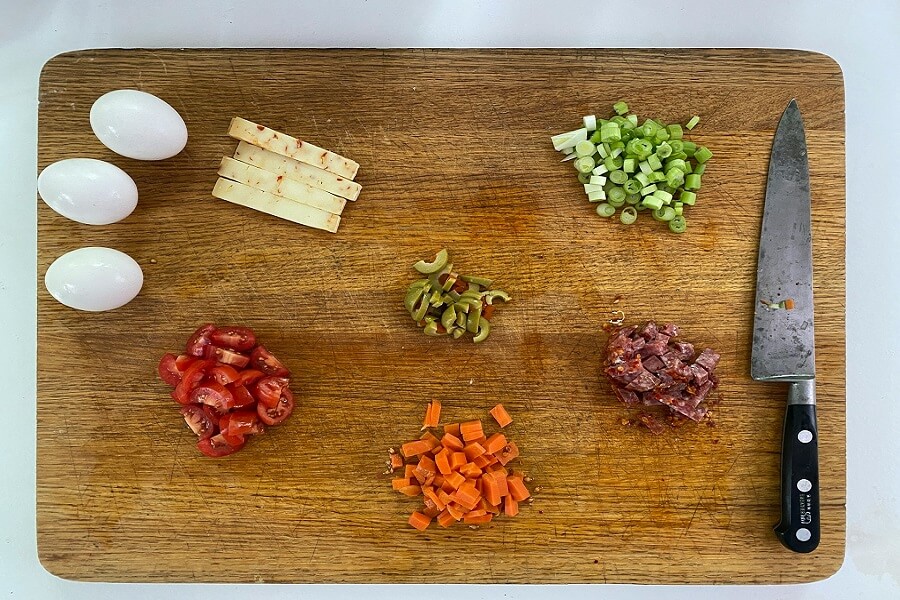
Leafy greens on a wooden board in kitchen daylight, the free Eat Well lever for Healthy Skin

What you do away from the cabinet shows up on your face, and none of it costs anything. Sleep, diet, not smoking and a lower stress load all move skin, and they are the levers no brand can bottle. Smoking is the clearest of them: it breaks down collagen and elastin and ages skin visibly in a way no cream reverses.

Food matters, but modestly and as a pattern rather than a hero ingredient. “There is a clear link between nutrition and skin health,” write Sandi Assaf and Owen Kelly of Sam Houston State University in their 2025 Nutrients review, “however, more research needs to be done.” In practice a plate of mostly whole foods does more than any single superfood or sachet, and the American Academy of Dermatology already advises cutting high-glycaemic foods to help acne. The Eat Well edit is the place for the food side, and a collagen drink is not it.

Sleep is the lever people underrate, because skin does much of its repair overnight. A small 2015 study in Clinical and Experimental Dermatology found that poor sleepers showed slower barrier recovery and more visible signs of ageing than good sleepers. If yours is patchy, the Sleep Better approach and our guide to how to sleep better are a better spend than the night cream that promises the same result. Stress works through the same door, raising cortisol that can tip conditions like acne, eczema and psoriasis into a flare.

None of this is sold hard, because none of it has a margin. It is also the part that compounds: the protection and the sleep you bank in your thirties are what your skin spends in your fifties.

The Two Ingredients Worth the Hype, and How the Rest Get Sold

Two topical actives have the evidence to justify their reputation: retinoids and vitamin C. Retinoids, the vitamin A derivatives, are the best-studied ingredient in skincare for lines and texture. “They’ve been at the forefront of the skin care zeitgeist for a long time because they’re very effective and very well studied,” says Dr Angelo Landriscina, a board-certified dermatologist in New York, who adds that they are still “by no means necessary.” Vitamin C, used in the morning, helps with dullness and uneven tone. Almost everything else on a busy front-of-pack is optional.

This is the rare case where putting something on your skin beats swallowing it, which is the reverse of what the supplement aisle implies. “You can get a much higher concentration in the skin by going through the top, so putting a skincare product on and having it soak through, than through the bottom,” says Dr Michelle Wong, cosmetic chemist and founder of Lab Muffin Beauty Science. A retinoid on your face reaches your face. A collagen capsule mostly reaches your bladder.

The problem is rarely the ingredient and almost always the execution. Good actives get sold underdosed, buried three lines down an ingredient list in amounts too small to do anything, or in vitamin C formulas that oxidise to brown before the bottle is half empty. A ten-active serum that lists all of them in trace quantities is a more expensive way of using none of them.

If you want one, introduce it slowly. A retinoid works on a timescale of two to three months, not three days, and starting two or three nights a week heads off the flaking and redness that makes most people quit in week one. A gentler third option, niacinamide, is well tolerated and helps with oil and barrier support if retinoids are too much for now. Whatever you add, keep wearing the sunscreen, because a retinoid makes skin more sun-sensitive, not less.

Where the Money Leaks: Collagen Drinks, Biotin and Step Ten

A handful of popular buys do far less than the marketing implies, and they are worth naming because that marketing is loud. Biotin does almost nothing for skin in people who are not deficient, and most of us are not. Oral collagen has some trial evidence for skin firmness, but it is weak and largely funded by the brands selling it. The twelve-step routine is the bigger drain, since every extra step adds fragrance, cost and a fresh chance to irritate the barrier you are trying to protect. Heavy fragrance is the most common avoidable irritant in the average cabinet.

The deeper trap is the label, which is written to sound like evidence.

Decoding the Front of the Pack

“Fragrance-free” vs “unscented”: not the same. Fragrance-free means no added fragrance. Unscented can mean a masking fragrance was added to hide a smell, which still counts as fragrance to reactive skin. For sensitive skin, fragrance-free is the one to want.

“Clean”, “natural”, “non-toxic”: none of these has a legal definition in cosmetics, so they promise nothing about whether a product works or suits you. They are positioning, not specification.

“Dermatologist-tested” and “hypoallergenic”: the first only means a dermatologist was involved at some point, not that it was proven effective. The second is unregulated and self-declared. Read the ingredient list instead.

If packaging and formulation both matter to you, our piece on microplastics in cosmetics covers the ingredients worth leaving out, and the Cruelty Free and Organic edits screen for animal testing and farming standards so the label-reading is done for you.

The Short Shelf for Healthy Skin: Four Products and How to Spot the Good Ones

One amber glass serum bottle on a stone surface in window light, the short Healthy Skin shelf

Protect first, support second, and most of the aisle never enters the conversation. A barrier you defend with sun protection and a gentle routine does the bulk of the work for free. The honest gap is that protection has to be bought, a moisturiser earns its keep daily, and a retinoid does more than hope. Three or four products, chosen on specifics rather than promises, cover almost everyone.

Sunscreen: broad-spectrum, SPF 30 or higher, used in enough quantity, roughly two fingers’ length for face and neck, every morning, reapplied in strong sun. The format matters less than the habit, so pick the texture you will actually wear daily. The Sun Care edit is filtered to broad-spectrum options.

Moisturiser: fragrance-free, with named humectants and barrier lipids on the list. Look for glycerin, hyaluronic acid and ceramides, and ignore the price tag, which correlates poorly with whether a cream holds water. The Face Creams edit is the place to start.

One active, bought one at a time: a low-strength retinoid, or a vitamin C in a stable form and opaque, air-tight packaging, not an everything-at-once blend where you cannot tell what is working. The Serums edit holds the single-active options worth the money.

Spending your First £50

If you are starting from nothing, buy in this order and stop when the money runs out.

  1. A broad-spectrum SPF 30 or higher. First, always, before anything else. If you buy one product this is it.
  2. A fragrance-free moisturiser. Second. It protects the barrier and makes everything else more comfortable.
  3. A gentle cleanser, if your current one leaves skin tight.
  4. One active, only once the three above are habits. A retinoid for texture and lines, vitamin C for tone.

Buy the sunscreen and the moisturiser before anything that promises to turn back time. If you would rather shop the vetted-brand version, our roundup of the best zero waste beauty brands is filtered to formulas that clear this bar.

Back to the Cabinet

That graveyard of half-used bottles was never a personal failing. It is what happens when a simple job gets sold as a complicated one, in the wrong order, with the cheapest and most useful thing left at the back. The evidence points the other way: protect your skin from the sun, cleanse and moisturise gently, sleep and eat reasonably well, and add one proven active only if you want to. Everything else is fragrance, packaging and steps doing the work of marketing.

The shelf that delivers is short, and every item on it earns its place on specifics you can check yourself: broad-spectrum SPF, a fragrance-free barrier cream, a single active at a real dose.

The Sun Care, Face Creams and Serums edits are filtered to the versions that meet those criteria, and our follow-on guide to choosing a daily SPF walks through the few worth keeping at the front of the cabinet, not the back.

Frequently Asked Questions

Do you actually need a skincare routine, or is it mostly marketing?

You need to protect and support your skin barrier, which is a short routine: a gentle cleanser, a moisturiser and a daily broad-spectrum SPF. Most of the extra steps and buzzy actives are optional rather than necessary, and a longer routine is not automatically a better one. The reliable parts are cheap and dull.

What does the science say works best for healthy skin?

In order of evidence: daily sun protection first, then a gentle cleanse and moisturiser to keep the barrier intact, then lifestyle factors like sleep, diet and not smoking. Retinoids and vitamin C are the topical actives with the strongest evidence if you want to add one. Almost everything else is optional.

Do you need sunscreen every day in the UK, even when it is cloudy?

Yes. Cancer Research UK says more than 90% of UV passes through cloud, so daily broad-spectrum protection is worthwhile year-round, with the strongest case in spring and summer and at altitude. It also links the large majority of melanoma cases to avoidable UV exposure, and it will not block your vitamin D in normal use.

Do collagen drinks and biotin supplements improve your skin?

For people without a deficiency, biotin does almost nothing, and oral collagen has only weak, mostly industry-funded evidence. A balanced diet does the same job, and topical actives reach the skin more directly than oral supplements, so the money is usually better spent on sun protection and a good moisturiser.

What is the simplest effective skincare routine?

A gentle cleanser, a moisturiser and a broad-spectrum SPF 30 or higher in the morning is enough for most skin. An optional retinoid at night covers lines and texture if you want to go further, introduced slowly, two or three nights a week to start, to avoid irritation.


READ NEXT

Open the bathroom cabinet of almost anyone in a UK city and you find the same small graveyard: a vitamin C gone brown at the neck, three half-used cleansers, a serum bought at 11pm on a bad-skin night, and somewhere at the back, barely touched, the sunscreen. The order is exactly backwards. The cheap, boring thing at the back does the most, and the expensive, exciting thing at the front does the least.

The short answer to how to get healthy skin is shorter and duller than the aisle implies, and most of it is free. What follows ranks the levers by how much evidence sits behind them, names the few products worth buying, and hands you a way to read a label so you stop restocking that graveyard. The Healthy Skin edit is filtered to the things that survive this filter, but you will not need most of it.

The Cabinet is Full and the Order is Backwards

Your skin is a self-maintaining wall, and most of looking after it is not getting in its way. Dermatologists describe it as bricks and mortar. “The bricks are the skin cells and the mortar is the skin barrier made of proteins and lipids,” says Dr Mona Gohara, assistant clinical professor of dermatology at Yale School of Medicine. That wall keeps water in and irritants out, renews itself roughly every month, and asks for very little in return.

The market needs you to forget that. Skincare products were valued at around 149.4 billion US dollars globally in 2024, according to the 2025 review Nutritional Dermatology in the journal Nutrients, and that figure is built on the serum you did not know you needed, not on the cleanser you already own. Growth depends on the routine getting longer.

Longer is where it goes wrong. Every extra step is another fragrance, another acid, another chance to crack the mortar you are trying to protect. The people with the calmest skin are rarely the ones with the fullest cabinets. They are usually the ones who found three things that work and stopped shopping.

So the rest of this is a ranking, not a list. The levers near the top have decades of evidence. The ones near the bottom have a marketing budget. Start at the top.

The Most Powerful Step is the One you Keep Skipping

Straw sun hat on a wooden table in bright daylight, daily sun protection for Healthy Skin

Daily sun protection is the most evidence-backed thing you can do for your skin, and it is the step most people treat as optional. It does two jobs at once: it prevents the lines, slackness and dark patches that people later spend hundreds trying to undo, and it lowers the risk of skin cancer. Nothing else on the shelf does both.

“A broad-spectrum sunscreen with an SPF 30 or above is essential to shield your skin from the UV,” says Dr Anjali Mahto, consultant dermatologist and founder of the Self London clinic. Broad-spectrum matters because two kinds of UV reach you. UVB burns, and it is what the SPF number measures. UVA ages, passing deeper and more steadily, which is why a face can look weathered without ever catching a burn. You want protection against both.

The stakes are not vanity. Cancer Research UK says 86% of melanoma cases, the most serious skin cancer, are preventable, with the large majority caused by too much UV. A tan is not a glow, it is the skin’s record of damage already done.

The reason it fails in the UK is that it never feels urgent. Cancer Research UK says more than 90% of UV passes through cloud, so a flat grey Tuesday is still doing quiet work, and the protection gets skipped precisely when it would help most. The other common mistake is amount: most people use a third of what they should, which turns an SPF 30 into something far weaker in practice.

The cabinet holds a hundred products, the evidence points to about five, and the one that matters most is the sunscreen at the back.

And the objection everyone reaches for, that sunscreen blocks vitamin D, does not hold up in normal use. Real-world sunscreen application is patchy enough that it has little measurable effect on vitamin D status, and the NHS already advises everyone in the UK to consider a daily 10 microgram vitamin D supplement through autumn and winter, when the sunlight here is too weak to make enough regardless. Protect your skin and supplement the vitamin separately. They are two different problems.

Cleanse, Moisturise, and Stop Doing So Much

A gentle cleanse and a moisturiser do almost everything else, and most people sabotage both by overdoing them. Washing with a high-pH soap or a hot, long shower strips the barrier you are trying to keep intact. Daily exfoliating acids stacked on top tend to cause the dryness, stinging and breakouts they promise to cure. For a lot of people, the single best change is subtraction.

The routine that holds up is short. Use a cleanser that does not leave skin tight or squeaky, and apply moisturiser while skin is still slightly damp so it traps water rather than letting it evaporate. That is it. A cleansing oil or balm is a low-irritation way to handle the first step, and the Oils & Balms edit is filtered to gentle formulas. Exfoliation mostly happens on its own, and it rarely needs help.

Adjusting for your Skin Type

One routine does not fit every face, and the tweaks are small.

Oily or combination: the instinct is to strip, which backfires, since stripped skin often produces more oil. Keep the gentle cleanser, choose a light, non-greasy moisturiser, and let a single active do the regulating rather than ten harsh products.

Dry: the issue is water loss, not dirt. Cleanse once a day rather than twice, pick a richer cream with an occlusive element, and always apply to damp skin.

Sensitive or reactive: fewer ingredients, no added fragrance, and one change at a time. If your skin flushes or stings easily, patch-test anything new on your jaw for a few days before it goes near your whole face.

The Parts of Healthy Skin that Happen in the Kitchen and the Bedroom

Leafy greens on a wooden board in kitchen daylight, the free Eat Well lever for Healthy Skin

What you do away from the cabinet shows up on your face, and none of it costs anything. Sleep, diet, not smoking and a lower stress load all move skin, and they are the levers no brand can bottle. Smoking is the clearest of them: it breaks down collagen and elastin and ages skin visibly in a way no cream reverses.

Food matters, but modestly and as a pattern rather than a hero ingredient. “There is a clear link between nutrition and skin health,” write Sandi Assaf and Owen Kelly of Sam Houston State University in their 2025 Nutrients review, “however, more research needs to be done.” In practice a plate of mostly whole foods does more than any single superfood or sachet, and the American Academy of Dermatology already advises cutting high-glycaemic foods to help acne. The Eat Well edit is the place for the food side, and a collagen drink is not it.

Sleep is the lever people underrate, because skin does much of its repair overnight. A small 2015 study in Clinical and Experimental Dermatology found that poor sleepers showed slower barrier recovery and more visible signs of ageing than good sleepers. If yours is patchy, the Sleep Better approach and our guide to how to sleep better are a better spend than the night cream that promises the same result. Stress works through the same door, raising cortisol that can tip conditions like acne, eczema and psoriasis into a flare.

None of this is sold hard, because none of it has a margin. It is also the part that compounds: the protection and the sleep you bank in your thirties are what your skin spends in your fifties.

The Two Ingredients Worth the Hype, and How the Rest Get Sold

Two topical actives have the evidence to justify their reputation: retinoids and vitamin C. Retinoids, the vitamin A derivatives, are the best-studied ingredient in skincare for lines and texture. “They’ve been at the forefront of the skin care zeitgeist for a long time because they’re very effective and very well studied,” says Dr Angelo Landriscina, a board-certified dermatologist in New York, who adds that they are still “by no means necessary.” Vitamin C, used in the morning, helps with dullness and uneven tone. Almost everything else on a busy front-of-pack is optional.

This is the rare case where putting something on your skin beats swallowing it, which is the reverse of what the supplement aisle implies. “You can get a much higher concentration in the skin by going through the top, so putting a skincare product on and having it soak through, than through the bottom,” says Dr Michelle Wong, cosmetic chemist and founder of Lab Muffin Beauty Science. A retinoid on your face reaches your face. A collagen capsule mostly reaches your bladder.

The problem is rarely the ingredient and almost always the execution. Good actives get sold underdosed, buried three lines down an ingredient list in amounts too small to do anything, or in vitamin C formulas that oxidise to brown before the bottle is half empty. A ten-active serum that lists all of them in trace quantities is a more expensive way of using none of them.

If you want one, introduce it slowly. A retinoid works on a timescale of two to three months, not three days, and starting two or three nights a week heads off the flaking and redness that makes most people quit in week one. A gentler third option, niacinamide, is well tolerated and helps with oil and barrier support if retinoids are too much for now. Whatever you add, keep wearing the sunscreen, because a retinoid makes skin more sun-sensitive, not less.

Where the Money Leaks: Collagen Drinks, Biotin and Step Ten

A handful of popular buys do far less than the marketing implies, and they are worth naming because that marketing is loud. Biotin does almost nothing for skin in people who are not deficient, and most of us are not. Oral collagen has some trial evidence for skin firmness, but it is weak and largely funded by the brands selling it. The twelve-step routine is the bigger drain, since every extra step adds fragrance, cost and a fresh chance to irritate the barrier you are trying to protect. Heavy fragrance is the most common avoidable irritant in the average cabinet.

The deeper trap is the label, which is written to sound like evidence.

Decoding the Front of the Pack

“Fragrance-free” vs “unscented”: not the same. Fragrance-free means no added fragrance. Unscented can mean a masking fragrance was added to hide a smell, which still counts as fragrance to reactive skin. For sensitive skin, fragrance-free is the one to want.

“Clean”, “natural”, “non-toxic”: none of these has a legal definition in cosmetics, so they promise nothing about whether a product works or suits you. They are positioning, not specification.

“Dermatologist-tested” and “hypoallergenic”: the first only means a dermatologist was involved at some point, not that it was proven effective. The second is unregulated and self-declared. Read the ingredient list instead.

If packaging and formulation both matter to you, our piece on microplastics in cosmetics covers the ingredients worth leaving out, and the Cruelty Free and Organic edits screen for animal testing and farming standards so the label-reading is done for you.

The Short Shelf for Healthy Skin: Four Products and How to Spot the Good Ones

One amber glass serum bottle on a stone surface in window light, the short Healthy Skin shelf

Protect first, support second, and most of the aisle never enters the conversation. A barrier you defend with sun protection and a gentle routine does the bulk of the work for free. The honest gap is that protection has to be bought, a moisturiser earns its keep daily, and a retinoid does more than hope. Three or four products, chosen on specifics rather than promises, cover almost everyone.

Sunscreen: broad-spectrum, SPF 30 or higher, used in enough quantity, roughly two fingers’ length for face and neck, every morning, reapplied in strong sun. The format matters less than the habit, so pick the texture you will actually wear daily. The Sun Care edit is filtered to broad-spectrum options.

Moisturiser: fragrance-free, with named humectants and barrier lipids on the list. Look for glycerin, hyaluronic acid and ceramides, and ignore the price tag, which correlates poorly with whether a cream holds water. The Face Creams edit is the place to start.

One active, bought one at a time: a low-strength retinoid, or a vitamin C in a stable form and opaque, air-tight packaging, not an everything-at-once blend where you cannot tell what is working. The Serums edit holds the single-active options worth the money.

Spending your First £50

If you are starting from nothing, buy in this order and stop when the money runs out.

  1. A broad-spectrum SPF 30 or higher. First, always, before anything else. If you buy one product this is it.
  2. A fragrance-free moisturiser. Second. It protects the barrier and makes everything else more comfortable.
  3. A gentle cleanser, if your current one leaves skin tight.
  4. One active, only once the three above are habits. A retinoid for texture and lines, vitamin C for tone.

Buy the sunscreen and the moisturiser before anything that promises to turn back time. If you would rather shop the vetted-brand version, our roundup of the best zero waste beauty brands is filtered to formulas that clear this bar.

Back to the Cabinet

That graveyard of half-used bottles was never a personal failing. It is what happens when a simple job gets sold as a complicated one, in the wrong order, with the cheapest and most useful thing left at the back. The evidence points the other way: protect your skin from the sun, cleanse and moisturise gently, sleep and eat reasonably well, and add one proven active only if you want to. Everything else is fragrance, packaging and steps doing the work of marketing.

The shelf that delivers is short, and every item on it earns its place on specifics you can check yourself: broad-spectrum SPF, a fragrance-free barrier cream, a single active at a real dose.

The Sun Care, Face Creams and Serums edits are filtered to the versions that meet those criteria, and our follow-on guide to choosing a daily SPF walks through the few worth keeping at the front of the cabinet, not the back.

Frequently Asked Questions

Do you actually need a skincare routine, or is it mostly marketing?

You need to protect and support your skin barrier, which is a short routine: a gentle cleanser, a moisturiser and a daily broad-spectrum SPF. Most of the extra steps and buzzy actives are optional rather than necessary, and a longer routine is not automatically a better one. The reliable parts are cheap and dull.

What does the science say works best for healthy skin?

In order of evidence: daily sun protection first, then a gentle cleanse and moisturiser to keep the barrier intact, then lifestyle factors like sleep, diet and not smoking. Retinoids and vitamin C are the topical actives with the strongest evidence if you want to add one. Almost everything else is optional.

Do you need sunscreen every day in the UK, even when it is cloudy?

Yes. Cancer Research UK says more than 90% of UV passes through cloud, so daily broad-spectrum protection is worthwhile year-round, with the strongest case in spring and summer and at altitude. It also links the large majority of melanoma cases to avoidable UV exposure, and it will not block your vitamin D in normal use.

Do collagen drinks and biotin supplements improve your skin?

For people without a deficiency, biotin does almost nothing, and oral collagen has only weak, mostly industry-funded evidence. A balanced diet does the same job, and topical actives reach the skin more directly than oral supplements, so the money is usually better spent on sun protection and a good moisturiser.

What is the simplest effective skincare routine?

A gentle cleanser, a moisturiser and a broad-spectrum SPF 30 or higher in the morning is enough for most skin. An optional retinoid at night covers lines and texture if you want to go further, introduced slowly, two or three nights a week to start, to avoid irritation.
Leave a Comment