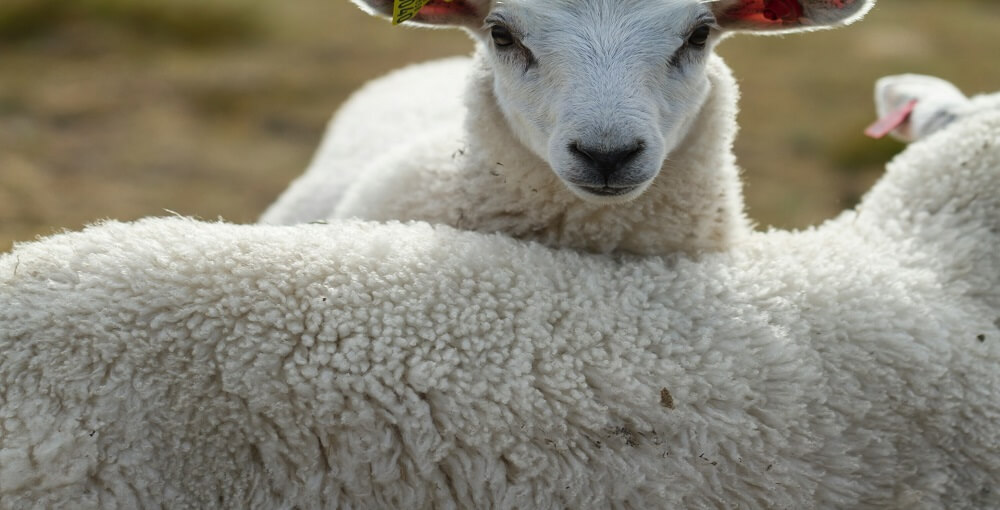
The leather debate tends to grab the attention, but wool sits in a strikingly similar spot. Cattle have to be killed for leather. Sheep don’t have to be killed for wool. That single difference is often where the conversation stops, and the assumption is that wool must therefore be the kinder, more sustainable option.
The reality is more complicated. Wool accounts for around 1% of global fibre output, according to the International Wool Textile Organisation’s 2024 Market Information Report, but that small share still runs through the lives of over a billion sheep and a production system that carries serious welfare and climate costs. That’s a lot of animals, a lot of land, and a lot of methane.
So can wool be part of a sustainable wardrobe, or is it time to retire it? Here’s what the industry actually looks like, why it’s a harder conversation than it first appears, and what the alternatives can realistically do.
Why we’ve used animal fibres for so long
Natural fibres have been used in every culture on earth for clothing, storage, rope, fishing nets, basic building materials. What people used depended on what grew or grazed nearby, and the result was a mix of plant fibres like linen and hemp and animal fibres like wool, silk and cashmere.
Wool became a staple in colder climates for good reason. It’s warm, breathable, flame-resistant, naturally moisture-wicking, and it holds its shape in a way few other fibres can. A 2016 technical review in Animal Frontiers set out the properties that have kept wool in use for millennia: thermal regulation across temperature ranges, elasticity, and durability that outlasts most synthetics. That list explains why wool has been hard to displace. It performs.
The question isn’t whether wool does the job. It does. The question is whether the way it’s produced today can be reconciled with what consumers now expect from their clothes, and with what the climate can afford.
What modern wool production actually involves
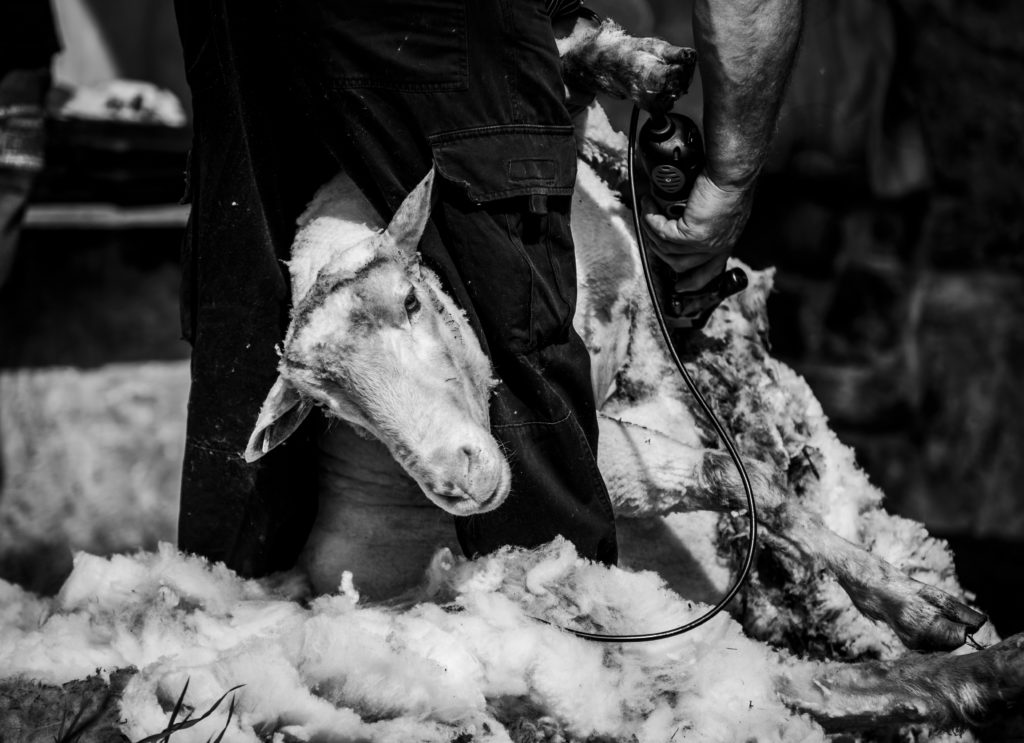
The mental image most of us have of wool is a small flock of sheep grazing on a hillside, shorn once a year by a friendly farmer in wellies. Industrial wool production at scale doesn’t look like that, and undercover investigations have repeatedly exposed cruelty on farms the industry considered standard.
One of the most widely documented practices is mulesing. According to RSPCA Australia’s updated mulesing guidance (2024), mulesing involves cutting strips of skin from around a fully conscious lamb’s hindquarters using sharp shears, so that the scarred skin is less susceptible to flystrike. It’s usually carried out during lamb ‘marking’ when the lamb is between two and ten weeks old. Marking often clusters several painful procedures on the same day: mulesing, tail docking, castration, ear notching, vaccination. While Victoria and Tasmania now legally require pain relief before mulesing, in all other Australian states and territories there is currently no mandatory requirement for producers to administer it.
There’s an ongoing industry shift towards pain relief and non-mulesing Merino breeds, particularly in Australia where the practice is concentrated, but progress is uneven. Shoppers who want to avoid mulesed wool generally need to look for explicit certification rather than assume it.
The second issue is climate. Sheep are ruminants, which means they produce methane as part of their digestive process. A 2017 study published in Environmental Science and Technology found that wool has one of the highest greenhouse gas footprints per kilogram of any common apparel fibre during the production phase, driven primarily by enteric methane emissions from sheep. Land use compounds this. Sheep need space, and their impact on soil, vegetation and biodiversity accumulates over time.
Wool carries one of the highest greenhouse gas footprints of any common apparel fibre at the production stage.
A nuanced conversation, not a clean one
Campaigns like Fashion Revolution’s #IMadeYourFabric stories have put the people behind the supply chain in front of consumers for the first time. The reactions the campaign has surfaced say something about where consumer attitudes have moved. Animals are increasingly seen as sentient beings rather than raw material, and the ethical footing of the industry is shifting underneath producers who were following the rules as they were taught them. That’s uncomfortable, and it needs to be held alongside the fact that farmers need to earn a living and deserve a fair conversation about their future.
It also means the question isn’t just ‘is wool ethical?’ but ‘what else could farmers be doing with the same land?’
Research from the University of Leeds, including work by Professor Simon Lewis of the University of Leeds and UCL, has modelled how removing a fraction of grazing land and allowing it to return to forest or regenerative landscapes could significantly reduce UK agricultural emissions while maintaining rural livelihoods through carbon payments and nature-based income. A 2024 peer-reviewed study in Frontiers in Sustainable Food Systems, involving researchers from the University of Leeds, identified specific levers for changing UK grazing livestock systems in ways that reduce environmental impact without wholesale removal of farming. Sheep farming at current prices is often marginal without subsidy. Other land uses are starting to pay farmers better, restore the land, and reduce atmospheric carbon at the same time.
Personal ethics will always play a role in what each of us considers acceptable. The justification for virgin animal fibres is getting thinner every year, not because farming is inherently wrong, but because there are now good alternatives for almost every use case. When animals are treated as a disposable commodity in pursuit of margin, their welfare gets squeezed in predictable ways.
What the alternatives actually look like
Wool is more biodegradable than oil-based synthetics like polyester, and that’s a real advantage at end of life. But weighed against the full set of fibres now available, its welfare and climate footprint put it lower down the list than most plant-based options and several of the newer semi-synthetics.
Organic cotton, linen and hemp all perform well in knitwear, layering and everyday wear, with much lower water and pesticide profiles when certified organic. Tencel, made from wood pulp using a closed-loop solvent process, performs especially well against wool for softness, drape and moisture management. For warmer garments, recycled wool is another option, reusing fibres that have already been through the supply chain rather than producing new ones. The same logic applies to recycled cashmere.
Lab-grown and bio-engineered fibres are starting to appear too, including protein-based fibres spun from agricultural waste. Most are still at early-stage commercial scale, but they show how quickly the fibre mix is changing.
Knitwear for the modern era

One of the most common objections is that wool is essential for knitwear. The reasoning usually goes: you want a jumper that’s warm, soft, holds its shape and lasts, so you need wool. That used to be broadly true. It’s no longer.
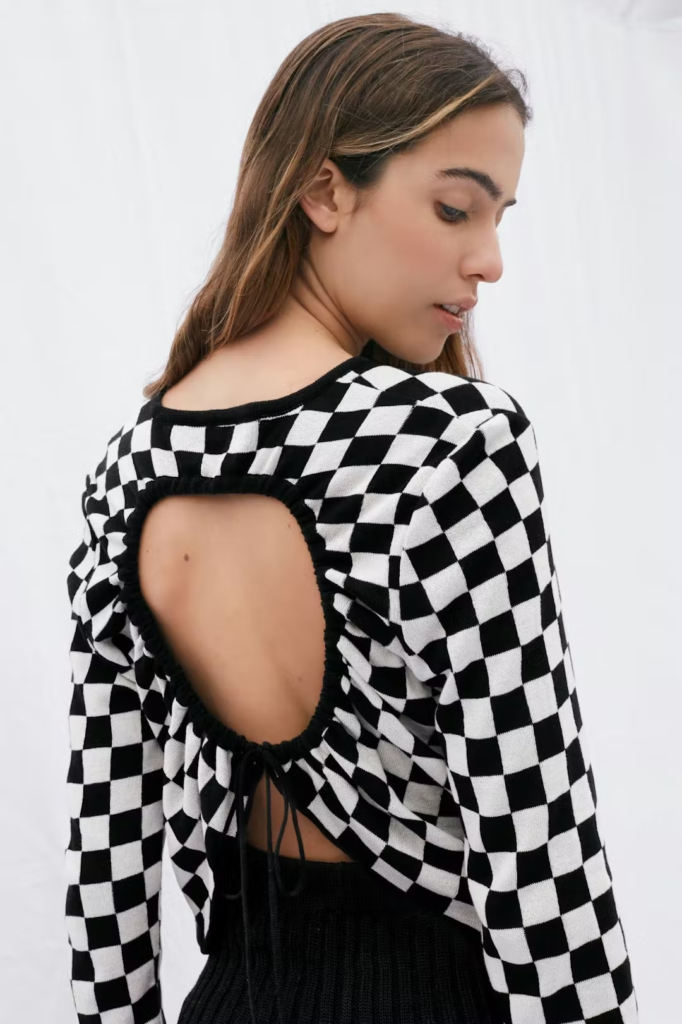
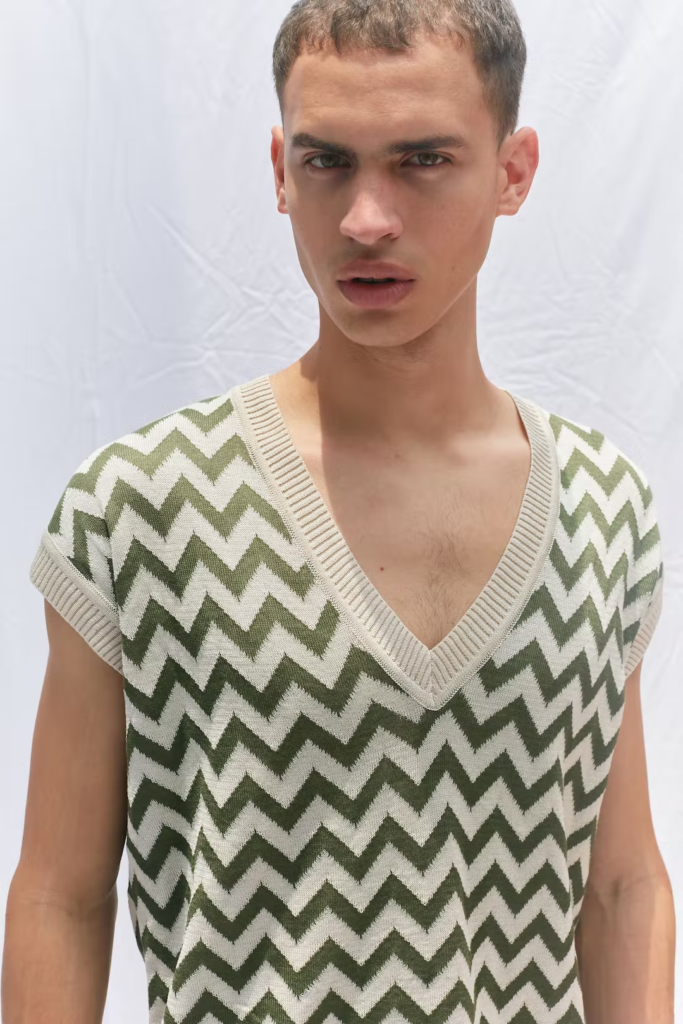
A new generation of knitwear brands is working with natural plant fibres to produce pieces that handle cold weather, wash well and age gracefully. Peruvian Pima cotton has become a favoured alternative in the space: its exceptionally long staple fibre gives it softness, strength and colour-holding qualities that rival wool for most wardrobe uses. Komodo carries knitwear in organic cotton and other plant fibres on Ziracle.
What’s more interesting than the material is the philosophy behind it. The best of these brands design for what might be called ‘selecting rather than accumulating’: pieces made to be worn often, kept in good condition, and passed through wardrobes for years rather than seasons. Each piece earns its place over time, rather than being pushed through the wardrobe by the next trend cycle.
That approach matters almost more than the fibre choice. Even the most sustainable material becomes a problem if it’s churned through a seasonal trend cycle. Knitwear that lasts is knitwear that gets worn.

Good things are worth fighting for
The fashion and textiles industry is global, interconnected and deeply tangled. Farming, spinning, dyeing, manufacturing and distribution systems have been built up over generations, and they won’t switch away from animal fibres overnight. What can change, and what’s already changing, is the mix of what we buy.
Buy less wool. Make the wool you already own last. When you do buy new, choose recycled, certified ethical or plant-based alternatives. For the broader picture, read our guide to can leather be sustainable and our guide to eco swaps for fashion.
Every brand in the Apparel and Style category on Ziracle has passed the same standard: kind to the people making the clothes, transparent about materials and supply chain, built to last longer than a season. For anyone avoiding animal fibres specifically, filter by Vegan and Cruelty Free to find pieces made without wool, silk or cashmere.
Ready to shop? Browse the Knitwear edit and find pieces made to outlast the trend cycle.
FAQs
At the production stage, yes. A 2017 study in Environmental Science and Technology found wool has one of the highest greenhouse gas footprints per kilogram of any common apparel fibre during the production phase, driven by methane emissions from sheep. Polyester has a lower production footprint per kilogram but sheds microplastics in every wash and doesn’t biodegrade. Both have real environmental costs. The better option is usually recycled wool, organic natural fibres, or semi-synthetics like Tencel, depending on the use case.
Mulesing is the practice of cutting strips of skin from around a fully conscious lamb’s hindquarters to reduce the risk of flystrike later in life. It’s concentrated in Australian Merino farming and is typically done when lambs are two to ten weeks old. As RSPCA Australia confirmed in 2024, while Victoria and Tasmania now legally require pain relief, most Australian states still have no mandatory requirement for it. Australia is the only country where mulesing is still carried out routinely. The most reliable way to avoid mulesed wool is to look for certifications like Responsible Wool Standard (RWS), ZQ Merino, or SustainaWOOL, all of which require non-mulesed sourcing. Some brands also specify ‘non-mulesed’ directly on product pages.
Yes, meaningfully. Recycled wool reuses fibres that have already been through the supply chain, avoiding the need for new sheep, new grazing land, and new methane emissions. The processing is lower-impact than producing new wool from scratch. The trade-off is that recycled wool is usually slightly less fine and less soft than virgin wool, though the gap has narrowed as processing has improved. For most wardrobe uses, recycled wool delivers comparable performance at a fraction of the footprint.
For most UK winter temperatures, yes. Peruvian Pima cotton, Tencel and hemp-cotton blends can be knitted at weights and densities that compete directly with wool for warmth. Where wool still holds a specific advantage is in extreme cold (mountain weather, prolonged outdoor exposure) where its thermal regulation remains unmatched. For city wear, commuting and layering, plant-based knitwear is a credible substitute. For the Cairngorms in February, wool still wins.
No. The most sustainable item you own is the one you already have, whatever it’s made of. The manufacturing and welfare cost is already sunk. Wear and repair what you’ve got until it wears out, then replace with recycled wool or a plant-based alternative. Giving wool items a second life through resale or charity donation is also valuable, because it extends the garment’s active life and displaces a new purchase somewhere else in the system.