Veo and Wearth are now Ziracle. Same mission, better platform. See what's new

Is Foraging the Next Step for Slow Beauty?

Slow beauty is moving rapidly forward, but is foraging for your skincare part of it?

Janet Home

Brands, Ziracle

Published : August 17, 2021

Updated : April 28, 2026

by Hamish Lawson
12 min read
|||||||||||||||

Benzoyl peroxide. Dihydroxyacetone. Glycerin. Emollient. The ingredients list on most skincare products reads like a chemistry paper. Many of those ingredients are harmless, some are useful, and a fair number are there mainly to extend shelf life. All of them come wrapped in beautiful packaging with a price tag to match.

Slow beauty is a direct response to that status quo, asking the same questions slow fashion asks but about what we put on our skin. Fewer ingredients. Local and seasonal where possible. Less packaging, less shelf-life engineering, and more attention to the full journey of the product. Foraging for your own skincare ingredients sits comfortably inside that movement, and it’s a surprisingly practical place to start if you want a near-zero-waste beauty routine.

Foraging is the practice of sourcing ingredients from the wild, most often for food, but also for home remedies and skincare. There’s an abundance of natural ingredients with skincare benefits growing in British woodlands, hedgerows and gardens, and many of them can be combined with other natural sources to produce serums, toners, scrubs and bath salts. Most cost little to nothing beyond the effort of finding them.

Natural ingredients grow by season, so you can’t forage the same things all year. Here’s a seasonal guide to the most useful plants for skincare, where to find them, and four recipes to get started. A few important notes on safety first.

A note on foraging safely

Before you head out, read the Woodland Trust’s foraging guidelines. The short version: only forage what you can identify with total confidence, take small amounts from abundant sources, never uproot plants (which is illegal on land you don’t own under the Wildlife and Countryside Act 1981), and never forage in protected sites.

Plant identification matters enormously. Some plants that look edible are toxic, and several common look-alikes can cause serious harm. If you’re in any doubt, leave it alone and check a reliable reference like Kew’s guide to poisonous plants or go with someone experienced. When you’re foraging for skincare in particular, patch-test on a small area of skin before applying anything more widely. Natural doesn’t automatically mean non-irritant.

One more thing. The NHS is clear that herbal and plant-based products are not a substitute for medical treatment. If you have a persistent skin condition, see a dermatologist. Foraged skincare is for everyday routines, not for treating serious issues.

Spring

Chickweed

Where: shady, moist locations including gardens and woodland edges. Chickweed forms small low-growing mats with distinctive white star-shaped flowers.
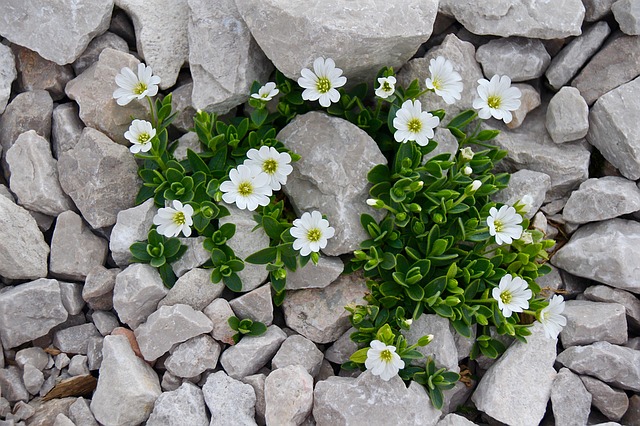
image of chickweed growing between light grey rocks

Benefits: chickweed has traditionally been used to soothe a range of skin issues thanks to its natural antiseptic, antifungal and anti-inflammatory properties. It’s often used as a quick remedy for itchiness and surface irritation.

Dandelion

Where: dandelions prefer moist, sunny areas, only going dormant in the coldest winters. They’re one of the easiest foraging plants to find in the UK because they grow almost everywhere, including lawns and pavements.
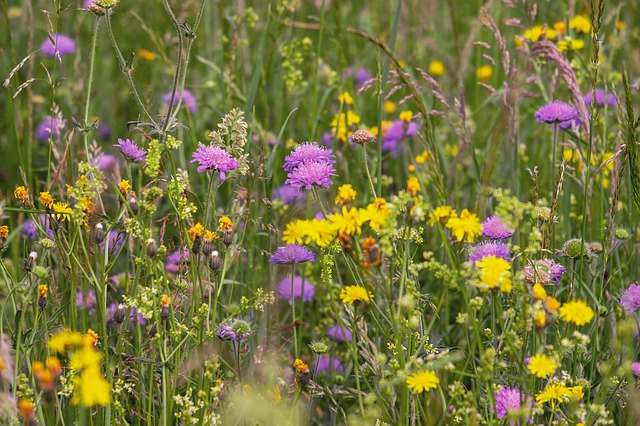
dandelions in long grass next to pink flowers

Benefits: the sap from dandelions is naturally alkaline, which makes it useful against germs, bacteria and fungus. It’s been used traditionally to treat ringworm and eczema. Seen as a natural detoxifier, dandelion juice also appears in homemade acne treatments, and the plant’s vitamin C content can support the appearance of scars and inflammation.

Goose grass

Where: turf, landscaped areas like crop fields, orchards and gardens. Goose grass, also known as cleavers, is the sticky plant children used to throw at each other in playgrounds.
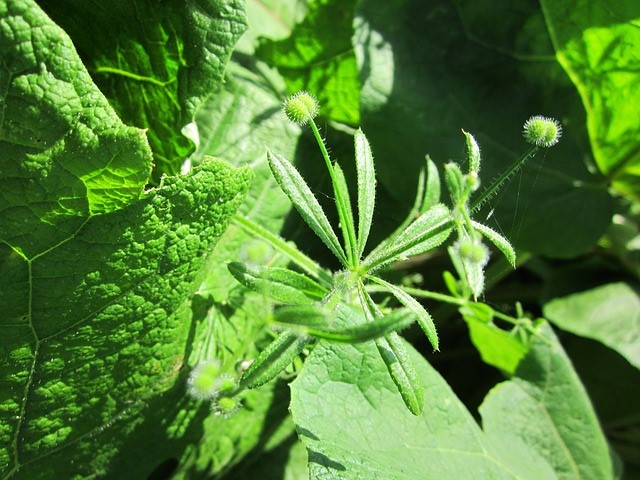
close up image of goosegrass.

Benefits: goose grass has long been used in folk medicine for skin complaints like psoriasis and eczema, and for helping small cuts, scrapes and abrasions to heal. It’s usually applied as a cooled infusion or a cold-pressed juice.

Wild garlic

Where: near marshland or water drainage ditches across much of the UK, often carpeting the floor of damp woodland in spring. You’ll usually smell it before you see it.
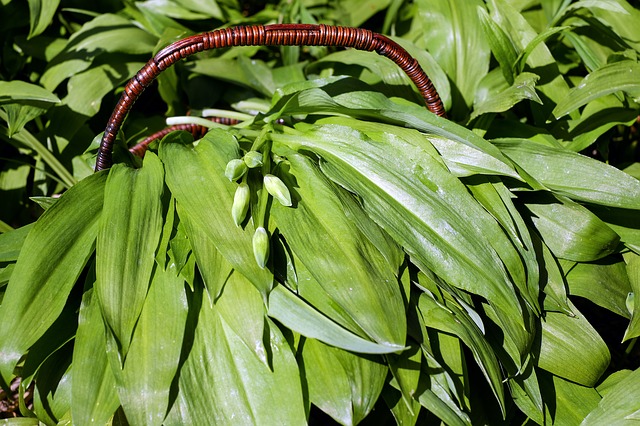
huge pile of wild garlic in a dark brown wicker basket

Benefits: wild garlic is rich in allicin, which gives it antiviral, antifungal and antiseptic properties. It’s used in cleansing products and in homemade acne treatments because it helps remove the bacteria that cause breakouts. Garlic also contains vitamin C, known to support collagen production and protect against the effects of UV exposure.

Recipe: dandelion face serum

Designed to brighten the complexion and firm the skin. The flower’s properties are known for supporting the appearance of age spots and scars, so it works well as a serum layer before your moisturiser, morning or night.

Ingredients: 6 fresh dandelion flowers and leaves, 1 aloe vera leaf, 1 teaspoon vitamin E oil.

  1. Wash the flowers and chop off the base of the stems to remove any dirt. Leave to drain.
  2. Slice the aloe vera leaf down the middle and scoop out the gel to fill half a cup.
  3. Blend the dandelions and aloe vera gel in a food processor or NutriBullet.
  4. Leave the mixture to sit for one hour.
  5. Using a cloth or strainer, squeeze the gel into a bowl until all you have left is dandelion pulp in the strainer and dandelion-infused gel in the bowl.
  6. Gently mix in the vitamin E.
  7. Pour into a pot or bottle, preferably dark glass to preserve the contents for longer.
  8. Apply to clean skin morning and night. Use within 10 weeks.

Summer

Chanterelle mushrooms

Where: growing in clusters in mossy coniferous forests, and also in mountainous birch forests. Chanterelles have a distinctive trumpet shape and a golden-yellow colour, with false gills rather than true ones.
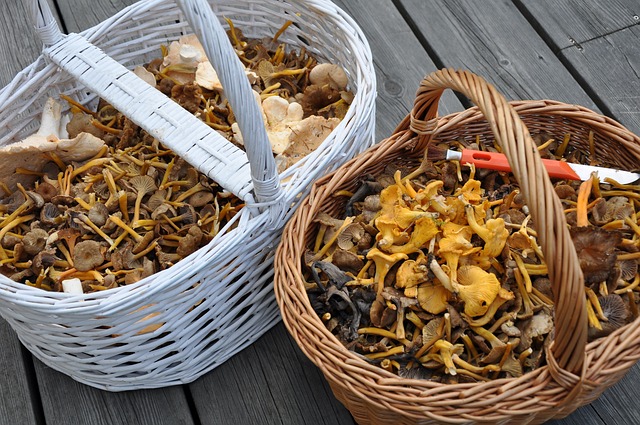
Chanterelle mushrooms in wicker baskets

Benefits: like many fungi, chanterelles are rich in vitamin D. They’re also rich in niacin, which has been used traditionally to address conditions like eczema and rosacea by helping to reduce redness, inflammation and irritation. Only forage mushrooms with expert ID. Several UK species are lethally toxic.

Blackberries

Where: commonly found in brambles across most UK woodland and along hedgerows. Pick them ripe and jet-black, never at the roadside where exhaust residue will have settled on the fruit.
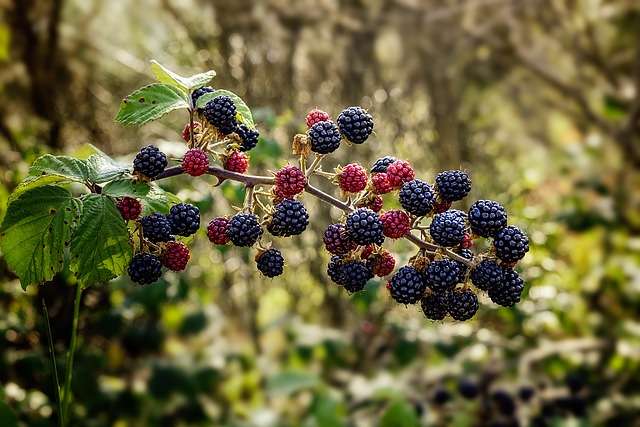
black berries

Benefits: blackberries are rich in antioxidants, which support circulation and immune function. They feature in face masks because of their astringent properties. The high vitamin C content supports collagen production, and the antioxidants help the skin look brighter and healthier.

Hazelnuts

Where: moist, lowland soil and under the shade of oak trees. The nuts ripen in late summer and early autumn.
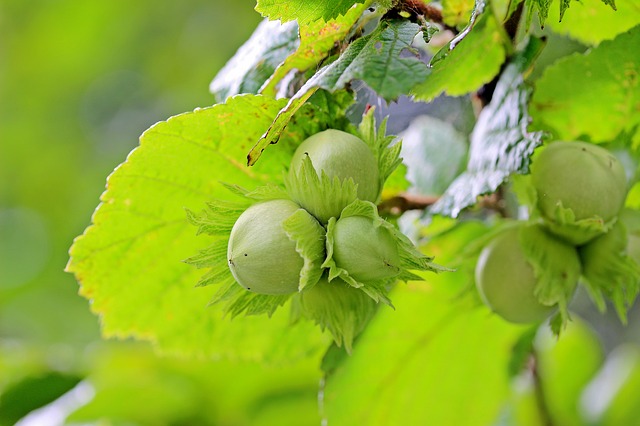
Benefits: hazelnuts contain a high concentration of antioxidants and are often applied to the skin as a cold-pressed oil. Naturally rich in fatty acids and vitamin E, hazelnut-based products support hydration and elasticity. They’re also a good protein source if you want to take some home for the kitchen.

Honeysuckle

Where: honeysuckle grows close to home, often on the exteriors of buildings and along hedgerows and woodland fringes. Its strong sweet scent makes it easy to find in the evening.
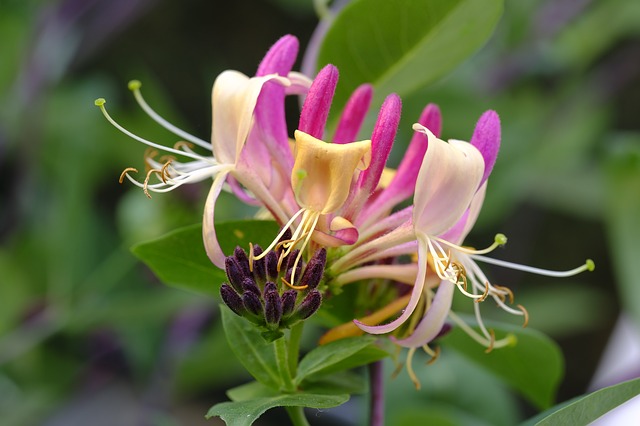
close up image of honeysuckle

Benefits: honeysuckle features in traditional remedies for eczema, acne and rosacea. Oil distilled from the plant is also used in hair products to strengthen roots and strands. As an essential oil, honeysuckle is used in aromatherapy and is thought to help with headaches, sinus pressure and stress.

Recipe: rose face spritz

Doubles as a face toner and as a cooling spritz on hot days. Use fresh, unsprayed roses from your own garden or a friend’s.

Ingredients: 7 roses, 1.5 litres of distilled water.

  1. Gently pull the petals from the roses and place them in a colander under lukewarm running water to remove any dirt.
  2. Once clean, put the petals in a pan with the distilled water. If 1.5 litres isn’t enough to cover them, add more.
  3. Over a low to medium heat, bring the petals to a simmer for about 25 minutes until they’ve lost their colour and gone very pale pink.
  4. Strain the mixture and separate the petals from the water. Don’t throw the petals away, you can add them to a bath that evening.
  5. Pour the rose water into a dark bottle and use as a cooling face spritz throughout summer.

Foraging is a near-zero-waste way to learn what actually grows around you.

Autumn

Rosehips

Where: rosehips develop from the seed pods of wild roses along hedgerows, waste ground and woodland edges. They ripen from late summer onwards and are at their best after the first frost.

Benefits: rosehips are known for their astringent properties, which help tighten the skin and close pores. They also contain lycopene and beta carotene (the same compound that gives carrots their colour) and have been used to address hyperpigmentation: skin that has darkened in places due to sun, hormones or medication. Rosehip oil is a staple in natural skincare for its essential fatty acid content.

Hawthorn

Where: hawthorn grows in hedgerows, woodland and scrubland. The berries (haws) ripen to a deep red in autumn.
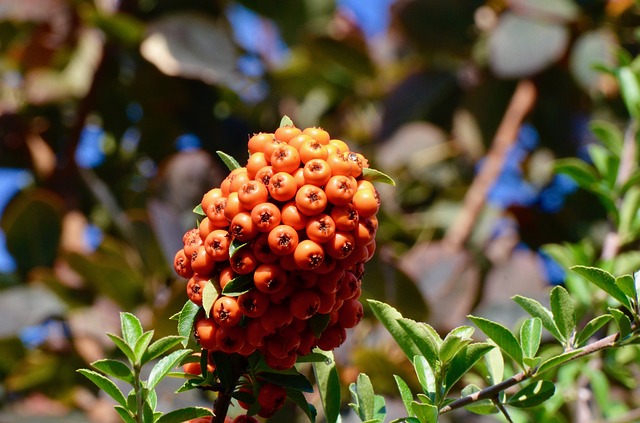
close up image of orange hawthorn berries

Benefits: hawthorn berries are naturally rich in polyphenols, and are traditionally associated with supporting the immune system and cardiovascular health. Cosmetically, they appear in hair products where they have a reputation for supporting fast hair growth and strong roots.

Walnuts

Where: in woodland, most commonly in southern parts of England. Wild walnut trees are less common than their cousins in orchards, so take only what you’ll use.

arial shot of walnuts in a bowl next to a walnut cracker and shells.

Benefits: most of the skincare benefits come from the shell and leaves, which makes walnuts an excellent near-zero-waste option. Walnut extracts help protect the skin from free radicals, and the shells make a brilliant natural exfoliant thanks to their rough texture. Grind them fine before use on the face. Shells are gentler on arms, legs and feet.

Recipe: walnut body scrub

Supports circulation, buffs away dead skin cells, and leaves skin smoother and brighter. Use no more than once or twice a week.

Ingredients: 12 walnuts, 30g refined shea butter, 30g almond oil, 5g vitamin E oil, 5 drops rosehip oil.

  1. Remove the shells from the walnuts.
  2. Grind the walnut shells into tiny particles. You can do this in a pestle and mortar, in a canvas bag with a rolling pin, or in a blender. Set aside.
  3. Put the shea butter and almond oil in a heat-proof bowl and place it over a pan of hot water, as you would to melt chocolate.
  4. On a low heat, let the shea butter melt into the oil.
  5. Once fully melted, remove from heat and allow to set. You can speed this up in the fridge.
  6. Use a wooden spoon to mix until the product turns fluffy.
  7. Add the crushed walnut particles, vitamin E and rosehip oil. Stir through.
  8. Spoon into a dark glass jar to keep it fresh. Use in the shower on damp skin, avoiding the face.

Winter

Nettles

Where: nettles prefer rich, moist soil and are commonly found near rivers, streams and lakes. Wear gloves when harvesting. Nettles lose their sting once they’re cooked or properly processed.
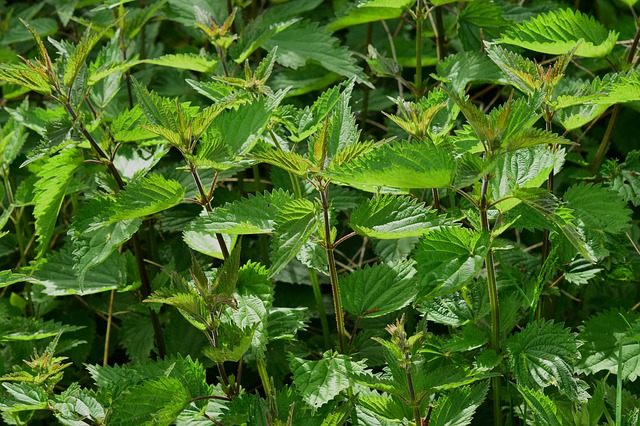
image of stinging nettles.

Benefits: prepared properly, nettles are a rich source of antioxidants and have a reputation for supporting skin against the effects of heavily polluted air. They’re also traditionally used as a hair rinse, where they’re thought to inhibit a hormone associated with hair loss and stimulate the scalp.

Beech nuts

Where: beech nuts prefer dry conditions and acidic soil. They can be tricky to find, but mature woodland is a good place to start, particularly where there are large beech trees.
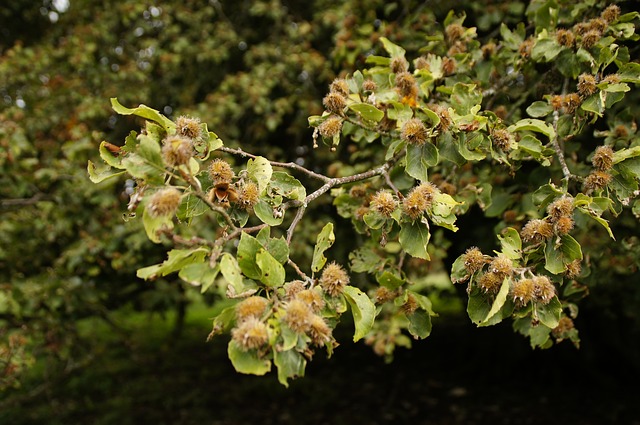
beech nuts

Benefits: beech nuts have a reputation as a powerful antiseptic and are traditionally associated with strong hair growth. Oil distilled from beech nuts is thought to strengthen follicle cells and slow hair loss. Important caveat: parts of the beech tree are toxic, so don’t attempt to forage or prepare beech nuts without expert guidance.

Rowan berries

Where: rowan trees grow at high altitude, particularly in the Scottish Highlands, and produce bright orange-red berry clusters. Rowan is also common in urban parks and gardens across the UK.
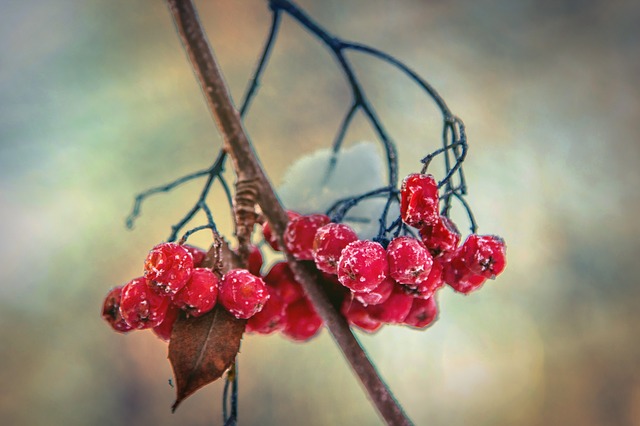
close up of Rowan berries

Benefits: packed with vitamin C, rowan berries are associated with supporting collagen production, which helps keep skin feeling firm and reduces the appearance of wrinkles over time. They can also be applied to dry or sore patches of skin for itchiness and irritation, and have traditionally been used for eczema and other skin inflammations. Raw rowan berries are mildly toxic, so they need to be cooked before use.

Pine

Where: Scots pine is the only truly native pine in the UK. It thrives on heathland and is widely planted for timber. It’s also found in the Caledonian Forest in the Scottish Highlands.
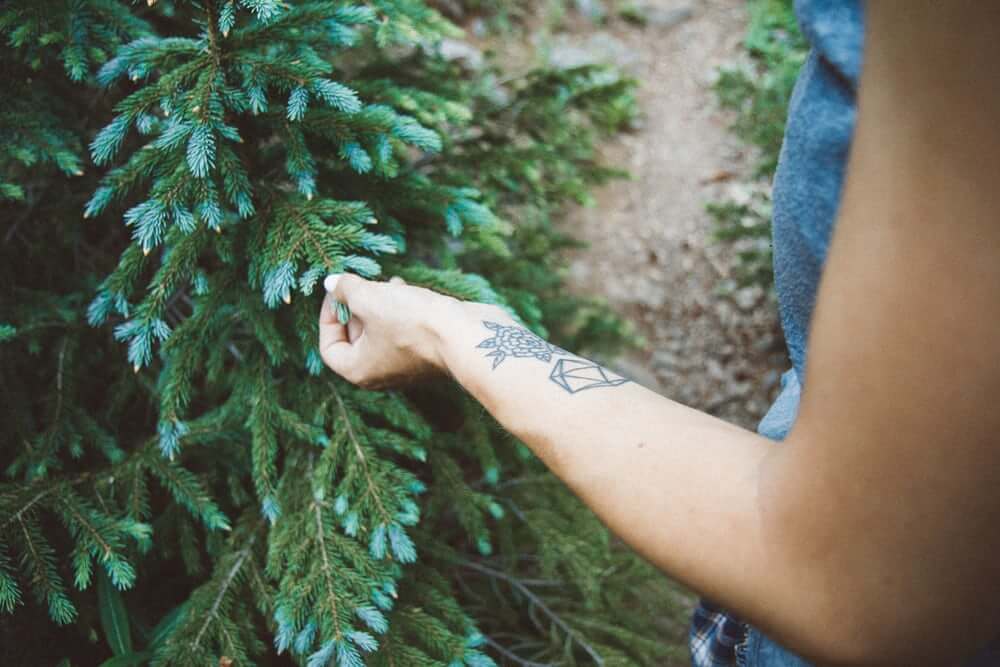
woman with a small tattoo touching a pine tree

Benefits: pine nut-based products help combat the effects of free radicals, which are associated with higher pollution levels, and feature in many anti-ageing formulations. Naturally fragrant, pine nuts are also used in perfumes and shower gels.

Recipe: rosehip bath salts

A luxurious bath salt infused with rosehips you can forage through autumn and into winter. Rosehips are rich in essential fatty acids which help nourish and rehydrate dry winter skin. Pour a hot bath, sprinkle in your salts, and let the mixture do the work.

Ingredients: 10 to 15 rosehips, Himalayan bath salts, almond oil, 4 rose petals, 4 drops of lavender essential oil.

Part one: infuse the oil.

  1. Chop any stalks and leaves from the rosehips and wash them with cold water in a strainer.
  2. Fill a jar (jam size works well) one-third with rosehips and top it up with almond oil.
  3. Leave to infuse for a minimum of four hours. The longer you leave it, the better the result.
  4. Strain the rosehip oil into a clean jar so you now have rosehip-infused almond oil.

Part two: mix the bath salts.

  1. In a mixing bowl, add the Himalayan bath salts.
  2. Mix in one teaspoon of your rosehip oil and the lavender essential oil. You can add more lavender if you like a stronger smell.
  3. Grind the rose petals in a pestle and mortar, then add them to the mix.
  4. Stir everything together and spoon into a jar, ready to sprinkle into your next bath.

Progress, not perfection

Foraging your own skincare isn’t going to replace your whole bathroom cabinet. It’s not meant to. Think of it the way you might think of growing your own herbs. You’ll still buy most of what you use, but the bits you make yourself tend to be the pieces you enjoy the most, and they come with no packaging, no shipping, no ingredient list to decode.

The bigger shift is the mindset. Foraging pushes you to notice what actually grows around you. That noticing tends to spread to the other parts of your routine, which is how slow beauty becomes a habit rather than a one-off project.

For more on slow beauty, read our guides to eco swaps for beauty and the truth about microplastics in our cosmetics.

Every brand in the Beauty and Self-Care category on Ziracle has passed the same standard: honest ingredients, transparent formulation, and packaging that takes the environment seriously. For products with short ingredient lists and whole-plant formulations, filter by Organic or Plastic Free to match the spirit of the foraged routine above.Ready to shop?

Browse the Healthy Skin edit for brands that work with whole ingredients from the start.

FAQs

Is foraging for skincare actually legal in the UK?

On land where you have permission, and within sensible limits, yes. The Wildlife and Countryside Act 1981 makes it illegal to uproot any wild plant without the landowner’s permission, and foraging in designated protected sites (National Nature Reserves, SSSIs) generally requires specific consent. Picking small amounts of leaves, flowers and fruit from common plants on public land for personal use is usually acceptable. Commercial foraging or stripping a site clean is not. The Woodland Trust’s guidelines are the most accessible starting point.

Is foraged skincare actually better for your skin than shop-bought?

It depends what you’re comparing it to. Foraged skincare has short ingredient lists, no packaging and no preservatives, which appeals to people who want minimal formulations. It also has a very short shelf life (typically two to ten weeks depending on the recipe) and no standardised potency, because plant concentrations vary with season, soil and species. For everyday use by people without sensitive skin, it’s a reasonable alternative. For anyone with reactive skin, eczema, or a specific condition, professionally formulated skincare is usually the more reliable choice. Always patch-test first.

What should I never forage without expert help?

Mushrooms, first and most importantly. Several UK species are lethally toxic, and some of them look very similar to edible ones. Beech nuts, which contain compounds that can be toxic if not properly processed. Anything you can’t identify with complete confidence. The rule of thumb: if you aren’t 100% sure what it is, leave it alone. Kew Gardens and the Woodland Trust both publish clear identification guides online.

How long does foraged skincare last?

Most of the recipes in this guide last between two and ten weeks, stored in dark glass in a cool place. The lack of preservatives is part of why they’re gentle, and also why they go off faster than shop-bought products. If something changes colour, smell, or texture, throw it out. Making smaller batches more often is the practical way to work with natural formulations.

Can I forage ingredients in a city?

With care, yes. Parks, community gardens, and private gardens (with permission) often have useful plants. Avoid anything within a few metres of busy roads, where exhaust particulates settle on leaves and fruit. Don’t forage in sites sprayed with herbicides or where dogs regularly urinate. Urban blackberries and elderflower are particularly popular and usually safe if picked sensibly away from traffic.


Deepen your understanding of metabolic health and longevity in our dedicated wellness series.

Explore Live Well

Janet Home

Brands, Ziracle

Janet Home has spent over a decade working in ethical and plant-based brands and businesses. She managed the shop and events at Hendersons of Edinburgh, the UK's longest-running vegetarian restaurant, ran operations at Loving Earth, an ethical plant-based chocolate company, and led B2B growth at ohne, a sustainable feminine care brand. Her articles for the Ziracle Journal cover serotonin and dopamine, slow fashion, microplastics in cosmetics, plant-based eating and mental health, zero waste hair care, foraging for skincare, and self-love practices.

READ NEXT

Is Foraging the Next Step for Slow Beauty?

Benzoyl peroxide. Dihydroxyacetone. Glycerin. Emollient. The ingredients list on most skincare products reads like a chemistry paper. Many of those ingredients are harmless, some are useful, and a fair number are there mainly to extend shelf life. All of them come wrapped in beautiful packaging with a price tag to match.

Slow beauty is a direct response to that status quo, asking the same questions slow fashion asks but about what we put on our skin. Fewer ingredients. Local and seasonal where possible. Less packaging, less shelf-life engineering, and more attention to the full journey of the product. Foraging for your own skincare ingredients sits comfortably inside that movement, and it’s a surprisingly practical place to start if you want a near-zero-waste beauty routine.

Foraging is the practice of sourcing ingredients from the wild, most often for food, but also for home remedies and skincare. There’s an abundance of natural ingredients with skincare benefits growing in British woodlands, hedgerows and gardens, and many of them can be combined with other natural sources to produce serums, toners, scrubs and bath salts. Most cost little to nothing beyond the effort of finding them.

Natural ingredients grow by season, so you can’t forage the same things all year. Here’s a seasonal guide to the most useful plants for skincare, where to find them, and four recipes to get started. A few important notes on safety first.

A note on foraging safely

Before you head out, read the Woodland Trust’s foraging guidelines. The short version: only forage what you can identify with total confidence, take small amounts from abundant sources, never uproot plants (which is illegal on land you don’t own under the Wildlife and Countryside Act 1981), and never forage in protected sites.

Plant identification matters enormously. Some plants that look edible are toxic, and several common look-alikes can cause serious harm. If you’re in any doubt, leave it alone and check a reliable reference like Kew’s guide to poisonous plants or go with someone experienced. When you’re foraging for skincare in particular, patch-test on a small area of skin before applying anything more widely. Natural doesn’t automatically mean non-irritant.

One more thing. The NHS is clear that herbal and plant-based products are not a substitute for medical treatment. If you have a persistent skin condition, see a dermatologist. Foraged skincare is for everyday routines, not for treating serious issues.

Spring

Chickweed

Where: shady, moist locations including gardens and woodland edges. Chickweed forms small low-growing mats with distinctive white star-shaped flowers.

image of chickweed growing between light grey rocks

Benefits: chickweed has traditionally been used to soothe a range of skin issues thanks to its natural antiseptic, antifungal and anti-inflammatory properties. It’s often used as a quick remedy for itchiness and surface irritation.

Dandelion

Where: dandelions prefer moist, sunny areas, only going dormant in the coldest winters. They’re one of the easiest foraging plants to find in the UK because they grow almost everywhere, including lawns and pavements.

dandelions in long grass next to pink flowers

Benefits: the sap from dandelions is naturally alkaline, which makes it useful against germs, bacteria and fungus. It’s been used traditionally to treat ringworm and eczema. Seen as a natural detoxifier, dandelion juice also appears in homemade acne treatments, and the plant’s vitamin C content can support the appearance of scars and inflammation.

Goose grass

Where: turf, landscaped areas like crop fields, orchards and gardens. Goose grass, also known as cleavers, is the sticky plant children used to throw at each other in playgrounds.

close up image of goosegrass.

Benefits: goose grass has long been used in folk medicine for skin complaints like psoriasis and eczema, and for helping small cuts, scrapes and abrasions to heal. It’s usually applied as a cooled infusion or a cold-pressed juice.

Wild garlic

Where: near marshland or water drainage ditches across much of the UK, often carpeting the floor of damp woodland in spring. You’ll usually smell it before you see it.

huge pile of wild garlic in a dark brown wicker basket

Benefits: wild garlic is rich in allicin, which gives it antiviral, antifungal and antiseptic properties. It’s used in cleansing products and in homemade acne treatments because it helps remove the bacteria that cause breakouts. Garlic also contains vitamin C, known to support collagen production and protect against the effects of UV exposure.

Recipe: dandelion face serum

Designed to brighten the complexion and firm the skin. The flower’s properties are known for supporting the appearance of age spots and scars, so it works well as a serum layer before your moisturiser, morning or night.

Ingredients: 6 fresh dandelion flowers and leaves, 1 aloe vera leaf, 1 teaspoon vitamin E oil.

  1. Wash the flowers and chop off the base of the stems to remove any dirt. Leave to drain.
  2. Slice the aloe vera leaf down the middle and scoop out the gel to fill half a cup.
  3. Blend the dandelions and aloe vera gel in a food processor or NutriBullet.
  4. Leave the mixture to sit for one hour.
  5. Using a cloth or strainer, squeeze the gel into a bowl until all you have left is dandelion pulp in the strainer and dandelion-infused gel in the bowl.
  6. Gently mix in the vitamin E.
  7. Pour into a pot or bottle, preferably dark glass to preserve the contents for longer.
  8. Apply to clean skin morning and night. Use within 10 weeks.

Summer

Chanterelle mushrooms

Where: growing in clusters in mossy coniferous forests, and also in mountainous birch forests. Chanterelles have a distinctive trumpet shape and a golden-yellow colour, with false gills rather than true ones.

Chanterelle mushrooms in wicker baskets

Benefits: like many fungi, chanterelles are rich in vitamin D. They’re also rich in niacin, which has been used traditionally to address conditions like eczema and rosacea by helping to reduce redness, inflammation and irritation. Only forage mushrooms with expert ID. Several UK species are lethally toxic.

Blackberries

Where: commonly found in brambles across most UK woodland and along hedgerows. Pick them ripe and jet-black, never at the roadside where exhaust residue will have settled on the fruit.

black berries

Benefits: blackberries are rich in antioxidants, which support circulation and immune function. They feature in face masks because of their astringent properties. The high vitamin C content supports collagen production, and the antioxidants help the skin look brighter and healthier.

Hazelnuts

Where: moist, lowland soil and under the shade of oak trees. The nuts ripen in late summer and early autumn.

Benefits: hazelnuts contain a high concentration of antioxidants and are often applied to the skin as a cold-pressed oil. Naturally rich in fatty acids and vitamin E, hazelnut-based products support hydration and elasticity. They’re also a good protein source if you want to take some home for the kitchen.

Honeysuckle

Where: honeysuckle grows close to home, often on the exteriors of buildings and along hedgerows and woodland fringes. Its strong sweet scent makes it easy to find in the evening.

close up image of honeysuckle

Benefits: honeysuckle features in traditional remedies for eczema, acne and rosacea. Oil distilled from the plant is also used in hair products to strengthen roots and strands. As an essential oil, honeysuckle is used in aromatherapy and is thought to help with headaches, sinus pressure and stress.

Recipe: rose face spritz

Doubles as a face toner and as a cooling spritz on hot days. Use fresh, unsprayed roses from your own garden or a friend’s.

Ingredients: 7 roses, 1.5 litres of distilled water.

  1. Gently pull the petals from the roses and place them in a colander under lukewarm running water to remove any dirt.
  2. Once clean, put the petals in a pan with the distilled water. If 1.5 litres isn’t enough to cover them, add more.
  3. Over a low to medium heat, bring the petals to a simmer for about 25 minutes until they’ve lost their colour and gone very pale pink.
  4. Strain the mixture and separate the petals from the water. Don’t throw the petals away, you can add them to a bath that evening.
  5. Pour the rose water into a dark bottle and use as a cooling face spritz throughout summer.

Foraging is a near-zero-waste way to learn what actually grows around you.

Autumn

Rosehips

Where: rosehips develop from the seed pods of wild roses along hedgerows, waste ground and woodland edges. They ripen from late summer onwards and are at their best after the first frost.

Benefits: rosehips are known for their astringent properties, which help tighten the skin and close pores. They also contain lycopene and beta carotene (the same compound that gives carrots their colour) and have been used to address hyperpigmentation: skin that has darkened in places due to sun, hormones or medication. Rosehip oil is a staple in natural skincare for its essential fatty acid content.

Hawthorn

Where: hawthorn grows in hedgerows, woodland and scrubland. The berries (haws) ripen to a deep red in autumn.

close up image of orange hawthorn berries

Benefits: hawthorn berries are naturally rich in polyphenols, and are traditionally associated with supporting the immune system and cardiovascular health. Cosmetically, they appear in hair products where they have a reputation for supporting fast hair growth and strong roots.

Walnuts

Where: in woodland, most commonly in southern parts of England. Wild walnut trees are less common than their cousins in orchards, so take only what you’ll use.

arial shot of walnuts in a bowl next to a walnut cracker and shells.

Benefits: most of the skincare benefits come from the shell and leaves, which makes walnuts an excellent near-zero-waste option. Walnut extracts help protect the skin from free radicals, and the shells make a brilliant natural exfoliant thanks to their rough texture. Grind them fine before use on the face. Shells are gentler on arms, legs and feet.

Recipe: walnut body scrub

Supports circulation, buffs away dead skin cells, and leaves skin smoother and brighter. Use no more than once or twice a week.

Ingredients: 12 walnuts, 30g refined shea butter, 30g almond oil, 5g vitamin E oil, 5 drops rosehip oil.

  1. Remove the shells from the walnuts.
  2. Grind the walnut shells into tiny particles. You can do this in a pestle and mortar, in a canvas bag with a rolling pin, or in a blender. Set aside.
  3. Put the shea butter and almond oil in a heat-proof bowl and place it over a pan of hot water, as you would to melt chocolate.
  4. On a low heat, let the shea butter melt into the oil.
  5. Once fully melted, remove from heat and allow to set. You can speed this up in the fridge.
  6. Use a wooden spoon to mix until the product turns fluffy.
  7. Add the crushed walnut particles, vitamin E and rosehip oil. Stir through.
  8. Spoon into a dark glass jar to keep it fresh. Use in the shower on damp skin, avoiding the face.

Winter

Nettles

Where: nettles prefer rich, moist soil and are commonly found near rivers, streams and lakes. Wear gloves when harvesting. Nettles lose their sting once they’re cooked or properly processed.

image of stinging nettles.

Benefits: prepared properly, nettles are a rich source of antioxidants and have a reputation for supporting skin against the effects of heavily polluted air. They’re also traditionally used as a hair rinse, where they’re thought to inhibit a hormone associated with hair loss and stimulate the scalp.

Beech nuts

Where: beech nuts prefer dry conditions and acidic soil. They can be tricky to find, but mature woodland is a good place to start, particularly where there are large beech trees.

beech nuts

Benefits: beech nuts have a reputation as a powerful antiseptic and are traditionally associated with strong hair growth. Oil distilled from beech nuts is thought to strengthen follicle cells and slow hair loss. Important caveat: parts of the beech tree are toxic, so don’t attempt to forage or prepare beech nuts without expert guidance.

Rowan berries

Where: rowan trees grow at high altitude, particularly in the Scottish Highlands, and produce bright orange-red berry clusters. Rowan is also common in urban parks and gardens across the UK.

close up of Rowan berries

Benefits: packed with vitamin C, rowan berries are associated with supporting collagen production, which helps keep skin feeling firm and reduces the appearance of wrinkles over time. They can also be applied to dry or sore patches of skin for itchiness and irritation, and have traditionally been used for eczema and other skin inflammations. Raw rowan berries are mildly toxic, so they need to be cooked before use.

Pine

Where: Scots pine is the only truly native pine in the UK. It thrives on heathland and is widely planted for timber. It’s also found in the Caledonian Forest in the Scottish Highlands.

woman with a small tattoo touching a pine tree

Benefits: pine nut-based products help combat the effects of free radicals, which are associated with higher pollution levels, and feature in many anti-ageing formulations. Naturally fragrant, pine nuts are also used in perfumes and shower gels.

Recipe: rosehip bath salts

A luxurious bath salt infused with rosehips you can forage through autumn and into winter. Rosehips are rich in essential fatty acids which help nourish and rehydrate dry winter skin. Pour a hot bath, sprinkle in your salts, and let the mixture do the work.

Ingredients: 10 to 15 rosehips, Himalayan bath salts, almond oil, 4 rose petals, 4 drops of lavender essential oil.

Part one: infuse the oil.

  1. Chop any stalks and leaves from the rosehips and wash them with cold water in a strainer.
  2. Fill a jar (jam size works well) one-third with rosehips and top it up with almond oil.
  3. Leave to infuse for a minimum of four hours. The longer you leave it, the better the result.
  4. Strain the rosehip oil into a clean jar so you now have rosehip-infused almond oil.

Part two: mix the bath salts.

  1. In a mixing bowl, add the Himalayan bath salts.
  2. Mix in one teaspoon of your rosehip oil and the lavender essential oil. You can add more lavender if you like a stronger smell.
  3. Grind the rose petals in a pestle and mortar, then add them to the mix.
  4. Stir everything together and spoon into a jar, ready to sprinkle into your next bath.

Progress, not perfection

Foraging your own skincare isn’t going to replace your whole bathroom cabinet. It’s not meant to. Think of it the way you might think of growing your own herbs. You’ll still buy most of what you use, but the bits you make yourself tend to be the pieces you enjoy the most, and they come with no packaging, no shipping, no ingredient list to decode.

The bigger shift is the mindset. Foraging pushes you to notice what actually grows around you. That noticing tends to spread to the other parts of your routine, which is how slow beauty becomes a habit rather than a one-off project.

For more on slow beauty, read our guides to eco swaps for beauty and the truth about microplastics in our cosmetics.

Every brand in the Beauty and Self-Care category on Ziracle has passed the same standard: honest ingredients, transparent formulation, and packaging that takes the environment seriously. For products with short ingredient lists and whole-plant formulations, filter by Organic or Plastic Free to match the spirit of the foraged routine above.Ready to shop?

Browse the Healthy Skin edit for brands that work with whole ingredients from the start.

FAQs

Is foraging for skincare actually legal in the UK?

On land where you have permission, and within sensible limits, yes. The Wildlife and Countryside Act 1981 makes it illegal to uproot any wild plant without the landowner’s permission, and foraging in designated protected sites (National Nature Reserves, SSSIs) generally requires specific consent. Picking small amounts of leaves, flowers and fruit from common plants on public land for personal use is usually acceptable. Commercial foraging or stripping a site clean is not. The Woodland Trust’s guidelines are the most accessible starting point.

Is foraged skincare actually better for your skin than shop-bought?

It depends what you’re comparing it to. Foraged skincare has short ingredient lists, no packaging and no preservatives, which appeals to people who want minimal formulations. It also has a very short shelf life (typically two to ten weeks depending on the recipe) and no standardised potency, because plant concentrations vary with season, soil and species. For everyday use by people without sensitive skin, it’s a reasonable alternative. For anyone with reactive skin, eczema, or a specific condition, professionally formulated skincare is usually the more reliable choice. Always patch-test first.

What should I never forage without expert help?

Mushrooms, first and most importantly. Several UK species are lethally toxic, and some of them look very similar to edible ones. Beech nuts, which contain compounds that can be toxic if not properly processed. Anything you can’t identify with complete confidence. The rule of thumb: if you aren’t 100% sure what it is, leave it alone. Kew Gardens and the Woodland Trust both publish clear identification guides online.

How long does foraged skincare last?

Most of the recipes in this guide last between two and ten weeks, stored in dark glass in a cool place. The lack of preservatives is part of why they’re gentle, and also why they go off faster than shop-bought products. If something changes colour, smell, or texture, throw it out. Making smaller batches more often is the practical way to work with natural formulations.

Can I forage ingredients in a city?

With care, yes. Parks, community gardens, and private gardens (with permission) often have useful plants. Avoid anything within a few metres of busy roads, where exhaust particulates settle on leaves and fruit. Don’t forage in sites sprayed with herbicides or where dogs regularly urinate. Urban blackberries and elderflower are particularly popular and usually safe if picked sensibly away from traffic.
Leave a Comment